CCME.NEWS, covering the regional and global HVACR industry with an unwavering commitment to providing in-depth news and analyses on policy, business and technology
Second edition of the conference, in Riyadh, will gather industry leaders, policymakers and stakeholders to address sustainability and refrigerant transition in the region
RIYADH, Saudi Arabia, 7 September 2025: Eurovent Middle East, in cooperation with the Air Movement and Control Association (AMCA), announced the second edition of the HVACR Next Generation Industry Congress, to be held on October 28 at the Intercontinental Durrat Al Riyadh Resort & Spa. The one-day event will run from 9am to 6pm Arabian Standard Time (AST).
Sharing the news through a Press Release, Eurovent Middle East said the 2025 Congress will focus on the theme, ‘Sustainability in extreme conditions’, reflecting the urgent challenges surrounding energy efficiency, refrigerant transition and Indoor Air Quality (IAQ) in the region’s high-temperature climate.
Eurovent Middle East said the HVACR industry holds a key position in reducing greenhouse gas emissions while maintaining affordable, resilient and reliable cooling and ventilation systems across the region. The Congress aims to bring together policymakers, building and HVACR professionals, investors, planners, consultants and academic representatives to examine these topics in depth, it said.
Participants will have the opportunity to gain insights into recent regulatory and policy developments impacting the regional HVACR sector, Eurovent Middle East said, adding that participants will also hear about technology-related advancements and case studies related to energy efficiency and sustainability, as well as engage with decision-makers from government, industry and finance.
Eurovent Middle East said the event will also explore business opportunities tied to the refrigerant transition and the Middle East’s fast-growing infrastructure development. The Congress is positioned as a platform to contribute to shaping a long-term sustainable roadmap for cooling solutions in the region, it added.
Eurovent Middle East said attendance to the event is complimentary but by invitation only. Confirmations will be handled on a first-come, first-served basis due to limited availability, it said, encouraging interested participants to register at www.eurovent.me/congress, where a full programme outline is also available.
Premium Story
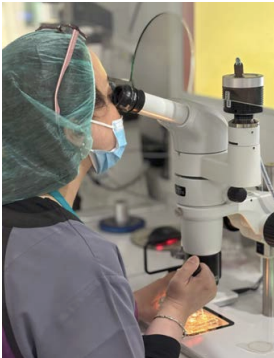
‘In IVF every particle matters, because every embryo matters’
Climate Control in conversation with Nick Agopian, President, Reviveaire. Excerpts…
Would it be correct to call particulates in IVF applications the Invisible Factor?
Nick Agopian
In vitro fertilization (IVF) procedures require meticulous control of environmental conditions. Embryos are extraordinarily sensitive to their surroundings, and yet one of the most critical variables, Indoor Air Quality has often been overlooked. While clinicians and lab managers rigorously manage temperature, humidity and handling protocols, the particulate and contaminant load in the air can have a profound, if unseen, impact on outcomes. What is the role of particulates in reproductive labs? Particulates are microscopic solids or liquid droplets suspended in the air. These range from PM10 (≤10 microns) to PM2.5 (≤2.5 microns), down to ultrafine particles (UFPs), measuring less than 0.1 micron. In an IVF setting, these particles can carry Volatile Organic Compounds (VOCs), microbes, endotoxins and other harmful agents. When they settle on culture media, lab surfaces or instruments, they can interfere with embryo development by introducing oxidative stress or disrupting cell signalling.
Moreover, certain particulate bound chemicals, like phthalates from plastics or combustion byproducts from nearby traffic, can act as endocrine disruptors, undermining fertility treatments in ways that may be difficult to trace.
Why does IAQ get overlooked?
One of the reasons IAQ has been underestimated in IVF applications is cognitive dissonance surrounding what we cannot see, smell, touch or taste. In human perception, threats we cannot directly sense tend to be deprioritised, even in highly controlled environments. Staff may assume that standard lab ventilation or filters “take care of it”, without realising that ultrafine particles and gaseous contaminants often bypass conventional filtration.
The invisibility of airborne hazards leads to a form of “out of sight, out of mind” complacency. Even when particle counters or VOC monitors identify elevated levels, the urgency may be muted, because the contamination is intangible, there is no visible dust, no noticeable odour, no tactile residue.
What is the science behind the concern?
Scientific literature has increasingly highlighted the impact of air quality on IVF success rates. Studies show that embryos exposed to elevated levels of certain VOCs or particulates have reduced viability and lower implantation rates. The mechanism is often oxidative stress: Reactive oxygen species generated by airborne contaminants can damage cellular membranes and DNA, slowing or halting development.
The December 2023 issue of the ASHRAE Journal underscores how emerging air cleaning technologies – including non-thermal plasma, advanced adsorption and highefficiency particulate filtration – can address contaminants that slip past traditional HVAC designs. In IVF labs, implementing such measures can be the difference between maintaining baseline performance and achieving optimal, repeatable results.
Should we be moving towards proactive IAQ management?
Yes, we should. A proactive IAQ programme for IVF applications should go beyond compliance with general laboratory standards. It should monitor PM2.5, UFPs and VOCs continuously. It should use filtration and purification systems capable of capturing and neutralising ultrafine particles and gaseous contaminants. It should minimise internal sources of pollutants, for example, it is necessary to avoid materials and cleaning products that off-gas harmful compounds. And it should maintain strict control of pressure differentials to prevent infiltration from adjacent spaces.
By addressing the unseen threats in the air, IVF clinics can protect the delicate micro-environment embryos require and give patients the best possible chance of success.
Why are we still playing catch-up on clean air, asks Dr Jenny Berens of Freudenberg
Filtration Technologies
IT MIGHT be easy to think that humanity’s focus on air quality is a fairly recent phenomenon, but the fact is that as long as humans have been using fires, there has also been a collective awareness regarding adverse health effects caused by smoke, odour and the lack of oxygen. The first publications related to air quality and its health impact were published as far back as 400 BC.
While our air quality has worsened, due to escalating population densities in cities, our focus on collecting air quality data and analysing their correlation to various ailments has increased, albeit a few decades behind. With relation to the first historic landmark, as discussed above, almost 2,500 years ago, we can conclude that we have spent less than 10% of our documented air quality history trying to map the relationship between what we breathe and how we feel.
Human reproduction is one of the many areas where scientists have started to investigate potential consequences related to poor air. In the United States, it was not until 1984, and after many court battles, that the public was informed that first-hand – and likely, second-hand – cigarette smoke causes a slew of pregnancy complications, including fetal development and injuries, premature birth and low birth weight. This information was spread through warning signs printed directly on cigarette packages. Noteworthy is that the first studies demonstrating that cigarette smoke is harmful to our bodies were published in the 1950s, so there was a 30-year gap between these two events.
Here, I would like to present a couple of discussion points that I would like to dig deeper into: Choice and Culture.
First off, when we are informed that something elective is harmful, we have the choice to abstain. More concerning is, of course, the non-elective activities we have to accept as an inevitable part of our external circumstances. However, in situations where we do have a choice, we base many of our decisions on reports and published information that are the result of data-driven studies, if these reports are pushed out to the public on a continuous basis. This leads us to wonder why a similar stream of studies, information and warnings are not applicable to other, similarly elective types of air pollutants? There have been studies conducted indicating connections between the use of perfumes – we can also include scented candles, incense and air-room deodorisers – and pregnancy complications. Since this is the case, why are there no warning labels on these types of products?
I believe that this ties into the second point – culture. Cigarette smoking went from an advertised “health product” to an activity that is now often looked down on and even outlawed in some countries, and so I would argue that culture, to a large degree, impacts what people believe to be positive versus negative air pollution.
The latest studies regarding human reproduction and how it is related to air quality, are showing that an increase in poorquality air leads to a reduction in female and male fertility. I, together with many others, believe that this information will lead us to the next big leap forward in recognising the importance of investing in studies that will motivate us to develop solutions that will help provide continuous access to clean air.
Dr Jenny Berens
The writer is Director (North America) at Freudenberg Filtration Technologies. She is the Chair of the ASHRAE SSPC 52.2 Committee, a voting member of ASHRAE 2.4 and a member of the ASHRAE 170 Committee. She may be contacted at jenny.berens@freudenberg-filter.com.
The threat is a possibility, unless and until we choose to wholly take the science and
engineering of IEQ on board in built environment-related decision making as HVAC stakeholders, says Dr Iyad Al-Attar, air filtration and IAQ consultant
IN RECENT decades, we have witnessed a profound and puzzling shift in human health: A worldwide decline in fertility rates. While many factors – including lifestyle changes, dietary habits and societal trends – play a role, a silent, often overlooked culprit is emerging from the very spaces we inhabit: Our indoor environments. Examining the correlation between Indoor Environmental Quality (IEQ) and the complex biology of human reproduction has become increasingly important.
Dr Iyad Al-Attar
Scientific research indicates that we spend most of our time indoors, which raises concerns about the air quality within our homes, schools and workplaces. The indoor air we breathe comprises a variety of pollutants, such as particulates, gases and bioaerosols. Furthermore, endocrine-disrupting chemicals (EDCs) are commonly found in many everyday products, contributing to the overall complexity of indoor air pollution.
These microscopic aggressors do not just affect our respiratory systems; growing evidence suggests they can disrupt hormonal balance, impair sperm and egg quality, and interfere with the delicate processes of fertilisation and embryonic development. The highly sensitive environments of InVitro Fertilization (IVF) laboratories, for instance, have shown a direct correlation between air quality and success rates. Studies have demonstrated that improving air quality in these clinics, particularly by filtering out molecular contaminants, leads to significantly higher embryo development, implantation and live birth rates.
This is where the crucial role of air filtration technologies becomes clear. Filtration technologies are no longer an accessory for Heating, Ventilation, and Air Conditioning (HVAC) systems; they are an essential tool for protecting and preserving reproductive health. Effective and sustainable air filter performance is crucial for capturing a wide range of pollutants. Integrating multiple filtration technologies into our living and working spaces, and especially in specialised medical environments, is not merely a matter of comfort but a proactive measure to mitigate a serious public health concern. The utilisation of appropriate filtration technologies is imperative, rendering our built environment, buildings and their envelopes inhabitable and truly livable.
This Editorial Campaign will explore the science behind this connection, detailing the specific pollutants that pose a threat to fertility and the mechanisms by which they cause harm. It will also provide a comprehensive overview of the available air purification technologies, offering practical insights for professionals and individuals alike. Our aim is to foster a broader understanding of IEQ’s impact on human reproduction and to champion the widespread adoption of strategies that create healthier and more fertile environments for generations to come. We urge you to join this Campaign by reading the insight-rich articles that follow in this issue and in subsequent issues, thereby informing your decisions as HVAC engineers involved in producing built environments; the action is vital in the face of the threat of being endangered.
In an ongoing movement, manufacturers are innovating to ensure that love in the air doesn’t come laced with pollutants, affecting fertility, says Marta San Román of AFEC (the association of HVAC equipment manufacturers in Spain)
THOSE with a few decades behind them may recognise the song, “Love is in the air”.
Love may be in the air, but so are particles, VOCs and invisible pollutants that silently threaten one of humanity’s most precious treasures: Fertility. Science is increasingly clear that poor Indoor Air Quality (IAQ) and Indoor Environmental Quality (IEQ) don’t just irritate lungs, reduce productivity or increase our health bills; they may also disrupt hormonal balance, affect reproductive health and compromise the possibility of new life.
At AFEC (the association of HVAC equipment manufacturers in Spain), we believe that protecting fertility starts with protecting the spaces where people live, work and dream of new families. Bedroom, office, classroom — these aren’t just places where we spend 90% of our lives, they’re ecosystems where air quality directly impacts our biology. If clean air fuels our minds and bodies, it also sustains our capacity to build the next generation.
And here’s the good news – AFEC’s members are already building solutions. From advanced ventilation and filtration to smart monitoring and adaptive control systems, manufacturers are innovating to ensure that love in the air doesn’t come laced with pollutants. Nobody wants to be “All out of love” — or out of clean air. Our industry is part of the true clean air supply, safeguarding comfort, health and fertility for “Every Woman in the World” and every future generation.
When air is truly clean, love and life can flourish – that is the greatest legacy we can leave behind.
Marta San Román
The writer is Director General, AFEC (the association of HVAC equipment manufacturers in Spain). She may be contacted at msanroman@afec.es
Premium Story
It’s exciting to meet at the intersection of IEQ and reproductive health
I am thrilled at the prospect of contributing to assembling a team of experts willing to share a plurality of insights, says Peter Cantone, Founder, Smart Air Defense
FIVE years ago, if someone had told me I would be the Chairman of the IEQ & Fertility Campaign, I would have dismissed it as unlikely. Yet here I am – humbled, honoured and deeply committed to exploring one of the most consequential public health topics of our time.
This issue is not just professional for me – it’s personal. I’ve been married for 28 years and am the proud father of four daughters, who are the foundation of everything I do. When I entered the IEQ space as founder of Smart Air Defense, I never imagined it would intersect with the future health and fertility of the next generation.
My journey began during the pandemic in New Rochelle, New York – the East Coast epicentre of the first outbreak in the United States. That crisis forced us to examine indoor air more closely than ever before: What’s in it, how it moves and how profoundly it shapes human health. It also revealed a troubling gap: There were very few experts who could explain or improve Indoor Air Quality (IAQ) to the extent it needed to be addressed.
Since then, I’ve focused much of my work on the primary and secondary school market. Schools are where our next generation spends most of its formative years, and the quality of those environments is inseparable from long-term health. IEQ isn’t just about preventing immediate illness, it plays a role in lifelong outcomes, including fertility, pregnancy and fetal development. By making classrooms healthier, we aren’t just protecting today’s students; we’re safeguarding the families and futures they will one day create.
This monthly column will focus on that critical dimension of IEQ: Its impact on fertility, pregnancy and reproductive health for women and men. We are assembling a board of leading experts led by Dr Iyad Al-Attar, the Executive Director of the Campaign, who will contribute science, data and insight. My role is not to claim authority but to ask the questions that need to be asked, and to ensure that the answers help us all better understand the stakes. IEQ is not just an infrastructure challenge – it is a generational one. The choices we make about the air we breathe today will shape the lives, families and futures of tomorrow.
A special thank you to Dr Iyad Al-Attar for trusting me to lead this initiative as Chairman of the IEQ & Fertility Campaign
Peter Cantone
The writer is Founder, Smart Air Defense. He may be reached at peter@smartairdefense.com.
Premium Story
Johnson Controls to supply Zürich with heat pumps using waste energy
Company says large-scale ammonia heat pump solution will contribute to Switzerland’s sustainable heat transition with anticipated efficiency gains of up to 30%
CORK, Ireland, 2 September 2025: Johnson Controls said it will be providing green heat to the city of Zürich through a new waste incineration project spearheaded by the municipal utilities of Zürich ERZ (Entsorgung & Recycling Zurich). Making the announcement through a Press Release, Johnson Controls said the project entails the expansion of the plant with a third process line and heat recovery from the flue gases.
As part of the project, Johnson Controls said its heat pumps feed the recovered energy into the District Heating network and provide additional heat to around 15,000 homes. Starting operations in 2027, the company added, the solution is one of the largest in Europe to use ammonia, which has zero Global Warming Potential (GWP), in a heat pump application on this scale.
According to the European Heat Pump Association, heat accounts for more than 60% of energy use in European industries, and there is significant potential to meet this need using freely available ambient or waste heat sources – estimates suggest that waste heat in the EU could meet the bloc’s entire energy demands for central heating and hot water. Heat pumps can harvest this energy from land, water, air or industrial processes and are typically 3-4 times more efficient than conventional systems, Johnson Controls said.
Richard Lek, President, Johnson Controls, EMEA, said: “As one of the largest untapped sources of energy, excess heat represents huge potential for businesses to reduce operating costs and become more resilient while meeting decarbonization targets. In 2024 alone, Johnson Controls helped cut customers’ expenses by 53% and reduce emissions by 60% compared to conventional natural gas boilers. We are proud to be partnering with ERZ on this innovative project and highlight the tremendous opportunity of waste heat sources – paving the way toward more energy-efficient and sustainable urban environments.”
Johnson Controls said that for the city of Zürich, it will provide a custom-made heat pump solution with six high-performance screw compressors, delivering a total system output of 42 MW. The heat pumps will extract low-temperature heat from the flue gas of a large waste-to-energy facility – raising the overall efficiency of the plant significantly. Johnson Controls added that to maximise the waste heat extraction and further increase efficiency, the units will be applied as three pairs of heat pumps operating in series, reducing the lift required, and expected to boost efficiency by as much as 30%.
Furthermore, the company highlighted the operating conditions are ideal for the heat pumps, as they are positioned first in a combination of multiple heat sources that raises the temperature before being supplied back to the grid. This ensures the optimum overall efficiency of the plant.
Jürg Bruder, ER, said: “The City of Zürich is actively committed to achieve net carbon neutrality by 2040, and a major part of this is the increase of carbon free supply of heat. By teaming up with Johnson Controls, we are further driving momentum in the heat transition and paving the way toward a more sustainable future.”
Johnson Controls said it was among the first providers of heat pumps and that it now supplies a broad portfolio for commercial, institutional and industrial organisations. The company added that its industrial and commercial heat pumps are used in sectors ranging from manufacturing and healthcare to municipalities and utilities. Johnson Controls also said it is supporting the transition to more sustainable refrigerants by offering heat pumps that use low- and ultra-low-global-warming-potential fluids.
Premium Story
Eurovent calls for EU action on sustainable cooling
Policy brief outlines priorities for energy efficiency, refrigerant management and low-carbon electricity to meet rising demand
BRUSSELS, Belgium, 2 September 2025: Eurovent said it published a policy brief urging the EU to prioritise sustainable cooling as part of its climate and industrial strategy. Making the announcement through a Press Release, Eurovent said the document outlines the priorities to ensure Europe is prepared for a future marked by rising temperatures.
Eurovent said the policy brief highlights the vital role of cooling in sectors such as food cold chain, pharmaceuticals, data centres, electric vehicles and human comfort. With global cooling demand expected to triple by 2050 and Europe warming at twice the global average rate, Eurovent said the policy brief positions sustainable cooling as a core pillar of the green transition.
Eurovent said the brief emphasises energy efficiency, refrigerant management and access to low-carbon electricity as the three pillars of sustainable cooling. It also underlines how modern, efficient cooling can ease pressure on electricity grids, improve affordability, and even contribute to decarbonisation through heat recovery and smart controls, Eurovent added.
According to Eurovent, the key recommendations include an updated EU Heating and Cooling Strategy that reflects the unique challenges of the cooling sector, strengthened ecodesign and energy labelling frameworks to ensure best-in-class cooling equipment, provision of targeted financial incentives for sustainable cooling solutions, integration of cooling needs into the Renovation Wave, the recognition of the HVACR industry’s contribution to EU industrial strategy and the importance of fully implementing the F-Gas Regulation.
Stijn Renneboog, Deputy Secretary General, Eurovent, said: “After another hot summer, awareness of the importance of sustainable cooling is rising in the Brussels policy sphere. But there are still major misapprehensions about the nature of the challenge. Cooling is about much more than comfort; it is of critical importance in a wide range of essential applications, including healthcare, food, AI and net-zero manufacturing. Cooling demand is sure to rise across all these applications, and we must prepare for this new reality now. Our policy brief is intended as a conversation starter and to provoke reflections. We are ready for dialogue, not just on how to ensure cooling can be sustainable, but on how to ensure these strategic technologies continue to be developed and manufactured right here in Europe.”
Eurovent said it has invited stakeholders across industry, government and civil society to engage with the recommendations and collaborate on building a future-proof European cooling sector.
Company says it has reinvented in-store experience; project integrates custom design, natural refrigeration and predictive maintenance solutions
MILAN, Italy, 1 September 2025: Epta said it has completed the restyling of Supermercats Montserrat hypermarket in Empuriabrava, a town often referred to as the Spanish Venice. Making the announcement through a Press Release, Epta said the project has transformed the store into a benchmark for freshness, quality and comfort in the retail sector.
Epta said a key strength of the project was the contribution of EptaConcept, its multidisciplinary team, which designed the store layout by enhancing customer flow, materials and visual identity. As part of its positioning as a fully integrated provider, the company said, EptaTechnica and EptaService were involved in every stage, from the custom design of the most advanced natural refrigeration solutions, to their installation and the activation of post-sales digital services, including remote monitoring to enable predictive maintenance. In the renovated hypermarket of Empuriabrava, Epta said, the interior design isn’t just a matter of aesthetics but a key element of the commercial strategy.
Diego Ortega, Country Concept Manager, Epta Iberia, said: “The entire project stems from the desire to create an open space capable of elevating the perception of the environment and offering consumers a natural, intuitive and engaging shopping experience. Every solution proposed, in line with the layout, prioritises low-height refrigerated furnishings and custom vertical models, designed to improve product visibility and encourage targeted purchasing behaviour. It’s a replicable model for retailers looking to combine design with commercial performance”
The company said the new layout further enhances Mediterranean flavours, particularly fresh fish, which represents the highlight of the local offering. Ensuring maximum quality and optimal preservation are two top-of-the-line models from Costan’s GranFit family, installed in the Fresh department, the company claimed, adding that these models rank among the most efficient solutions in the Group’s portfolio, thanks to their outstanding energy performance.
Epta said the semi-vertical GranValdaj and the vertical GranVista Next models specifically, both positive-temperature units designed for pre-packaged products, combine an almost invisible structure with low energy consumption. The company said that for timeless flavour, frozen products are preserved in GranSesia units, semi-vertical models designed to maximise display area while maintaining a compact and linear form, allowing these food items to stand out even in smaller spaces.
Epta said that from a technological standpoint, all remote models are powered by the transcritical CO₂ modular control unit, ECO2Middle, chosen for its high application flexibility and its ability to provide a refrigeration capacity, ranging from 60 to 150 kW for medium and from 0 to 50 kW for low temperature. The company concluded that the integration of the ETE (Extreme Temperature Efficiency) system further ensures high performance even during peak summer heat, which is particularly common along the coast.
Salah Nezar of New Murabba speaks on how AI is revolutionising District Cooling efficiency in ways unimaginable
This paper provides insights from two novel AI-based energy optimisation projects developed under the Sustainability and Innovation function for leading global technology companies across North America. The pioneering initiatives leveraged advanced IoT mapping, granular metering and sophisticated Machine Learning models to significantly improve energy efficiency and provide greater operational visibility for large-scale data centres. The project in the heart of Silicon Valley, California, achieved a remarkable 40% reduction in energy consumption. In contrast, the pilot developed in Allin, Texas, is still being refined, with results currently withheld from public disclosure.
Salah Nezar
Building on this global exposure and expertise, this paper also incorporates a valuable perspective from one of the novel testbed projects initiated by Saudi Arabia’s leading District Cooling provider. The pilot use case, conducted on a large District Cooling plant serving one of the mega-developments in Riyadh, further underscores the progress made in leveraging AI solutions for energy optimisation. Led by a well-established international consulting firm specialising in AI and digital solutions, the ongoing study produced a highly accurate predictive model demonstrating an impressive 96% accuracy within two hours. This milestone is considered significant progress in intelligent load demand forecasting and energy management for large-scale infrastructure in Saudi Arabia and the Middle East.
New Murabba aims to redefine the concept of smart built environments and sustainable urban living on a global scale. More than just the world’s modern downtown, it is founded on cutting-edge natural resource optimisation strategies, integrated from the very inception of its development. New Murabba is leveraging AI-powered predictive modelling, digital twin technologies and integrated energy-efficient solutions to reduce energy demand and carbon emissions, while enhancing real-time resource management based on informative data. These advancements are being delivered through strategic partnerships with leading global technology firms and innovation hubs. At the heart of this transformative vision stands the Mukaab – an iconic, immersive megastructure that masterfully fuses cultural heritage with cutting-edge technological innovation. It serves as a powerful emblem of New Murabba’s commitment to low-carbon design, AI-integrated operations and future-ready infrastructure at every level, in full alignment with Saudi Arabia’s Vision 2030.
These groundbreaking initiatives position Saudi Arabia’s giga and mega projects as regional pioneers and influential global contributors to the evolving narrative of sustainability, adaptive design and intelligent building innovation.
TOWARDS LIVABLE AND SUSTAINABLE URBAN ENVIRONEMENTS
Amid the climatic challenges and rapid urban expansion shaping major cities in the Middle East, the pursuit of livable, sustainable and energy-efficient urban environments has become a top priority from various perspectives and scales. District Cooling systems represent a transformative approach for modern climate control in this evolving landscape. District Cooling offers scalable, modular configurations that enhance efficacy, sustainability and operational excellence.
The District Cooling concept centralises the cooling process by chilling water and delivering it through underground piping, producing a cooling effect on a district-wide scale. The approach offers many benefits related to energy efficiency, carbon emission reduction, integration of clean technologies and appealing urban space planning.
In a region where cooling demand can represent 65% of the power demand in summer, these benefits become more than enticing; they become essential to meeting short- and long-term economic growth and prosperity goals. To achieve a stable and efficient operational scheme, cooling demand must be predicted accurately and granularly for a meaningful period.
AI analytics represent a powerful enablement tool that provides enormous opportunities for energy optimisation, operational excellence and asset performance management across the lifespan. Seamless integration with Computerised Maintenance Management System (CMMS) is critical for optimising operational efficiency and maintaining data integrity. Predictive analytics capabilities can proactively manage fluctuations in cooling demand by varying the outputs and limiting systems’ interdependency inefficiencies during different operational modes.
ROLE OF AI IN DEMAND PREDICTIONS AND FAILURE DIAGNOSTICS
AI-powered load prediction makes District Cooling plants much more innovative and resilient. By anticipating demand profiles, AI helps operators predict anomalies through alerts and equipment failure diagnosis before they increase in severity. These proactive features are essential in this region, where cooling demands are high and volatile and represent a severe burden on the power grid during the hot season.
Key elements monitored by Machine Learning models include the following factors:
Weather: Air temperature, humidity, wind speed and solar radiation are all great contributors to cooling usage. AI models can layer on localised microclimate data to provide sufficient coverage of the multiple weather types present in the Kingdom.
Occupancy and use: Buildings generate a lot more heat at peak occupancy. AI learns the unique and sometimes rapid changes in usage transition of the diverse building typologies, such as residential tall towers, malls, multi-dimensional commercial buildings and large-scale mixed-use developments.
Variations in part loads and peak loads: AI can detect and monitor hourly, daily, weekly and seasonal changes in cooling demand and mitigate the risk of service requests during part-load and peak-load phases.
Various techniques are used to integrate the above factors in a single or multiple prediction model to meet the intended goals.
LEVERAGING AI TECHNIQUES FOR REAL-TIME DECISIONS
Utilisation of advanced AI methods for load predictions and consequent operational improvements is paramount to achieving maximum efficiency in District Cooling while reducing energy wastage. By using accurate predictive models, District Cooling operators and end-users can foresee spikes and drops in cooling demand, allocate resources more efficiently and minimise the overall operation costs. This requires an effective pair of statistical models and Machine Learning implementations, as follows:
Statistical Models: These provide high-level understanding of consumption patterns and cyclical variations, and can often be considered baselines or components to be used within hybrid models, such as: Linear Regression, which is a traditional method that studies past cooling demand with regard to major predictors, such as ambient air temperature, humidity or occupancy proxies. It is only capable of identifying fundamental consumption trends and would typically use hyperbolic factors for similarly complex, non-linear relationships.
Time Series Models (SARIMA): The Seasonal Autoregressive Integrated Moving Average model is beneficial for forecasting cooling loads with deep cyclical characteristics, which is standard with climatic energy demands. This model can capture short-term fluctuations to long-term cycles, making it a handy tool for DC companies when planning for an optimised cooling supply strategy.
Machine Learning Models: AI models significantly elevate predictive accuracy by acquiring complex, non-obvious patterns residing in massive, multi-variate, time-based cooling load granular data. Predictive analytics often identifies and resolves these patterns far better than traditional statistical methods, particularly in quickly changing environments. The models considered are as follows:
Ensemble Learning: This includes Random Forest & Gradient Boosting models, like XGBoost and LightGBM). These powerful techniques yield added predictive robustness and reliability through the strategic means of weighted averaging decision trees. They are superior at addressing rich, high-dimensional data while accounting for the many simultaneous influencing factors (small-scale weather forecast data, dynamic occupancy change and complex historical demands). The advantages make these methods highly applicable in the diverse, fluid and volatile demand pattern.
Support Vector Machines (SVMs): Highly useful if the data exhibit complex, non-linear relationships, like many energy consumption patterns. They are also helpful for small, high-quality datasets or when residuals pattern demonstrates difficult attributes, particularly where low-accuracy regression models have dissimilarities due to complex boundaries (the case with cooling load prediction).
Artificial Neural Networks (ANNs) and Long Short-Term Memory (LSTM): ANN-type models and profound learning frameworks, like LSTMs, are well-suited for analysing time-based sequential data. The approach allows a vital learning experience from previous cooling demands data over time to improve estimates of future demand by identifying long-range dependencies. They are particularly applicable in fast-paced District Cooling environments, where energy demand evolves and changes throughout the day and seasons.
Reinforcement Learning (RL): Besides predicting demand for cooling, RL can optimise District Cooling systems’ real-time operational response to variations. RL entails a competent AI agent that learns and adapts behaviour over time, using experiences to improve its operation, while simultaneously seeking to minimise energy consumption and maximise performance under varying demand profiles. The operation of District Cooling systems provides an adequate cooling supply and balances it against demand while limiting operational costs. RL enables AI agents to make adaptive, data-driven choices by learning from experiential feedback instead of simply using a static set of rules.
DATA FOUNDATIONS FOR AI SOLUTIONS
The development of reliable, high-performance, AI-powered cooling load prediction and optimisation models requires specifications for fundamental data inputs. Accurate, consistent, high-quality, granular and comprehensive datasets are critical for developing reliable, robust, adaptive and scalable models. The five pillars of data requirements are as follows:
● Historical data: High-resolution and accurate consumption data, ideally over one year, can effectively capture complex changepoints, trends, patterns and anomalies.
● Real-time and forecasted weather data: Granular weather data sets include outdoor temperature, humidity, wind speed/direction and solar radiation. Local weather station data for accurate real-time and forecast data will be critical.
● Calendar data: These pertain to information on weekends, public holidays and key known scheduled events that may significantly influence building occupancy and use patterns.
● Building characteristics and metadata: These include detailed data types for building data, such as building type (e.g., residential, commercial, mixed-use governmental), building area total, intended occupancy, building age and typical operating hours.
● Operational data: These include real-time telemetry from cooling systems’ chillers, pumps, cooling towers, thermal energy storage tanks and other related network components (e.g., setpoints, flow rate, pressure differentials, power) for monitoring the performance and health of the systems’ emergent response.
MACHINE LEARNING: QUATIFIABLE ADVANTAGES
As construction and expansion continue to quickly modernise cities in the Middle East, combining AI with District Cooling systems offers a wide range of distinct and quantifiable benefits:
● Decreased energy use: AI can reduce energy use by 25-35% over conventional standalone cooling systems, depending on the type of heat rejection, thermal storage capacity and type of control system. This means considerable savings on operational costs.
● Reduced emissions: Helps achieve environmental and sustainability certifications, such as LEED and Mostadam.
● Decreased operational costs: Predictive maintenance and intelligent load management minimise wear and tear on complicated and costly equipment. More importantly, they reduce downtime, disruption and O&M costs.
CONCLUSION: BREAKTHROUGHS IN NEXT-GEN EFFICACY
AI is changing the District Cooling paradigm from a conventional cooling approach to a responsive, innovative, self-optimising energy network. By harnessing predictive analytics, advanced Machine Learning techniques and real-time data management, the District Cooling industry can achieve unprecedented energy efficiency – as low as 0.6 kW/TR, or better – alongside significant water resources conservation (2 Gal/TR). These tremendous improvements provide efficacy and long-term sustainability by extending infrastructure lifespan and significantly lowering total maintenance costs.
At their core, AI-driven load forecasting and operational efficiency measures are not merely technological advancement options or educational showcases; they mark a fundamental shift towards climate resilience and efficacy in a rapidly evolving economic landscape. By anticipating demand fluctuations and dynamically adapting operational strategies in real time, AI drives transformative advancements in energy management. It delivers exact responses to cooling demand variability through data-driven decision-making, ensuring exceptional efficiency and operational agility across large-scale infrastructure.
The writer is Senior Director – Design Management, New Murabba. He may be reached at <snezar@newmurabba.com>