
CCME.NEWS

Your source for the HVACR Industry, covering in-depth news & analyses on policy, business & technology.

Get Premium:

Sign-up

COMMERCIAL ENQUIRIES:

Frédéric Paillé
Co-Founder & Commercial Director
fred@cpi-industry.com
+971 50 714 7204

Follow Us

CCME.NEWS

CCME.NEWS, covering the regional and global HVACR industry with an unwavering commitment to providing in-depth news and analyses on policy, business and technology

Contact Info

PO Box 13700,
Dubai Media City, Dubai
admin@cpi-industry.com
+971 50 714 7204

Follow Us

Premium Story

AEPCo announces partnership with elementsix for net-zero action

Developer says many Gulf companies face a complex and fragmented path to compliance, with new climate disclosure rules set to be introduced

DUBAI, UAE / KUWAIT CITY, Kuwait, 11 September 2025: Alternative Energy Projects (AEPCo), a renewable energy developer with a 650 MW portfolio across more than 20 installations in the MENA region, and Dubai-based carbon and ESG advisory firm, elementsix, announced a partnership to accelerate corporate decarbonisation in the Gulf and wider MENA region. Making the announcement through a Press Release, AEPCo said an integrated solution, formulated through the partnership, enables companies to measure their carbon footprint, define reduction strategies and deploy actionable clean energy solutions under one umbrella.

AEPCo said that with Kuwait’s Capital Markets Authority and the UAE’s Federal Decree – Law No. 11 set to introduce binding corporate climate disclosure rules within the next 12-18 months, many Gulf companies face a complex and fragmented path to compliance. According to AEPCo, the urgency is amplified by the Gulf’s accelerating clean energy transition: GCC region countries are on track to deploy 40 GW of utility-scale solar capacity by 2030, according to the International Renewable Energy Agency (IRENA), and the broader MENA region is expected to add 62 GW over the next five years, with solar comprising more than 85% of that growth.

The AEPCo-elementsix solution fills this critical gap by combining elementsix’s expertise in carbon accounting and ESG strategy with AEPCo’s project development, execution and financing strength, the company said. Together, AEPCo said, the two companies will deliver high-impact solutions, from solar farms to wind energy deployment, and from energy efficiency upgrades to emissions tracking.

Dr Raed B’kayrat, Chief Development Officer, AEPCo, said: “We’re empowering corporate leaders to publicly commit to net-zero strategies, backed by tangible, bottom-line benefits. Beyond emissions cuts, our projects catalyse job creation and economic transformation across sectors.”

AEPCo said the partnership offers full-cycle carbon footprint analysis and reduction planning, the development of clean energy assets tailored to corporate targets, access to global carbon markets and to renewable energy certificates, and strategic ESG alignment for investor confidence and regulatory readiness.

Amer Arafat, Co-Founder, elementsix, said: “Voluntary climate action is no longer optional in the Gulf. Companies that lead today will secure tomorrow’s market share, investor confidence and policy advantages.”

The company said its regional footprint across oil & gas, finance, real estate and heavy industry gives elementsix immediate access to high-impact emissions sources. This positions the model to deliver scalable climate solutions in record time.

Dahlia Haleem, Co-Founder, elementsix, said: “The Gulf is setting the global standard for sustainability integration. Our partnership turns this vision into competitive advantage and resilience.”

AEPCo said the solution is now live across its markets, giving early movers access to prime renewable energy resources, favourable financing and strategic positioning in a rapidly evolving policy environment.
Premium Story

Ice on demand

Nabil Shahin, Managing Director, AHRI MENA, elaborates on Thermal Energy Storage’s role in smarter, greener cooling; establishes progress in that direction by highlighting TES-related text in LEEDv4 and AHRI Standards 900 (I-P) & 901 (SI)

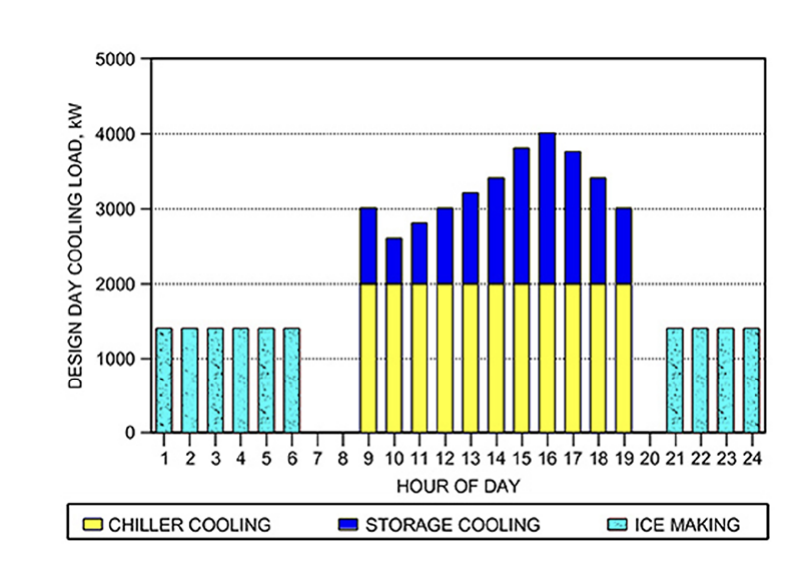
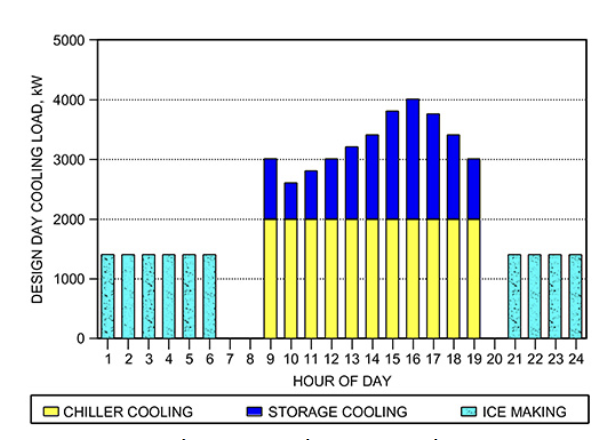
Thermal Energy Storage (TES) is a general term describing a technology that stores energy created at a particular time and makes it available to be used later. The most common residential use of this technology is the making of ice cubes in the refrigerator at night for use the following day for keeping your drinks cold. In commercial buildings, this same technology is used on a much larger scale, making and storing ice at night that is used the following day to cool buildings.

There are many reasons for using ice storage in buildings, the main one being dramatically reducing the cost to air condition buildings. By shifting electric consumption to off-peak hours, ice storage reduces peak electrical demand and takes advantage of lower off-peak electric rates, which translates into major cooling cost reductions.

A thermal storage system that uses ice as a storage medium can provide added cooling capacity for any system. The ice tank can be charged, waiting to discharge during unusually high demand periods, or as a backup to critical systems.

Environmental benefits

An ice storage system is used as an environmentally friendly, smart grid technology for cooling building occupants. Ice storage takes advantage of cleaner, more plentiful night-time electricity generation, which is increasing in renewable content, by storing energy to cool buildings the next day. Ice storage complements renewable energies, by helping to overcome the intermittency of renewable energy. For example, in the United States, the generation of electricity from wind is mainly at night, therefore this energy needs to be stored so it can be available during the on-peak hours.

Ice storage also helps to reduce source fuel consumption in many locations. Most base load generator plants are much more efficient as compared to “peaking” plants that come on during the day. By using night-time electricity to make ice and then storing it for daytime use, an ice storage system can be more (source) energy efficient compared to conventional instantaneous systems. Ice storage allows building operators to control when energy is used, decoupling the creation of the cooling from dispatching of cooling, allowing consumption of cheaper more efficiently produced energy when demand is high.

Applications

Ice storage is typically used in buildings that have large cooling loads during the day, as compared to nighttime. The technology can be applied to new construction, retrofits and building expansions. Typical applications include office buildings, schools, hospitals, airports, places of worship, data centres and buildings seeking LEED certification. Ice storage is a good option for lowering energy costs and environmental impacts, as a backup to critical systems, for reducing the size of electric services or cooling and heating equipment and to increase HVAC operating flexibility for system resiliency and redundancy. Ice storage should also be considered with electrical or cooling tower limitations, because the chiller may be sized based on average load instead of peak load. This is because the system reduces peak demand. (For reducing peak demand with storage, refer to page 51.32 of Chapter 51 of the ASHRAE Handbook, 2016 HVAC Systems and Equipment.)

In addition, ice storage can be modified to fit a variety of applications. Ice storage tanks are available in many sizes and configurations to meet the needs of the project. They can be buried in the ground, or placed in the basement, parking lot or roof.

Product Basics

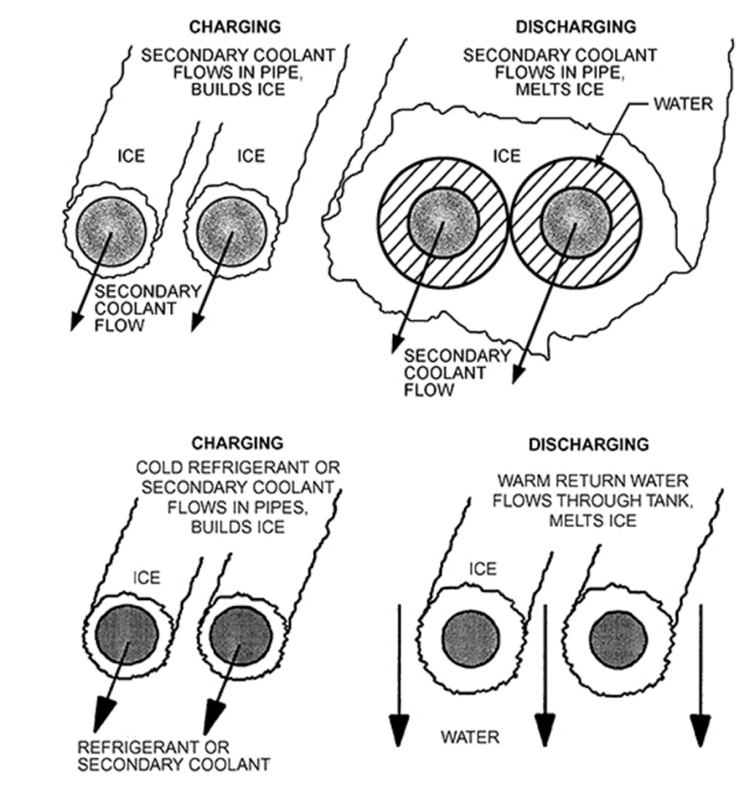
The construction consists of a tank to hold water and a tubular heat exchanger that will hold a coolant (antifreeze) and allow water to freeze on the outside of the heat exchanger. During the charging period, coolant at approximately 24 degrees F (-4.4 degrees C) is circulated through the coil and leaves the tanks at approximately 31 degrees F (-0.5 degrees C). The ice will form around the outside of the tubes in the water held within the tank. As the ice thickness continues to grow, the entering temperature will drop slightly. As ice forms around each tube, the remainder of the water will rise to the top and can be used to monitor the ice level in the tank.

Product Types

Ice on Coil (internal melt)

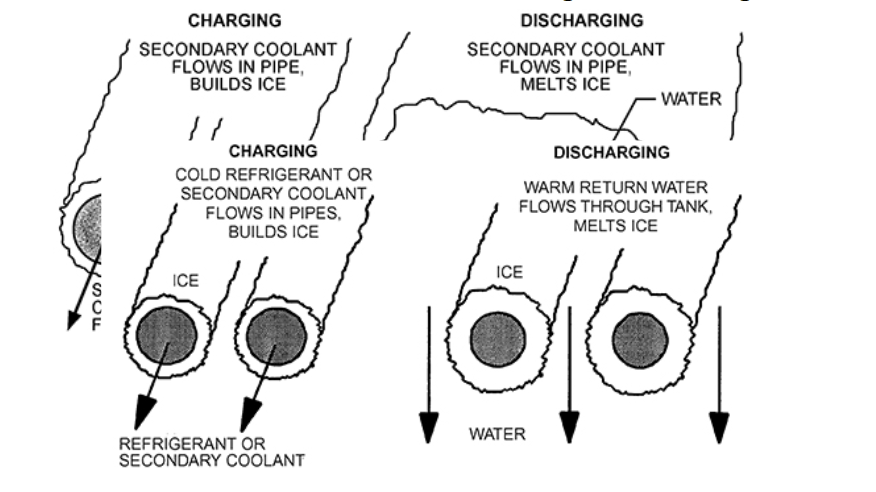
Ice on coil (internal melt) is an ice storage technology in which tubes (coil) are immersed in water. The water never leaves the device. During off-peak hours, ice is formed on the outside of the tubes by circulating colder secondary coolant or refrigerant inside the tubing or pipes to build ice. During the discharge, when the building needs cooling from the ice storage device, the ice is melted internally in such a manner as to melt the ice closest to the tubing, by circulating warmer secondary coolant though the tubes and then to the building.

Ice on Coil (external melt)

Ice on Coil (external melt) is an ice storage technology in which tubes (coil) are immersed in water and ice is formed on the outside of the tubes. During the discharge, when the building needs cooling from the ice storage device, the ice is melted externally by circulating unfrozen water outside the tubes to the load.

Unitary ice storage system

A packaged assembly including an ice storage device and refrigeration equipment for cooling and charging the device; overall performance is rated by the manufacturer.

Installation and maintenance considerations

Ice storage devices should be installed and supported level by the general contractor, in strict accordance with the manufacturer’s directions. Because there are no moving parts, typical maintenance for storage tanks is minimal. The water level and glycol concentration should be checked annually.

Standards and Guidelines

ASHRAE Standard 189 states that new buildings need to include a 10% demand reduction over a conventional system. This directive can be accomplished by using ice thermal energy storage. In 2015, the US Army incorporated requirements of ASHRAE 189.1 on all construction and renovation of new buildings and structures in the US territories, permanent overseas Active Army Installations, Army Reserve Centers, Army National Guard facilities and Armed Forces Reserve Centers.

USGBC also has revised its standard to include demand reduction, offering points for building owners to reduce the overall demand of the building. In new construction, it is based on energy cost reduction, which may be achieved with thermal storage, thus helping with LEED certification. See GBI ANSI Standard ANSI/GBI 01-2010-Energy Section 8.2.2.1. The new LEEDv4 also offers up to 3 points in the Demand Response credit to encourage designers and building owners to think beyond the walls of the project, to consider the interconnection between energy use decisions (how much and when it is used) and the realities of energy generation and distribution capacity. Demand response credits are available for permanent load shifting as accomplished with ice storage.

AHRI Standards 900 (I-P) & 901 (SI), Performance Rating of Thermal Storage Equipment Used for Cooling, establishes a single set of requirements for the testing and rating of net usable storage capacity and auxiliary power input ratings for thermal storage equipment used for cooling, whereby equipment performance ratings can be compared from product to product. The standard applies to thermal storage equipment used for cooling that may be charged and discharged with any of a variety of heat transfer fluids. The equipment may be fully factory assembled; assembled on site from factory-supplied components; or field erected, in accordance with pre-established design criteria.

AHRI Guideline T (I-P) & (SI), Specifying the Thermal Performance of Cool Storage Equipment, establishes the minimum information required for user specified application requirements and supplier-specified thermal performance data, for cool storage equipment.

(All graphics on this page are courtesy ASHRAE Handbook, 2012 HVAC Systems and Equipment.)

The writer is Managing Director, AHRI MENA. He may be contacted at <NShahin@ahrinet.org>.

Premium Story

Keeping the coils running at factory efficiency

Tony Ghiraldo of UVTronix says a new coil after only three months of use will have sufficient biofilm accumulation on its surface to start affecting operational efficiency. Germicidal UVC will not only disinfect the air but will also keep the coil clean, which in turn, will keep the equipment efficient with optimum heat transfer as well as maximum air flow

INDOOR Air Quality (IAQ) is only too easy to overlook when thinking about new building designs, and it has not been very well addressed in existing buildings.

The causes of poor IAQ are always pretty much the same; however, the single worst cause and probably the most dangerous is a contaminated AC cooling coil and air conditioning ductwork. The mould and bacteria that grow on the coil get into the air flow and cause health problems for the people receiving the contaminated air, as well as causing technical problems for the equipment.

The dirty coil also has a knock-on effect on other aspects relating to bad IAQ, such as excess moisture and poor air flow, leading to inadequate heat and moisture removal from the air. Insufficient ventilation, particularly untreated air, also exacerbates the situation, increasing the level of airborne pathogens, to which we also must add the external pollutant ingress that happens every time a door or window is open.

In existing buildings, the possible solutions are not limitless; this, however, does not mean that they must be limited in their result capabilities. A small number of well-executed measures can help improve IAQ considerably and make indoor environments safer, as well as better protect the equipment and extend equipment life.

These targeted interventions must include the installation of germicidal UVC lamp systems, which will continuously disinfect the coil and help keep ducts cleaner by reducing microbial growth. Using UVC lamp systems will serve a double purpose – they will deep-clean the air-handling unit coil to remove even the toughest microbial accumulation with no human intervention, and will help keep the equipment efficient, reducing wear and tear as well as impacting on operational costs. An ASHRAE member study supports the fact that a clean coil saves energy.

Good filter maintenance is also essential and should be carried out in a timely and responsible manner; if possible, increasing filter efficiency is also a step in the right direction, if the equipment permits it.

As far as ventilation is concerned, the treating of incoming air with UVC lamp systems in the ducts will help reduce the incoming level of pathogens. These systems will treat the air as it passes and are designed to flood the duct with Germicidal UVC for efficient incoming air decontamination

For smells and in-kitchen exhaust systems, photocatalytic oxidation technology can be used. They are easy and simple to install, using a UVC lamp as the activator. This measure will complement the work done on the coil face as well as in the ducts. Current IAQ monitoring devices focus on CO2, PM2.5, humidity and VOCs, enabling proactive action to be taken in the face of these non-microbial contaminants.

For new buildings, the problem can be addressed in the design stages, and the measures stop being preventative and become proactive. The installation of germicidal UVC during the installation of the AC system will help keep the coils running at factory efficiency; and if the lamps are changed as suggested by the manufacturer, this status will not change. A clean coil will keep the equipment efficient with optimum heat transfer as well as maximum air flow, for less equipment effort. The requested room temperature is reached faster, and the equipment operates at optimum efficiency. It is worth noting that a new coil after only three months of use will have sufficient biofilm accumulation on its surface to start affecting operational efficiency.

A great example of forward thinking when designing a building with IAQ in mind is Torre Mayor, the tallest building in Mexico City and the second tallest building in Latin America. The building was designed to be sustainable, green and intelligent, where attention to people was paramount as a goal. There are 46 coils that are taken care of with germicidal UVC lamp systems. Added to this, the HVAC system has reservoirs, where the clean condensate is accumulated and repurposed, being used in bathrooms as well as cooling tower replenishment. This can be called the safest and healthiest building in Latin America.

Other aspects that should be given attention to when designing new buildings include the design and layout of ventilation systems and exhaust systems, making sure these are efficient and independent of each other. Adequate maintenance and cleaning of air handlers is essential, aided to a very large extent by the implementation of germicidal UVC systems. Material selection will also be very important to make sure that low emissions are achieved, as well as avoiding mould growing components, so that no hidden design flaws come to light when it is too late. Energy-recovery ventilation is also suggested to reduce the cost of fresh air injection. Again, designing UVC systems into the air handlers from the beginning is essential. And correct sizing of the equipment for worst-case scenarii is crucial.

There is no doubt that for existing and new buildings a well-executed IAQ strategy not only improves occupant health and comfort but also boosts productivity, reduces absenteeism and extends building system life, all leading to increased financial gain.

The writer is International Sales Director, UVTronix. He may be reached at <tghiraldo@uvtronix.com>

Premium Story

ICE ON DEMAND

Nabil Shahin, Managing Director, AHRI MENA, elaborates on Thermal Energy Storage’s role
in smarter, greener cooling; establishes progress in that direction by highlighting TES-related
text in LEEDv4 and AHRI Standards 900 (I-P) & 901 (SI)

THERMAL Energy Storage (TES) is a general term describing a technology that stores energy created at a particular time and makes it available to be used later. The most common residential use of this technology is the making of ice cubes in the refrigerator at night for use the following day for keeping your drinks cold. In commercial buildings, this same technology is used on a much larger scale, making and storing ice at night that is used the following day to cool buildings. There are many reasons for using ice storage in buildings, the main one being dramatically reducing the cost to air condition buildings. By shifting electric consumption to off-peak hours, ice storage reduces peak electrical demand and takes advantage of lower off-peak electric rates, which translates into major cooling cost reductions. A thermal storage system that uses ice as a storage medium can provide added cooling capacity for any system. The ice tank can be charged, waiting to discharge during unusually high demand periods, or as a backup to critical systems.


Environmental benefits

An ice storage system is used as an environmentally friendly, smart grid technology for cooling building occupants. Ice storage takes advantage of cleaner, more plentiful night-time electricity generation, which is increasing in renewable content, by storing energy to cool buildings the next day. Ice storage complements renewable energies, by helping to overcome the intermittency of renewable energy. For example, in the United States, the generation of electricity from wind is mainly at night, therefore this energy needs to be stored so it can be available during the on-peak hours. Ice storage also helps to reduce source fuel consumption in many locations. Most base load generator plants are much more efficient as compared to “peaking” plants that come on during the day. By using night-time electricity to make ice and then storing it for daytime use, an ice storage system can be more (source) energy efficient compared to conventional instantaneous systems. Ice storage allows building operators to control when energy is used, decoupling the creation of the cooling from dispatching of cooling, allowing consumption of cheaper more efficiently produced energy when demand is high.

Applications

Ice storage is typically used in buildings that have large cooling loads during the day, as compared to nighttime. The technology can be applied to new construction, retrofits and building expansions. Typical applications include office buildings, schools, hospitals, airports, places of worship, data centres and buildings seeking LEED certification. Ice storage is a good option for lowering energy costs and environmental impacts, as a backup to critical systems, for reducing the size of electric services or cooling and heating equipment and to increase HVAC operating flexibility for system resiliency and redundancy. Ice storage should also be considered with electrical or cooling tower limitations, because the chiller may be sized based on average load instead of peak load. This is because the system reduces peak demand. (For reducing peak demand with storage, refer to page 51.32 of Chapter 51 of the ASHRAE Handbook, 2016 HVAC Systems and Equipment.) In addition, ice storage can be modified to fit a variety of applications. Ice storage tanks are available in many sizes and configurations to meet the needs of the project. They can be buried in the ground, or placed in the basement, parking lot or roof.

Product basics

The construction consists of a tank to hold water and a tubular heat exchanger that will hold a coolant (antifreeze) and allow water to freeze on the outside of the heat exchanger. During the charging period, coolant at approximately 24 degrees F (-4.4 degrees C) is circulated through the coil and leaves the tanks at approximately 31 degrees F (-0.5 degrees C). The ice will form around the outside of the tubes in the water held within the tank. As the ice thickness continues to grow, the entering temperature will drop slightly. As ice forms around each tube, the remainder of the water will rise to the top and can be used to monitor the ice level in the tank.

Product Types

Ice on Coil (internal melt)

Ice on coil (internal melt) is an ice storage technology in which tubes (coil) are immersed in water. The water never leaves the device. During off-peak hours, ice is formed on the outside of the tubes by circulating colder secondary coolant or refrigerant inside the tubing or pipes to build ice. During the discharge, when the building needs cooling from the ice storage device, the ice is melted internally in such a manner as to melt the ice closest to the tubing, by circulating warmer secondary coolant though the tubes and then to the building.

Ice on coil (external melt)

Ice on Coil (external melt) is an ice storage technology in which tubes (coil) are immersed in water and ice is formed on the outside of the tubes. During the discharge, when the building needs cooling from the ice storage device, the ice is melted externally by circulating unfrozen water outside the tubes to the load.

Unitary ice storage system

A packaged assembly including an ice storage device and refrigeration equipment for cooling and charging the device; overall performance is rated by the manufacturer. Installation and maintenance considerations Ice storage devices should be installed and supported level by the general contractor, in strict accordance with the manufacturer’s directions. Because there are no moving parts, typical maintenance for storage tanks is minimal. The water level and glycol concentration should be checked annually

Standards and guidelines

ASHRAE Standard 189 states that new buildings need to include a 10% demand reduction over a conventional system. This directive can be accomplished by using ice thermal energy storage. In 2015, the US Army incorporated requirements of ASHRAE 189.1 on all construction and renovation of new buildings and structures in the US territories, permanent overseas Active Army Installations, Army Reserve Centers, Army National Guard facilities and Armed Forces Reserve Centers.

USGBC also has revised its standard to include demand reduction, offering points for building owners to reduce the overall demand of the building. In new construction, it is based on energy cost reduction, which may be achieved with thermal storage, thus helping with LEED certification. See GBI ANSI Standard ANSI/GBI 01-2010-Energy Section 8.2.2.1. The new LEEDv4 also offers up to 3 points in the Demand Response credit to encourage designers and building owners to think beyond the walls of the project, to consider the interconnection between energy use decisions (how much and when it is used) and the realities of energy generation and distribution capacity. Demand response credits are available for permanent load shifting as accomplished with ice storage.

AHRI Standards 900 (I-P) & 901 (SI), Performance Rating of Thermal Storage Equipment Used for Cooling, establishes a single set of requirements for the testing and rating of net usable storage capacity and auxiliary power input ratings for thermal storage equipment used for cooling, whereby equipment performance ratings can be compared from product to product. The standard applies to thermal storage equipment used for cooling that may be charged and discharged with any of a variety of heat transfer fluids. The equipment may be fully factory assembled; assembled on site from factory-supplied components; or field erected, in accordance with pre-established design criteria.

AHRI Guideline T (I-P) & (SI), Specifying the Thermal Performance of Cool Storage Equipment, establishes the minimum information required for user specified application requirements and supplier-specified thermal performance data, for cool storage equipment.

(All graphics on this page are courtesy ASHRAE Handbook, 2012 HVAC Systems and Equipment.)

The writer is Managing Director, AHRI MENA. He may be contacted at <NShahin@ahrinet.org>

Premium Story

Jeddah Construct to spotlight USD 692 billion Western region construction pipeline

Organiser, dmg events, says the event will bring together more than 200 exhibitors from over 20 countries

JEDDAH, Saudi Arabia, 10 September 2025: Saudi Arabia’s Western region is currently building on its USD 692 billion worth of projects, representing 55% of the Kingdom’s USD 1.25 trillion development plan, dmg events, the organiser, said. Making the announcement through a Press Release, dmg said that in response to the burgeoning scale of opportunity, Jeddah Construct, the largest construction event in the Western Province, returns for its second edition from September 28 to 30 at the new Jeddah Superdome. dmg said following a successful launch in 2024, the exhibition, powered by Big 5 Construct Saudi, shall be returning larger and is expected to welcome over 13,000 industry professionals.

According to dmg, Saudi Arabia’s construction output value reached USD 141.5 billion in 2023, a 4.3% increase from the previous year, and is forecast to rise to USD 181.5 billion by 2028, making it the largest construction market globally. The company said that the Western region, led by Jeddah, is significantly contributing to this growth. Jeddah Central, a USD 19.9 billion coastal redevelopment, will deliver a marina, beaches, museums, a stadium and 2,700 hotel rooms. Jeddah Tower, set to surpass one kilometre in height, will be the world’s tallest building. Restoration of UNESCO-listed Al-Balad, alongside Jeddah Cove and Airport City, underscores the city’s dynamic blend of heritage, leisure, commerce and infrastructure, dmg said.

According to Knight Frank’s Construction Landscape Review, dmg said, the residential sector continues to lead construction output value in Saudi Arabia, accounting for 31% of the total in 2023 at USD 43.5 billion, and is expected to reach USD 56.9 billion by 2028. dmg said the power and utilities sector follows closely at USD 35.1 billion, with growth forecast to reach USD 46.5 billion. The scale and diversity of this pipeline underscore the breadth of opportunity for companies across the construction ecosystem.

With projects reshaping Jeddah’s skyline and driving new demand for technologies and expertise, the exhibition, dmg said, offers a timely opportunity for businesses to engage with decision-makers, align with Vision 2030 objectives and contribute to the delivery of one of the fastest-growing construction markets in the world.

dmg said that this year, Jeddah Construct will bring together more than 200 exhibitors from over 20 countries, including China, Germany, India, Italy, Spain, Türkiye and Qatar. Leading brands, such as Madar, Masdar, Al Yamamah Steel and Henkel, will represent sectors from building interiors and finishes to heavy construction, metal and steel, MEP services, HVAC R, digital construction, modular and offsite solutions, marble and stone, urban design and solar

technologies, dmg said. Over 3,500 products will be on display, attracting senior buyers, procurement heads, architects, engineers and construction managers seeking solutions for projects of every scale.

Muhammed Kazi, Senior Vice President, Construction, dmg events said: “Jeddah Construct reflects the scale and ambition of the construction market in Saudi Arabia’s Western Province. With significant investment concentrated in the region, the event offers a strategic setting for companies to connect with industry leaders, present their solutions and explore opportunities aligned with the Kingdom’s Vision 2030 objectives. It is an environment where the market’s ambitions for growth and the partnerships shaping its future come together.”

Amidst this rapid growth and sector-wide transformation, Jeddah Construct’s move to Jeddah Superdome offers an expanded layout and upgraded facilities, with easier access to product zones, live demonstration areas and networking lounges, dmg said, adding that visitors can witness equipment and materials in action, compare solutions side-by-side and engage directly with suppliers, driving innovation and efficiency across the construction value chain.

Alongside the exhibition, dmg said, the Construct Talks programme will feature more than 15 CDP-certified sessions, with over 30 leading speakers who will share industry knowledge, addressing topics such as sustainable building practices, digital transformation, advanced materials, safety standards and large-scale project delivery. Key speakers include Wael Samy Abdelghany, HSE Director – Non Haramain Projects, Saudi Binladin Group; Dr Luay Ayyash, Director of Construction, The Royal Commission for AlUla; Bilal Khalid, Chief Portfolio Officer, IHCC; Matt Doran, MENA Regional Hub Manager, Chartered Institute of Building; Mohamed Anber, Project Manager, Kabbani Construction Group; Ahmad Mhanna, Director, Middle East / North Africa Region, American Concrete Institute; Ibrahim Sarhan, Project Delivery Manager, Red Sea Global; Dr Paul Mckeown, CEO, HanmiGlobal Saudi; Simon Jobbins, Engineering Director, Parsons; and Elise Chalouhi, Design Manager, NEOM.

Jeddah Construct, dmg said, is supported by Lanyard Sponsor, Himalaya Steel; Exclusive Badge Sponsor, Al Yamamah Steel Industry Company; Supporting Associations, Chartered Institute of Building and Institution of Civil Engineers; and Industry Partner, SCAVO.

Premium Story

Eurovent launches “Desert Certification” programme

Eurovent Middle East calls the scheme the high-ambient temperature testing scheme in the region

DUBAI, UAE, 9 September 2025: Eurovent Middle East announced the launch of the “Desert Certification” programme, characterising the initiative as the first high-ambient temperature testing scheme of its kind in the Middle East. Making the announcement through a Press Release, Eurovent Middle East said the certification, overseen by Eurovent Certita Certification, covers air conditioners, VRF systems, chillers, rooftop units and IT cooling units, addressing the critical role of cooling in the region, where HVACR systems account for up to 80% of building energy use.

According to Eurovent Middle East, research by MarkNtel Advisors reveals that the GCC region HVACR market is projected to reach AED 32.8 billion by 20301, expanding at a CAGR of 4.67% between 2025 and 2030. Growth is fuelled by large-scale housing developments to major government investments in tourism, and increasing demand from the commercial, oil & gas and transport sectors, further cementing HVACR systems as a cornerstone of regional infrastructure development.

Eurovent Certita Certification is a globally recognised, independent certification body for the HVACR sector, Eurovent Middle East said, adding that its mission is to build trust by verifying product performance through impartial testing, factory audits and ongoing surveillance. The Eurovent Certified Performance mark already dominates in Europe with more than 75% market penetration and has steadily grown in the Middle East, Eurovent Middle East said. Products tested under the new scheme will carry a dedicated Eurovent Certified Performance mark in red, highlighting that they are “certified to high-ambient temperatures”, Eurovent Middle East said.

Ali Nour Eddine

Ali Nour Eddine, International Director, Eurovent Certita Certification, said: “In the Gulf Cooperation Council (GCC) region, HVAC systems face extremely high ambient temperatures, yet most equipment is still certified using European or American standards that don’t reflect regional conditions. The result? Certified performances that fail to represent real-world operation. That’s why we created the Desert Certification, a third-party, performance-based scheme tailored specifically to the harsh climate of the GCC [region].”

Markus Lattner, Managing Director, Eurovent Middle East, added: “We firmly believe that energy efficiency is a matter of national security, and as a regional chapter of the Eurovent Association, we are committed to supporting the local industry and broader national sustainability goals. Certified equipment ultimately consumes less energy, reduces emissions and contributes directly to a project’s green objectives. This scheme provides engineers, specifiers, architects and consultants with a reliable foundation of proven performance values at high-ambient conditions while offering a distinct competitive edge for manufacturers and brands.”

Markus Lattner

As part of the programme, Eurovent Certita Certification will collaborate with six accredited laboratories across Europe and the UAE to ensure consistent testing, faster turnaround times and local support for GCC region manufacturers, Eurovent Middle East said. Working closely with regional governments, Eurovent Certita

Certification also aims to secure official recognition of Desert Certification, enabling manufacturers to avoid multiple overlapping certifications while benefitting from a single, unified scheme, Eurovent Middle East said. Such recognition will strengthen local credibility, enhance international visibility and showcase true product performance in the region’s real operating environment, it further said. With rapid infrastructure development driving demand across Bahrain, Kuwait, Oman, Qatar, Saudi Arabia and the UAE, the introduction of the Desert Certification, Eurovent Middle East said, marks a milestone for the industry and the region at large.

Premium Story

Leave it to the central cooling guys

With a well-oiled plant supervision mechanism in place, there is a certain peace of mind that comes with the way they handle refrigerants, says Dr Rajendra Shende, former Director of UNEP

The World Meteorological Organization (WMO), in its State of the Global Climate report, confirmed that 2024 was likely the first ever calendar year to be more than 1.5 degrees C above the pre-industrial era, with a global mean near-surface temperature of 1.55 ± 0.13 degrees C above the 1850-1900 average. This is the warmest year in the 175-year observational record and, what more, signals that human civilisation is on the verge of failing to meet the 1.5 degrees C goal set by the Paris Agreement, 10 years ago.

Dr Rajendra Shende

As would have been expected, rising temperatures are raising global cooling demand, which is now projected to triple by 2050, which will only further drive electricity consumption up worldwide. Rising population, higher incomes, and improved standards of living are the key drivers of demand in addition to global warming. Yet, a key factor, which strangely is overlooked in the impact scale is the ascent of Artificial Intelligence and disruptive digital technologies, which require augmented cooling.

Indeed, the HVAC sector faces an acutely felt need of enhancing energy efficiency, using passive and natural solutions, using renewable energy and mitigating environmental impact.

My argument is that the world needs a paradigm shift to meet the goals of the Paris Agreement and the Kigali Amendment to the Montreal Protocol. We have in our midst such macro-economic and climate-friendly technologies as Community Cooling Systems, which – for unknown and abstract reasons, in my view – are typically called as District Cooling Systems. What’s important to highlight, though, is that with the strategic coming together of low-GWP and zero-ODP refrigerants and energy efficient systems, like District Cooling, the desired transformational change is possible.

The superiority of District Cooling Systems

Humanity has always resorted to minimising costs, efforts and adverse impacts when faced with challenges. Community-farming, home-sharing, housing societies and shared transport are some obvious examples. In that context, for some strange reason, District Cooling Systems are still regarded with reluctance at a global level, when the talk veers towards trying to find a solution to the cooling and climate challenge.

The advantages of District Cooling are obvious for readers of Climate Control Middle East, as have been discussed numerous times:

· A central cooling facility housing large, highly efficient turbo-chillers or absorption chiller technologies that are not economically feasible for a small-profile use, like a single building. Anyway, a well-designed central facility leads to an aggregate efficiency that can be 30-50% higher than the combined efficiency of the distributed systems it replaces.

· Thermal Energy Storage.

· The ability to rely on a wider range of energy sources, including waste heat, deep-lake-water cooling and geo-thermal.

But for me, a chemical-man, the most important advantage comes through consolidating refrigerant charge into a secure, centralised location, which minimises the risk of direct emissions through leakage – a critical concern associated with high-GWP refrigerants.

The refrigerant dimension: Aligning with global protocols

The environmental benefit of any cooling system is intrinsically linked to its working fluid. The Montreal Protocol successfully addressed ozone depletion by phasing out the key Ozone Depleting Substances (ODSes) – CFCs – and now is nearly at the end of phasing out HCFCs. Its Kigali Amendment now targets the phase-down of HFCs due to their high Global Warming Potential (GWP). The choice of refrigerant is, therefore, not just technical but a core component of corporate and national climate strategy.

The ideal refrigerant for future-proof systems must meet three key criteria:

· Zero Ozone Depletion Potential (ODP): A non-negotiable baseline

· Low Global Warming Potential (GWP): Preferably under 150, and certainly under 700, to comply with current and anticipated future regulations (e.g., EU F-Gas Regulation)

· High energy efficiency: The refrigerant must enable systems to operate at peak thermodynamic performance

Community of refrigerants for Community Cooling

Central plants are ideal platforms for deploying next-generation refrigerants that might be challenging to implement safely in distributed settings.

Natural Refrigerants, mainly Ammonia (R-717), Hydrocarbons (e.g., Propane R-290) and Water (R-718), come to mind. There are safety and toxicity hazards associated with Natural Refrigerants; however, modern, well-engineered central plants with robust safety protocols are perfectly suited to harness ammonia and hydrocarbons to exploit their excellent thermodynamic properties, zero ODP, and very low GWP (~3).

And now, let’s look at the refrigerants that are in vogue now: Low-GWP synthetic blends of HFOs (e.g., R-1234ze, R-513A) with GWPs below 10. These refrigerants are standalone and are also designed as drop-in replacements for HFCs like R-134a that are destined to be phased down. Though they offer a practical transition path with similar or better energy performance profiles and significantly reduced climate impact, there are definite and emerging dangers associated with ‘forever chemicals’ – PFAS, which are the chemicals that are formed due to break-down of HFOs. The most common PFAS from refrigerants is trifluoroacetic acid (TFA), which is highly persistent, accumulates in water, and is a concern from health and environmental points of view.

HFOs, in fact, represent the ‘forever dilemma’ for modern civilisation. HFOs were introduced as climate-friendlier alternatives; however, their decomposition into these persistent chemicals has created a new environmental problem.

A path to sustainable cooling

The challenges of rising cooling demand and climate change are intertwined. Addressing them requires moving beyond incremental improvements to distributed systems and embracing a systemic transformation.

District Cooling represents the most intelligent model for urban cooling, delivering undeniable economies of scale, grid stability and massive gains in energy efficiency. By itself, it is a powerful tool for reducing a city’s carbon footprint.

For HVAC engineers, urban planners and policymakers, the mandate is clear. The future of sustainable cooling lies in the strategic integration of District Cooling infrastructure and climate-friendly refrigerants. It is a technically sound, economically prudent and environmentally essential path forward.

Premium Story

Eurovent issues new AHU controls Recommendation

Organisation says the document outlines how integrated systems support compliance, enable monitoring and optimise energy use

BRUSSELS, Belgium, September 9, 2025: Eurovent announced the release of a new Recommendation on AHU controls in building automation under the revised Energy Performance of Buildings Directive (EPBD). Making the announcement through a Press Release, Eurovent said the document outlines how integrated systems support compliance, enable monitoring and optimise energy use.

Eurovent said the Recommendation highlights the capability of available AHU control systems to foster objectives of Directive 2024/1275, Recast EPBD, in a technically and economically feasible way. Eurovent added that it provides recommendations on specific requirements to be implemented in the transposition of the Directive by Member States to fulfil the provisions of Article 13(10), which are intended to support national legislators in developing a clear interpretation of the term ‘technically and economically feasible application’.

Igor Sikonczyk, Secretary, Product Group ‘Air Handling Units’ (PG-AHU), Technical and Regulatory Affairs Manager, Eurovent, said, “With the revised EPBD setting ambitious requirements for building automation, the Eurovent Recommendation 6/20 provides clear, practical guidance on how air-handling unit control systems can play a central role in delivering both energy efficiency and healthy indoor environments in Europe’s buildings.”

Eurovent said the Recommendation is intended to support policymakers, manufacturers, designers and building operators in implementing cost-effective solutions that align with EU climate and health objectives.

Premium Story

Rheem launches Centurion HVAC system for MEA region

Company says new integrated heating and cooling system focuses on energy savings and hot climate readiness

DUBAI, UAE, 8 September 2025: Rheem Middle East launched the Rheem Centurion, which the company described as a new HVAC system designed to provide integrated hot water production, energy efficiency and smart operation for projects across the MEA region.

According to Rheem Middle East, the system has been developed to address the region’s growing demand for energy-efficient technologies across residential, commercial and hospitality sectors. The company said Rheem Centurion is engineered to deliver up to 84% energy savings by recycling waste heat expelled by air conditioning units to simultaneously produce hot water and cool indoor spaces.

The company said the dual-function system is aligned with MEA sustainability targets and the evolving need for smarter, more efficient infrastructure in light of continued urbanisation and construction growth across the region. It is designed to operate efficiently throughout the year, with a view to reducing both energy costs and carbon emissions, Rheem Middle East said.

The system, Rheem Middle East said, is suitable for various building types and can heat water up to 70 degrees C, making it applicable for high-demand environments such as hotels, resorts, hospitals and multi-family developments. The company said a smart controller allows users to select among cooling, heating or simultaneous operation modes. Rheem Middle East said the system offers whisper-quiet performance for enhanced indoor comfort.

Speaking about the launch, Brian Hempenstall, Vice President and General Manager, Rheem Middle East, said: “Rheem Centurion is more than a product launch; it represents a significant step forward for the built environment in this region. By combining air conditioning and hot water generation in a single, highly efficient system, we are helping developers, hoteliers and homeowners meet today’s demands while preparing for tomorrow’s sustainability standards. At Rheem, our mission is to deliver comfort without compromise – comfort that is smarter, cleaner and built for the future of the Middle East and Africa.”

Premium Story

Refrigerant systems: Innovation, safety and compliance

Developers and manufacturers outline what it takes to move decisively to low-GWP refrigerants, from early-stage design to smart controls and site safety

As the HVACR industry moves deeper into the phase-down of high-GWP refrigerants, project teams face a practical question: How do you deliver efficiency gains and climate alignment without compromising safety or serviceability? Interviews with a developer and a manufacturer point to early design integration, disciplined safety practices and data-driven operations as the levers that make low-GWP transitions viable. Sharing their insights on this topic are Ra’ed Hammouri, Senior MEP Manager, DAMAC and Naveen Sivakumar, Account Manager, Danfoss. Their combined perspectives shed light on the technical, operational and safety priorities shaping the future of refrigerant systems.

Developer lens: policy, design and delivery

Hammouri says refrigerant systems are not deployed in high-rise buildings at the company’s current projects; their use is limited to villas and master plan developments.

Ra’ed Hammouri

Hammouri says the organisation follows regional and global regulations under the Kigali Amendment to the Montreal Protocol by phasing down high-GWP refrigerants and prioritising low-GWP alternatives, wherever applicable. “Sustainable alternatives are adopted, wherever applicable, utilising environmentally friendly refrigerants,” he says.

He adds that the company aims to move proactively. “We aim to leapfrog to climate-friendly refrigerants, considering availability, cost, safety, energy efficiency and supply chain stability,” he says.

Hammouri says Damac addresses the refrigerant strategy in the early stages of a building. “Refrigerant strategy is incorporated at the design stage to align equipment selection, plant layout and serviceability,” he says.

On implementation, he notes the gap between project types. “Retrofits face compatibility, space and downtime issues, while new-builds allow smooth integration of low-GWP systems from the start,” he says.

People and processes underpin the transition. “We provide specialised training, certifications and safety workshops for handling flammable or toxic refrigerants and complying with local authority and international standards,” Hammouri says. “Collaboration starts early – we work closely with manufacturers and consultants at an early stage of the project to validate design, ensure compliance, optimise performance and support commissioning.”

Through a manufacturer’s lens: redesigning systems for compliance and performance

From a manufacturing perspective, the shift to low-GWP refrigerants requires more than a simple swap. “We’re not just swapping refrigerants, we’re redesigning whole systems around new environmental targets,” Sivakumar says. “That means choosing low-GWP natural and synthetic refrigerants – and engineering for their specific traits, whether that’s higher operating pressure, flammability or different thermodynamic profiles.”

Naveen Sivakumar

He adds that the company matches the refrigerant to the application. “CO₂ for supermarkets and high-temperature heat pumps, ammonia/CO₂ cascades for large industrial sites, and hydrocarbons for small outdoor chillers – so we stay ahead of regulation while actually improving performance,” he says.

Smart controls, Sivakumar explains, are part of the strategy. “Connected controls are becoming the norm,” he says. “In food retail, for example, we use IoT-enabled case controllers and pack controllers that constantly track temperature, humidity, compressor load and energy use. Instead of fixed ‘day/night’ settings, the system can adjust rail heat based on the actual dew point, cutting energy waste and reducing wear on components. That same data stream can flag a slow refrigerant leak or compressor issue before it becomes a breakdown, keeping downtime and service costs low.”

On supply, Sivakumar says the company monitors market dynamics. “Sustainable refrigerants can face supply and pricing pressures due to regulatory quotas, production capacity and regional availability,” he says. “Our contribution to resilience is ensuring our components are qualified for multiple refrigerants, giving system builders flexibility to adapt if one option is temporarily constrained.”

Safety, Sivakumar says, remains non-negotiable. “We apply the same safety rules everywhere – even in countries without strong refrigerant laws,” Sivakumar says. “Global standards like ISO 5149 and EN 378 provide guidance on how much refrigerant can be in a space, how leaks are detected, how ventilation is managed and how ignition sources are controlled. In practice, that might mean using smaller refrigerant charges in occupied areas, indirect systems that keep flammable refrigerants outside the sales floor or industrial designs that combine ammonia with CO₂ to minimise exposure risk. The aim is to give customers high efficiency, reliability and low environmental impact without taking shortcuts on safety.”

Looking ahead

Sivakumar says the transition will not be defined by a single refrigerant but by a portfolio approach. “Natural refrigerants are going global,” he says. “CO₂ has already proven itself in supermarkets and industrial racks, and we’re seeing it move into heat pumps, as well. Ammonia will keep its place in large industrial sites, often combined with CO₂ to balance efficiency with safety. For smaller systems, hydrocarbons, like propane, are becoming the refrigerant of choice, given their efficiency, low charge sizes and negligible climate impact.”

He adds that synthetic low-GWP blends will also remain relevant. “HFCs are being phased down, but when paired with HFOs they stay relevant, and innovation continues — especially as components get smarter at handling pressure, flammability and efficiency requirements,” he says. Mildly flammable A2L refrigerants, he notes, are gaining wider acceptance as standards evolve, while A3 refrigerants are finding applications in compact outdoor units.

Sivakumar says that ultra-low GWP synthetics, such as R1234ze and R513A, are already shaping new system designs. “We are now seeing compressors and chillers designed from the ground up for these refrigerants,” he says. “That’s no longer a future promise – it’s happening.”

Efficiency, he stresses, is the common thread. “With HVAC accounting for approximately 15% of world electricity, every component – compressors, heat exchangers, controls – must deliver more performance with less energy. That is where Danfoss is putting a lot of focus – combining low-GWP refrigerants with technologies that drive down energy use.”