CCME.NEWS

Your source for the HVACR Industry, covering in-depth news & analyses on policy, business & technology.

Get Premium:

Sign-up

COMMERCIAL ENQUIRIES:

Frédéric Paillé
Co-Founder & Commercial Director
fred@cpi-industry.com
+971 50 714 7204

Follow Us

CCME.NEWS

CCME.NEWS, covering the regional and global HVACR industry with an unwavering commitment to providing in-depth news and analyses on policy, business and technology

Contact Info

PO Box 13700,
Dubai Media City, Dubai
admin@cpi-industry.com
+971 50 714 7204

Follow Us

Premium Story

AMCA to host online seminar on fan and blower systems

Participants will receive 18 PDH credits for completing the Level II course, which will focus on Troubleshooting and Efficiency of fan and blower systems

ILLINOIS, United States, 19 September 2025: Air Movement and Control Association (AMCA) International announced the next instalment of its technical seminar series, Fan and Blower Applications Engineering II: Troubleshooting and Efficiency, which will begin on October 3. Making the announcement through a Press Release, AMCA said the course is part of its now three-part series focused on fan and blower applications.

According to AMCA, the Level II seminar will combine live virtual instruction with self-paced online learning, and the sessions will run on October 3, 10, 17 and 24 October, from 9am to noon CDT.

AMCA said Ron Wroblewski, President, Productive Energy Solutions, and William Howarth, President, Ventilation & Fan Consulting Service International, will teach the course.

According to AMCA, participants who complete all programme requirements will receive 18 Professional Development Hour (PDH) credits.

AMCA said the Level II course will include the following modules:

· Selecting and specifying the best fan for an application

· Diagnosing and identifying sources of fan problems

· Psychrometrics for fan systems

· Fan-system troubleshooting

· Heat recovery in industrial and commercial fan systems

· Bearings in fan systems

· Balance quality and vibration

· Introduction to Fan Energy Index (FEI)

· Calculating FEI

· System effect in fan systems

· Belts and couplings

· Variable Frequency Drives (VFDs) in fan systems

AMCA said the class size is limited, and that registration will close at noon CDT on October 1.

AMCA said it will also be conducting a seminar, titled Fan and Blower Applications Engineering III: Verification and Optimisation, on November 7. Unlike the previous courses, AMCA said, Level III will follow a hybrid format, combining webinars, on-demand modules and a hands-on workshop at AMCA International headquarters, in Arlington Heights, Illinois from November 19 to 21. The course, AMCA said, will feature practical exercises using pitot tubes, manometers and other equipment to measure flow rate and efficiency in fan systems, referencing AMCA Publication 203 and ISO 5802.

Premium Story

ECNO report warns building renovations have stalled

Weakness in infrastructure is mirrored by a funding gap, report estimates that climate investment in 2023 fell short by EUR 344 billion

BRUSSELS, Belgium, 18 September 2025: The European Climate Neutrality Observatory (ECNO) announced the release of its 2025 report, which warns that building emissions remain one of the key roadblocks towards net-zero targets. Making the announcement through a Press Release, ECNO said that between 2018 and 2023, annual CO₂ cuts from the sector were about 16.5 million tonnes, and it has to double by 2030.

According to ECNO, the report points to stalled renovations as the main cause. The observatory said only one per cent of buildings are upgraded each year, while deep retrofits reach just 0.2-0.3% of the existing stock. ECNO added that at the same time, embodied emissions are rising, with cement and brick demand increasing by 18% over five years.

ECNO quoted energy experts from Exergio, a company that develops AI-based solutions for energy efficiency in commercial properties, as saying that this reflects a blind spot in EU policy.

Donatas Karčiauskas, CEO, Exergio, said: “Deep renovations cover less than one per cent of the building stock each year, which I hardly can call progress. Even light measures, like replacing windows or swapping boilers, have slowed. Despite that, Europe still overlooks digital retrofits. With AI optimisation, buildings could already cut emissions by up to 30% without waiting for construction work.”

ECNO also highlighted electrification , another cornerstone of climate neutrality, where progress has flatlined. The EU target is to lift electrification from 21.3% in 2022 to 32% by 2030, yet demand for the necessary equipment is “moving in the wrong direction”. Heat pump sales, which are central to replacing fossil fuel heating with electricity, fell in 2023-24, ECNO said, adding that annual investments in them are about EUR 19 billion against the EUR 55 billion required to reach 30 million units by 2030. ECNO said that enabling infrastructure, such as smart meters and optimisation tools, has been ‘far too slow’ or not tracked at all.

Karčiauskas argued that Europe is missing the bigger picture: “Smart meters and optimisation tools are the backbone that makes electrification work. They track electricity and heat use in short intervals, often every 15 minutes, and show how demand changes across floors or tenants. Occupancy sensors add another layer by showing when rooms are actually used. With that data, AI can, for example, warm offices before staff arrive in the morning, cool meeting rooms before they fill up in the afternoon, or shift energy use to cheaper night-time tariffs. Without this system, installing more heat pumps will not deliver the expected results.”

ECNO said weakness in infrastructure is mirrored by a funding gap. The organisation estimated that the climate investment in 2023 fell short by EUR 344 billion. This funding gap, the observatory said, is reflected in stalled renovations, falling heat pump sales, weaker EV demand and a slowdown in wind power projects.

Karčiauskas said this shortage of capital drags on Europe’s ability to produce the technologies it needs – from heat pumps and batteries to wind turbines and building controls – and doesn’t allow manufacturing to expand. At the same time, ECNO noted that fossil fuel subsidies are climbing. Europe spent EUR 400 billion on imported oil and gas in 2024, around two per cent of GDP. The report found that 11% of EU families cannot afford adequate heating, cooling or electricity.

“The report,” Karčiauskas said, leaves little doubt: Without tackling buildings, the EU cannot deliver climate neutrality. Digital retrofits should be treated as part of the transition toolkit, cutting emissions immediately, enabling electrification and providing the performance data policymakers still lack.”

Premium Story

Empower CEO participates in International Energy Leadership Programme

H.E. Ahmad Bin Shafar highlights UAE’s District Cooling model

DUBAI, UAE, 17 September 2025: H.E. Ahmad Bin Shafar, CEO, Emirates Central Cooling Systems Corporation (Empower), participated in the ‘International Energy Leadership Programme’, organised by the Government Experience Exchange Office at the UAE Ministry of Cabinet Affairs, Empower announced through a Press Release.

According to Empower, the programme brought together 30 senior leaders and heads of energy sectors from 19 countries, including Azerbaijan, Brazil, Colombia, Costa Rica, Ethiopia, Georgia, Indonesia, Kazakhstan, Kenya, Kurdistan Region of Iraq, Kyrgyzstan, Maldives, Mongolia, Montenegro, Morocco, Senegal, Seychelles, Uzbekistan and Vietnam.

Empower said the programme aimed to enhance the capabilities of energy leaders by equipping them with leadership and administrative skills and by sharing examples of successful UAE government models in energy and government modernisation. The agenda included field visits to government institutions and private sector companies, alongside interactive workshops and discussions with Emirati experts, Empower said.

As part of the programme, H.E. Bin Shafar delivered a presentation on the UAE’s District Cooling journey, which he said has become a global benchmark. He also outlined Empower’s role as the world’s largest District Cooling services provider and described how the company’s projects are helping to improve energy efficiency and conserve natural resources.

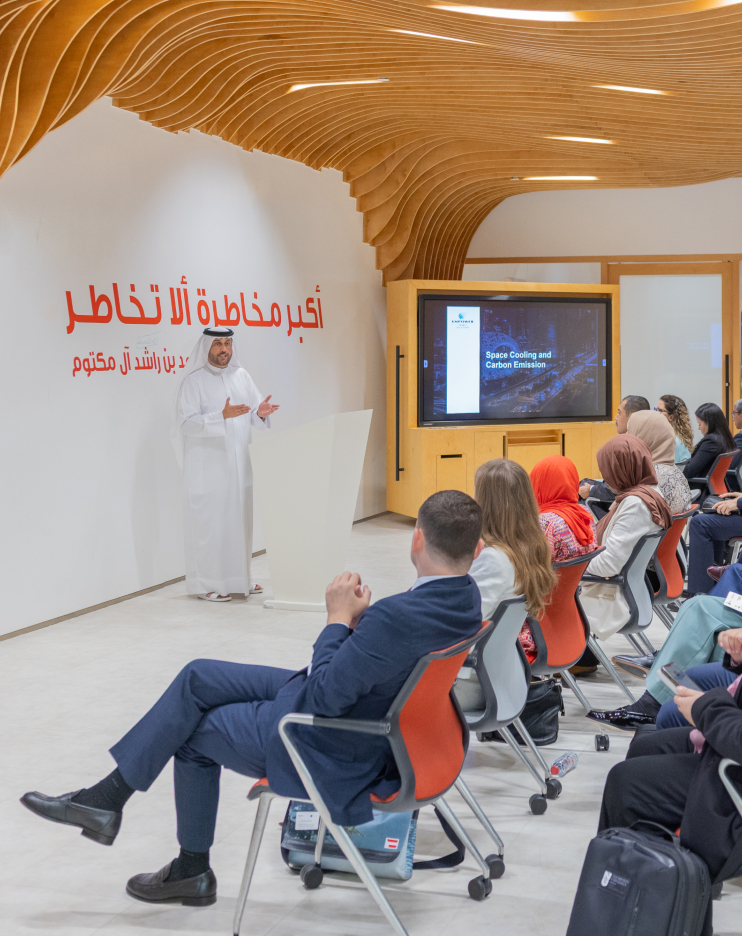
H.E. Ahmad Bin Shafar addresses delegates at the International Energy Leadership Programme

H.E. Bin Shafar pointed to Empower’s achievements in cutting carbon emissions and reducing electricity consumption, which he said support Dubai and the UAE’s broader efforts in sustainable urban development. He added that the company’s contributions extend beyond the environmental sphere to include economic and social value by promoting a green economy and enhancing urban liveability.

Commenting on his participation, H.E. Bin Shafar said: “The International Energy Leadership Programme serves as a vital platform for the exchange of knowledge and expertise among global leaders, underscoring the UAE’s pioneering role in fostering international partnerships that advance a more sustainable future for generations to come. Our participation provides an opportunity to highlight the key achievements of the UAE and Empower in District Cooling, which has emerged as one of the most innovative solutions for improving energy efficiency and reducing carbon emissions. We take pride in the fact that Dubai’s experience has evolved into a global benchmark, reinforcing sustainability efforts and supporting the pursuit of carbon neutrality.

“We remain guided by the forward-looking vision of the UAE’s wise leadership to accelerate the transition to energy efficiency and build a sustainable green economy. This commitment is aligned with the Dubai Clean Energy Strategy, Dubai Net Zero Carbon Emissions Strategy 2050 and UAE Net-Zero by 2050 strategic initiative.”

Premium Story

Empower CEO joins International Energy Leadership Programme to highlight UAE’s District Cooling model

The programme hosted energy sector leaders from 19 countries, spotlighting the UAE’s experience in sustainable cooling and energy efficiency.

DUBAI, UAE, 17 September 2025: H.E. Ahmad Bin Shafar, CEO, Emirates Central Cooling Systems Corporation PJSC (Empower), participated in the ‘International Energy Leadership Programme’ organised by the Government Experience Exchange Office at the UAE Ministry of Cabinet Affairs, Empower announced through a Press Release.

According to Empower, the programme brought together 30 senior leaders and heads of energy sectors from 19 countries, including Montenegro, Mongolia, the Maldives, Georgia, Seychelles, Indonesia, Senegal, Kenya, Morocco, the Kurdistan Region of Iraq, Ethiopia, Azerbaijan, Kazakhstan, Colombia, Brazil, Uzbekistan, Kyrgyzstan, Vietnam and Costa Rica.

The company noted that the programme aimed to enhance the capabilities of energy leaders by equipping them with leadership and administrative skills and by sharing examples of successful UAE government models in energy and government modernisation. The agenda included field visits to government institutions and private sector companies, alongside interactive workshops and discussions with Emirati experts.

As part of the programme, Bin Shafar delivered a presentation on the UAE’s District Cooling journey, which he said has become a global benchmark. He also outlined Empower’s role as the world’s largest District Cooling services provider and described how the company’s projects are helping to improve energy efficiency and conserve natural resources.

Bin Shafar pointed to Empower’s achievements in cutting carbon emissions and reducing electricity consumption, which he said support Dubai and the UAE’s broader efforts in sustainable urban development. He added that the company’s contributions extend beyond the environmental sphere to include economic and social value by promoting a green economy and enhancing urban liveability.

Commenting on his participation, Bin Shafar said: “The International Energy Leadership Programme serves as a vital platform for the exchange of knowledge and expertise among global leaders, underscoring the UAE’s pioneering role in fostering international partnerships that advance a more sustainable future for generations to come. Our participation provides an opportunity to highlight the key achievements of the UAE and Empower in district cooling, which has emerged as one of the most innovative solutions for improving energy efficiency and reducing carbon emissions. We take pride in the fact that Dubai’s experience has evolved into a global benchmark, reinforcing sustainability efforts and supporting the pursuit of carbon neutrality.”

He added: “We remain guided by the forward-looking vision of the UAE’s wise leadership to accelerate the transition energy efficiency and build a sustainable green economy. This

commitment is aligned with the Dubai Clean Energy Strategy, Dubai Net Zero Carbon Emissions Strategy 2050 and UAE Net-Zero by 2050 strategic initiative.”

Premium Story

Eurovent Certification, ETL align standards for rooftop heat pump units

Eurovent says rooftop heat pump units are the workhorses of retail and small commercial buildings

LILLE, France, 17 September 2025: Eurovent Certification said it has strengthened its collaboration with the UK’s Energy Technology List (ETL). Making the announcement through a Press Release, Eurovent Certification said third-party certification schemes are becoming go-to tools for identifying high-performing, trustworthy products. The organisation said its collaboration with ETL has taken a major step forward by aligning testing standards on rooftop heat pump units. This not only streamlines the ETL listing process for manufacturers but also simplifies product selection for specifiers, Eurovent Certification said

The organisation said the collaboration with ETL began in early 2024. ETL, it said, aligns testing standards so that Eurovent Certification test reports can be used for the ETL, provided the products meet its strict energy performance criteria.

According to Eurovent Certification, the ETL is a scheme for the UK market, featuring around 8,000 independently verified and accredited energy efficient products across 65 sub-technology groups, backed by the Department for Energy Security and Net Zero (DESNZ). The organisation added that the products featured on the ETL must be in the top 25% for energy efficiency on the market, in their class. Eurovent Certification said the scheme is free for manufacturers and specifiers, thus helping UK businesses. And the public sector is able to make greener energy choices by selecting the most energy efficient products, the organisation said. 

According to Eurovent Certification, rooftop heat pump units are the workhorses of retail and small commercial buildings, delivering reliable thermal comfort in a single, packaged system. These pumps, Eurovent Certification said, are mounted externally on rooftops, these all-in-one units are capable of providing ventilation, cooling and/or heating directly to the indoor space. Beyond temperature control, rooftop units can enhance Indoor Air Quality with high-efficiency filters that capture harmful particulate matter, ensuring cleaner, healthier air for occupants. The organisation said they are designed for applications where air recirculation is acceptable. Many modern rooftop units, it said, go a step further, offering advanced features like humidity regulation and free cooling to maximise comfort and efficiency.

Eurovent Certification said the rooftop units join a list of aligned products, including evaporative air coolers, refrigerated display cabinets, air-to-water heat pumps, air-to-air

heat pumps, split and multi-split water or brine-to-water heat pumps, water-to-air heat pumps and multi-split air-to-domestic hot water heat pumps.

Eurovent Certification said that aligning Eurovent Certified Performance for rooftop units with the ETL’s criteria streamlines the listing process while ensuring products continue to meet trusted, third-party performance standards. With the ETL backed by the UK Government, this alignment, Eurovent added, opens new doors for manufacturers, helping them reach public sector buyers and sustainability focused businesses with greater ease and credibility.

According to Eurovent, specifiers can also trust that the listed products meet the highest benchmarks for efficiency and performance. The organisation said that choosing equipment carrying Eurovent Certified Performance and ETL listing not only removes uncertainty from the procurement process but also supports decarbonisation objectives, giving decision makers double assurance in selecting proven, sustainable solutions.

Premium Story

Emicool signs concession agreement with Al Reef Cooling Company

District Cooling provider says move marks its entry into the Abu Dhabi market with plans to enhance operational efficiency at Al Reef facility

DUBAI, UAE, 16 September 2025: Emirates District Cooling (Emicool) said it has signed a concession agreement with Al Reef Cooling Company, which holds exclusive District Cooling rights for Al Reef Downtown development, in Abu Dhabi.

Making the announcement through a Press Release, Emicool said the agreement represents its official entry into the Abu Dhabi market and aligns with its strategy to expand across the UAE through long-term concessional models.

Al Reef DCP

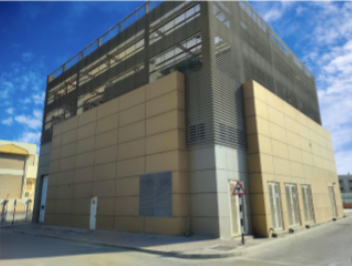
Emicool said Al Reef District Cooling plant has an installed capacity of 8,005 refrigeration tonnes (TR) and a connected capacity of 9,629 TR. Emicool said the District Cooling plant serves 46 buildings, including more than 1,800 residential customers and approximately 36 retail units. Emicool said it assumed operational management of the plant in July 2025 and intends to carry out efficiency upgrades in line with its Build, Own, Operate and Transfer (BOOT) model.

Commenting on the occasion, Dr Adib El Moubadder, CEO, Emicool, said: “The concession agreement for Al Reef Cooling Company marks a defining milestone in Emicool’s growth journey. Securing the exclusive District Cooling concession for Al Reef Downtown not only establishes Emicool’s presence in Abu Dhabi but also significantly strengthens the company’s national portfolio of District Cooling assets. This breakthrough reflects Emicool’s strategic focus on long-term concessional models, operational excellence and sustainable expansion, enabling it to deliver reliable, efficient and scalable cooling solutions to a growing customer base across the UAE.”

Mohamed Al Qubaisi, Chairman, Manazel Real Estate, which owns Al Reef Cooling Company, said: “District Cooling is a critical component of sustainable urban development, and Emicool has established itself as a leading provider in the region. This agreement ensures that Al Reef community will continue to benefit from reliable and efficient cooling solutions. We are confident that Emicool’s expertise and operational excellence will support the long-term needs of residents and businesses at Al Reef Downtown while contributing to the growth and modernisation of Abu Dhabi’s District Cooling infrastructure.”

Emicool said Al Reef plant, primarily serving residential buildings with some retail clients, is a strategic addition to its expanding network of cooling assets. The company said that the new concession reflects its ongoing focus on operational efficiency, geographic growth and the delivery of scalable cooling solutions for large-scale developments.

Premium Story

Empower meets with Chilean leadership to discuss District Cooling collaboration

H.E. Ahmad Bin Shafar, CEO, says Empower remains committed to sharing expertise, exchanging knowledge and building effective partnerships that strengthen international cooperation in the District Cooling sector

DUBAI, UAE, 15 September 2025: Empower CEO, H.E. Ahmad Bin Shafar, met Fares Jadue, Mayor of Recoleta, Chile, to explore collaboration in the field of District Cooling. Making the announcement through a Press Release, Empower said the meeting took place on the sidelines of the International District Energy Conference for Latin America and the Caribbean (LAC 2025), on September 9 and 10 in Santiago, Chile.

Empower said the discussions revolved around key developments in District Cooling and the increasing global emphasis on sustainable development, efficient cooling and carbon emission reduction. H.E. Bin Shafar, who also serves as Special Advisor on District Cooling to the United Nations Environment Programme (UNEP), Member Emeritus of the Board of Directors of the International District Energy Association (IDEA), and Chairman of the District Cooling Operators Association – GCC region, reiterated Empower’s commitment to sharing UAE’s experience in the sector.

Empower said that Mayor Jadue shared his municipality’s plans to implement a District Cooling system. H.E. Bin Shafar welcomed the initiative and affirmed Empower’s willingness to provide technical guidance and expertise in support of the project’s success and alignment with Recoleta’s sustainability objectives, Empower said.

According to Empower, both parties expressed interest in further cooperation, knowledge exchange and mutual engagement in sustainable energy technologies. The company also noted that the interaction reinforced the role of District Cooling in supporting international climate goals and fostering low-carbon urban development.

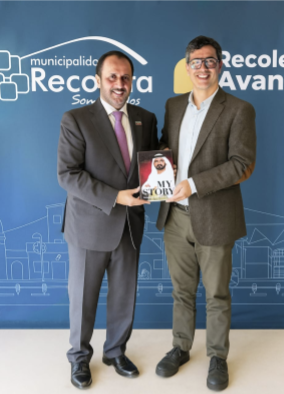
H.E. Ahmad Bin Shafar with Fares Jadue

As a symbolic gesture, H.E. Bin Shafar presented Mayor Jadue with a copy of My Story, a book authored by H.H. Sheikh Mohammed bin Rashid Al Maktoum, Vice President and Prime Minister of the UAE and Ruler of Dubai, the company said. Empower highlighted that the book reflects the UAE’s vision of innovation, leadership and long-term planning.

Commenting on the meeting, H.E. Bin Shafar said: “I was pleased to meet Fares Jadue, the Mayor of Recoleta, on the sidelines of the International District Energy Conference for Latin America and the Caribbean (LAC 2025). At Empower, we remain committed to sharing expertise, exchanging knowledge and building effective partnerships that strengthen

international cooperation in the District Cooling sector. This vital industry plays a significant role in addressing global energy challenges and creating new opportunities for collaboration that deliver lasting benefits to communities worldwide.”

He further added that Empower’s international role reflects Dubai’s leadership in energy transformation and sustainable development. “We remain committed to supporting the vision of our wise leadership, achieving new milestones, and contributing to the global advancement of the district cooling sector,” he said. “These efforts reflect our continued focus on promoting sustainability, fostering innovation, and supporting international aspirations for a greener future for all.”

Empower said it was an official sponsor of LAC 2025. The company added that the event was organised by the Ministry of Energy and the Sustainable Energy Agency of Chile, funded by the Global Environmental Facility (GEF) and supported by UNEP, the Cool Coalition, the United Nations Industrial Development Organization (UNIDO), the Swiss State Secretariat for Economic Affairs (SECO) and IDEA. Empower confirmed that H.E. Bin Shafar participated in two key sessions during the conference’s opening day, where he shared insights into District Cooling sector trends and opportunities, in the presence of international experts and policymakers.

Premium Story

The transcendental nature of HVAC analytics

They are no longer part of a mere technical upgrade, says Qusai Abuabed – Sales Director for Türkiye, Middle East & Africa at Armstrong Fluid Technology, adding that they represent a shift in mindset – from costly cycles of ‘break-fix’ to ‘predict-prevent’, from inefficiency to optimisation and from siloed equipment to integrated building intelligence

IN AN age where buildings are increasingly expected to function as responsive, sustainable ecosystems, the ability to leverage the available intelligence in an existing infrastructure has become a necessity. At the heart of this shift is HVAC analytics – the datadriven backbone of high performance buildings.

The conversation around energy efficiency often begins with new technologies. But the real transformation happens when we harness the data to inform decisions, unlock hidden efficiencies and move from reactive maintenance to proactive optimisation. This is where HVAC analytics comes into its own – particularly in mature markets like ours, where the potential for energy savings to be gained through building retrofits is enormous and the pressure to meet sustainability targets is growing.

The smart opportunity in existing systems
In many buildings, HVAC systems represent 45-70% of total energy consumption. Yet the majority of these systems – particularly those installed more than a decade ago – still operate without the benefit of analytics. This is a significant missed opportunity. Performance drift, where HVAC systems gradually lose efficiency over time, is a known but often unaddressed issue. Components degrade. Building loads change. Equipment settings are altered. And without visibility into what’s happening inside the system, facility managers are left in the dark. Smart analytics can reverse drifting performance and efficiency, by identifying issues early. Systems can be tuned for optimal performance – cutting energy costs, reducing emissions and extending asset life.

Retrofitting legacy equipment with intelligent technologies isn’t just technically feasible – it’s financially compelling. In markets like the UAE, where aggressive retrofit programmes are already underway, analytics can help prioritise interventions, track ROI and verify energy savings in real time.

A data-driven process

It is possible to elevate data analytics to a new level and to embed data gathering and analysis into every stage of our energy upgrade programmes. Sales and service engineering teams begin with a detailed site audit. They record the plant room layout, document current performance metrics, and consult with stakeholders to understand operational goals and pain points. The result is a clear business case. Customers aren’t just told that a solution is more efficient. They see how and where the savings will occur, and how long it will take to recoup their investment. Often, payback occurs within just a few years. But crucially, the value progression doesn’t end there. The technologies and systems continue to deliver performance gains over their lifespan, adding to savings year after year, and multiplying the payback on the retrofit investment.

Intelligent pumps, smarter buildings

Intelligent pumps play a vital role in this equation. They deliver flexible, energy-efficient operation with the lowest installed and operating costs, making them a core enabler of highperformance, sustainable building solutions. When connected to datadriven, cloud-based monitoring tools, they become even more valuable, providing facility managers with actionable insights. Such tools enable building operators to track system health, detect inefficiencies and implement predictive maintenance strategies that avoid costly failures. Retrofit-friendly architecture means performance management solutions can be applied across a range of projects – from new installations to decades-old facilities. These tools create a crucial feedback loop – turning raw performance data into intelligent decision-making that drives operational excellence in new and retrofitted systems alike.

Beyond compliance: A competitive advantage

The demand for intelligent building systems is no longer driven solely by environmental regulations – though these are growing rapidly. It’s also a matter of commercial competitiveness. Property developers, architects and consulting engineers are under pressure to deliver spaces that are sustainable as well as cost-effective. Analytics offer a way to satisfy both demands.

In Dubai, for instance, more than 30,000 buildings are scheduled to be retrofitted by 2030 to meet ambitious energy reduction targets. These retrofits are projected to save over USD 22 billion and cut CO2 emissions by more than one million tons. Building intelligence, driven by HVAC analytics, is central to achieving those goals.

But this isn’t just about publicsector mandates or energy efficiency. Smarter buildings also mean more comfortable indoor environments. Through early fault detection and realtime adjustment, HVAC analytics help create more consistent temperatures, improved air quality, and lower operating noise – factors that directly influence occupant satisfaction and productivity.

Building a more intelligent future

As digital transformation accelerates, the building services sector has a rare opportunity to reimagine its role – from an operational necessity to a strategic enabler. HVAC analytics have transcended from being just a technical upgrade. They represent a shift in mindset: From costly cycles of ‘break-fix’ to ‘predict-prevent’, from inefficiency to optimisation and from siloed equipment to integrated building intelligence.

Combining data with domain expertise is the key to unlocking this future. Experience shows that when analytics are applied with intent, the results are profound: Smarter systems, lower emissions and stronger returns.

For building professionals navigating this new frontier, the message is clear: Data is no longer just a record of what’s happened; it’s a foundation for improvement and a crucial tool for measuring what’s next.

The writer is Sales Director for Türkiye, Middle East & Africa at Armstrong Fluid Technology. He may be contacted through qabuabed@armstrongfluidtechnology.com.


Premium Story

ASHRAE to showcase solutions at 2025 Building Decarbonisation Conference

ASHRAE to showcase solutions at 2025 Building Decarbonisation Conference Society says event will be a gathering place for professionals to determine how to accelerate building-decarbonisation strategies

ATLANTA, Georgis, United States, 12 September 2025: ASHRAE said the 2025 Building Decarbonisation Conference will take place from October 22 to 24 in Chicago. Making the announcement through a Press Release, ASHRAE said the conference will be a gathering place for professionals to determine how to accelerate building-decarbonisation strategies.

Bill McQuade, President, ASHRAE, said: “Decarbonisation is not just about technology. It’s about rethinking how we design, operate and value our buildings. This conference is about equipping building professionals with the strategies, partnerships and tools needed to make measurable progress. This is the ‘must-attend’ conference for professionals in the business of designing, constructing or operating buildings.”

According to ASHRAE, the two-and-a-half-day programme will feature 21 seminars, 14 panels, five technical tours and three keynotes across four tracks: Scaling Decarbonisation, Innovator’s Showcase, Blueprints for Change and Beyond Decarbonisation. ASHRAE said the sessions will deliver visionary perspectives and practical solutions that attendees can apply immediately in their own projects.

According to ASHRAE, some of the highlighted sessions include:

Demystifying Existing Building Decarbonisation: New Tools for Strategic Decarbonisation Planning. This panel discussion, ASHRAE said, introduces the audience to the strategic decarbonisation planning process, presents the three tools and provides examples of strategic decarbonisation plans that have been developed and implemented. The panel will describe and highlight projects where the strategic decarbonisation planning process has been put into practice in real buildings.

Innovating to Zero: Developer Arriving at Net Positive, Operator Electrifying a Community Including Shared EVs and Designer Outthinking AI in “Human Versus AI”. This seminar features three leading projects in climate action – a fully net-zero campus building at the University of Illinois, an all-electric Canadian development with shared EV mobility, and a bold “human versus AI” competition exploring low-carbon design at scale. Together, ASHRAE said, they reveal how developers, operators and designers are rethinking what’s possible in the built environment.

Turning Up the Heat: Unlocking the Value of Data Centre Waste Heat. This session explores how growing data centres can transform waste heat into a valuable resource for heating

buildings and supporting sustainable urban development. Case studies from leading institutions demonstrate integrated design strategies and emerging metrics that are reshaping the future of data centre efficiency, ASHRAE said.

Designing for Resilience: Energy, Water, Ecology and Agriculture in Rural Decarbonisation. ASHRAE said this session highlights Linkhaw Farms, a sustainable neighbourhood development in Lumberton that brings housing, economic opportunity and climate resilience to a rural, agriculture-based community. Integrating regenerative agriculture, clean energy and resilient water and thermal systems, the project delivers decarbonisation at scale. Experts from multiple disciplines will show how this holistic, community-driven model advances health, sustainability and economic growth while creating a scalable blueprint for rural development.

The Art of Decarbonisation. This session highlights the Museum of Modern Art’s multi-phase strategy to meet New York City’s Local Law 97 targets while safeguarding artwork and improving operations. Speakers will share how energy upgrades, carbon reduction measures, and real-time analytics are helping a world-class museum meet sustainability goals and enhance resilience.

Decarbonising at Scale: Using AI to Move Fast (and Accurately) for Large Real Estate Portfolios. This session, according to ASHRAE, presents how one organisation is leveraging AI-driven analytics to accelerate the decarbonisation of a large real estate portfolio. Presenters will explore legislative and financial drivers, trade-offs between traditional engineering and AI approaches and lessons learnt on using technology to achieve emissions goals at scale.

ASHRAE’s New Flexible International Building Code Framework. An Interactive Discussion with Audience Participation: This interactive session introduces ASHRAE’s global code framework, designed to help countries implement building energy codes by 2030. ASHRAE said participants will preview assessment tools and technical guidance, then take part in a mini stakeholder workshop to experience how this framework can advance decarbonisation worldwide.

ASHRAE added that in-person registration is set at USD 750 for members and USD 800 for non-members, with additional registration options available.

Premium Story

Full Gauge Controls, Climtek in HVACR + AI initiative

Announce upgrade to “HVACR industry’s first AI-based technical support platform”

TORONTO, Canada, 9 September 2025: Full Gauge Controls and Climtek, a division of Trimac Inc announced a significant upgrade to the HVACR industry’s first AI-based technical support platform.

Making the announcement through a Press Release, Full Gauge said the AI-based technical assistant has been serving technicians, service personnel, engineers, channel partners and end-users worldwide since its pilot launch, two years ago. With today’s release, the platform evolves into a fully embedded, multimedia-enabled support companion, accessible directly from the Full Gauge Controls website and the upcoming upgraded FG Finder mobile app, Full Gauge said.

“We’re proud to have been the first in our industry to launch an AI-based support platform,” said Antonio Gobbi, Founder and Director, Full Gauge Controls. “This latest upgrade reinforces our commitment to customer success. Whether you’re a first-time installer or a seasoned engineer, the assistant is there to guide you instantly, on our website or in your pocket through the new FG Finder app.”

Full Gauge said the new platform provides conversational support across its product range and the Sitrad Pro remote management ecosystem. With the release, users can instantly access installation guidance, troubleshooting support, visual instructions, parameter configurations and setup workflows in their preferred language, Full Gauge said.

“This upgrade takes our original AI deployment to a whole new level,” said Rakesh Saxena, Founder and Director, Trimac Inc. “Technicians can now experience fluid, human-like conversations in their native language, supported by embedded video tutorials, wiring diagrams and product visuals. It’s more than a chatbot, it’s a practical field assistant, engineered for speed, accuracy and real-world use.”

According to Full Gauge, key features of the upgraded assistant include:

• Multilingual conversational support in English, Portuguese, Spanish and others major languages

• Embedded video tutorials with step-by-step walkthroughs

• Visual wiring diagrams and setup guides

• Web and mobile access via Full Gauge website and new FG Finder app

• Continuous learning from real-world cases and user feedback

• Advanced analytics dashboard, which offers insights by intent, product model and user feedback, with drill-down access and trend tracking to support continuous product and service improvement