CCME.NEWS, covering the regional and global HVACR industry with an unwavering commitment to providing in-depth news and analyses on policy, business and technology
IAQ-monitoring company says the new office will serve clients and partners across the GCC region from its first permanent base in the region
DUBAI, UAE, 12 May 2026: Kaiterra announced the opening of its regional hub in Dubai. Making the announcement through a May 12 Press Release, the company said the new office will serve clients and partners across the GCC region from its first permanent base in the region.
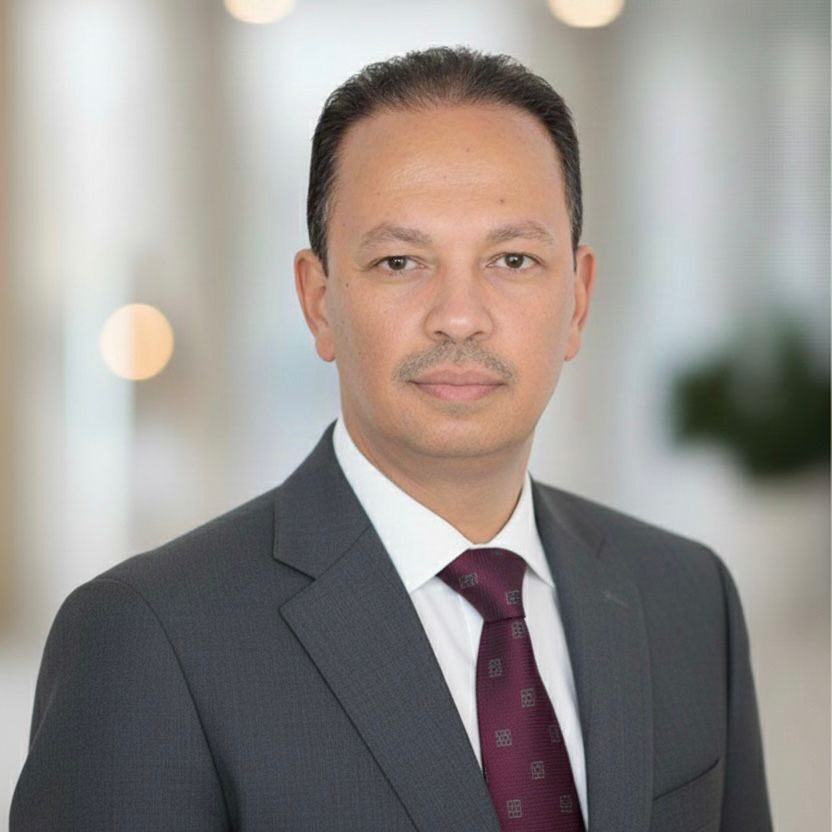
Henry Ng
According to Kaiterra, Henry Ng, Regional Director, will lead the base. Kaiterra said the move comes as the GCC region continues to expand its built-environment ambitions. Referring to Deloitte’s 2025 GCC Powers of Construction report, the company said the region is navigating a USD 3 trillion project pipeline linked to national programmes, including Saudi Vision 2030, Qatar National Vision 2030, UAE Centennial 2071 and Dubai 2040 Urban Master Plan. The company said these programmes place sustainability, occupant wellness and building performance at their core.
Kaiterra said that in a region where residents spend up to 98% of their time indoors due to extreme climatic conditions, continuous Indoor Air Quality (IAQ) monitoring has shifted from an optional differentiator to a baseline requirement. The company added that WELL, GSAS, LEED and Estidama certifications are increasingly becoming standard for flagship projects across the region.
Liam Bates, CEO, Founder, Kaiterra, said: “The Gulf is raising the global benchmark for what modern buildings should deliver. Our clients and partners across the region have made it clear they want to work with a technology partner that is present, invested and operating on their timeline. A permanent regional hub is where that commitment starts.”
Ng said: “The National Visions driving development across the GCC [region] share a common thread – a genuine commitment to quality of life for the people who spend their days in these spaces, whether that’s an office, a hospital, a mall or a cultural landmark. As the Gulf builds some of the most ambitious environments in the world, the air quality inside has to match that ambition. This office exists to make that happen, in-person, in this market, with the partners and clients shaping it.”
Kaiterra said its enterprise-grade hardware, cloud analytics and services supports Fortune 500 corporations, real estate developers and sovereign projects, globally. The company added that its solutions have already been deployed across Dubai Municipality projects, with engagements underway across the wider Gulf.
Hisham Jaber, Founder, The Healthy Home, IEQ Technologies, said: “IAQ adoption is moving fast across the GCC [region], and clients now expect global-standard monitoring as a baseline. Kaiterra establishing official representation in the region brings that expertise within reach of the partners and consultants delivering the work, which is where real progress happens.”
Kaiterra said the Dubai hub is the first of several offices planned across the Gulf, as regional demand continues to accelerate.
Premium Story
Empower reports 44% year-on-year increase in Q1 2026 net profit
District Cooling company says growth was driven by higher capacity additions, lower operational costs and sustained demand for District Cooling services across Dubai
DUBAI, UAE, 7 May 2026: Emirates Central Cooling Systems Corporation (Empower) announced its financial results for the first quarter of 2026. Making the announcement through a Press Release, the company said it recorded total revenue of AED 631 million, representing an increase of 16.8% compared to the same period in 2025. Empower said it recorded EBITDA of AED 358 million, while pre-tax net profit reached AED 229 million. The company said net profit after tax amounted to AED 208 million for the first quarter ending 31 March 2026, reflecting a 44% increase compared to the first quarter of 2025.
H.E. Ahmad Bin Shafar
H.E. Ahmad Bin Shafar, CEO, Empower, said: “The results reflect the strength of Empower’s business model and our ability to deliver sustainable growth. The exceptional performance in revenue and net profit during the first quarter of 2026 was driven by higher capacity additions and a reduction in operational costs, supported by a well-planned expansion strategy and the sustained increase in demand for District Cooling services across Dubai. We continue to operate in line with the vision of His Highness Sheikh Mohammed bin Rashid Al Maktoum, Vice President and Prime Minister of the UAE and Ruler of Dubai, which aims to position Dubai as a global benchmark for sustainable cities through the implementation of energy-efficient solutions and development of advanced infrastructure.
“We focus on enhancing the efficiency of our operational assets and expanding our capacity to keep pace with the emirate’s rapid urban development, while maintaining the highest standards of operational and environmental sustainability. We also continue to invest in innovation and adopt global best practices, thereby strengthening our ability to deliver sustainable added value to our shareholders, support the transition to a low-carbon economy, and reinforce Empower’s global leadership in the District Cooling sector.”
Citing its financial statements, Empower said it recorded consolidated revenue of AED 3.51 billion over the twelve-month period from April 2025 to March 2026, compared to AED 3.26 billion for the period from April 2024 to March 2025, reflecting a growth of 7.6%. The company said EBITDA reached AED 1.71 billion over the same period, compared to AED 1.53 billion for the corresponding 12-month period ending March 2025, marking an increase of 11.7%.
Empower said its Annual General Meeting, held in March 2026 with a quorum of 85% of the company’s paid-up share capital, approved the Board of Directors’ proposal to distribute cash dividends of AED 437.5 million to shareholders for the second half of 2025.
The company said the first quarter of 2026 witnessed significant business growth, with the signing of 28 new contracts to supply 35,662 refrigeration tons of cooling services to projects and buildings across Dubai. Empower said this increased its total contracted capacity to 1.98 million refrigeration tons. The company said it signed a master agreement with Meraas to supply cooling services to the City Walk phase 3 project and the Verve building, totalling 17,500 refrigeration tons.
Empower said it added 33,500 refrigeration tons to its total connected load and expanded its customer base to approximately 160,000 customers across 1,776 buildings during the first quarter of 2026. The company said newly connected buildings include Sobha Creek Vista Heights, Verde by Sobha and Binghatti Elite, among others. Empower said the expansion reflects its commitment to supporting Dubai’s growing real estate sector through efficient and sustainable cooling solutions.
As part of its expansion strategy, Empower said it awarded a contract during the first quarter to design its fifth District Cooling plant in the Business Bay development in Dubai. The company said construction of the plant is scheduled to commence in the fourth quarter of 2026, with a total cooling capacity of approximately 44,000 refrigeration tons upon completion.
Empower said the Dubai Electricity and Water Authority increased its stake in the company to 80% during the reporting period, reflecting an increase in DEWA’s controlling stake.
Premium Story
IIR releases technical brief on high-temperature heat pumps for industrial decarbonisation
The publication examines the role of high-temperature heat pumps in reducing emissions from industrial heating while outlining performance, applications and policy pathways
PARIS, France, 30 April 2026: The International Institute of Refrigeration (IIR) announced the release of its 61st Technical Brief on Refrigeration Technologies, focusing on high-temperature heat pumps for industrial decarbonisation. Making the announcement through an April 30 Press Release, the organisation said the publication examined state-of-the-art applications and performance of high-temperature heat pumps as key technology for reducing carbon emissions from industrial heating.
IIR said Professor Ruzhu Wang, of Shanghai Jiao Tong University, authored the technical brief alongside an international team of experts, providing a comprehensive review of system configurations, working fluids, components, commercial products and real-world applications. The organisation added that the brief also assessed the economic and environmental performance of high-temperature heat pump systems.
IIR said industrial heating accounted for approximately 37% of global energy consumption, with two-thirds dedicated to heat generation, and added that the 100-200 degrees C temperature range targeted by high-temperature heat pumps was critical for sectors including food processing, chemical engineering, textiles, paper-making and plastics manufacturing. The organisation stated that replacing fossil-fuel boilers with electrified, high-efficiency alternatives was essential to meeting global decarbonisation targets.
IIR said high-temperature heat pumps had progressed significantly over the past decade, with commercial systems now available at high technology readiness levels and capable of delivering temperatures between 90 degrees C and 300 degrees C, with capacities ranging from kilowatts to 100 MW. The organisation added that annual scientific publications in the field had increased from 921 in 2010 to 5,480 in 2024, reflecting sustained growth in research activity.
IIR said the technical brief identified three main system categories: Compression, absorption and hybrid absorption-compression. IIR highlighted innovative applications such as dual-use systems combining heating and cooling, as well as integration with thermal energy storage to improve efficiency and economic performance.
Professor Wang said: “High-temperature heat pumps are the key to decarbonizing industrial heat supply and providing thermal energy via renewable electricity. Working fluids, energy efficiency, stability, scalability, electricity-to-thermal energy conversion and regulation, as well as thermal storage, are the core key elements. It is urgent to research and develop various types of high-temperature heat pumps to replace fossil fuel-fired boilers and electric boilers.”
IIR said the brief compared high-temperature heat pumps with conventional fossil-fuel boilers, noting that the systems offered a coefficient of performance above 1.5, delivering more heat energy than the electrical energy consumed. The organisation added that economic and environmental competitiveness depended on local electricity-to-fuel price ratios and the carbon intensity of national grids.
IIR said countries with cleaner electricity systems and favourable price ratios were already benefiting from adoption, and added that the advantages of high-temperature heat pumps were expected to increase, as power systems transitioned towards renewable energy.
IIR said the technical brief outlined policy recommendations to accelerate deployment, including performance-based subsidies, support for demonstration projects, carbon pricing mechanisms, investment in workforce development and regulatory clarity on refrigerant phase-out timelines. The organisation added that it had also produced a two-page summary for policymakers to make key findings accessible to non-technical decision-makers.
Premium Story
Europe records rising temperatures, shrinking glaciers and declining snow cover in latest climate report
New findings highlight widespread climate impacts across Europe, including heatwaves, biodiversity loss and changing energy trends
READING, United Kingdom, 29 April 2026: The European Centre for Medium-Range Weather Forecasts (ECMWF), an independent intergovernmental organisation and World Meteorological Organisation (WMO), released the European State of the Climate 2025 report, outlining the impacts of rapid warming across the continent. Making the announcement through a Press Release, the organisations said Europe was experiencing reduced snow and ice cover alongside increasing heatwaves, droughts and record ocean temperatures affecting regions from the Arctic to the Mediterranean.
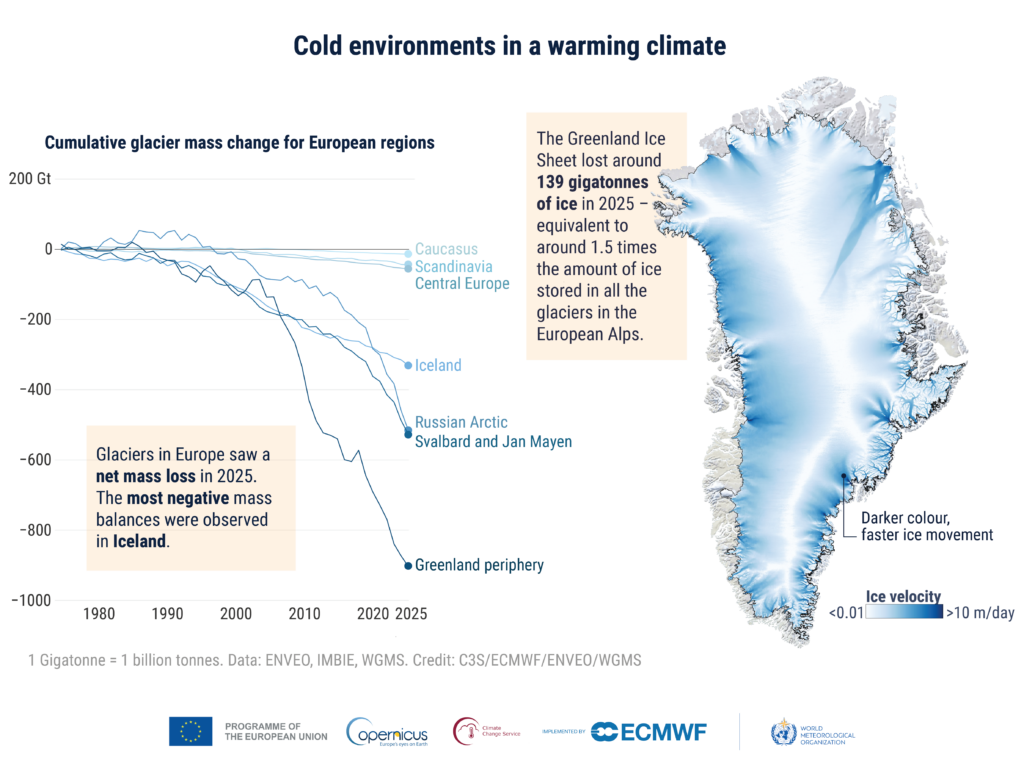
Figure 1. (Left) Cumulative glacier mass change (Gt) for European glacier regions from 1976 to 2025. Gt = gigatonnes = 1 billion tonnes. Data: WGMS. Credit: WGMS/C3S/ECMWF. (Right) Greenland Ice Sheet ice flow velocity for the 2025 hydrological year. Data: IMBIE, ENVEO. Credit: ENVEO/C3S/ECMWF.
ECMWF and WMO said the report, produced under the Copernicus Climate Change Service, brought together contributions from around 100 scientists. The organisations added that the report provided a comprehensive overview of climate indicators across Europe, including cold environments, marine ecosystems, rivers, lakes and wildfire risk.
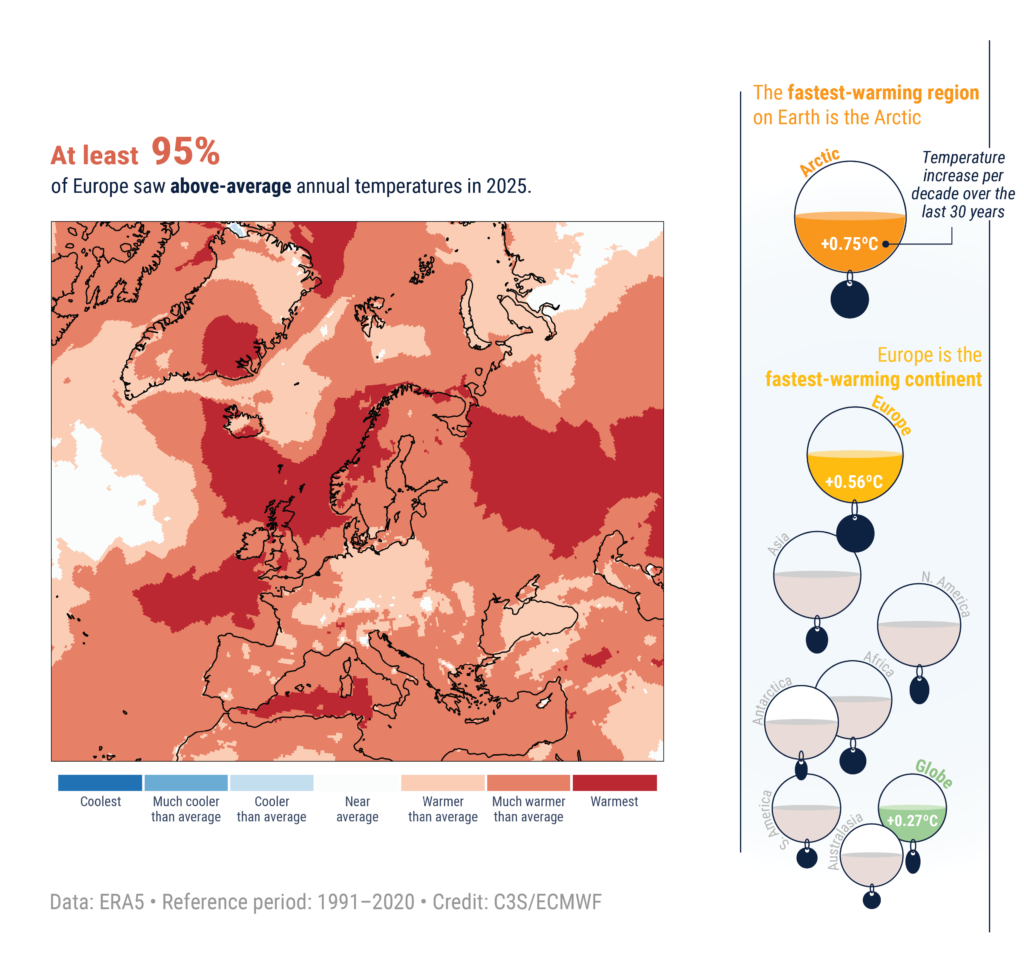
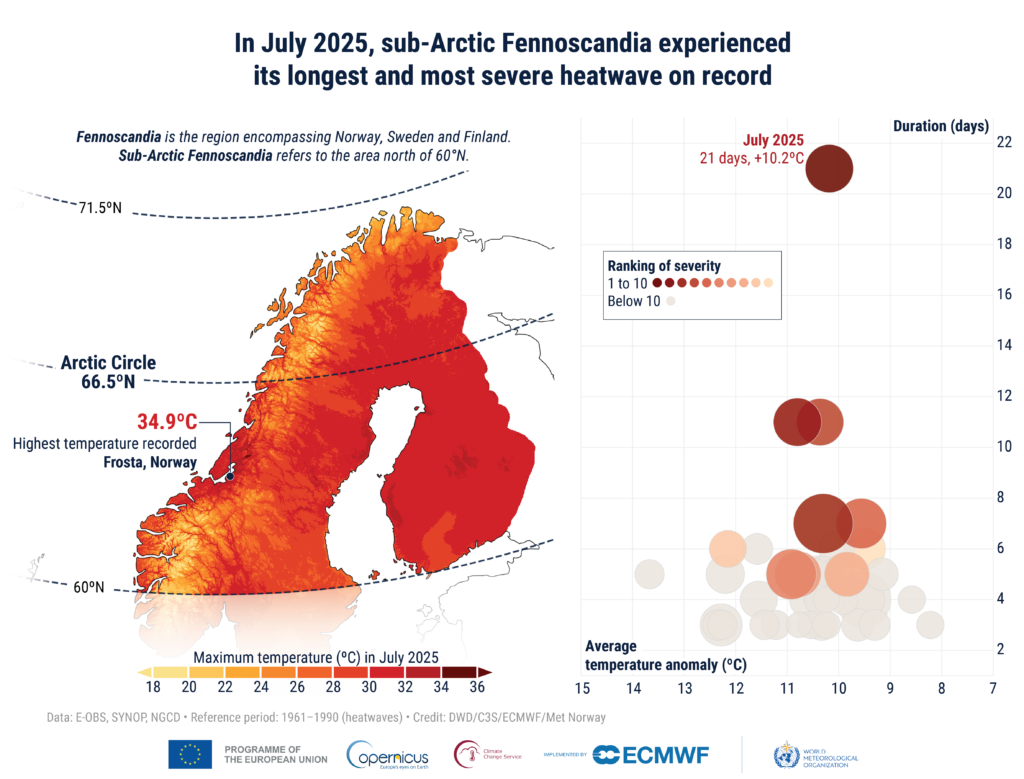
According to ECMWF and WMO, the key findings of the report state that at least 95% of Europe had experienced above-average temperatures in 2025. The organisations added that a record three-week heatwave affected sub-Arctic Fennoscandia, with temperatures exceeding 30 degrees C near and within the Arctic Circle.
Figure 2. (Left) Anomalies and extremes in annual surface air temperature in 2025. The extreme categories (‘coolest’ and ‘warmest’) are based on rankings for 1979–2025. The other categories describe how the temperatures compare to their distribution during the 1991–2020 reference period. ‘Much cooler/warmer than average’ – cooler/warmer than 90% of temperatures; ‘cooler/warmer than average’ – than 66% of temperatures; ‘near average’ – within the middle 33%. (Right) Visual representation of anomalies in average temperature over the globe, for each continent based on the IPCC regions, and the Arctic. Linear trends are indicated for the last thirty years (1996–2025) for the globe, Europe and the Arctic. Data: ERA5. Credit: C3S/ECMWF
ECMWF and WMO said glaciers across all European regions had recorded net mass loss, with Iceland experiencing its second-largest glacier loss on record. The organisations added that snow cover levels were 31% below average and that the Greenland Ice Sheet had lost 139 gigatonnes of ice.
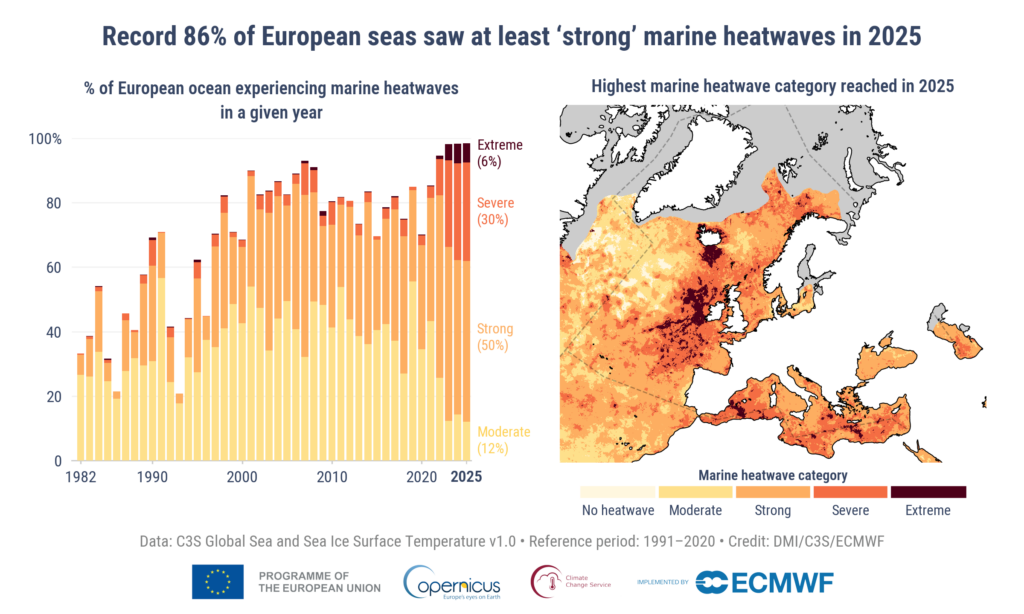
ECMWF and WMO said the annual sea surface temperature across the European region was the highest on record, with 86% of the area experiencing at least strong marine heatwaves. The organisations added that wildfires had burnt more than 1,034,550 hectares, representing the largest area on record.
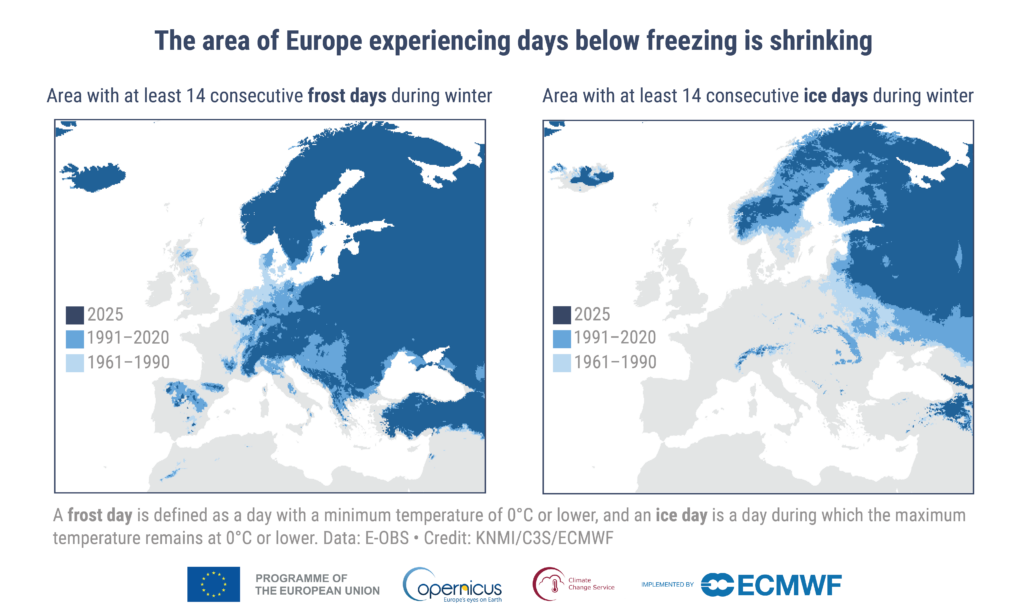
Figure 3. The area of Europe that experienced at least 14 consecutive (left) ‘frost days’ and (right) ‘ice days’ in 2025 (dark blue) compared to the 1991–2020 average (medium blue) and the 1961–1990 average (light blue). A frost day is defined as a day with a minimum temperature of 0°C or lower, and an ice day is a day during which the maximum temperature remains at 0°C or lower. Data: E-OBS. Credit: KNMI/C3S/ECMWF.
ECMWF and WMO said river flows had remained below average for 11 months of the year, with 70% of rivers experiencing reduced annual flows. The organisations added that storms and flooding had affected thousands of people, although extreme rainfall events were less widespread than in previous years.
ECMWF and WMO said renewable energy had supplied 46.4% of Europe’s electricity in 2025, with solar power reaching a record contribution of 12.5%. The organisations added that biodiversity remained critical for sustainability but continued to face degradation due to climate change.
ECMWF and WMO said the findings highlighted the interconnected impacts of climate change on ecosystems and societies, reinforcing the need for coordinated policy responses across Europe.
Florian Pappenberger, Director-General, the European Centre for Medium-Range Weather Forecasts, said: “Europe is the fastest-warming continent, and the impacts are already severe. Almost the whole region has seen above-average annual temperatures. In 2025, sub‑Arctic Norway, Sweden and Finland recorded their worst heatwave on record with 21 straight days and temperatures exceeding 30 degrees C within the Arctic Circle itself. The 2025 report offers clear, actionable insights to support policy decisions and help the public better understand the changing climate we live in.”
Celeste Saulo, Secretary-General, World Meteorological Organisation, said: “The WMO State of the Climate has revealed the imbalance of energy on our planet, and the European State of the Climate, produced jointly by WMO and ECMWF, reflects the impacts for Europe. Our joint effort to produce the ESOTC reflects how climate change is impacting biodiversity and the bold initiatives taken by European policy makers to protect and restore it.”
ECMWF and WMO said the report highlighted rapid warming across Europe’s coldest regions, including the Arctic and the Alps, where snow and ice play a critical role in reflecting sunlight. The organisations added that the shrinking extent of freezing winter days and rising minimum temperatures reflected a broader warming trend.
ECMWF and WMO said sub-Arctic Fennoscandia experienced its longest recorded heatwave in July, lasting three weeks, with temperatures exceeding 30 degrees C and peaking at 34.9 degrees C in Frosta, Norway. The organisations added that Europe recorded a reduced number of cold stress days, with 90% of the continent experiencing fewer than average.
ECMWF and WMO said above-average temperatures combined with reduced precipitation had contributed to significant losses in snow and ice cover. The organisations added that snow cover in March 2025 was approximately 31% below average and glaciers across Europe experienced net mass loss, while the Greenland Ice Sheet lost 139 gigatonnes of ice, contributing to rising global sea levels.
Figure 4. (Left) Percentage of the area of the WMO RA VI (Europe) ocean region experiencing marine heatwave conditions each year from 1982 to 2025, shown for four intensity categories: ‘moderate’ (yellow), ‘strong’ (light orange), ‘severe’ (dark orange) and ‘extreme’ (brown). For each year, the percentage is based on the highest intensity reached at each location within the region. (Right) Map showing the highest marine heatwave category experienced at each location during 2025. Marine heatwaves are defined relative to the 1991–2020 reference period. Data: C3S Global Sea and Sea Ice Surface Temperature v1.0. Credit: DMI/C3S/ECMWF.
Samantha Burgess, Strategic Lead for Climate, ECMWF, said: “The ESOTC 2025 paints a stark picture – the pace of climate change demands more urgent action. With rising temperatures, and widespread wildfires and drought, the evidence is unequivocal; climate change is not a future threat, it is our present reality. In confronting the impact on biodiversity loss, we need to match the speed of adaptation happening in the clean energy transition and, at the same time, ensure robust science continues to underpin our policies and decisions.
ECMWF and WMO said the global ocean had absorbed approximately 90% of excess heat from greenhouse gas emissions, with 2025 marking the fourth consecutive year of record sea surface temperatures in the European region. The organisations added that marine heatwaves affected 86% of Europe’s ocean areas, with 36% experiencing severe or extreme conditions.
ECMWF and WMO said the Mediterranean Sea had recorded at least one day of strong marine heatwave conditions annually over the past three years, while severe conditions were also observed in the Norwegian Sea. The organisations added that these patterns highlighted the widespread geographical impact of ocean warming.
Mauro Facchini, Head, Copernicus Unit, European Commission, said: “The European State of the Climate 2025 report demonstrates once more the value of our joint efforts to have a world-class European Earth observation system. Maintaining our own state-of-the-art, reliable data records of our Earth system is vital for making informed policy decisions in our rapidly changing climate. Copernicus is pivotal to help us preserve our sovereignty, our environment, food systems, safety and economy.”
ECMWF and WMO said around 70% of rivers across Europe experienced below-average flows, while soil moisture levels ranked among the lowest since 1992. The organisations added that drought conditions affected 53% of Europe in May, reflecting combined impacts of rainfall variability and long-term climate trends.
Figure 5. Heatwaves in sub-Arctic Fennoscandia since 1950. The circle size is proportional to the area affected by the corresponding event. The 10 most severe heatwaves are indicated by darker colours and grey indicates those with a severity ranking below 10. Sub-Arctic Fennoscandia is defined here as mainland Norway, Sweden and Finland north of 60°N (60°–72°N, 4°–32°E). Severity is based on a combination of the average temperature anomaly relative to the 1961–1990 reference period, the duration and the area affected. Data: E-OBS, SYNOP. Credit: DWD/C3S/ECMWF.
Dušan Chrenek, Principal Adviser, Digital Green Transition, DG Clima, said: “The climate change signal remains unequivocal across Europe, and the European State of the Climate 2025 report is a stark reminder that we must sustain and accelerate both adaptation and mitigation efforts. This edition provides compelling evidence of the profound impacts of climate change on intensity of extreme weather events, biodiversity and economy, while reinforcing Europe’s strategic ambition to further strengthen its Earth observation capabilities by harnessing cutting-edge technologies.”
ECMWF and WMO said European policy frameworks increasingly recognised the link between climate and biodiversity, with initiatives aimed at strengthening ecosystem resilience. The organisations added that the European Union had committed to restoring at least 20% of land and sea areas by 2030 and all ecosystems in need by 2050, supported by broader strategies such as the European Green Deal and EU Climate Law.
Acquisition enhances engineering expertise in cold-plate design and server-side liquid cooling to support AI and high-performance computing workloads
COLUMBUS, Ohio, United States, 29 April 2026: Vertiv announced the acquisition of Strategic Thermal Labs LLC, which the Ohio-based company described as a specialist in advanced liquid-cooling technologies. Making the announcement through an April 29 Press Release, Vertiv said the acquisition strengthens its thermal-chain strategy by enhancing engineering capabilities at the interface between server-side liquid cooling and supporting infrastructure.
Vertiv said increasing compute requirements are intensifying the importance of interaction between server-side liquid cooling and supporting infrastructure. Vertiv added that these interactions influence system performance, including flow, balance, controls behaviour, serviceability and lifecycle reliability.
Vertiv said Strategic Thermal Labs would bring expertise in cold-plate design, server-side liquid cooling and high-density thermal validation. Vertiv added that this capability is expected to strengthen its ability to simulate high-density compute conditions, optimise thermal and power interactions, and support customers across design, integration, commissioning and lifecycle operations.
Scott Armul, Chief Product, Technology Officer, Vertiv, said: “As AI and high-performance computing push power densities to unprecedented levels, understanding and solving heat challenges at the chip level becomes critical to system design, performance and reliability. STL brings deep expertise and proven capability in addressing some of the industry’s most demanding chip-level density and thermal problems, strengthening Vertiv’s ability to emulate and validate system-level solutions and enabling customers to improve performance and lifecycle outcomes in liquid-cooled environments.”
Vertiv said the acquisition does not change its commitment to an open ecosystem approach. Vertiv added it would continue to support interoperable, server- and silicon-agnostic infrastructure solutions aimed at improving system-level performance across diverse compute environments.
Vertiv said the addition of Strategic Thermal Labs supports its broader strategy of helping customers address increasing infrastructure complexity through integrated power, thermal, controls and lifecycle services capabilities.
Premium Story
LUVE signs multi-year agreement to supply data centre cooling solutions
Company says framework agreement targets high-efficiency cooling systems for next-generation and AI-driven data centre applications
UBOLDO, Italy, 29 April 2026: LU-VE said it has entered into a multi-year framework agreement with a global data centre hyperscaler for the supply of cooling solutions across multiple facilities. Making the announcement through an April 29 Press Release, LU-VE said the agreement covers the delivery of high-efficiency cooling systems designed for next-generation data centre architectures, including high-density and AI-driven workloads.
LU-VE said the total potential value of the agreement is estimated at over EUR 100 million for the first two years, subject to project execution and customer call-offs. LU-VE added that estimated values for subsequent years would be confirmed at a later stage.
Matteo Liberali, President, CEO, LUVE, said: “This agreement is part of our strategy towards medium- and long-term objectives. It confirms the strength of our positioning in mission-critical cooling applications and our ability to support customers in the transition towards more energy-efficient and sustainable data centre infrastructures.”
Riccardo Quattrini, General Manager, LUVE, said: “This partnership represents the outcome of a strong teamwork and fully reflects our ‘glocal’ approach – thinking globally while acting locally. I extend my sincere appreciation to our Italian, US and Polish teams for their professionalism, commitment and the genuine enthusiasm with which they contribute every day to our success.”
LU-VE said the agreement supports its strategic focus on mission-critical cooling applications and reinforces its capability to deliver solutions for global data centre infrastructure.
LU-VE said it operates as a global manufacturer of air heat exchangers and high-efficiency cooling systems across commercial, industrial and technological applications, supported by a network of production facilities and sales offices worldwide.
Premium Story
DEWA reports world’s lowest electricity customer minutes lost at 49 seconds annually
Company highlights record service continuity performance through advanced smart grid implementation
DUBAI, UAE, 29 April 2026: H.E.Saeed Mohammed Al Tayer,Managing Director and CEO of DEWA, announced that the organisation had recorded the world’s lowest electricity customer minutes lost (CML), at 0.82 minutes, or approximately 49 seconds, per year. Making the announcement through an April 29 Press Release, DEWA said the achievement surpassed its previous record of 0.94 minutes in 2024, representing an improvement of around 13%.
H.E. Al Tayer said: “We work in line with the vision and directives of His Highness Sheikh Mohammed bin Rashid Al Maktoum, Vice President and Prime Minister of the UAE and Ruler of Dubai, to provide the best electricity and water infrastructure in the world. We utilise the latest technologies of the Fourth Industrial Revolution, particularly artificial intelligence, which we are fully integrating into DEWA’s strategies and operations. The smart grid is a fundamental pillar of DEWA’s strategy to deliver services according to the highest standards of availability, reliability and efficiency. This supports the Dubai 2040 Urban Master Plan and the Dubai Economic Agenda (D33), which seek to consolidate Dubai’s position among the top three global cities.”
H.E. Al Tayer said the Smart Grid, implemented with investments of AED 7 billion up to 2035, provided advanced features to enhance transmission and distribution efficiency, reduce outages, minimise losses and improve electrical load management. He added that one of the key programmes – the Automatic Smart Grid Restoration System – was the first of its kind in the Middle East and North Africa, enabling remote, round-the-clock control and monitoring through centralised systems that automatically located and isolated faults and restored service.
DEWA said it had reduced customer minutes lost in Dubai from 6.88 minutes per year in 2012 to 0.82 minutes in 2025, significantly below the average of approximately 15 minutes recorded by leading utility companies in the European Union. The company added that the result underlined its global leadership in adopting innovation to deliver services according to high reliability standards.
Premium Story
‘Hybrid cooling is now a pragmatic default strategy’
In an interaction with Surendar Balakrishnan of Climate Control Middle East, Ehab Ibrahim, Managing Director at Meinhardt MENA, discusses the engineering responses needed as data centres place growing pressure on energy systems. With data centres consuming about 1.5% of global energy, demand expected to more than double by 2030, and nearly 80% of an estimated 12,000 facilities worldwide still relying on air cooling, Ibrahim points to integrated design and hybrid cooling strategies as key aspects to improving efficiency, reliability and long-term flexibility. Excerpts from the interview…
Given the surge in data centre activity and the sheer scale and ambition of projects, what design planning and execution solutions are you providing to support an integrated project delivery approach involving civil, structural and MEP disciplines to improve reliability and energy efficiency of data centres?
‘Surge’ is really an understatement right now. We are seeing an absolute boom driven heavily by AI and cloud. And when you are building at hyperscale level, working in silos simply does not work anymore.
At Meinhardt, our approach is all about integration from day one. We rely heavily on advanced BIM modelling and digital twins, so our civil, structural, MEP and architecture teams are effectively in the same virtual room before any construction activity has even started. That allows us to identify and resolve clashes early.
But it is not only about avoiding clashes. It is also about optimising the whole system. By integrating the design early, we can optimise the building orientation and the structural layout to support highly efficient airflow and cooling distribution. We are also pushing hard into modular and prefabricated design. By building standardised, highly efficient MEP components off site, we can accelerate the construction timeline while ensuring the final facility is reliable and energy efficient. Ultimately, it is about using technology to make complexity feel seamless and to reduce capital expenditure to the lowest possible value.
Are you able to quantify the improvement in energy efficiency through this approach?
Yes. The climate conditions in the GCC region are, of course, challenging, but we are seeing clear gains in power efficiency. Previously, in markets such as Saudi Arabia and the UAE, we were achieving PUE values of around 1.5 – 1.55. Now, that is moving towards 1.4 and below, which is a strong achievement.
Air cooling systems address the cooling needs of about 80% of data centre cooling projects around the world. Are you seeing any shift in this? For instance, is there a pivot happening towards immersion cooling or direct-to-chip cooling? And if so, are these positively impacting energy efficiency and helping lower greenhouse gas emissions?
Yes, a massive shift is underway. Air cooling has been the workhorse of the industry for decades. But with AI workloads pushing rack densities from a standard 10 or 15 kilowatts up to 50 or 80 kilowatts, and sometimes even more than 100 kilowatts, it simply cannot move enough thermal energy fast enough. So, we have to rely on liquid cooling.
We are absolutely seeing a strong pivot towards liquid cooling, specifically direct-to-chip cooling and immersion cooling, because it targets the heat right at the source, whether it is the CPU or the GPU. Immersion cooling, where servers are submerged in fluid, is also highly effective for certain thermal management requirements.
And to your point about efficiency and emissions, yes, they make a huge positive impact. Liquid is more efficient at transferring heat than air. By shifting the heavy thermal lifting to liquid, it reduces the power needed to run massive fans and chillers.
What is your view on hybrid architectures that combine air cooling for space-level requirements and liquid cooling for dense loads in new-build as well as brownfield projects?
I am really glad you brought this up because hybrid cooling is now a pragmatic default strategy. Think about it. A facility might have an AI cluster running at a 100-kilowatt rack, but it may also have standard networking and storage equipment running at 10 kilowatts.
And sometimes, when we are talking about building the AI model, you need the high-density racks. But later, when you start running the model, you do not actually need the same density or the same capacity. So, it does not make financial sense to put everything in a liquid bath.
In a hybrid model, we use liquid cooling specifically for the high-density AI loads. And we use optimised air cooling with hot and cold aisle containment to manage ambient room temperature and lower-density loads. For brownfield or retrofit projects, this is an absolute game changer. You do not have to rip out your entire legacy HVAC system. You simply bring liquid cooling to the specific rows that need it, which saves a massive amount of capital expenditure and downtime. For new builds, designing shared infrastructure that supports both air and liquid from day one gives the operator incredible flexibility.
Geopolitical events are causing supply chain uncertainty in the case of critical equipment, including cooling infrastructure, on a global scale. How should the world plan for fast-developing situations?
It is one of the most pressing challenges we face right now. You can have the best design in the world, but if a critical chiller or generator is stuck on a ship or delayed at the factory, the facility cannot open.
To plan for this, we have to fundamentally change how we procure. We can no longer rely on just-in-time delivery. We advise our clients to commit capital early to secure manufacturing slots, either by direct procurement or by having framework agreements with suppliers. In some cases, critical equipment is ordered almost immediately, sometimes before the final design is fully locked, or immediately after the concept design stage is finalised.
At the same time, we cannot rely on a single supplier or a single geographic region. The supply chain has to be diversified. We have all seen how quickly situations can change. One day, you may find the Suez Canal blocked. Another day, you may find Hormuz blocked. So, you need to diversify delivery locations, as well. In some instances, we may accept a slight premium to use secondary suppliers or to source equipment locally or regionally, simply to guarantee delivery.
And in our financial and project models, we always include schedule contingencies, essentially budgeting for temporary solutions such as rental generators or temporary cooling, in case permanent equipment is delayed. It is all about pricing in the cost of risk and building extreme flexibility into the project plan.
Premium Story
Still a lack of coordination between mechanical and architectural teams
As towers grow taller and structurally more demanding, a fundamental situation is emerging between the aesthetic priorities that shape a building’s exterior and the engineering imperatives that determine how effectively it serves its occupants, says Amir H Greiss of SharpMinds Consulting Engineers
In the region, cooling cannot be regarded as a secondary building feature. It is the foundational infrastructure upon which the viability of vertical occupation depends. For residential inhabitants on the upper floors of towers in Dubai, or for professional occupants working within a fully glazed commercial building in Abu Dhabi’s Central Business District, the thermal characteristics of the building envelope directly govern comfort, utility expenditure and the quality of the occupied environment in ways that no element of interior specification can adequately address in their absence.
The challenge is most acute at the exterior. The UAE’s built environment is subject to exceptional levels of solar radiation across the majority of the calendar year. Glass façade, which remains the dominant architectural expression across the region’s high-rise typology, presents a significant risk of amplified heat gain, when matters of orientation, glazing performance and external shading are not resolved during the earliest stages of the design process. Where these decisions are made with thermal rigour, the building’s own form contributes meaningfully to reducing the mechanical load imposed on internal cooling systems. Where they are deferred or treated as secondary to visual considerations, that load is transferred entirely to chillers, cooling towers and, ultimately, to the energy expenditure of every occupant within the building.
It is for this reason that architecture and engineering must be approached in a unified manner rather than a sequential process in which one follows the other. The exterior envelope is not an aesthetic layer applied after the structural and spatial decisions of a project have been resolved. It is a thermal instrument of considerable consequence, and its performance establishes the conditions under which every mechanical system behind it must operate. A façade conceived with appropriate attention to solar orientation, glazing specification and shading provision can substantially reduce peak cooling demand. The downstream effects of that reduction extend to equipment sizing, energy consumption, capital expenditure and the operational costs borne by residents and commercial tenants across the full life of the asset.
The UAE has produced buildings that demonstrate this integrated approach at the highest level. The Al Bahr Towers, in Abu Dhabi, with their computer-controlled mashrabiya screen designed to respond dynamically to solar movement throughout the day, achieved a material reduction in heat gain relative to a conventional glazed facade, with a corresponding reduction in the mechanical cooling infrastructure required to maintain internal comfort. That project is widely recognised as a work of architectural distinction. It merits equal recognition as a work of engineering intelligence. In the most effective high-rise buildings, the two are inseparable.
Cooling towers, the mechanical components responsible for rejecting heat from chilled water systems in large commercial and mixed-use developments, are themselves subject to architectural decisions in ways that receive insufficient attention during the design process. Their placement within a building’s technical zones or on its roof plane, determines the availability of adequate airflow, the acoustic conditions experienced by upper floor inhabitants, the structural loads imposed on the building frame and the practicality of long-term maintenance regimes. When these considerations are deferred beyond the concept and schematic stages, the consequences manifest progressively over the life of the asset, through elevated operating costs, constrained maintenance access and acoustic disturbance to the very occupants the building was commissioned to serve.
District Cooling infrastructure offers an instructive model for what genuine integration between architecture and engineering can achieve at a larger scale. Where masterplans are connected to centralised chilled water networks from the outset of the design process, architectural and engineering decisions can be developed in coordination rather than resolved in opposition. The building is conceived within its infrastructure rather than subsequently adapted to accommodate it. The outcome – for developers, asset managers and inhabitants alike – is a materially more efficient and operationally more resilient asset.
The most enduring buildings in this region will not be distinguished solely by their height or their architectural ambition. They will be distinguished by the standard to which they perform. Treating exterior design, occupant welfare and cooling infrastructure as a single integrated strategy from the earliest moment of a project is not a refinement of process. It is the essential condition for delivering buildings that are genuinely fit for this climate, this culture and the generations of inhabitants who will occupy them.
The UAE possesses the technical capability, the investment environment and the institutional will to establish a new benchmark for high-rise performance and distinct designs.
The writer is Founder and Chief Executive Officer of SharpMinds Consulting Engineers. He may be contacted at <Agreiss@sharpmindsce.com>.
Nick Agopian, President, Reviveaire, discusses the role of advanced air-handling in IVF outcomes
In vitro fertilisation (IVF) is often viewed through the lens of biology, genetics, clinical protocols, physician expertise and robotic equipment. These are, without question, critical variables – ones that are visible. Yet one of the most influential factors in IVF success is often overlooked, because it is invisible: The quality of the air surrounding the process.
Within the IVF laboratory, air is not simply a background condition, which we typically take for granted. It is an active participant in the environment, where embryos are developed, handled and preserved. Unlike many other clinical settings, IVF operates at a level of sensitivity where even minor environmental disturbances – from particles of gases – can influence outcomes. The embryo, in its earliest stages, is highly vulnerable to both particulate contamination and chemical exposure. As a result, air quality becomes directly tied to embryo viability, implantation potential and, ultimately, successful pregnancy rates.
The challenge lies in understanding that IAQ is not a single variable; it is the result of two distinct but equally important factors: Particulate control and gas-phase contamination. These are occurring in all environments and are not visible to the human eye.
Particulate filtration is the more commonly understood component. High-efficiency filters, such as MERV 13, MERV 16 and HEPA, are designed to capture airborne particles, including dust, skin cells and microbial carriers. In clinical environments, this level of filtration helps maintain a clean and controlled space, reduce biological contamination and protect sensitive procedures. However, the higher the filtration effectiveness and efficiency, the more difficult it is to move air through the system; hence, properly designed air handling is a must. This needs to be a systems approach for proper IAQ.
However, particulate filtration alone is not sufficient.
Gas-phase contaminants, such as Volatile Organic Compounds (VOCs), aldehydes and other chemical pollutants – such as acid gases – pose a different and often more insidious risk. These compounds can originate from building materials, cleaning agents, furnishings, human activity and outdoor air. Unlike particles, gases cannot be captured by traditional mechanical filtration alone. Yet they can interact with embryo culture media and lab surfaces, introducing subtle but meaningful stressors into the developmental environment. So, what is a nuisance gas for humans is detrimental to an embryo.
This is particularly important in IVF settings, where embryos are exposed to open or semi-controlled environments during handling. Even low-PPB concentrations of certain chemical compounds have been linked to reduced embryo quality and lower fertilisation success. In this context, the absence of visible contamination does not equate to a safe environment in these settings.
The design goal is clear – achieving optimal air quality in IVF clinics requires a dual strategy:
Particulate filtration
Gas-phase (chemical) filtration
But filtration, on its own, is only part of the equation.
The delivery of clean air is equally critical. Air-handling systems play a central role in ensuring that filtration performance translates into real-world outcomes. Consistent airflow (sometimes known as airflow effectiveness), proper pressurisation and stable environmental conditions are essential for maintaining the integrity of the space. Without these, even the most advanced filtration systems can fall short.
This is where system-level thinking becomes important. Rather than viewing filtration as a standalone component, it must be integrated into a broader air-handling strategy that considers airflow patterns, air change rates, temperature and humidity control, and interactions among different zones within the facility.
Modern air-handling solutions are designed with this level of flexibility in mind. Configurable systems – semi-custom and custom – can incorporate multiple stages of filtration, energy-recovery components and precise control mechanisms to adapt to the specific needs of IVF laboratories. This allows clinics to move beyond minimum compliance, which is critical, because codes call for minimum, and towards environments that are optimised for performance.
Improving air quality in IVF clinics is not simply about meeting standards or reducing contaminants. It is about increasing the probability of successful outcomes for patients, who are often navigating emotionally and financially demanding journeys. On the Space station, the HVAC system is called a Life Support System; I would argue it is the same in an IVF clinic.
Indeed, for clinicians, it enhances consistency and confidence in results; for patients, it contributes to trust in the environment, where life is being created; and for operators, it represents a strategic investment in both outcomes and reputation.
In this sense, IAQ becomes something more: It becomes human quality – and happy parents.
Designing IVF environments with this perspective requires a shift in mindset. Instead of asking what is required to meet code, the question becomes: What is required to optimise outcomes in what is technically a process-oriented result, not comfort for the clinicians?
The answer lies in recognising air as a critical input, one that must be controlled with the same rigour as any other element of the IVF process, such as sterilization, because in the end, success in IVF is not determined by a single factor. It is the result of many variables working together, often in ways that are not immediately visible. Among those variables, air quality stands out as one of the most powerful, and one of the most underestimated.
And in a process where every advantage matters, controlling the invisible may be one of the most important decisions a clinic can make.