
CCME.NEWS

Your source for the HVACR Industry, covering in-depth news & analyses on policy, business & technology.

Get Premium:

Sign-up

COMMERCIAL ENQUIRIES:

Frédéric Paillé
Co-Founder & Commercial Director
fred@cpi-industry.com
+971 50 714 7204

Follow Us

CCME.NEWS

CCME.NEWS, covering the regional and global HVACR industry with an unwavering commitment to providing in-depth news and analyses on policy, business and technology

Contact Info

PO Box 13700,
Dubai Media City, Dubai
admin@cpi-industry.com
+971 50 714 7204

Follow Us

Premium Story

‘Achieving a place in the Guinness Book of Records significantly enriches District Cooling’

In an eclectic interaction with Surendar Balakrishnan of Climate Control Middle East, H.E. Ahmad Bin Shafar, the CEO of Empower, highlights key milestones achieved as a District Cooling utility, the impact of the IPO and the technological innovations that have broken down barriers for the advancement of District Cooling. Excerpts from the interview…

Empower finding a place in the Guinness Book of Records is viewed as a significant milestone for a District Cooling company. What does it mean for you, and for the entire District Cooling movement in the region and at a global level?

We at Empower have received numerous awards regionally and globally for our various accomplishments over the past two decades. Achieving a place in the Guinness Book of Records is a remarkable milestone for Empower and a significant enrichment to the District Cooling industry.

It showcases District Cooling’s potential and sets a new standard for the industry, worldwide. We have become the first District Cooling company in the world to achieve two Guinness World Records for a single project – the Business Bay District Cooling scheme, in Dubai. Achieving the twin honours helps gain public attention and increases awareness of District Cooling as an energy-efficient solution for space cooling.

The Business Bay District Cooling project is unique for various reasons, including being a single project with the highest capacity, having an interconnected single network of chilled water piping that extends to over 52 kilometres, having a strong Thermal Energy Storage (TES) capacity and having the deepest micro-tunnelling for a District Cooling project.

The Guinness achievement is also a testament to our team’s dedication and innovation. Dubai is a champion city for District Cooling, and the Guinness World

Records solidify the position of the Emirate at a global level. We are proud to lead the way and inspire others to adopt sustainable cooling solutions.

What unique advantages has the IPO brought to you as a District Cooling company? How is it helping you scale up your ambitions?

The IPO has increased our visibility and credibility. It has increased awareness of District Cooling and attracted new customers and partners. It has also opened an opportunity for the public to be a part of this venture that was established with a mission of environmental sustainability.

The IPO has strengthened confidence in Dubai’s long-term growth prospects and critical infrastructure. It has provided us with the necessary capital to further expand Dubai’s District Cooling infrastructure, which ultimately contributes to environmental preservation for future generations.

The Business Bay project is massive in scale and unprecedented in the area of coverage. What unique approach are you adopting in terms of project execution and innovation in technologies? How is the project allowing you to maximise the potential of supplying chilled water in an interconnected manner across your plants in the district?

Business Bay is a vibrant and bustling business hub in Dubai. It is a mixed-use community with residential, commercial and hotel buildings. Developed by Dubai Holding, Business Bay spans an area of 4.3 square kilometres, with a leasable area of 7.2 square kilometres. The area is home to numerous skyscrapers of varying heights and functions.

We at Empower are the exclusive provider of District Cooling services for the Business Bay development. We established the Business Bay District Cooling project with the aim of meeting the cooling requirements of Business Bay development and the stunning towers along Sheikh Zayed Road, thus positioning ourselves as being instrumental in a remarkable achievement in the field of District Cooling.

Currently, we operate the District Cooling system with four advanced District Cooling plantrooms and six TES tanks with a total connected capacity of nearly 242,000 RT, catering to nearly 200 buildings within the development and the adjacent Sheikh Zayed Road through a single underground distribution network that is over 52 kilometres in total length. The project will have an ultimate capacity of 451,540 RT upon its completion.

To execute this massive project, we adopted a unique approach that combines cutting-edge technology with collaborative project management. It has involved proper planning with a strategy developed during the masterplan stage to identify the network serving the early buildings, in coordination with the master developer. We hired the best project management professionals to execute the massive project and an international consultant to design the first plant in Business Bay, thus enabling us to adopt the best design, which became the trendsetter in the region.

One of the key innovations was interconnecting the lower and upper network crossing the Dubai Canal, during which we encountered huge challenges due to constructability issues. The team executed the deepest Non-Disruptive Road Crossing (NDRC) micro-tunnelling project in the world for District Cooling purpose – it was approximately 30 metres in depth. The interconnection allows us to maximise the potential of supplying chilled water across our plants. By leveraging the network, we can reduce energy consumption and increase overall system efficiency.

The project showcases our commitment to pushing the boundaries of innovation in District Cooling and contributing to Dubai’s sustainable developmental goals. We are proud to be setting a new standard for large-scale District Cooling projects, worldwide.

What specific measures are you taking to fully realise the potential of District Cooling in decarbonising our cities – be it in Dubai or through your global involvement of taking your District Cooling expertise to cities across the world?

Growing population and urbanisation increase the global demand for cooling. In the Middle East region, about 70% of the energy used in buildings is for space cooling. By reducing energy usage for cooling, District Cooling significantly reduces annual carbon emissions. District Cooling works by aggregating demand among multiple buildings.

At Empower, we focus more on improving the operational efficiency of District Cooling. We use advanced equipment and leverage the latest technologies, including AI. We also implement Thermal Energy Storage in our District Cooling plants. TES reduces the peak-load pressure on the state’s power grid. We are using advanced control systems and technologies, including SCADA, to optimise the operation of District Cooling plants.

We also initiate retrofitting of buildings to make them compact for District Cooling. Jumeirah Emirates Towers is a classic example of this.

We promote District Cooling as an ideal solution for existing and emerging cities, especially in hot regions. We urge governments of cities the world over to formulate District Cooling-favourable policies.

Speaking of which, how are you using your proven template of establishing District Cooling schemes in urban habitats the world over – in terms of financing of the schemes, engineering, installation, O&M, billing, etc.?

Through collaborating with UNEP’s ‘District Energy in Cities’ and the ‘Cool Coalition’ initiatives, we at Empower are already sharing our expertise with other cities, worldwide. We have already collaborated with ASHRAE to develop a District Cooling Standard, which will be applicable to the global District Cooling sector. We are ready to share our various innovations in the field of District Cooling to enrich the industry. For example, our sub-metering system is a distinctive feature in the District Cooling industry, enabling monthly billing for a vast and diverse customer base. Through an integrated and reliable framework, we obtain accurate meter readings that support seamless billing across all serviced properties.

Given that Renewable Energy is a vital aspect of the modern energy narrative, how are you integrating – or planning to integrate – solar, geothermal, green hydrogen, etc. – in your plants as a consistent aspect of the template?

In Dubai, DEWA (Dubai Electricity and Water Authority) controls the commercial production and distribution of renewable energy. We are using solar energy in our plants, not for producing chilled water but for a common purpose, like lighting the plant building.

Integrating renewable energy in District Cooling operations is something that yet needs to be developed. We have already collaborated with ASHRAE for conducting a research study to invent the next-generation District Cooling systems. One of the key areas of this research will be integrating renewable energy in District Cooling. We hope the outcome of our research will be a game-changer.

The world is moving towards autonomous, smart buildings, which are adaptive in nature and, hence, offer greater sustainability. What futuristic technologies are you exploring, including maximising the potential of AI, to be able to plug into the autonomous buildings’ movement?

As mentioned, we are exploring various opportunities for the development of the District Cooling sector. Our research for the next-gen District Cooling system is the stepping-stone in this direction.

We have also started using machine learning tools in District Cooling plant optimisation, which increases chiller performance and efficiency. We are exploring options to leverage artificial intelligence for planning the production and distribution of cooling energy, based on demand using weather forecasts.

What specific measures are you taking to increase the uptake of Treated Sewage Effluent (TSE) for cooling tower makeup, given that TSE has competing demand from irrigation?

We have prioritised TSE usage in master-planning and design stages of new plants. We have engaged in multiple agreements with TSE suppliers to ensure availability and priority allocation for District Cooling. We have implemented water optimisation strategies to reduce overall cooling tower consumption, enhancing the efficiency of TSE use.

We have also collaborated with Dubai Municipality to align TSE supply planning with seasonal cooling demand peaks. And we have invested in treatment systems to improve compatibility of TSE with plant operations, ensuring reliability and sustainability.

We are fast approaching 2030, seen as a pivotal year in making a decisive shift towards climate-friendly and safe refrigerants? What is your policy in aligning with global refrigeration transition efforts? What steps have you taken in the past one year to mitigate climate change in the context of refrigerants used in your plants? (Context: The consensus is that District Cooling, thanks to its centralised nature, has a better scope for proper refrigerant management by trained technicians who are able to monitor operations round the clock.)

We have aligned with international and national goals, phasing out high-GWP refrigerants and transitioning toward low-GWP alternatives. We have conducted refrigerant upgrade studies in plants with older chillers to meet sustainability benchmarks. We have ensured all refrigerant-handling personnel are well-trained and follow strict leak detection and recovery protocols. We have integrated refrigerant tracking systems for continuous monitoring and prompt maintenance. And we have engaged OEMs and consultants to future-proof plant designs and adopt next-generation chiller technologies.

What are you able to report with regard to interconnecting District Cooling networks for more optimised use of the chilled water that is produced across your portfolio of District Cooling projects?

We have initiated interconnection of key networks to enable load sharing and improve redundancy in areas such as Business Bay, DIFC and Kifaf. We have connected multiple plants within strategic zones to create thermal grids that balance demand and maximise asset utilisation. We have used predictive analytics and real-time monitoring to dispatch chilled water from the most efficient plants first. We have reduced overall energy and water consumption by shifting loads based on operational performance across interconnected systems. And we have strengthened system reliability and resilience through networked operation, especially during peak periods or plant maintenance.

Given the rapid and unprecedented ramp up in data centre activity in the GCC region, including the UAE, what is your outlay of plans to be able to effectively serve the data centre sector with cooling in the most energy efficient and reliable manner?

Currently, we have no specific plan in place; however, effective harvesting of waste heat from data centres could help resolve variances in delta T. We will eventually develop a proper plan for serving data centres based on their growth.

Premium Story

The air we breathe

Outdated and poorly installed cooling systems do more than just inflate energy bills – they strain HVAC performance, silently erode Indoor Air Quality (IAQ) and jeopardise occupant health. Experts decode the link involving system design, filtration choices and the realities of IAQ degradation across various building types

In a region where the climate is harsh and indoor environments dominate our daily lives, the performance and health impact of HVAC systems cannot be underestimated. Yet, many buildings continue to rely on outdated, underperforming air conditioning and ventilation systems – compromising not only energy efficiency but also occupant wellbeing. Drawing on insights from Mansour Kharoub from Khatib & Alami; Dr Iyad Al-Attar, an independent air filtration consultant and Mohamed Abdelwarith from Clenergy, this article decodes the link involving system design, filtration choices and the realities of IAQ degradation across various building types.

Kharoub, Director of Mechanical Engineering and Associate Principal, Khatib & Alami, speaking on the inefficiencies of legacy HVAC systems, says older cooling systems consume 20-30% more energy, have a high downtime duration and show reduced cooling performance.

Mohamed Abdelwarith

Abdelwarith, Technical Director, Clenergy, says other than an increase in energy consumption and reduced cooling performance, legacy cooling systems bring other challenges to building owners, such as increased operating and maintenance costs, due to more frequent servicing of ageing equipment, and discontinued replacement parts and phased-out refrigerants with high ODP and GWP, such as R-22). “Poor Indoor Air Quality arising from reduced airflow and inadequate air circulation caused by leaks, ageing air movers, and airflow restrictions from cooling coils and air filtration devices add to the woes,” he says. The decision to retain or replace such systems hinges on factors like system age, rising maintenance costs and deteriorating IAQ.

Understanding the core of IAQ

Dr Al-Attar says: “IAQ enhancements are easy to claim and hard to verify. The optimal point for IAQ, when considering air movement technologies, energy efficiency and sustainable HVAC system performance lies in achieving a dynamic balance that prioritises occupant health and wellbeing alongside environmental responsibility and cost-effectiveness. It’s not a fixed point but rather a continuously adjusting equilibrium.”

Dr Al-Attar

From an IAQ perspective, Dr Al-Attar underscores the importance of source control and filtration. “To prioritise source control and filtration, one should consider minimising pollutant generation in the first place,” he says. “This approach starts with agreeing on what is ailing the indoor environment and its occupants regarding particulates, gases/chemicals and bioaerosols.” He further highlights the necessity of reliable and continuous IAQ data, stating, “Ultimately, reliable and continuous IAQ data is paramount to any meaningful enhancement.”

Abdulwarith echoes the need for specificity when selecting air treatment and air movement equipment. He says various factors should be considered to ensure an optimised solution. “From fan design and airflow device drive configuration to UVC lamp safety risks, the right system must integrate application-specific needs, spatial constraints and lifecycle costs,” he says. “Equipment must also be designed for constructability, reliability and performance verification.

On specifying air treatment and movement equipment

Energy efficiency and IAQ are critical when it comes to specifying air treatment and air movement equipment, Kharoub says. “The first and most important thing is energy efficiency,” he says, citing ASHRAE 90.1 as the baseline. “The second thing that is really, really very critical and important is the Indoor Air Quality,” he adds, for which he references compliance with ASHRAE 62.1.

But project context matters as it plays a significant role in shaping design choices. Kharoub highlights how in some cases systems are designed to exceed the minimum requirements, particularly when aligned with green building ratings. Regional climate conditions are also taken into careful consideration, he says, adding that other key factors include ensuring system reliability, ease of maintenance, collaboration with the project team, noise control and planning for future scalability. “We make our specifications of the project and call for the right certifications and compliances – AHRI, Eurovent or different standards,” he says.

Ensuring optimal performance through proper installation

Abdulwarith highlights common compromises during the installation phase that affect equipment performance. “Taking advantage of technical specification gaps to install air treatment or air movement equipment with lower efficiency and performance is one such compromise,” he says. “It leads to jeopardised air circulation as well as various operational challenges concerning IAQ, air change rates, and environmental quality factors such as noise levels and thermal comfort levels, in addition to higher operational costs associated with energy expenditure as well as servicing frequencies.”

Mansour Kharoub

Kharoub acknowledges the budget-driven pressures that often lead to corner-cutting. These things, he says, happen when confronted with the project budget, and people start cutting corners. The most frequent compromise, he says, is sometimes made by the contractor and involves the lack of third-party testing and commissioning, and this immediately means that there wasn’t a budget for this step.

Skipping third-party testing leads to downstream issues, Kharoub says. “Such compromise, really, it leads to other complications, later on, and affects the performance of the system

and the health of the people,” he says. He cites improper sealing, mismatched motor sizing and oversizing as common issues. “Sometimes, the ducting and the path is unsealed and the air is going and leaking everywhere,” he says. This, he adds, leads to systems operating at only 70–80% of their intended capacity.

One of the immediate consequences of system inefficiency is a spike in energy bills, driven by higher energy consumption, resulting from poor performance, Kharoub says. This inefficiency also accelerates wear and tear, shortening equipment lifespan and causing user discomfort due to inadequate ventilation or inconsistent temperature control, he adds.

In the long term, such compromises can lead to premature equipment failure, with systems needing replacement well before their expected 25-year lifespan, sometimes in as few as 15 years.

As if echoing Kharoub, Abdulwarith points out the consequences of inadequate testing and commissioning. “Improper or incomplete testing and commissioning of installed equipment and systems happens to ensure Owner’s Project Requirements and Basis-Of-Design criteria are successfully met within the acceptable tolerance range,” he says. Such oversights can lead to long-term health implications, including the development of chronic Building Related Illnesses (BRI) among occupants.

Tailoring solutions to specific environments

BRIs are anathema to Dr Al-Attar, who points out the necessity of customising IAQ solutions based on building usage. “Attempting to resolve IAQ by uncontrollably adding filtration technologies can be counterproductive and miss the mark when it comes to specificity to the building type and its intended use,” he says. He stresses that air movement and distribution entail more than just providing volumes of air. “Air quality, flow rates and patterns are paramount when addressing the desired outcomes,” he says.

Healthcare facilities are simply another level up for Dr Al-Attar. “Special consideration must be granted to healthcare facilities where appropriate air movement is paramount for wound-healing eye surgeries,” he says. “On the other hand, excessive air velocities may have a counterproductive effect, especially for ophthalmic sutures.” He underscores the importance of controlled air movement to prevent turbulence and potential re-entrainment of airborne contaminants.

Abdulwarith, adding to this, says, “Accumulation of mould, dust and allergens in old air filters and air distribution systems aggravates the issue further.”

Advocating for stricter regulations, enforcement

Abdulwarith and Kharoub call for a more robust regulatory framework – one that ensures quality from installation through to long-term operation. Abdulwarith recommends mandatory licensing for HVAC technicians, with specialised training in air treatment systems, air movement equipment and modern refrigerants – low-GWP systems. He also recommends standardised testing and commissioning protocols, including refrigerant charge verification and airflow balancing. Furthermore, he proposes the installation of IoT/BMS sensors for real-time monitoring and cloud-based compliance logs accessible to regulators.

Echoing these priorities, Kharoub is especially firm on the necessity of mandatory third-party commissioning, insisting it must be properly completed and certified before final handover. He also calls for installer and commissioning team certifications to ensure technical competence. In addition, he stresses the need for “clear penalties in case of non-compliance” to deter cost-cutting and shortcuts during installation.

Both agree on the importance of ongoing oversight beyond project delivery. Kharoub advocates for “periodic post-occupancy audits” – a common practice in other countries – as a means to track system performance over time.

Incentivisation also plays a central role in their proposed reform. Abdulwarith supports tax credits and project-based rewards for contractors who exceed minimum efficiency standards, while Kharoub encourages broader adoption of green building certifications through targeted incentives. Together, these recommendations aim to raise industry standards, reduce energy waste and protect occupant health over the full lifecycle of HVAC systems.

As the built environment continues to expand across the region, ensuring HVAC systems are designed, installed and maintained to meet the highest standards will be critical. The insights shared by experts make one thing clear: Sustainable, healthy indoor environments require more than compliance – they demand commitment.

Premium Story

AHRI announces industry-wide initiative to evaluate new low-GWP refrigerants

AHRI says the initiative is designed to support member companies in their efforts to identify viable next-generation refrigerants while avoiding duplicative testing efforts across the industry

ARLINGTON, Texas, 29 July 2025: AHRI announced the launch of a new industry-wide cooperative research programme aimed at evaluating alternative refrigerants having a GWP of less than 300 for major product categories, such as air conditioners, heat pumps, chillers and heat pump water heaters.

Making the announcement through a Press Release, AHRI said the program, titled ‘The Lower-GWP Alternative Refrigerants Evaluation Program’ (Lower-GWP AREP) is of interest to its members-companies seeking to assess refrigerants that might be appropriate for future HVACR applications, while avoiding duplicative work.

AHRI said this marks the third iteration of its refrigerant research initiatives, following the success of R-22 AREP in the 1990s and AREP-2 in the 2010s, in response to environmental concerns related to high-GWP refrigerants. As with previous efforts, AHRI said, it will provide the leadership to coordinate and manage this industry-driven research and work closely with industry experts from its member companies.

Xudong Wang, Vice President of Research, AHRI, said: “The objective of this program is to help the industry identify and evaluate the most promising refrigerants, as well as to understand the technical challenges of enabling their use. The program will not rank these alternatives but will instead focus on identifying potential replacements for current refrigerants that will allow the industry to meet and comply with future regulatory activities in the United States and abroad.”

AHRI said that to begin the program, it will survey chemical producers to create a list of candidate refrigerants. Those that are selected will undergo comprehensive testing, including compressor calorimeter testing, system drop-in testing – if applicable – and soft-optimised system testing. AHRI said that refrigerant stability and compatibility, with lubricants and other common materials, will also be tested, if necessary. Tests are expected to be performed at participating companies’ laboratories, using their own resources, at their own expense, AHRI added.

According to AHRI, the program will be overseen by a Technical Committee consisting of experts from its members-companies, operating under the AHRI Research and Technology Committee. The Technical Committee, AHRI said, will be responsible for developing detailed test protocols prior to the start of the program, prioritising tasks, if refrigerant samples have limited availability, and ensuring the quality of the results to be published.

AHRI said that once the Technical Committee roster is finalised, an open solicitation will be made to manufacturers in the United States and elsewhere to participate in the testing program. Testing, AHRI added, is expected to begin in January 2026.

Premium Story

Engineering Healthcare Wall Systems in the built environment

Calling wall systems ‘silent sentinels, Mohanad Abobakr says they play as much a vital role as ventilation in preventing microbial cross-contamination and enhancing infection control

In healthcare facilities, surfaces are among the most significant vectors for the spread of pathogens, often overlooked in favour of hand hygiene and ventilation alone[1]. Walls, often perceived as passive dividers, can in fact, become active reservoirs for microbes, unless deliberately designed for hygiene. A well-engineered wall system inhibits microbial adherence and facilitates thorough cleaning, thereby interrupting transmission chains that begin when contaminated droplets or hands come into contact with vertical surfaces. In this context, hygienic wall finishes are not merely aesthetic elements but critical components of infection control.

Hygienic wall systems combine seamless, non-porous materials with precise detailing to eliminate crevices where dirt and pathogens could accumulate. Beyond surface smoothness, such walls contribute to acoustic comfort, manage humidity and minimise off-gassing of volatile organic compounds (VOCs), all of which support a healthier indoor environment. By specifying low-emitting, moisture-resistant finishes, designers limit respiratory irritants and discourage mould growth. In short, an effectively engineered wall system enhances patient safety, staff wellbeing and the broader performance of healthcare interiors, transforming every vertical plane into a “silent sentinel” that actively prevents microbial cross-contamination.

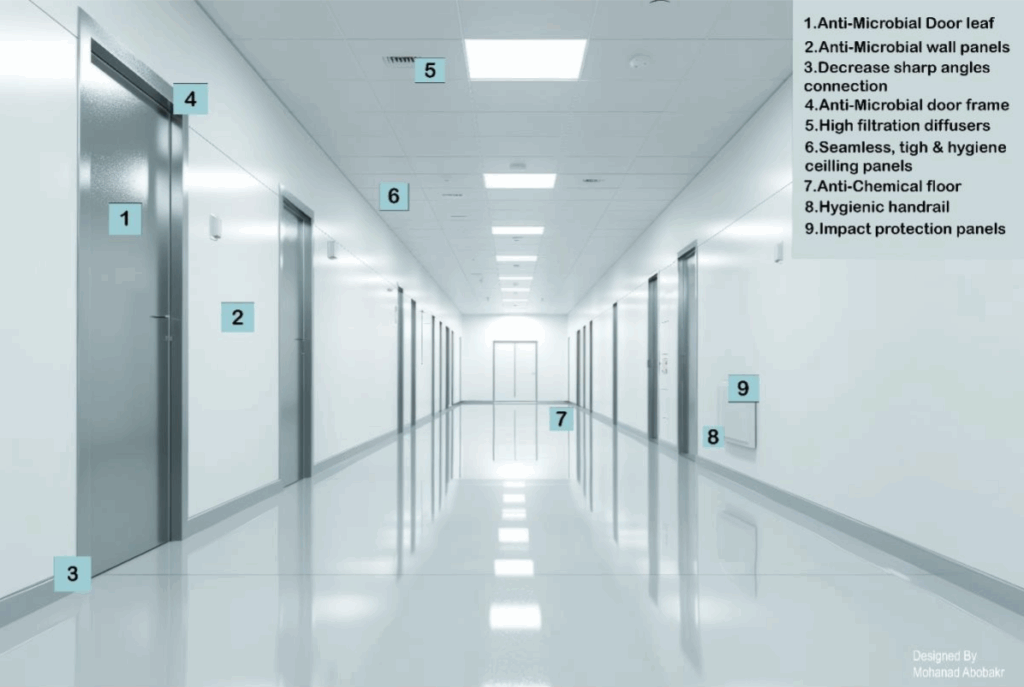
Figure 1: A schematic diagram of some of the key built environment hygiene features to consider incorporating in a hospital setting

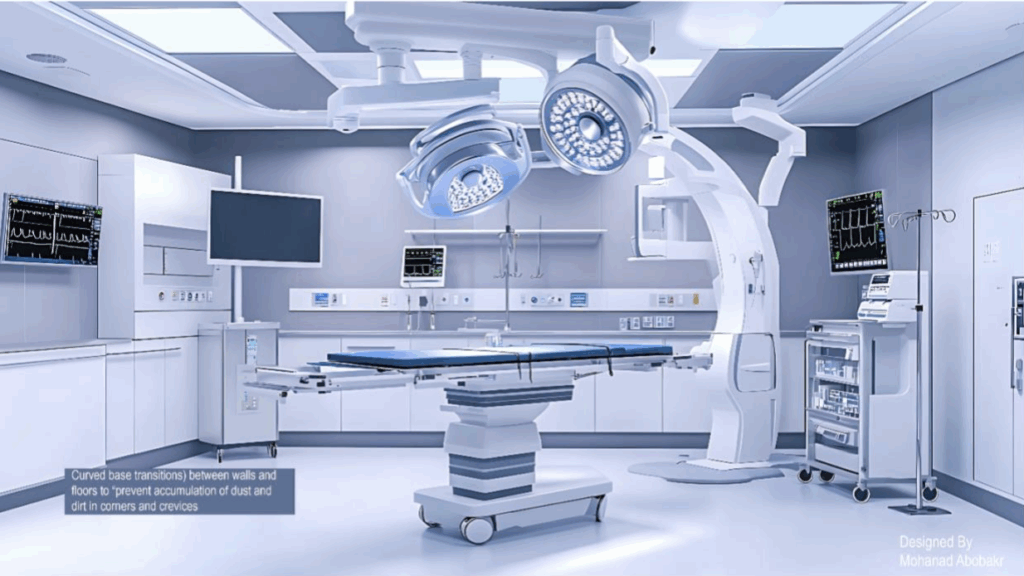
Infection-control guidelines underscore the need for impervious, cleanable wall finishes. For example, UK standards explicitly state that clinical-area walls must be “smooth, hard, seamless and impervious” to make cleaning easier[2]. Surfaces should be “free from fissures, open joints or crevices”, since any gap could trap contaminants[2]. Further guidance advises that wall finishes be able to withstand cleaning and disinfection without physical degradation[4]. In other words, surfaces must remain intact and non-porous after repeated exposure to cleaning agents. Similar recommendations appear in other contexts: NHS Infection Control guidance calls for “smooth, cleanable impervious surfaces” throughout clinical areas, and advises designing coving (curved base transitions) between walls and floors to “prevent accumulation of dust and dirt in corners and crevices”[5, 3]. All these criteria – impermeability to liquids, chemical resistance and ease of wiping – are fundamental hygienic design parameters.

Key performance parameters

Key performance parameters can be quantified. Surface imperviousness means that the material resists penetration by fluids (blood, body fluids, cleaning solutions). An impervious wall finish does not absorb liquids, preventing pools or stains. Porosity is a related concept: Porous or open-pored materials are avoided, because their tiny holes can harbour bacteria and spores (and are nearly impossible to disinfect fully)[6]. Indeed, the German Commission for Hospital Hygiene (KRINKO) specifically recommends avoiding open-pored and granular materials in healthcare settings[6]. Likewise, surface roughness – often expressed by the Ra value – is controlled. Research and industry experience, including food-industry standards adopted by hygiene guidelines, suggest that mechanically treated surfaces should be very smooth, with Ra around 0.8 µm or less[6]. A low roughness means fewer tiny crevices, where dirt and microbes can lodge; smoother materials are easier to wipe completely clean. If surfaces are too rough, cleaning may be ineffective even with strong disinfectants. In practice, wall finishes for hospitals are specified to have minimal texture for precisely this reason[6].

Chemical resistance and durability are equally important. All interior surfaces will be subjected to routine cleaning regimens using strong detergents and sporicidal agents. If the wall material, or its finish, is not chemically stable, it will degrade over time, developing cracks or discolouration and, ultimately, lose its hygienic integrity. NHS guidance explicitly notes that wall finishes should not be physically affected or degraded by detergents and disinfectants[4]. Thus, the chosen wall system must resist oxidation, discolouration and warping under repeated disinfection. For example, polymer coatings or solid surfaces are tested for long-term exposure to bleach and other cleaning chemicals[7, 4]. Inadequate durability can lead to areas that cannot be safely disinfected. The KRINKO report warns that many commonly used surfaces can become damaged or lose their seal over a few years, creating hidden niches of dirt accumulation[7]. Hygienic design, therefore, demands materials with proven stability under cleaning.

Cleanability ties all these factors together. A wall system must not only resist contamination and chemicals but also allow rapid and thorough cleaning. In the UK’s health-building notes, all work surfaces – including walls, which are part of “built-in” surfaces – are required to be free of unsealed joints, seams or gaps[8]. This means no exposed fasteners, burrs or grout lines – just a continuous surface. Wall panels or coatings should extend completely from floor to ceiling without horizontal breaks, where possible. Where joints exist, they must be sealed or welded to eliminate cavities. Corner treatments, such as coved bases, provide a seamless junction between floor and wall, preventing the usual 90-degree corner trap. One guideline bluntly states that “coving between the floor and the wall” is needed to prevent dust accumulation in corners[5]. In summary, an optimally hygienic wall has sealed edges, no overlapping layers and a one-piece appearance, whether achieved through welded vinyl sheets, tightly bonded panels or continuous coatings.

Figure 2: Provide a seamless junction between floor and wall, preventing the usual 90-degree corner trap

Choose the hygienic surface

Choosing the right material for wall surfaces involves balancing these parameters. Several classes of materials are common in modern healthcare. PVC vinyl wall coverings are popular, because they are lightweight and can carry anti-microbial additives or decorative patterns. High quality vinyl can provide a reasonably smooth, washable surface, and some brands meet hospital grade specifications. However, vinyl is typically applied in sheets or tiles, requiring seams and welds at edges. Although seams can be heat-welded to become quite impervious, any joint is a potential weak point over time. Heavy impact or abrasion can tear the vinyl, and lower-grade vinyl may not resist all chemicals. In cleanrooms, vinyl is often compared to resin floors: It “is durable, but may be more prone to scratches, tears or indentations depending on the quality and thickness of the wear layer”[9]. Moreover, the seams or welded joints, while initially sealed, may eventually “harbour particles or bacteria”, if they degrade[10]. Thus, vinyl can be effective, but typically requires careful maintenance of edges and regular inspection.

By contrast, epoxy resin systems (liquid-applied coatings) form a truly seamless membrane over wall substrates. Fibre-reinforced epoxy wall panels or coatings provide a continuous hard surface from floor to ceiling, with integral coved toe. Epoxy systems are chemically bonded to the substrate and cure into a monolithic layer. As noted in industry sources, fibre-reinforced epoxy has “easy application and durability” as a protective barrier against contaminants[11]. Specialised epoxy wall products are formulated to tolerate UV exposure and harsh chemicals[11]. Once applied, an epoxy wall coating has no joints at all, except at door frames and cutouts, eliminating any gaps that could trap soil[10, 12]. In fact, one manufacturer notes that “resinous wall systems bond tightly and chemically to every part of a surface, offering easy cleanability and durability” [12]. The downsides are that epoxy is rigid (so substrate must be very flat), and repairs can be difficult (patching a damaged epoxy panel requires re-coating a section). But for many intensive-care or operating-room areas, seamless epoxy walls deliver the highest level of hygiene by virtue of their imperviousness and robustness.

High-Pressure Laminate (HPL) panels are another option. HPL (sometimes called phenolic-resin panels) consists of cellulose fibres impregnated with resin, compressed under heat into a hard sheet. These panels can be produced in large, smooth sheets and installed with tight joints. The material itself is non-porous and stain-resistant, and higher-end HPL can endure heavy impact. For example, one leading supplier advertises that its HPL offers “superior stain-, wear-, impact- and scratch-resistance” compared to vinyl or wood[13]. Typical HPL surfaces are durable and easy to disinfect. If any minor chip or crack occurs, however, it can expose the inner material, so edges must be well-sealed. In practice, wall-mounted HPL is often used around nurse stations or corridors where durability is paramount, but it does rely on good seam sealing at the panel joints. Unlike epoxy coatings, HPL panels can be individually replaced if damaged. Overall, HPL sits between vinyl and epoxy: It is harder than vinyl, so is more impact resistant, but is less chemically impervious than a cured resin coating.

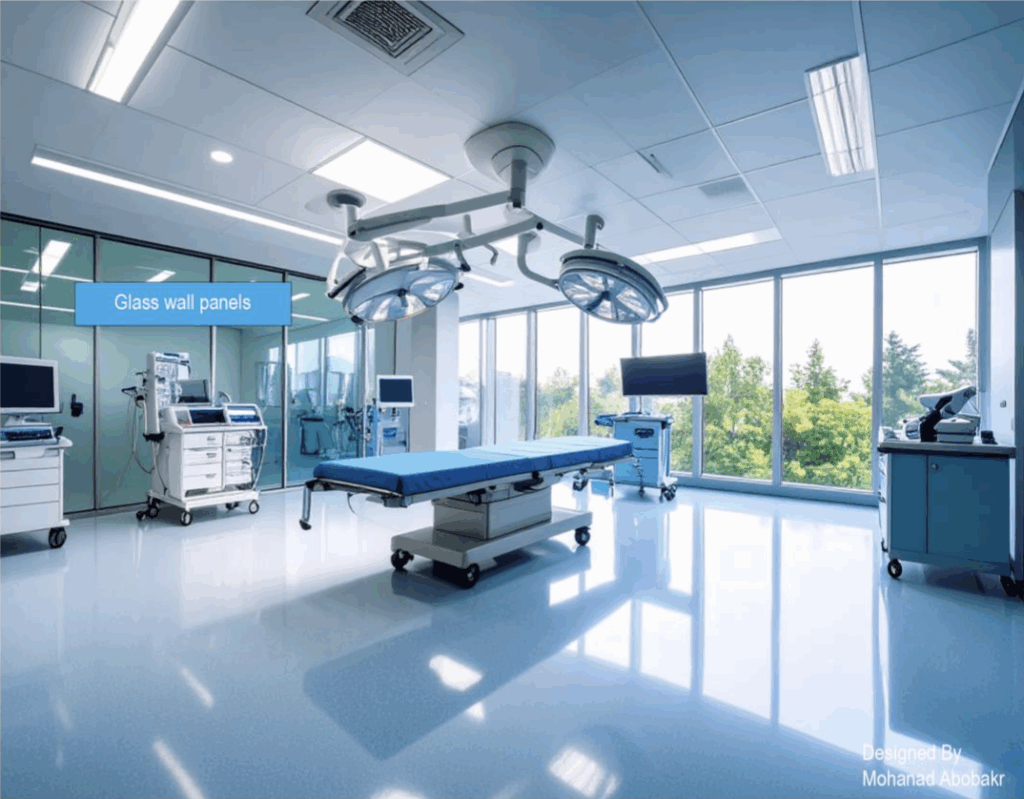
Tempered glass panels represent a newer class of hygienic wall finish. Glass is inherently non-porous and chemically inert. High-quality tempered glass wall panels, often mounted over a backing plate, have no paint or laminate layer that can wear off. Glass will not absorb fluids or

harbour microbes, and it can be vigorously cleaned for decades without degradation. Industry experts note that glass “can withstand hospital-grade cleaners, meaning it cleans better and won’t degrade even after decades of use”[14]. Since glass is smooth and impermeable, pathogens have nowhere to attach; one trade commentary points out that “glass can’t harbour bacteria or pathogens” unlike porous materials[14]. The downsides are that glass is rigid and heavy; it must be installed carefully and is prone to visible smudges until wiped. Also, the edges and mounting channels need sealant to prevent water ingress. When well-installed, however, glass is arguably the most hygienic material: It remains flat, scratch-free and glistens cleanly. Glass partitions (for example, in operating rooms) also reflect light and can improve staff visibility.

Figure 3: Wall glass panels

In all cases, infection-control best practices dictate integrating these materials with smart design. For example, walls should extend unbroken from floor to ceiling and meet adjacent surfaces flush to avoid gaps. Any penetrations – electrical outlets, handrails, medicine pass-throughs – must be sealed. Hardware, like grab bars or monitors, should be flush-mounted when possible. Junctions are critical; as noted earlier, coving at the wall-floor interface removes the acute corner that normally traps dust[5]. Wall finishes must survive the actual cleaning protocols used. For instance, materials are tested to ensure that repeated wiping with disinfectants – including bleach, hydrogen peroxide and quaternary ammonium compounds – does not dull or crack the surface. Hospital guidelines stress that all high-touch wall areas be designed so staff can clean them without difficulty. Reducing the number of flat surfaces – for example, by avoiding recesses or unnecessary trim – also cuts down on potential contamination sites.

Ultimately, choosing between vinyl, epoxy, HPL or glass involves trade-offs in cost, aesthetics and performance. Vinyl coverings are often least expensive and easiest to install on existing walls, but they require perfect substrate preparation. Epoxy resin systems are labour-intensive to apply but yield the most seamless finish. HPL provides a good balance of durability and replaceability. Glass is the most expensive but offers unmatched longevity and cleanliness. In each case, designers must verify that the product specifications meet the strict criteria of healthcare standards: Imperviousness to moisture, Ra below recommended thresholds, compatibility with sterilant, and proven cleanability. Technical literature confirms that seamless, non-porous surfaces inhibit bacterial survival and facilitate disinfection[6, 12]. High-touch walls – bed head walls, splash areas, food prep zones – should use materials with the highest imperviousness rating available. Likewise, in isolation or operating areas, compliance with both ventilation – air changes and filtration – and surface hygiene guidelines provide a holistic infection-control strategy.

In conclusion, hygienic wall systems are a vital element of the healthcare-built environment. By specifying impervious, smooth and chemically durable materials and eliminating joints, designers ensure that interior walls do not become reservoirs for pathogens. Adhering to design standard, such as Health Building Notes recommendations, makes healthcare surfaces easier to clean and safer for patients. Emerging materials, like non-porous laminates and glass panels, expand the toolkit, but the core principles remain: Control porosity, minimise roughness (keep Ra low) and withstand disinfectant use. When combined with proper air filtration and rigorous cleaning protocols, well-designed walls contribute substantially to reducing hospital-acquired infections. The goal is a hygienic envelope in which every surface, including walls actively supports a sterile, healing environment.

References

1. U.S. Environmental Protection Agency. (n.d.). Air cleaners, HVAC filters, and coronavirus (COVID-19). Retrieved from https://www.epa.gov/indoor-air-quality-iaq/air-cleaners-hvac-filters-and-coronavirus-covid-19

2. NHS England. (2021). Health Building Note 00-10, Part B: Walls and ceilings. Retrieved from https://www.england.nhs.uk/publication/hbn-00-10-part-b-walls-and-ceilings

3. NHS England. (2021). Health Building Note 00-09: Infection control in the built environment. Retrieved from https://www.england.nhs.uk/publication/hbn-00-09-infection-control-in-the-built-environment

4. Commission for Hospital Hygiene and Infection Prevention (KRINKO). (2024). Hygiene requirements for cleaning and disinfection of surfaces: Recommendation of the Commission for Hospital Hygiene and Infection Prevention (KRINKO) at the Robert Koch Institute. GMS Hygiene and Infection Control, 19. Retrieved from https://www.egms.de/static/pdf/journals/dgkh/2024-19/dgkh000468.pdf

5. Lorenzi, N. (2024, September 10). Interior surface options for health care facilities. Health Facilities Management. Retrieved from https://www.hfmmagazine.com/interior-surfaces-products

6. Abobakr, M. (2024). Decision-making methods through a ‘hygienic lens’. Health Estate Journal (HEJ), UK. Retrieved from https://content.yudu.com/web/1u0jl/0A1umgt/HEJ-March-2024/html/57.html?page=56

7. Clarus. (n.d.). How glass keeps healthcare safer and cleaner. Retrieved from https://www.clarus.com/blog/how-glass-keeps-healthcare-safer-and-cleaner/

8. Sika. (n.d.). Hygienic floors, walls and ceilings in hospitals and other healthcare facilities. Retrieved from https://khm.sika.com/en/documents-resources/knowledge-center/knowledge-articles/hygienic-floors-walls-and-ceilings-in-hospitals.html

9. Precision Environments, Inc. (2025, April 22). What is the difference between vinyl and epoxy flooring systems? Cleanroom Technology. Retrieved from https://cleanroomtechnology.com/what-is-the-difference-between-vinyl-and-epoxy

10. Precision Environments, Inc. (2025, April 22). What is the difference between vinyl and epoxy flooring systems? Cleanroom Technology. Retrieved from https://cleanroomtechnology.com/what-is-the-difference-between-vinyl-and-epoxy

11. Abobakr, M. (2020). Stopping Corona from Sticking to the Surface. Climate Control Middle East. Retrieved from https://ccme.news/stopping-corona-from-sticking-to-the-surface/

12. CS Group. (n.d.). Using Wall Protection in Healthcare Environments | CS Acrovyn®. Retrieved from https://www.c-sgroup.co.uk/landing/wall-protection-in-healthcare/

13. Brissco Online. (n.d.). PVC Cladding for Hospitals. Retrieved from https://www.brissco-online.com/knowledge-hub/hygiene-cladding/hygiene-cladding-guides-reviews/pvc-cladding-for-hospitals

14. Altro. (n.d.). Hygienic Wall Cladding Solutions | External Wall Cladding. Retrieved from https://www.altro.com/uk/learn-and-engage/altro-guides/walls

The writer is a healthcare architect and specialist in healthcare façade design. He is a Programme Leader and Senior Lecturer at the Sustainable Engineering and Technology Education Centre at the University of Roehampton, in the United Kingdom. He holds a Master’s degree in International Façade Design and Construction from Ostwestfalen-Lippe University, Germany, and is the recipient of the Building HEALTHY Building(s) Award (Germany, 2017). He may be contacted at Mouhand.Abobakr@roehampton.ac.uk

Mohanad Abobakr
Premium Story

IEQ and fertility

In the delicate dance of creating new life, an often-invisible partner plays a critical role – the air we breathe, says IAQ consultant Dr Iyad Al-Attar, adding that for those undergoing In Vitro Fertilisation (IVF) and seeking to benefit from other Assisted Reproductive Technologies (ART), as well as for couples hoping to conceive naturally, the purity of the air is emerging as a crucial factor in determining success. Dr Al-Attar in conversation with Surendar Balakrishnan, Editor, Climate Control Middle East…

Quite simply, why isn’t air pollution research clearing the air?

The world is facing a severe health crisis caused by air pollution, which has a significant impact on human health, the environment and the economy. Scientific research links air pollution to respiratory and cardiovascular diseases, and the World Health Organization identifies it as a leading cause of premature death. Environmentally, it contributes to acid rain, ozone depletion and climate change, while economically it leads to lost productivity and healthcare costs amounting to billions of US Dollars. Equally important and overlaid with emotion is the fact that air pollution causes infertility.

Despite overwhelming evidence, air pollution is being addressed but not directly identified as a cause of infertility in the public realm. Economic barriers, such as industry resistance to regulations and fears of job losses hinder effective action. Politically, there is often insufficient support for environmental policies, while a lack of real-time air quality data hampers public awareness. The scientific community has documented the severe health effects of air pollution, including increased rates of diseases and impaired cognitive function. Air pollution impacts our health beyond respiratory and cardiovascular issues, also posing a risk to reproductive health due to poor outdoor and indoor air quality.

Given that air pollution affects human fertility, why is the topic not gaining the traction it deserves? Indeed, what are some of the challenges contributing to the slow acknowledgment of the issue?

There are four challenges, in my opinion that are preventing the topic from gaining momentum. The first reason is scientific challenges. Infertility has various genetic and lifestyle influences, making it hard to establish clear connections to specific pollutants. The second is the focus of existing research. Reproductive medicine has focused on clinical and genetic aspects, prioritising advancements in In Vitro Fertilisation (IVF) over environmental factors. The third is the competition for funding. Environmental reproductive health studies struggle for funding against more established research areas, complicating large-scale studies. And the fourth reason is awareness. Public discussions on air pollution usually revolve around immediate health issues, overlooking its potential impact on infertility. Addressing the correlation between air pollution and infertility requires interdisciplinary research, more funding and campaigns to raise awareness about the importance of clean air for reproductive health.

The impact of air pollution on human fertility can be seen as a quiet crisis. While growing scientific evidence highlights the adverse effects of airborne contaminants on our ability to conceive and raise healthy babies, there is a lack of public and political urgency to address the issue. Research on the respiratory and cardiovascular effects of air pollution has been extensive; however, the impact on fertility has received less attention. Pollutants like Particulate Matter (PM2.5), nitrogen dioxide and sulphur dioxide are increasingly linked to reduced sperm quality and count in men, as well as diminished ovarian reserve and lower IVF success rates in women.

Recent decades have seen a decline in sperm quality in industrialised countries, with air pollution suspected as a contributing factor. Research suggests that exposure to air pollutants can impact sperm motility, vitality, concentration, morphology, DNA quality and hormonal changes. The impact on female fertility ranges from Spontaneous Fertility to Hormonal Effects and to Fecundability, particularly in the case of women living in close proximity to major roads.

Could you clarify the connection between outdoor air pollution and issues related to human fertility?

Scientific research has highlighted that exposure to air pollution can lead to decreased sperm count and motility, DNA damage, hormonal disruption and erectile dysfunction, further impeding conception. Pollutants can damage blood vessels, leading to reduced blood flow, which is necessary for an erection. Pollutants include silicate dust particles [Figure 1], Volatile Organic Compounds (VOCs), pesticides, phthalates and Heavy Metals. In essence, outdoor air pollution acts as a pervasive environmental stressor that can directly and indirectly impair various stages of human reproduction, from gamete development and quality to fertilisation and from implantation to successful pregnancy outcomes.

What can air filtration technologies do for IVF and Assisted Reproductive Technologies, or even preventatively, towards protecting the human race before conception of a baby?

The air we breathe is crucial for creating new life, especially for those undergoing IVF and Assisted Reproductive Technologies. The purity of air is increasingly being recognised as vital for reproductive success, with advanced air filtration systems acting as protectors against harmful pollutants that can impact sperm, eggs and embryos. On the IVF outcome front, a decrease in live birth rates has been associated with increased NO2 levels. Ozone exposure negatively impacts births, post-implantation. Furthermore, high PM10 concentrations during the follicular phase are linked to increased miscarriage risk. Animal studies suggest that exposure to PM2.5 affects embryo development and implantation. Pollutants such as NO2, CO, and PM2.5 are associated with increased stillbirth risks. Ultimately, research indicates that better air quality in IVF clinics leads to higher fertilisation rates, improved embryo quality and increased live birth rates.

Air filtration also benefits reproductive health at home by enhancing sperm quality and hormone balance. High-quality air purifiers can reduce exposure to toxins, supporting gamete health and healthy pregnancies. Investing in air filtration is crucial for ensuring cleaner air for future generations, particularly during pregnancy. Enhancing our understanding of filtration requires bridging the gap among fields such as building science, HVAC and filtration technologies. Filter acquisition often overlooks the physical and chemical properties of particles, as well as the importance of air filter media and the pleating process, all of which impact filter permeability, performance and circularity. A fundamental understanding of particle properties is essential for addressing challenges and for engineering air filters with optimal separation and retention capabilities.

We should emphasise the importance of a foundational framework for improving Indoor Environmental Quality (IEQ) in urban environments. Progress can be through phases.

Phase 1: Foundation – IEQ governance and IAQ monitoring Establish IEQ governance:

• Form a cross-departmental task force, develop a Municipal IEQ Code with health-based standards and mandate IAQ transparency for building owners

• Implement comprehensive IAQ monitoring: Deploy sensors to gather real-time data on indoor pollutants (PM2.5, CO2, VOCs, temperature and humidity) to identify pollution sources and track intervention effectiveness

Phase 2: Targeted action – HVAC and filtration upgrades

• Optimise HVAC systems: Ensure compliance with ventilation standards, use demand-controlled ventilation and maintain HVAC systems to avoid contamination

• Engineer air filtration requirements: Engineers must select filters based on a thorough physical and chemical characterisation of outdoor and indoor pollutants, moving beyond the simplistic approach of merely installing higher efficiency filters

• Continuous IAQ monitoring: Deploying IAQ sensors with the required spatial resolution to reveal the locations of pollution sources, enabling proper, objective and effective response to any IAQ variation and sending notification alerts for HVAC maintenance, based on monitoring data

If governance and monitoring are not the first priority, then a focus solely on technology will lead to failure as a result of wasted resources and a lack of accountability.

Can couples seeking refuge in air filtration technologies realise the dream of parenthood?

The protective power of air filtration plays a crucial role in preventative health, particularly in safeguarding fertility before conception. Pollutants that endanger embryos in labs can also affect reproductive health in individuals. For men, air pollution is linked to reduced sperm quality and increased DNA fragmentation.

For women, it can disrupt hormonal balance, adversely affect egg quality and lower ovarian reserves. Using high-quality air purifiers at home and in the workplace can help minimise exposure to harmful substances. For couples planning a family, this proactive measure can:

1) Protect gamete quality (filtered air improves sperm and egg quality)

2) Reduce inflammation (air pollution causes systemic inflammation that can harm reproductive function)

3) Support a healthy pregnancy (continued air filtration during pregnancy helps limit exposure to pollutants associated with complications like low birth weight and developmental issues)

Investing in fit-for-purpose air filtration systems promotes the health of future generations. However, challenges remain, including the difficulties in establishing universal thresholds for air contaminants due to variations in pollution sources and human tolerance. Logistical hurdles also exist in creating global standards, as the regulation of Assisted Reproductive Technologies differs significantly across countries. While some nations enforce strict laws, others rely on self-regulation, which complicates efforts to establish harmonised global standards. Also, these measures can be costly and governments may be unwilling or unable to allocate resources. Likewise, individuals might not be able to afford some of the equipment needed to cleanse indoor air.

You have spoken many times about widening the IAQ lens and embracing the IEQ perspective. What is your take on this?

While Indoor Air Quality (IAQ) primarily addresses the direct toxic effects of airborne substances on the reproductive system, Indoor Environmental Quality (IEQ) adopts a more holistic approach. IEQ recognises that human health, including reproductive wellbeing, is influenced by a complex interplay of physical factors, like lighting, noise, thermal comfort and space utilisation; psychological factors, like stress; and social factors within indoor environments. By comprehensively assessing and improving these interrelated elements, IEQ offers a broader strategy for enhancing reproductive health that extends beyond merely mitigating toxic exposures, ultimately contributing to healthier living and working environments.

Are you optimistic that change is imminent and can steer the course of our environmental challenges to a sustainable path?

I am hopeful; I can’t say I am optimistic. We are behind on most of our environmental promises, and the scale of our environmental challenges – driven by the way we live, generate and use power as well as pollute and heat our planet – can challenge an optimistic mindset. The rising tide of pandemics, wildfires and early signs of climate change reveal our vulnerability.

We must address the economic challenges surrounding outdoor air quality and indoor air quality issues. The cost-benefit dilemma often hinders progress, with the financial burden of cleaner technologies taking centrestage. Studies show that the long-term benefits of filtered air – such as lower healthcare costs, enhanced labour productivity and the creation of green jobs – outweigh initial investments. However, short-term economic concerns and corporate lobbying frequently overshadow these advantages, prioritising immediate economic anxieties over the proven benefits of clean air policies.

Political will for meaningful change is often weak, as politicians balance the interests of polluting industries with the demand for cleaner air. Concerns about job losses and public backlash make bold environmental action risky. The trans-boundary nature of air pollution further complicates efforts, requiring challenging international cooperation.

Public awareness of air pollution is increasing, but it often does not translate to pressure for change. In many low- and middle-income countries, limited access to real-time air quality data hinders understanding of risk. Even when people are aware, they may resist measures that disrupt daily life, like driving restrictions or fuel tax increases, as the perceived short-term inconveniences outweigh long-term benefits. Furthermore, research funding is limited and highly competitive, with studies on environmental reproductive health vying for the same funds as established infertility research. The high costs and logistical challenges of long-term studies on air pollution and fertility pose a significant obstacle to securing funding. Without dedicated funding and support from major health organisations, progress in this field is likely to remain slow.

Any final thoughts?

The growing scientific evidence on the adverse effects of air pollution on fertility demands urgent attention. While the challenges are substantial – encompassing scientific complexities, funding scarcity, economic resistance, political inertia and public awareness deficits – the potential of air filtration technologies offers a tangible pathway for protection. Therefore, I am proud to be addressing the IEQ and fertility nexus in collaboration with Climate Control Middle East (CPI Industry) through an upcoming focused campaign on this mission-critical topic, and I invite government organisations, research institutions, and industry leaders to join this timely initiative. This will require a global campaign that leverages interdisciplinary research, increased funding, robust governance, comprehensive monitoring, and sustained public awareness campaigns to avail fit-for-purpose filtered air for current and future generations.

Figure 1: Silica particulates captured by a typical air filter used in the HVAC air-handling unit in an IVF clinic
Premium Story

Emerson receives award for energy efficiency at its Milwaukee facility

Company says the honour is tied to the Wisconsin state energy efficiency programme recognising its commitment to saving energy

MILWAUKEE, Wisconsin, United States, 26 June 2025: Emerson said its Appleton Group iron casting facility in South Milwaukee has received a 2025 Energy Excellence Award from Focus on Energy. Making the announcement through a Press Release, Emerson said the award recognises organisations in the state that go beyond basic energy efficiency solutions, both within their own organisations and those they support.

Emerson said its foundry is one of the 11 recipients this year, highlighting how energy-efficient industrial facilities can reduce costs, contribute to a healthier environment and strengthen local economies.

Erin Soman, Managing Director, Focus on Energy, said: “Emerson’s foundry shows that even energy-intensive operations can be leaders in energy efficiency. This award isn’t just about saving energy – it’s about people coming together to think differently about how we use energy and what that means for Wisconsin’s future.”

Emerson said that Focus on Energy is a statewide energy efficiency and renewable energy programme for businesses and residents in Wisconsin. It offers a range of rebates and incentives for energy-saving technologies as well as services that help organisations reduce energy use and costs.

According to Emerson, the Appleton foundry, which manufactures electrical fittings, enclosures and other cast products for electrical infrastructure, has worked with the Focus on Energy initiative since 2017. In that time, the partnership has made it possible for the foundry to identify, evaluate, design and implement many successful energy efficiency and utility cost-savings projects, Emerson said.

According to Emerson, these initiatives include the installation of new controls on its makeup air units, the replacement of channel furnaces with cordless induction melting furnaces and the replacement of over 800 fluorescent lights with Appleton industrial LED fixtures. Combined, the energy improvements save the facility more than 10,000 megawatt-hours (MWh), 65,000 million British thermal units (MMBtu) and USD 1 million in energy costs, annually. Emerson said the foundry also identified nearly USD 350,000 in energy-related incentives throughout this period.

Emerson said the foundry team’s commitment to optimising energy efficiency has cut the facility’s total energy consumption and emissions by about a third since 2017, drastically reducing its own emissions and operating expenses. These reductions, Emerson said, are especially significant, given that the century-old foundry had been among the largest energy-consuming facilities across all of Emerson.

John Schuster, Plant Manager, Emerson, said: “The Energy Efficiency Excellence award highlights the dedication of our team to improve our own environmental impact, support our cost reductions in Wisconsin’s energy system and work with external organizations to move toward a more sustainable future. What we’ve achieved in South Milwaukee is a success story for the Emerson portfolio, as well as for the castings industry overall. It’s an honor to be acknowledged in this way.”

Premium Story

Hauser joins Epta Group

Epta says move is to enhance the collective presence and competitiveness of the two companies in the retail sector

MILAN, Italy; LINZ, Austria, 17 July 2025: Epta said it has signed a binding agreement with the shareholders of Hauser, an established Austrian company with a strong presence across the DACH region and central-eastern European markets, under which Hauser will join Epta Group.

Making the announcement through a Press Release, Epta said the strategic business combination aims to enhance Epta Group’s presence and competitiveness in the retail sector and marks a significant step forward in the long-term vision shared by both companies – two family-owned businesses united by common values and a commitment to sustainable growth.

Epta said Hauser joining Epta Group will result in one of the most comprehensive and leading players in the sector, with approximately €2 billion in consolidated revenues and around 10,000 employees, combining innovation, sustainability and exceptional service capabilities. The joint entity, Epta said, will significantly reinforce the individual geographic presence of the two companies, with particular focus on Germany, Austria, Switzerland, Poland, Czech Republic, Slovakia, Romania, Bulgaria, Hungary, further south-eastern European countries, UK and France. The regional presence will benefit also from Hauser’s two plants in Austria and Czech Republic, Epta said.

According to Epta, Hauser’s renowned market position will complement its own unique expertise in commercial refrigeration, as the Group will now offer its clients one of the broadest ranges of commercial refrigeration solutions and services, driven by sustainable and digital innovation. Supported by a more extensive and complementary geographical footprint, Epta said, the two companies will join forces in design, production, installation and maintenance of commercial refrigeration systems. With a widespread and highly skilled professional network throughout Europe, Epta said it plans on providing a higher quality of service for customers.

Epta said the coming together of the two companies is another milestone for it in its journey to consolidate its status as a global player in the sector, thanks to an increase in its offer and a strengthened international footprint. For Hauser, this operation creates the ideal conditions for long-term profitable growth in a highly evolving market, Epta said.

Marco Nocivelli

Marco Nocivelli, CEO, Epta, said: “The union of the Epta and Hauser families marks the beginning of a new chapter in European industrial excellence, built on shared values, vision, and a deep commitment to innovation and sustainability. Our combined expertise in the commercial refrigeration business is unique. After our recent partnership with the Viessmann family in 2023, the agreement with Hauser further strengthens our position as a global player in the sector. In a scenario shaped by ecological and digital transitions, creating meaningful partnerships and networks is essential to generate a sustainable future. This agreement perfectly represents our strategy and our desire to continue investing in the future of the Group according to our purpose – Preserving our planet with conscious innovation. Together.”

Thomas Loibl

Thomas Loibl, CEO, Hauser, said: “With Epta as a strong partner, we are continuing our tradition as a family business while strengthening our international presence. This step ensures the company’s sustainable development, provides stability in an economically volatile environment, and opens up new opportunities for Hauser.”

Following completion of the transaction, which will be carried out through a contribution in Epta of Hauser’s shares, the current shareholders of Epta will hold approximately 86% of the combined entity, while the foundation founded by Mr. Hauser will hold approximately 14%, Epta said.

Upon closing, Hauser will be fully consolidated into Epta’s financial statements, Epta said. As part of the agreement, Hauser will be represented within Epta’s Board of Directors, ensuring continuity and alignment of strategic vision, Epta added.

According to Epta, the closing of the deal is subject to customary conditions precedent, including approval by the European antitrust authorities, expected by the end of 2025.

Epta said it received assistance in the transaction from Bain & Company for business and operational due diligence, from PwC for financial and tax matters and from Clifford Chance as legal advisors. Hauser, Epta said, received advice from PwC for financial, tax and legal matters.

Premium Story

Empower begins supplying District Cooling to Phase 1 of Al Habtoor Tower

Project has a total capacity of 7,200 RT, District Cooling utility company says

DUBAI, UAE, 22 July 2025: Emirates Central Cooling Systems Corporation (Empower) said it has commenced supplying its District Cooling services to the first phase of Al Habtoor Tower project, which spans 3,517,313 square feet. Making the announcement through a Press Release, Empower said all phases of the District cooling connection to the project are scheduled for completion by the end of 2027, with a total cooling capacity reaching 7,200 refrigeration tons (RT), equivalent to nearly 75% of the peak cooling demand of Burj Khalifa.

Empower said this follows the agreement it signed with Al Habtoor Group in April 2024 to supply Al Habtoor Tower project with its District Cooling services from its Business Bay District Cooling project.

Empower confirmed it will deliver District Cooling services through advanced systems designed to maximise energy efficiency and minimise carbon emissions. The distribution network for the project has been engineered in line with leading environmental standards, it added.

H.E. Ahmad Bin Shafar, CEO, Empower, said: “The scale and diversity of Empower’s portfolio reflect our steadfast commitment to delivering the highest standards of quality and reliability to customers across all sectors. We remain dedicated to providing sustainable cooling solutions that keep pace with Dubai’s rapid urban and population growth, support its environmental vision, and align with the UAE’s broader objectives of conserving natural resources, advancing a green economy and achieving carbon neutrality.

“We take pride in our partnership with Al Habtoor Group to deliver our industry-leading services to Al Habtoor Tower. This collaboration stands as a testament to the growing confidence in Empower’s expertise and capabilities in supporting landmark developments that shape the emirate’s urban landscape. We remain committed to expanding our operations and playing an active role in advancing the sustainability of Dubai’s real estate sector.”

H.E. Ahmad Bin Shafar

H.E. Bin Shafar further emphasised that Empower will continue its expansion efforts while adopting advanced technologies within a strategic framework focused on planned sustainable development. This approach aligns with the directives of H.H. Sheikh Mohammed bin Rashid Al Maktoum, Vice President and Prime Minister of the UAE and Ruler of Dubai, which aim to position the emirate as a global hub for the green economy and the city with the world’s lowest carbon footprint by 2050.

Empower said Al Habtoor Tower stands out as one of the most iconic urban developments in its portfolio of customers. Rising to a height of 350 metres, the tower comprises 87 floors and 1,701 residential units, complemented by a range of luxury amenities, Empower said, adding that it is expected to house up to 5,000 residents.

Empower said it provides environmentally friendly District Cooling services to all projects of Al Habtoor City, including a collection of luxury international hotels and mixed-use residential towers.

Premium Story

Byrne announces placement in Top 100 global equipment rental companies

Says its inclusion in the IRN100 highlights its growth trajectory, adds that its regional insight and agility remain key strengths

DUBAI, UAE, 21 July 2025: Byrne Equipment Rental, a provider of rental solutions across the Middle East, announced that it has once again been recognised in the 2024 IRN100, the International Rental News ranking of the world’s top 100 equipment rental companies by rental revenue. Making the announcement through a Press Release, Byrne said it is one of only two companies headquartered in the Middle East to be included in this prestigious global list.

With a legacy spanning over 30 years, the company said it has built a strong reputation for reliability, safety and innovation across the region. With operational leadership and teams established across Saudi Arabia, UAE, Oman and Bahrain, Byrne said it has a deep understanding of local regulations, industry needs and operating environments, which has made it a trusted partner for clients across sectors, including oil & gas, construction, events and logistics.

Pat Fallon, Deputy CEO, Byrne Group, said: “This recognition is a testament to the strength of our business model – one that is not only rooted in the Middle East, but shaped by it. Our success is grounded in regional expertise, long-standing client relationships, and an unwavering commitment to safety, uptime and service excellence – all underpinned by a cultural intelligence that respects and reflects the values, expectations and business norms of the Middle East.”

Byrne said it goes beyond being an equipment provider, adding that it has evolved into a strategic partner, offering turnkey rental solutions that include technical support, compliance advisory and customised project delivery. Byrne said it goes further by investing in sustainable technologies, digital tools and workforce development, ensuring it remains a forward-thinking leader committed to adding value beyond machinery.

As the Middle East continues to invest in infrastructure, energy transition and large-scale development, Byrne said its regional intelligence and agility remain critical advantages. It said that being included in the IRN100 underscores not only its own growth trajectory but also the growing global recognition of Middle Eastern businesses in the equipment rental space.

Premium Story

ASHRAE to host CIDCO 2025

Event to focus on AI-driven innovation in construction and building operations, Society says

ATLANTA, Georgia, USA, 18 July 2025: ASHRAE said it has an exciting lineup of keynote sessions and technical programming for the 2025 ASHRAE Conference for Integrated Design, Construction & Operations (CIDCO), from August 13 to 15 in Denver, Colorado, in the United States. Making the announcement through a Press Release, ASHRAE said the conference will bring together professionals from across the built environment to explore innovative strategies that shape the future of building performance.

“CIDCO reflects the dynamic convergence of design, construction and operations, and emphasizes ASHRAE’s commitment to innovation and sustainability across the entire building lifecycle,” said 2025-26 ASHRAE President Bill McQuade. “This year’s conference provides a great opportunity for building professionals to collaborate, challenge conventional thinking and explore breakthrough ideas that are shaping the future of high-performance buildings.”

According to ASHRAE, sessions include:

· Keynote Session 1: Carl Elefante Wednesday, August 13 | 8.10am – 9am Carl Elefante, architect and author of Going for Zero: Decarbonizing the Built Environment on the Path to Our Urban Future, will kick off the conference by sharing how the lessons embedded in our built heritage can guide the decarbonization of our cities. According to ASHRAE, Elefante is a nationally recognized advocate for the stewardship of existing buildings as a climate solution.

· Keynote Session 2: Building Performance Analysis in the Age of AI Thursday, August 14 | 8am – 9am 2024-25 ASHRAE Presidential Member Dennis Knight will moderate a panel discussion featuring Dr Roya Cody, E Mitchell Swann, Zheng O’Neil and Krishnan Gowri. The panel will examine how artificial intelligence is reshaping design workflows, operations and building performance analytics, with a focus on real-world applications and emerging best practices.

According to ASHRAE, immediately following the August 14 keynote, attendees would have the opportunity to participate in the CIDCO Innovation Jam, a fast-paced, collaborative session where teams will tackle HVAC challenges in a hot and humid data centre scenario, with an added creative twist. ASHRAE said participants have the opportunity to register either individually or in teams before or during the conference.