CCME.NEWS

Your source for the HVACR Industry, covering in-depth news & analyses on policy, business & technology.

Get Premium:

Sign-up

COMMERCIAL ENQUIRIES:

Frédéric Paillé
Co-Founder & Commercial Director
fred@cpi-industry.com
+971 50 714 7204

Follow Us

CCME.NEWS

CCME.NEWS, covering the regional and global HVACR industry with an unwavering commitment to providing in-depth news and analyses on policy, business and technology

Contact Info

PO Box 13700,
Dubai Media City, Dubai
admin@cpi-industry.com
+971 50 714 7204

Follow Us

Premium Story

LU-VE Group begins production of ‘Giants’ product range in China

Move follows major plant expansion in Tianmen, company says

UBOLDO, Varese, Italy, 22 July 2025: LU-VE Group, which produces heat exchangers and cooling systems, announced the beginning of production and delivery of its GIANTS product range in China, following what it called a significant expansion of its manufacturing facility in Tianmen, in the Hubei Province of China.

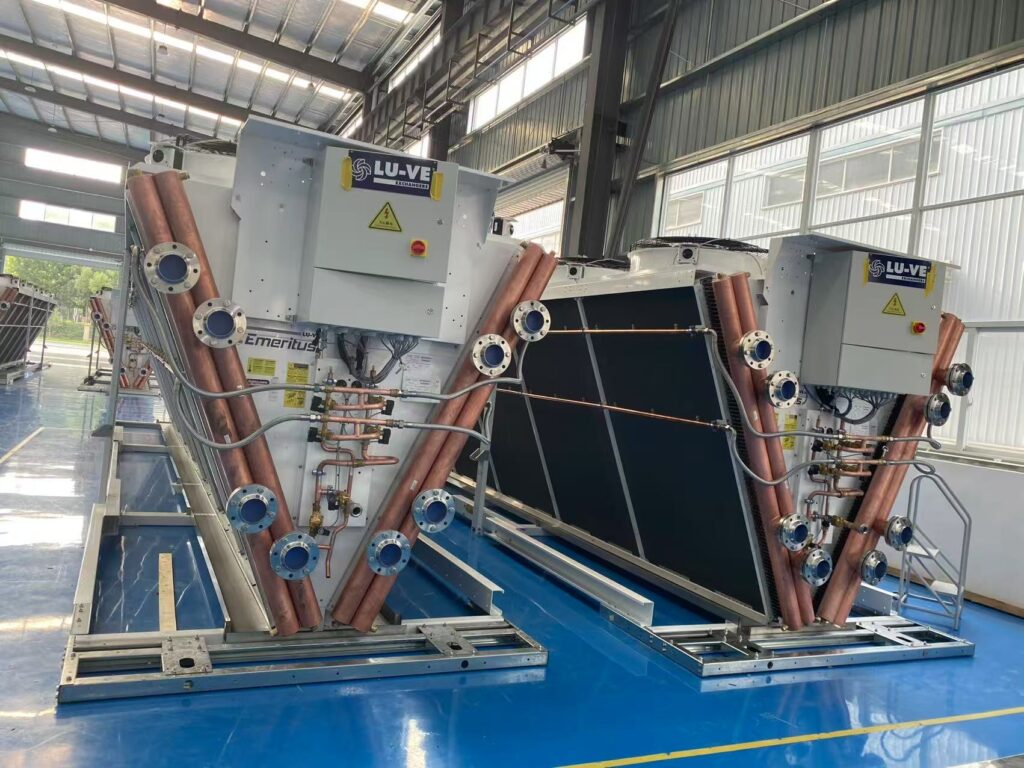
EHLD Giants manufactured in the Tianmen plant

Making the announcement through a Press Release, LU-VE said the newly expanded plant, operational since December 2024, has more than doubled in size – from 19,000 to over 43,000 square metres, including 6,640 square metres dedicated to the storage of finished products. This strategic investment, LU-VE said, reinforces its commitment to the Chinese market and supports its international growth strategy. As a result, the facility now manufactures large EHDV dry coolers from the GIANTS range, featuring advanced technologies for high-demand applications in data centres and power generation – sectors experiencing strong growth under China’s “For China from China” initiative and the €80 billion cold chain investment plan through 2028, LU-VE said.

Giant unit ready to be shipped

“With the start of GIANTS production in China, we are delivering on our GLOCAL strategy: Combining LU-VE Group’s global expertise with local production capabilities,” said Thomas Stiller, General Manager, LU-VE China. “This gives our customers in China faster delivery, tailored products and closer support. The expansion not only strengthens our local presence but also enables us to meet the growing demand from critical sectors like data centres and energy.”

LU-VE said it remains the first and only foreign company to establish operations in Tianmen, highlighting its long-term strategic vision and its ability to identify high-potential regions for industrial development. The company added that its enhanced production hub positions it as a key player in supporting China’s evolving infrastructure needs, while ensuring the highest standards of quality, efficiency and innovation.

Premium Story

Evaporative Cooling

Hajj 2025: Sustainable solutions for a warming future. Extolling the benefits of Indirect-Direct Evaporative Cooling (IDEC) systems, Shakeel Ahmed Kayani says their performance during Hajj 2025 provided irrefutable evidence of their efficacy

Each year, millions of Muslims gather in Makkah for Hajj, one of the world’s largest religious gatherings. However, rising temperatures are making this spiritual journey harsher. In June 2025, temperatures exceeded 50 degrees C, similar to Hajj 2024, which recorded a high of 51.8 degrees C. That year, more than 1,300 pilgrims died from heat-related causes, most of them unregistered and without access to cooling or shelter (Associated Press, 2024). On June 16, 2024, over 2,764 cases of heat exhaustion were reported in a single day (Arab News, 2024).

In response, the Saudi government made significant improvements for Hajj 2025. These included more than 10,000 new shaded trees, over 2,400 misting fans and the operation of the Grand Mosque’s 155,000-ton cooling system to maintain temperatures between 22 degrees C and 24 degrees C (Saudi Press Agency, 2025). As a result, a 90% reduction in heat-related illnesses was reported compared to the previous year (Financial Times, 2025).

Even with centralised efforts, millions of pilgrims still required decentralised and mobile cooling solutions, especially in outdoor or semi-covered areas.

Cooling outdoor zones with fog cannons

For large, open areas exposed to direct sun, such as the paths to Jamarat, gathering zones in Arafat and Mina, high-pressure fog cannon systems played a vital role. The systems spray ultra-fine water droplets into the air, reaching up to 70 metres, quickly reducing ambient temperature by 10-12 degrees C (International Journal of Heat and Technology, 2021).

Compared to small misting fans, fog cannons cover wider areas with stronger airflow, making them more effective for crowd cooling. The units are mobile, lend themselves to rapid deployment, and can be operated successfully alongside hydration stations and heat-reflective white roads. Fog cannons offer practical, low-energy solutions that significantly reduce heat stress in zones where traditional cooling is not possible.

Using IDEC units in tunnels and shaded walkways

While fog cannons work well in open spaces, other areas, such as tunnels and covered walkways need a different solution. Indirect-Direct Evaporative Cooling (IDEC) systems are the best solution for shaded and semi-enclosed zones.

Hundred per cent fresh air, no hot exhaust

Unlike regular air conditioners that re-use indoor air and blow hot air outside, IDEC systems work differently. They take in fresh air from outside, cooling it down from 50 degrees C to anywhere between 13 degrees C and 18 degrees C, using water-based evaporation; they, then, send the cooled air into space. After use, the air is released outside. This not only improves indoor comfort but also helps cool down nearby outdoor areas, reducing the “heat bubbles” often created by traditional air conditioning systems in crowded spaces.

Energy efficiency and environmental impact

Traditional air conditioning units recycle indoor air and release hot exhaust into the environment. IDEC systems, in contrast, are sustainable. They use no refrigerants and consume up to 85% less energy than conventional air conditioners (Ahmad et al., 2024). With global demand rising, the IDEC market was valued at USD 1.2 billion in 2024 and is growing fast, especially in hot and dry regions, like large parts of Saudi Arabia. IDEC systems support sustainability goals as well as the striving for lower operating costs.

A sustainable model

Saudi Arabia’s Vision 2030 aims to promote sustainability, energy efficiency and reduced carbon emissions. IDEC systems support these goals by offering low-energy and environmentally friendly alternatives to traditional cooling systems. In the future, heat risks will continue due to climate change and unexpected temperature spikes. Makkah’s average temperature is increasing at a rate of 0.4 degrees C per decade (Pal & Eltahir, 2016). According to the study, the carbon footprint per pilgrim during Hajj is about 60.5 kilograms of CO₂ equivalent per day, much of it linked to cooling systems (Al-Ghamdi et al., 2011).

Integrating low-energy, low-emission technologies like IDEC and fog cannons will be essential to reducing environmental impact while maintaining comfort and safety.

Conclusion

Hajj 2025 demonstrated that innovative, scalable cooling solutions can make mass gatherings safer without compromising on sustainability. Evaporative solutions brought broad-area cooling in the open sun, while providing efficient, fresh-air cooling in shaded and enclosed locations.

Together, these solutions can form a powerful model for outdoor climate control. They not only can address immediate heat challenges but also align with broader environmental goals. As climate risks continue to grow, these systems are poised to become essential for Hajj, Umrah and other outdoor events.

The writer is Co-Founder, Windmason Arabia Company. He may be reached at shakeel@windmason.com.

Premium Story

GCC refrigerant transition report

Utpal Joshi of Daikin MEA elaborates on the technical pathways and strategic priorities

The Gulf Cooperation Council (GCC) countries are entering a pivotal phase in their refrigerant transition journey, driven by international climate obligations and national sustainability agendas. Most members – Bahrain, Kuwait, Oman and the United Arab Emirates – have ratified the Kigali Amendment to the Montreal Protocol and are classified under Group 2 of Article 5 Parties. This classification mandates a freeze on hydrofluorocarbon (HFC) consumption by 2028, followed by a gradual phasedown to 15% of baseline levels by 2047.

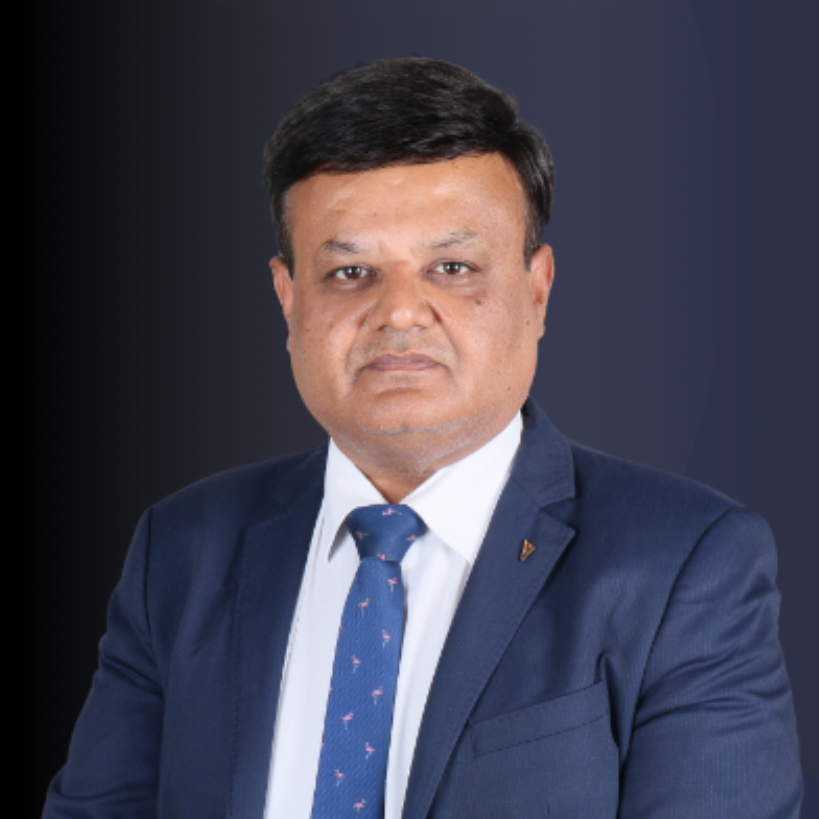
Utpal Joshi

United Arab Emirates (UAE)

National Cooling Plan Integration: The UAE has incorporated refrigerant management into its National Cooling Plan (NCP), which aims to reduce cooling demand and improve energy efficiency across sectors. This includes strategies for phasing down high-GWP (Global Warming Potential) refrigerants, in alignment with the Kigali Amendment to the Montreal Protocol.

National Refrigerant Registry: The UAE is developing a centralised refrigerant registry to track the import, use and disposal of refrigerants. This digital platform will enhance transparency, support enforcement of quotas and facilitate data-driven policy decisions.

Saudi Arabia

Through the Saudi Standards, Metrology and Quality Organization (SASO) and the Saudi Energy Efficiency Center (SEEC), the country is implementing Minimum Energy Performance Standards (MEPS) values. However, the Saudi National Center for Environmental Compliance (NCEC) and the Saudi Energy Efficiency Centre (SEEC) are looking into low-GWP refrigerants separately.

Technician Training Programmes: Saudi Arabia is rolling out certification and training programmes for HVACR technicians to ensure safe handling of alternative refrigerants, especially flammable or high-pressure types, like R-32, R454B and hydrocarbons.

Qatar

Policy Development: The country is also working on institutional frameworks to support enforcement and compliance, including customs training and refrigerant tracking mechanisms.

Kuwait

HCFC Phase-out Management Plan (HPMP): Kuwait is advancing through its HPMP, which is part of its commitment under the Montreal Protocol to eliminate ozone-depleting substances like HCFCs. This includes transitioning to low-GWP alternatives and upgrading equipment.

District Cooling Evaluation: The country is conducting technical and economic assessments of low-GWP refrigerants for use in District Cooling systems, which are a major component of its urban infrastructure.

Bahrain

Regional Standards Alignment: Bahrain is aligning its national policies with GCC region-wide standards on refrigerants and energy efficiency, ensuring harmonisation across borders.

Import Controls on HFCs: The country is preparing to implement import licensing and quota systems for high-GWP HFCs, which will be enforced through customs and environmental agencies.

Oman

Capacity Building: Oman is focusing on institutional and human capacity development, including training programmes for technicians, inspectors and policymakers.

Public-Private Partnerships (PPPs): The government is fostering collaboration with the private sector to pilot low-GWP technologies in commercial and industrial applications, such as cold storage, supermarkets and manufacturing.

This evolving regulatory landscape sets the foundation for a region-wide transformation in refrigerant use, particularly considering the GCC region’s extreme ambient temperatures, which impose unique technical and operational challenges on HVACR systems.

Technical pathways and strategic priorities

The shift from R-22 and R-410A to lower-GWP alternatives, such as R-32 (in the Middle East and worldwide) and R-454B (Europe, the United States) is progressing steadily. Commercial Refrigeration is working with R-290 in self-contained commercial refrigeration appliances having limit of up to 500g, being increased from 150g, as per the updated EN IEC 60335-2-89:2022. These refrigerants offer improved thermodynamic efficiency and reduced environmental impact, but their mildly flammable (A2L) classification necessitates updated safety protocols and technician training. High-ambient conditions, often exceeding 52 degrees C, challenge the volumetric cooling capacity and discharge temperature of these refrigerants.

These systems are transitioning from R-134a and R-410A to R-513A and R-1234ze(E). Centralised plant control and lower leak rates make chilled water systems suitable for the adoption of A2L refrigerants.

R134a remains an acceptable refrigerant in District Cooling applications, with future drop-in options like R-513A. District Cooling – with its centralised location, better monitoring, professional operation and maintenance, and tight controls on refrigerant leak detection – ensures higher reliability in terms of installation and environmental safety.

Though options exist, in the form of adopting ultra-low-GWP refrigerants, such as R-1234ze, R-513A, R-1233zd(E) and R-514A, the systems accepting them require careful compressor and oil management design to maintain performance in high-ambient environments.

The shift from R-404A to R-452A and CO₂ (R-744) is underway. CO₂ systems require advanced cycle enhancements to maintain efficiency in high-ambient conditions.

CO₂ transcritical systems and HFO blends, like R-448A and R-449A, are being adopted. These systems require advanced controls and heat-rejection strategies in hot climates.

Ammonia (R-717) remains dominant due to its zero-GWP and high efficiency profile. CO₂ and HFOs are gaining interest for smaller or safety-sensitive applications.

Stakeholder action summary: Enabling a resilient refrigerant transition

While many industry members and legislators possess the necessary knowledge, the urgent need is for a cohesive effort by industry experts to provide essential guidance for this transition. AHRI MENA is proud to lead this initiative by forming the AHRI MENA Refrigerant Transition Work Group. This group serves as the umbrella for these efforts, aiming to offer expert guidance, become the industry’s voice and to facilitate communication with various stakeholders.

The work group is calling for following actions by respective parties:

Governments and Regulators

· Help establish enforceable GWP limits

· Mandate high-ambient performance testing

· Include G mark regulations for safety codes for A2L and natural refrigerants

· Establish safety protocols, in line with Civil Defence, Building codes, Transportation guidelines, Warehousing restrictions or any other mechanical codes

· Legislate refrigerant recovery and reclamation

· Coordinate and harmonise regional standards through GSO

Manufacturers and OEMs

· Prioritise high-ambient system design

· Accelerate low-GWP product rollouts

· Support field validation in GCC region climates

· Ensure retrofit compatibility

Service providers and technicians

· Upskill for A2L and natural refrigerants

· Adopt best practices in recovery and reuse

· Promote end-user education

Developers, utilities and end-users

· Specify low-GWP systems in new projects

· Invest in centralised cooling infrastructure

· Monitor lifecycle performance

Academic and research institutions

· Lead localised performance testing

· Develop high-ambient LCCP models

· Support innovation in cycle enhancements

The writer DX Consultant Sales Director, Daikin Middle East and Africa. He may be contacted at joshi.u@daikinmea.com

Premium Story

AHRI MENA hosts ‘Industry Talks: The future of HVACR’

Dubai conference emphasises stakeholder unity, regulations, Environmental Product Declarations; becomes an occasion for the signing of an MoU between AHRI MENA and ASHRAE Falcon Chapter, and the unveiling of the MENA HVACR Expo

DUBAI, UAE, 1 July 2025: AHRI MENA conducted ‘AHRI Industry Talks: The future of HVACR’, on July 1 in Dubai. The event gathered manufacturers and suppliers of HVACR equipment, consultants and representatives from ASHRAE, UL and UNEP, among other stakeholders.

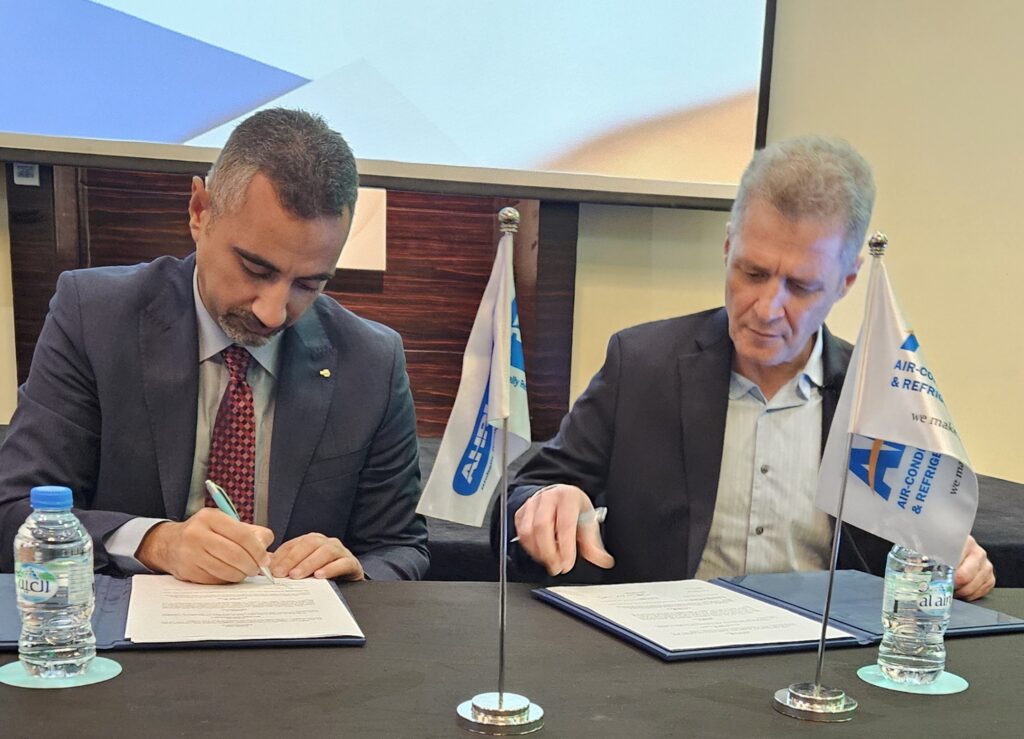
AHRI and the ASHRAE Falcon Chapter sign the MoU

The conference emphasised stakeholder unity, regulations and Environmental Product Declarations and climate change, among other topics.

Nabil Shahin, Managing Director, AHRI MENA, spoke of the need for a unified approach as an industry, which he said, would benefit not only manufacturers, developers and consultants but also end-users. Regulation is fragmented, he said, so give us the marching orders, as we are a manufacturers’ association. He also spoke on climate change mitigation efforts pertaining to refrigerant transition.

The conference was an occasion for the sharing of updates from the different Working Groups AHRI MENA has established, including the MENA Air-Handling and Distribution SWG, MENA Chiller SWG, MENA Unitary SWG, MENA VRF SWG, MENA Evap Cool SWG, MENA Refrigerant WG, MENA Heat Pipe WG and the MENA Commercial Refrigeration SWG. The Working Groups aid a streamlined approach to evaluating and defining action strategies for different aspects of the HVACR sector.

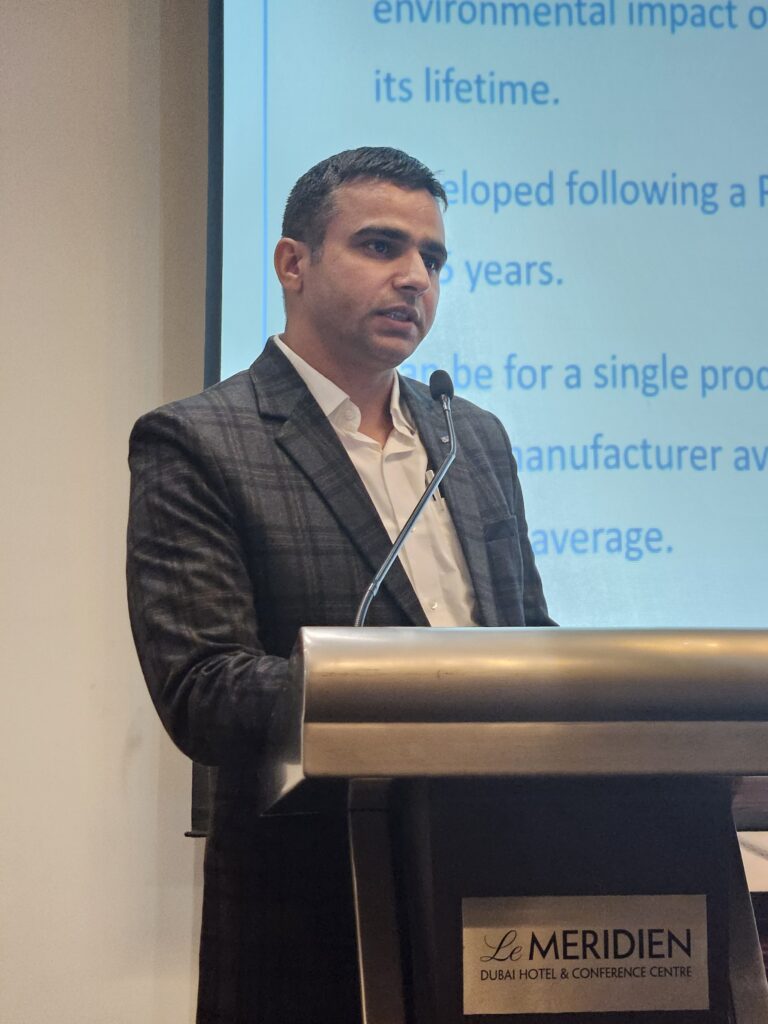
Dalip Singh

Dalip Singh, Senior Technical Analyst, AHRI MENA, who represents the MENA Chiller Special Working Group, said it is working on MENA-specific IPLV calculation. The objective is to take building characteristics in the region into consideration while arriving at a MENA-specific tool, he added.

Utpal Joshi, representing the MENA VRF Special Working Group, said the Working Group conducted a study involving Abu Dhabi, Kuwait City and Riyadh and that its efforts have led to the defining of four temperatures. Joshi said SASO (the Saudi Standards, Metrology and Quality Organization) has introduced a new set of regulations, which will come into effect in December 2026.

Singh, speaking on the work being carried out by the MENA Evap Cool Special Working Group, reported that it is in the process of creating a standard from scratch, subsequent to a request that SASO made of the Group. “We are preparing the standard for direct, indirect and hybrid cooling,” he said. “We shall release it by December 2025.”

Speaking on the MENA Refrigerant Working Group, Shahin said the task ahead is to evaluate refrigerants for high-ambient conditions and to see their behaviour. A second objective of the Group, he said, is to help regional regulatory bodies to transition to new refrigerants. “And since some of the substances are dangerous,” he said, “the aim is to reconcile with civil defence codes, building codes, warehousing codes, etc.”

Speaking on the exertions of its Chiller Statistical Committee, AHRI said the role of the Committee is to give sales data that comes from its members. In the United States, the data-gathering process is a well-developed one and indicates market trends, AHRI said, adding that in the MENA region, it started the discussion on statistical data two years ago and finally has arrived at a template and also has gathered chiller-related data. Saying that the data is available only to members, AHRI added that the next step is to generate VRF-related data.

The conference was also an opportunity to highlight AHRI’s initiatives relating to Environment Product Declaration (EPD) and Product Category Rules (PCR). Singh, speaking on EPD, said consumers are willing to pay extra for products with strong environment-friendly credentials. Speaking, then, on PCRs, he highlighted the role of Programme Operators to support PCRs. “AHRI will be one of the programme operators, going forward,” he said. “It will be a natural extension of our certification programme.”

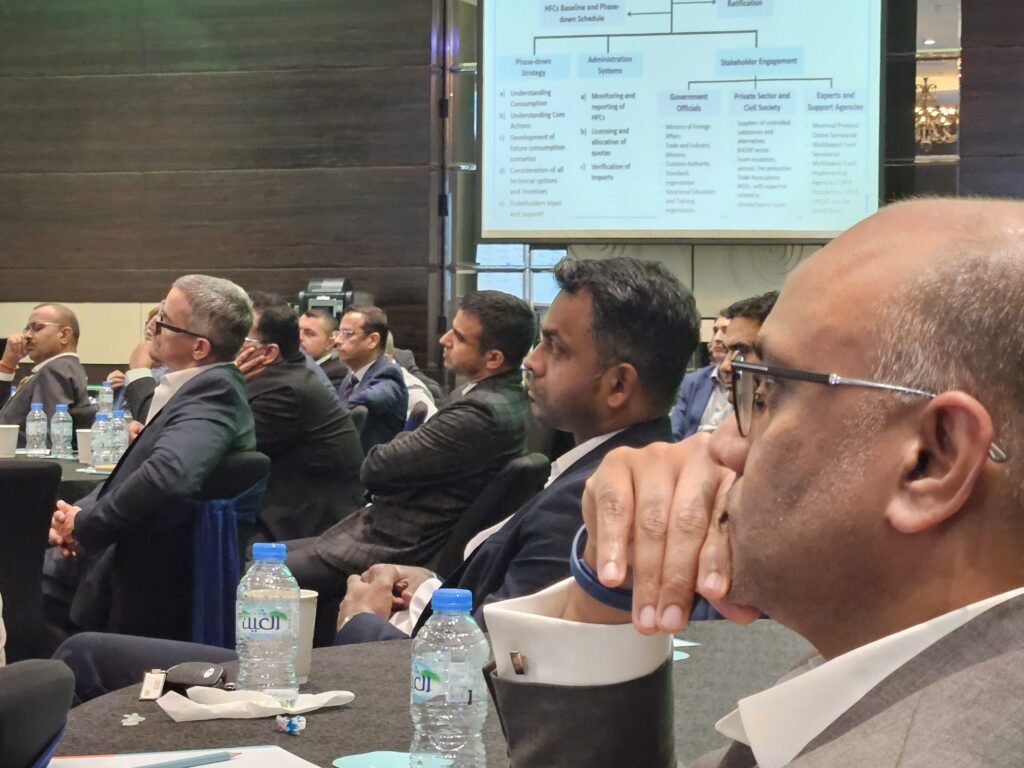
Member of the audience listen to a presentation

The conference also saw an announcement on the upcoming MENA HVACR EXPO, which will run under the theme, ‘Accelerating Climate Innovation across Industries’. Speaking on invitation from AHRI, Kym Cardozo, Director, Event at dmg::events, the producer of the EXPO, said it will be an unmissable event for the HVACR industry. “The focus of the event goes beyond daily comfort and will address energy efficiency and sustainability,” Cardozo said, adding that dmg has strong endorsement from AHRI, ASHRAE and the ASHRAE Falcon Chapter.

The MENA HVACR EXPO, he said, will take place from November 24 to 27 and will be co-located with the Big 5 Global. Cardozo encouraged the HVACR industry to tap into demand from key industries investing in HVACR, including agriculture, construction, education, energy & utilities and food & beverage. The EXPO, he said, would also have a conference programme, with Day 1 featuring discussions on innovation and emerging technologies, which he added AHRI, ASHRAE and dmg would helm. Day 2, led by AHRI, would feature discussion on regulatory compliance and standards, and Day 3, led by ASHRAE, would focus on workforce development and upskilling.

The conference was also an opportunity for the signing of an MoU between AHRI and the ASHRAE Falcon Chapter. Singh, speaking on the signing, said it signifies cooperation in development of HVACR standards, training and capacity building, among other initiatives.

Premium Story

AHRI joins HVACR World 2025 event

AHRI joins HVACR World 2025 event Institute says the event is a strategic meeting point for manufacturers, developers, consultants, regulators and end users to collaborate and innovate and to address the sector’s most pressing challenges

DUBAI, UAE, 30 June 2025: AHRI announced its support of the HVCAR World 2025 event, scheduled to take place from November 24 to 27 at the Dubai World Trade Centre. Making the announcement through a Press Release, AHRI said the event is being organised by dmg events, and will be co-located with Big 5 Global, supported by the UAE Ministry of Energy and Infrastructure.

AHRI emphasised that shaping the future of the HVACR industry across the Middle East, Africa and South Asia (MEASA) regions has never been more critical. With HVACR systems accounting for up to 70% of residential electricity use in the GCC region, there is an urgent need for energy-efficient and climate-resilient solutions, AHRI said.

According to AHRI, HVACR World is being billed as a strategic meeting point for manufacturers, developers, consultants, regulators and end users to collaborate and innovate, and to address the sector’s most pressing challenges, stay informed through expert-led educational sessions, and receive timely updates on industry standards, technologies and regulatory developments.

Nabil Shahin, Managing Director, AHRI MENA, said: “The HVACR industry must accelerate the shift toward efficient, verified solutions. By endorsing HVACR World, AHRI reinforces its mission to promote tested, certified, and reliable equipment while strengthening collaboration across the MEASA region.”

AHRI said HVACR World will feature:

● Product showcases covering air conditioning, refrigeration, Indoor Air Quality and smart controls

● Live demonstrations, technical workshops and sector-specific content

● The AHRI Convening Leaders meeting, for AHRI members keen on driving sustainable innovation

AHRI said that with heating and cooling responsible for over 40% of global energy-related CO₂ emissions, its support underscores the need for standards-based solutions that support the region’s ambitious climate goals.

Premium Story

Tabreed, CVC DIF to acquire PAL Cooling from Multiply Group

Existing portfolio includes eight long-term concessions, currently serviced by five District Cooling plants

L-R Samia Bouazza, Khalid Al Marzooqi and Özgür Önder during the signing ceremony. Standing is Dr Bakheet Al Katheeri

ABU DHABI, UAE, 30 June 2025: CVC DIF, the infrastructure strategy of global private markets manager, CVC, and Tabreed have entered a partnership to acquire PAL Cooling Holding from Abu Dhabi’s Multiply Group.

Making the announcement through a Press Release, Tabreed said the transaction, with an equity value of approximately AED 3.8 billion, includes three long-term concessions in the Abu Dhabi main island area and five long-term concessions on Al Reem Island, and remains subject to customary regulatory approvals. The concessions are serviced by five existing District Cooling plants and associated networks in Abu Dhabi, with connected capacity of 182,000 refrigeration tons (RT), as of December 2024, Tabreed said. An additional plant is under construction, and three are in the planning phase, Tabreed said. Together, the nine plants and eight concessions are expected to represent approximately 600,000 RT, Tabreed added.

PAL, founded in 2006, is a prominent player in the UAE District Cooling market, Tabreed said, adding that it caters to residential, commercial and mixed-use developments. PAL has eight, long-term concession agreements and partnerships with such master developers as Aldar Properties, Modon and Imkan, Tabreed said. PAL is strongly positioned on Al Reem Island, which is a strategic destination now fully part of the ADGM free zone, the financial centre of Abu Dhabi, Tabreed said, adding that it is poised to benefit from the expected development ramp-up, with future network expansion already licenced by Abu Dhabi’s Department of Energy.

Dr Bakheet Al Katheeri, Chairman, Tabreed, emphasising the significance of the partnership, said: “Tabreed is always looking to the future and ensuring we remain agile. The acquisition of PAL Cooling with CVC DIF aligns perfectly with our strategic objectives and readiness to adapt to Abu Dhabi’s ambitious real estate projects. This year has been historic for Tabreed, with ventures like our Palm Jebel Ali JV and continued growth in Abu Dhabi. These steps position us to meet the UAE’s rising demand for sustainable cooling, driven by population growth and decarbonisation targets.”

Gijs Voskuyl, Managing Partner, CVC DIF, said: “PAL Cooling services its clients under long-term, concession-based contracts in a fast-growing urban environment. The company has a strong track record of developing and constructing high-quality and electrified District Cooling plants to deliver reliable, energy-efficient cooling solutions. Building on CVC DIF’s long-term track record in the sector, we are delighted to partner with Tabreed, a leading District Cooling company in the Middle East. Together with our partners, we are convinced that PAL Cooling is a high-quality investment that will provide our investors with solid returns, while offering the potential for long-term growth and sustainable value creation.”

Khalid Al Marzooqi, CEO, Tabreed, said: “This is turning out to be a truly pivotal year for Tabreed. As we enter a new phase of growth in Abu Dhabi alongside partners, CVC DIF, the benefits brought by this acquisition will be substantial. As part of Tabreed’s portfolio, these additional plants will be operated and maintained by the world’s leading experts in sustainable cooling. The acquisition also serves to strengthen our already investment-grade status with safe, long-term concession agreements and assured future growth, evidenced by current and planned developments on Reem Island.”

Özgür Önder, Head, CVC Middle East, said, “Our partnership with Tabreed, a regional leader with deep industry expertise, aligns perfectly with CVC’s commitment to investing in the UAE, backing mission-critical businesses that support sustainable development across the country.”

According to Tabreed, CVC DIF’s investment focus and experience spans key sectors including Energy Transition, Digital Infrastructure Utilities and Transport – areas that are critical to Tabreed’s strategic vision. Its expertise and investment approach makes CVC DIF an ideal partner for a transformative project of this scale, Tabreed said.

Commenting on the transaction, Samia Bouazza, Group CEO and Managing Director, Multiply Group, said: “The monetisation of PAL Cooling Holding is a deliberate step in our portfolio optimisation strategy, aimed at delivering superior returns to our shareholders. It reflects our ability to realise significant value from our assets while enhancing liquidity to fuel Multiply Group’s next phase of growth – both across our core verticals and on the global stage.”

Tabreed said Bouazza, Al Marzooqi and Önder signed the deal during a ceremony at Multiply’s Abu Dhabi headquarters in the presence of Dr Al Katheeri.

Premium Story

Policy, performance and the path to decarbonisation

Recognising the need to transform District Cooling from a technical niche into essential urban infrastructure, speakers at the 11th Edition of DC Dialogue explore digital readiness, the thinking among developers, and policy-related progress, including the restructuring of tariffs to improve trust and performance

The 11th Edition of District Cooling Dialogue (“DC Dialogue”), held on May 15 in Dubai, was a platform that convened as both a map and a mirror reflecting the industry’s progress and outlining necessary pathways to make a difference for a decarbonised future.

Organised by CPI Industry, DC Dialogue is the longest-running event in the publishing house’s portfolio, with the inaugural edition dating back to May 2007. Surendar Balakrishnan, Co-founder and Editorial Director, CPI Industry, said that over the years, participants and delegates have left with strengthened resolve and knowledge of technological solutions for implementing at their respective worksites. While the chilled water and District Cooling sector has evolved, the core purpose of DC Dialogue has remained unchanged – to highlight trends and advance knowledge on recently introduced policies, regulations and technologies.

As like previous editions, the 11th Edition of the conference gathered government officials, developers, consultants, contractors, manufacturers, suppliers and service providers of technological solutions. Through Plenary Session addresses, technical presentations and panel discussions, the conference provided context for advancing knowledge on recently introduced policies, regulations and technologies with topics carefully picked on the basis of their impact on a wide range of socio-economic and sustainable development targets.

George Berbari, CEO, DC PRO Engineering, and author of the critically acclaimed book, The Energy Budget, chaired the conference. In his opening remarks as Chair, he reflected on the progress of the District Cooling industry in the UAE, marking over 27 years of service. He spoke candidly about the environmental consequences of past generations and the responsibility now shifting to the next. “I believe my generation has been the worst to the environment,” he remarked, acknowledging

both successes and failures in his career, spanning 40 years. “But it’s time to hand the torch to those who will do better.”

Berbari highlighted Dubai’s District Cooling landscape, noting that while the city has installed an impressive 2.2-2.3 million tons of cooling capacity, only about half is currently utilised. With District Cooling accounting for approximately 24% of Dubai’s total cooling load and growing by around 100,000 tons, annually, the city leads globally in penetration, but still falls short of cities like Copenhagen and Reykjavik, where coverage is approaching 100%, he said.

Berbari closed with a symbolic nod to progress, a mobile EV charger he spotted en route to the venue, describing it as a small but encouraging sign that infrastructure in the region is starting to align with climate goals.

Following Berbari’s opening remarks, in a heartfelt Keynote Address, H.E. Dr. Abdulla Bilhaif Alnuaimi, Chairman, Sharjah Consultative Council, and Former UAE Minister of Climate Change & Environment, spoke of his transition from an infrastructure developer to an environmental advocate, an arc that shaped his recently published book, Climate Change Enigma: A Delicate Balance, which he released to the engineering community at the event. H.E. Dr. Alnuaimi emphasised the paradox of progress – that the very structures we build for economic development also contribute to environmental degradation.

H.E. Dr. Alnuaimi stressed the importance of reconciling technical growth with planetary boundaries. Notably, he cited the UAE’s emissions share as less than 0.6% globally, while calling for a leadership role in policy, research and infrastructure design. He challenged the audience to innovate beyond efficiency and focus on material science, water reuse and customer-centricity.

James Grinnell, Director of Water at the Regulation & Supervision Bureau (RSB) Dubai, delivered a wide-ranging and data-rich plenary address on regulatory updates, energy and water efficiency, tariff restructuring and the evolving landscape of customer expectations. He began by aligning with previous speakers, when he said, “It is our generation that probably caused the most damage so far.” He reaffirmed the need to ensure that cooling is done efficiently.

Grinnell’s presentation offered a review of the trends of 2023-2024. Contracted capacity, he said, rose by three per cent, and demand by four per cent, signalling a maturing market with pent-up growth in new developments. He said the current penetration of District Cooling in Dubai is around 23%, influenced in part by an increase in villa construction since COVID-19.

Energy efficiency has markedly improved, dropping from 0.98 kW/ton/hr to as low as 0.845 kW/ton/hr, he said. “We are beginning to see curtailing of the poor performing plant,” he noted, “while over half a dozen systems now perform under 0.7 kW/ton/hr.” However, the use of recycled water has declined, leading to greater reliance on DEWA-supplied water, a development he described as double-edged.

Grinnell elaborated on the topics of tariffs, emphasising that greater utilisation of existing systems drives down effective rates; he cited a drop from AED 1.14 in 2022 to around AED 1.07 in 2024. “That’s somewhere in the region of AED 240 million in efficiency,” he said.

Dominic McPolin, Former Advisor to the Minister of Works, Bahrain, through a video message added a philosophy- and policy-driven layer to the day’s discussions. Reflecting on his 20-year journey with District Cooling in Bahrain, McPolin underscored the importance of integrating District Cooling into the “family of infrastructure” alongside water, power and drainage.

He identified a shift from “energy transition” to “energy addition,” describing a global trend toward pragmatic solutions that prioritise access and affordability. McPolin outlined five pillars: Access to affordable energy, efficiency, sustainability, security and health, pointing out that District Cooling scores well in four but struggles with the first.

“I realized I’ve been looking through the wrong end of the telescope,” he said, advocating for customer-first approaches and warning against monopolistic practices. He cited Denmark’s model, achieving high uptake without compulsory connection, thanks to zero CAPEX tariffs, community-driven networks and urban integration, as a replicable benchmark.

In his closing message that was urgent yet hopeful, McPolin said: “The business model must change. Only by focusing outside the industry, into the planning systems, can we drive customer satisfaction.” McPolin’s call to reorient from technology towards community outcomes resonated as a challenge to the entire industry.

In the Plenary Discussion, subsequent to McPolin’s address, Berbari led an interaction on the topic, ‘The future of District Cooling regulations and enabling mechanisms. The panel brought together H.E. Dr. Alnuaimi; Andreas Michael Feil, First Secretary for Climate, Energy and Environment Policy, Embassy of the Federal Republic of Germany, Abu Dhabi; Grinnell; and Steve Lemoine, CEO and General Manager, Middle East, Dalkia.

Berbari opened with a provocative comparison: “A USD 1 billion investment in District Cooling delivers three times the emissions reduction of a metro system, yet policy prioritization remains skewed.”

Dr. Alnuaimi acknowledged past missteps. “We failed, as technicians, to really take District Cooling from only doing the work to innovating,” he said. “I have not heard so far offering anything that spoke about innovation.” He advocated exploring nanotechnology and new materials to evolve the sector beyond cost debates.

Feil, bringing a European perspective, explained how energy scarcity since the 1970s, had driven German efficiency. “If you exchange your oil heating system for a heat pump, after 5-7 years, you recover the cost,” he said. He also emphasised that Germany’s 2045 carbon neutrality goal makes building sector reform the focus of urgency.

Berbari pressed for an integrated policy in the UAE, noting that even cost-effective, scalable ideas, such as aligning District Cooling with nuclear and solar, face inertia. He underscored the fact that without clear governance frameworks and performance-based regulation, District Cooling cannot reach its full potential.

Subsequent to the Plenary Discussion, in a technical presentation representing Pegler, under the Aalberts umbrella, Bader Yousef, who represents Aalberts Integrated Piping Systems MEA, presented the company’s comprehensive approach to fluid regulation and distribution. “We offer our customers bespoke integrated piping solutions,” he said, noting the company’s reach across industrial, commercial, and residential sectors.

Yousef emphasised that the firm doesn’t merely sell valves and connectors but delivers complete system solutions. “When you work with us, you aren’t just buying our pipes and valves, you are buying our know-how, our can-do and our tireless innovation,” he said. Aalberts’ team of engineers provides tailored support across the project lifecycle, from conception to maintenance, he said.

Through his presentation, Yousef reinforced the brand’s “core promise”: Agility in problem-solving and innovation at scale. By combining connection, valve and fastening technologies with domain expertise, Aalberts aims to deliver not just hardware, but confidence in long-term performance and regulatory compliance, he said.

Following this, in another technical presentation, featuring Kingson Jebaraj, General Manager, Innovative Water & Energy Tech, formerly of Tabreed, the delegates received information on the evolving challenges of using Treated Sewage Effluent (TSE) in District Cooling. “Fifteen years ago, TSE was difficult to work with, but over the last decade, treatment technologies have matured, Jebaraj said. “Now, we are seeing new variability in TSE quality.”

Jebaraj emphasised that despite rising complexity, TSE remains critical due to its low cost, often 10-20% that of potable water, and its environmental advantages. However, suspended solids and organic load variations in the last few years are pushing current polishing systems to their limits. “There are lots of issues, even when water is taken directly to the cooling tower,” he noted.

He advocated for performance guarantees to de-risk adoption of new water-treatment technologies and highlighted regional trends across the UAE, Qatar and Saudi Arabia. His presentation was both a cautionary update and a call to adapt TSE systems for greater resilience and precision in response to shifting water quality.

In a panel discussion on the topic, ‘AI and cooling optimisation’, Sagar Kulkarni, Managing Director, Consistent Engineering Consultants; A R Suresh Kumar, Head, International Operations Business Group, Voltas Limited; Mohammed Shameer, Co-Founder & Partner, Design Solutions Inc., sat with Berbari to talk on how AI, IoT and automation can elevate District Cooling systems from being just centralised to becoming intelligent and responsive.

Kulkarni opened the session by stating that while District Cooling has immense decarbonisation potential, the industry still underutilises digital tools for optimisation. He emphasised the need for data-driven design and post-occupancy monitoring, urging stakeholders to move from legacy practices to “intelligent, adaptive systems”. He stressed that a well-calibrated Building Management System (BMS), complemented by AI, could significantly improve chilled water flow, delta T management and energy use intensity.

Suresh Kumar echoed the view, describing Voltas’ focus on energy audits, AI-based predictive maintenance and digital twins. He advocated for real-time monitoring of secondary loop systems, highlighting that the operational efficiency of a District Cooling system lies not only in the plant but also in the building interface. “Unless the loop is closed between the user and the plant,” he said, “you’re only fixing half the problem.”

Shameer added a valuable on-ground perspective, drawing from his design consultancy background. He pointed out the importance of interfacing design intent with real operational feedback. “We often see performance gaps when sub-metering and energy valves are missing or underutilised,” he said. He called for harmonising HVAC design with user behaviour and system feedback, underlining that smart cooling isn’t just about sensors – it’s about intelligent coordination.

Berbari, as moderator, stressed that AI alone would not solve inefficiency unless paired with correct commissioning and a culture of operational accountability. He urged for early stakeholder collaboration and continued training for FM teams, noting, “The future is not just smart, it must be adaptive, collaborative and verifiable.”

The session concluded with consensus that while AI tools offer promising optimisation pathways, systemic implementation and integration into building codes and developer mandates remain the next essential step.

The final panel discussion, once again moderated by Berbari, brought together leading developers to explore District Cooling through the lens of implementation, cost, performance and end-user satisfaction. It featured Ra’ed Al-Hammouri, Senior MEP Manager, DAMAC Properties; Prasanth Chakkingal, Head – MEP Design, PNC Architects of Sobha Group; Dr Samiullah Khan, Chief Sustainability Officer, Fakhruddin Properties; and Jason Prince, Head of Energy Management Services, Nationwide Management Services (a subsidiary of Deyaar Development PJSC).

Prince set the tone by explaining how his team often enters the picture years after construction is complete. “We work on projects after four or five years,” he said. “These buildings come to us with issues, which could be retrofit in nature and have to do with delta T, or it could be BMS.” He likened Delta T issues to diagnosing a human body. “It’s not one section, it’s a combination of a lot,” he said.

Al-Hammouri, sharing DAMAC’s perspective, said the organisation has adopted a strategic approach of outsourcing of district cooling services, owing to commercial pressure and the need for speed. He highlighted, however, that sustainability often takes a backseat in the region. “Not everyone in this field is caring about sustainability,” he said. “To be frankly speaking, decision-makers take decisions based on cost.” He noted that while District Cooling typically achieves 0.9 kW/TR efficiency, some in-house systems hit 1.2. He advocated shared responsibility, where the authority, the District Cooling provider and the developer must sit on one table and convince the end users.”

Berbari pushed for right-sizing. “Why accept 30 m²/TR when reality is 45–50?” he asked. Al-Hammouri agreed, but stressed that design accounts for worst-case loads and that retail and public areas skew demand.

Giving a rather unique perspective for a developer, Chakkingal described Sobha Group’s transition from standalone chillers to in-house District Cooling networks. “Our advantage is backward integration,” he said, noting that designers, FM teams and operational data are all internal, allowing accurate performance prediction. “We’re not afraid of going to the limits,” he said, though he declined to share specific performance metrics.

Speaking on one of the challenges District Cooling faces, Chakkingal said that design oversizing is inevitable due to regulatory pressure and safety factors. “Even with best design, you end up with 30-40% oversizing,” he said, adding that his team is experimenting with nanofluid technology and adiabatic systems to further reduce energy consumption.

Dr Samiullah Khan offered a dual perspective – personal and professional. Despite having used District Cooling at home for 15 years, he said, “If I switch off everything, I still pay 90% of my electricity bill.” He stressed the need for collaborative design validation and revealed how he has partnered with a university to create a consortium involving consultants, developers, and regulators. Fakhruddin Properties, he said, avoids cost-driven decisions. “We are looking at the embodied cost, operational cost and end-of-life cycle cost,” he said. Despite these efforts, innovation is often blocked by time constraints in the approvals process.

In closing, the panellists aligned on key points: District cooling must evolve into a more collaborative, data-backed and customer-transparent ecosystem. End users currently bear the cost of inefficiencies; with this in mind, the developers called for more flexible contracts, improved coordination with providers and standardized performance validation.

Overall, the conference concluded on a note of deep introspection and cautious optimism. The collective sentiment from speakers, particularly in the final panel, served as an organic wrap-up to the day’s events.

Throughout the event, a recurring theme was the need for systemic alignment among developers, District Cooling providers, consultants, regulators and end-users. Participants called for greater transparency, accountability and agility within the value chain. This was evident in the sense of shared frustration among the developers over rigid capacity contracts, lack of flexibility for retroactive corrections and the high operational costs passed on to end-users.

Yet, the addresses, panels and presentations were not just about challenges; they also showcased a growing culture of innovation. Examples ranged from nano-fluid technologies and SCADA-integrated energy meters to collaborative design reviews with academic institutions. The conference also highlighted how real-world operational data must feed back into design strategies to avoid repeated inefficiencies.

As Berbari put it: “We are developing outdoor air conditioning. We are wasting so much energy.” It was a stark reminder that the industry must continuously evaluate not just systems but also behaviours and expectations.

From regulatory shifts and digital tools to developer ambitions and user demand, the conference reaffirmed its role as a catalyst for unvarnished conversations and actionable insights. As District Cooling networks expand in response to rising urban heat, the call is clear: Efficiency must be systemic, and sustainability must be inclusive – not just in design or operations but also in business models, policymaking and public trust.


Premium Story

Sourcing at a crossroads

Evaluating cost, credibility and continuity of sourcing HVACR products from China amid global trade shifts

Against a backdrop of rising geopolitical tensions and supply chain disruptions, the HVACR sector is adjusting to a new normal. Chinese-manufactured equipment, once chosen primarily for cost advantages, are now being scrutinised through a more complex lens, including long-term performance, brand credibility, cost and perception.

Strategic stockpiling and smart partnerships

Distributors like Nia, which supplies the GREE brand in the UAE, have responded to ongoing volatility with robust contingency planning. Kamran Khan, CEO, Nia, says: “Global trade uncertainties have posed significant challenges, including increased cost of shipments and fluctuating costs. To maintain business continuity, we build a strategic inventory buffer for all key finished goods units and spare parts.”

Beyond inventory management, Nia has invested in logistics flexibility, choosing multi-port routing and even air freight for critical items. The company has also intensified partnerships with freight forwarders and keeps a close watch on trade policies to minimise disruption.

These actions are part of what Khan describes as “proactive procurement planning” – a foundation enabling resilience even when material costs spike or semiconductors face lead-time bottlenecks.

To manage customer expectations in such a climate, Nia focuses on transparent communication, long-term pricing contracts and a Total Cost of Ownership (TCO) narrative that highlights lifetime savings over upfront costs.

To mitigate pricing volatility and ensure long-term customer value, distributors are increasingly turning to manufacturing partners that invest in process optimisation and product innovation. Kamran says, GREE, for instance, is adopting new strategies to offset the effects of rising material costs and extended lead times.

Careful calibration of risk and performance

From the consultant’s desk, the view is similarly pragmatic. Elie Faysal, Senior Mechanical Engineer, AZZ Architectural Engineering Consultants, points out that while Chinese HVAC equipment is not always a first choice, it remains viable in certain applications. “In certain scenarios, yes, I do recommend Chinese HVAC equipment, particularly when the product meets the technical requirements and performance standards of the project,” he says. “This is especially relevant in budget-sensitive or non-critical applications, where a balance between cost-effectiveness, compliance and functional performance is essential.”

Faysal’s evaluation is metric-driven, with key performance indicators including energy certifications, like ASHRAE or Eurovent; IAQ performance; climate durability and serviceability, especially for remote sites or fast-track projects.

Faysal emphasises that Chinese equipment continue to offer a notable pricing advantage, especially during value engineering (VE) stages that often reveal “these cost differences can still be substantial enough to warrant consideration – provided that life-cycle value and performance are not compromised”.

However, he says, it is essential to assess the manufacturer’s local support, warranty coverage, spare parts availability and track record in similar projects or climates.

Still, he cautions that not all brands are equal. “Concerns typically include long-term reliability, after-sales service limitations and client perception, especially in premium or brand-sensitive projects,” he says.

To mitigate risk, Faysal recommends the importance of validating local support; requesting regional project references, preferably within the GCC region or similar environments; using mock-up testing or performance guarantees, where feasible; and avoiding lesser-known brands without international certifications

He also recommends adopting hybrid specifications, such as considering using Chinese products for secondary systems, such as ventilation units and exhaust fans, while retaining critical systems, such as chillers, VRFs and AHUs from premium brands.

The factors driving sourcing decisions

While cost remains an important consideration in the decision to specify or distribute Chinese HVACR products, Faysal and Khan emphasise that performance reliability and post-sales support are increasingly influencing procurement choices.

While Faysal recommends a selective, metric-driven approach when specifying Chinese HVACR products, particularly in non-critical or budget-sensitive applications, distributors like Khan point to another critical factor – implementation.

Khan highlights that product selection is only part of the equation. Even high-quality equipment can underperform if it is poorly installed, improperly commissioned or not maintained correctly, he says. These issues, he says, have been among the most common reasons for early system failure and performance gaps in the field. Installation and commissioning, he says, remain a weak link in the value chain, often determining whether high-performance products deliver in real-world conditions or not.

To address the issues, Nia and its partner-brand, GREE have developed a comprehensive support structure designed to ensure proper handling across all project phases. This includes technical training programmes for contractors, field supervision during installation, on-site mobile service units and remote diagnostics via IoT-enabled equipment. In addition, user-friendly mobile apps and multilingual hotlines provide customers and technicians with real-time access to installation guides, warranty status and service updates.

By investing in product innovation and on-the-ground support, distributors like Nia aim to close the gap between factory-grade performance and real-world outcomes. As a result, the conversation is evolving; from one focused purely on pricing to a more strategic approach that prioritises installation quality, operational reliability and customer confidence.

Digital tools and regulatory compliance

Khan says GREE, one of Nia’s flagship partners, is also banking on smart HVAC to meet market demand. “Digital tools, like AI, IoT and smart diagnostics, are no longer niche in GREE’s product portfolio; they are becoming standard across most product lines, especially in mid-to-high-end residential and all commercial and industrial offerings,” he says.

From AI climate control and cold plasma purification to smart ventilation, GREE’s R&D is geared towards systems that are efficient, intelligent and globally compliant, Khan says.

China’s evolving domestic codes – covering energy efficiency, Indoor Air Quality (IAQ) standards, electrical safety standards and HFC phase-downs – have helped elevate Chinese products to international benchmarks. These standards, Khan notes, now align with or even exceed global norms like CE marking (EU), UL certification (USA), CCC (China), AHRI Performance and Eurovent.

The balance is shifting

While cost is no longer the sole driver, it still plays a crucial role in procurement decisions. What’s changing is the rigour of due diligence, the weight placed on local support and the value assigned to innovation. Faysal says, “This balanced, performance-based approach enables smart cost control without compromising technical compliance, operational reliability or client confidence.”

Premium Story

Advancing sustainability through VRF

Saudi Arabia leads the charge with AI and autonomous buildings

The 9th edition of the Middle East Variable Refrigerant Flow (VRF) Conference, held on 7 May 2025 at the Radisson Blu Hotel in Riyadh, Saudi Arabia, underscored the significant role of VRF technology in the Kingdom’s ambitious sustainability drive, highlighting its integration with AI and the burgeoning field of autonomous buildings

Produced and organised by CPI Industry, publishers of Climate Control Middle East magazine since 2006, the 9th Edition highlighted crucial advancements and innovations in VRF systems, and explored their critical role in meeting Saudi Arabia’s Vision 2030 sustainability objectives.

Surendar Balakrishnan, Editorial Director and Co-founder, CPI Industry, giving the Welcome Address, recalled one of the earlier VRF conferences, humorously noting how inadequate air conditioning at the venue ironically turned a discussion on VRFs into one on thermal comfort and Indoor Environmental Quality (IEQ). In contrast to the earlier edition, Balakrishnan said, the 9th Edition advertently sought to emphasise the growing importance of IEQ, particularly Indoor Air Quality (IAQ), and its integration with modern VRF technology.

Hassan Younes, Co-founder & Co-CEO, grfn global and Chairperson of the event, set the stage by highlighting the prominence VRF technology has gained since 2007-2008. Younes stressed the growing significance of refrigerant selection, noting ongoing debates about low Global Warming Potential (GWP) refrigerants, such as R-32, and their implementation. He drew attention to critical considerations in safety, design, construction and regulatory frameworks necessary for the successful adoption of advanced VRF systems.

“VRF systems are at the heart of sustainable cooling strategies, providing precision, adaptability and energy efficiency essential to Saudi Arabia’s climatic challenges,” Younes said.

Ubaidullah Khaja Mohamed Siddiqui, Vice-Chairman, The Walk Investment Company, giving the Keynote Address, provided insights into the growing integration of AI and smart technologies in the built environment. Siddiqui highlighted the urgent need for sustainable cooling solutions to mitigate high energy consumption, especially as cooling demands are projected to triple. He emphasised Saudi Arabia’s ambitious goal of a 30% electricity cut by 2060, achievable through the adoption of smart building technologies, including VRF systems.

“AI-driven smart technologies are crucial for optimising energy use, enhancing operational efficiency and significantly reducing environmental impact,” Siddiqui said.

Subsequent to the address, Younes moderated a Plenary Discussion, featuring Anas Alfar of Hussain & Al Hassan G. Shaker Bros., Yazan Al Zyoud of Samsung Electronics and Markus Lattner of Eurovent Middle East. They discussed the regulatory landscape and its implications for VRF manufacturers. Alfar highlighted the transition from R-410A to R-32 refrigerants, driven by regulatory changes. Al Zyoud shared Samsung’s commitment to adopting AI-driven solutions for optimised VRF performance, emphasising real-time adjustments for increased efficiency. Lattner focused on upcoming regulatory changes across the GCC region, including the implications of the Kigali Amendment, stressing the importance of regional standards adapted to high-ambient conditions. He highlighted Eurovent’s efforts to develop training programmes to build local capacity and expertise, vital for the proper handling and installation of emerging refrigerant technologies.

Autonomous buildings constituted a major topic, championed by Salah Nezar of New Murabba, who underscored the synergy among VRF systems, AI and IoT for achieving zone-based cooling, real-time diagnostics and predictive maintenance. Nezar emphasised Saudi Arabia’s leadership role in integrating these technologies, showcasing NEOM, The Red Sea Development and Qiddiya as pioneering examples.

“Integration of VRF technology with IoT and AI is not just futuristic – it’s already happening here in Saudi Arabia, shaping our smart cities,” Nezar remarked.

Bridging industry perspectives for collective growth

The conference notably catered to a diverse range of stakeholders. Regulators gained essential knowledge about the latest frameworks necessary for enforcing compliance and promoting energy efficiency. in alignment with Vision 2030. Contractors and consultants took away practical strategies for integrating advanced VRF systems with AI and IoT technologies, enhancing their project outcomes. Manufacturers received clarity on the evolving refrigerant landscape and insights into market-driven innovations, essential for product development. The event positioned itself by fostering targeted dialogues and actionable insights tailored specifically to the distinct needs of these key industry groups.

The 9th Middle East VRF Conference served as a vital platform, fostering dialogue among industry leaders, policymakers and technology experts, emphasizing the essential role of VRF technology in Saudi Arabia’s sustainable growth trajectory. As the Kingdom advances towards its Vision 2030 targets, VRF technology, bolstered by innovation and supportive regulations, is poised to play a central role in the region’s transformative journey towards a greener future.

“Saudi Arabia,” Younes said, “is not just adopting VRF technology; it is innovating and setting standards for global sustainability in HVAC solutions.”

Premium Story

IAQ governance: Let’s fix the hardware first

Dr Iyad Al-Attar speaks on the imperative of IAQ governance in rapidly urbanising pandemic-prone cities

In a nutshell…

The central argument is that Indoor Air Quality (IAQ) governance is an essential and currently undervalued component of creating resilient and “pandemic-proof” urban environments, particularly in the context of rapid urbanisation. Dr. Al-Attar emphasises that IAQ is not solely an environmental concern but a fundamental public health issue with far-reaching implications that extend beyond respiratory health. Effective IAQ initiatives require an Indoor Environmental Quality (IEQ) lens that encompasses robust government policies, technological innovation and active citizen participation.

The relentless march of urbanisation, a defining characteristic of the 21st century, presents a complex tapestry of opportunities and challenges. While cities serve as engines of economic growth and innovation, their burgeoning populations and concentrated activities often strain resources and infrastructure, leading to a multitude of environmental concerns and climate change issues. Among these, the degradation of air quality, both outdoors and indoors, stands out as a critical threat to public health and wellbeing. The COVID-19 pandemic further underscored the vulnerability of densely populated urban centres to airborne pathogens, shifting the focus from ensuring merely pandemic-resistant cities to the more ambitious goal of creating truly pandemic-proof urban environments. Central to achieving this paradigm shift is the robust governance of Indoor Air Quality (IAQ), a factor that has long been overlooked but is now recognised as a cornerstone of urban resilience and public health security.

Rapid urbanisation complicates the challenge of maintaining healthy IAQ through interconnected pathways. Increased construction leads to dust and particulate matter, while higher population densities result in greater emissions from transportation, energy and industry, infiltrating indoor spaces. The pandemic highlighted the significance of IAQ in disease transmission, shifting the focus from surface disinfection to airborne transmission as a critical defence against respiratory viruses. Traditional measures, like mask mandates and basic ventilation adjustments, are insufficient if systems are malfuctioning or poorly maintained.

To enhance urban resilience against possible pandemics in the near or distant future, we must shift from merely preparing for outbreaks to designing pandemic-proof cities that minimise the risk of airborne disease transmission. Effective IAQ governance involves comprehensive standards, consistent monitoring, public education, integrated urban planning and collaborative innovation to protect urban populations amidst ongoing and future health challenges.

Figure 1: Construction dust particle reocovered from air filters installed in air-handling units in the Arabian Peninsula

IAQ governance

Governance is essential for achieving optimal IAQ through establishing and enforcing standards for healthy air in various environments, including homes and workplaces. This involves creating stringent IAQ standards that address different pollutants and climatic conditions. Effective governance necessitates the careful application of established standards in HVAC systems, which involves customising ventilation rates to suit specific needs and adapting to varying environmental conditions. Additionally, the urgent need for adaptive air filtration systems, which operate smarter in responding to the challenges of outdoor air quality, cannot be overstated. These modern filtration systems should possess the capability to deal with various pollutant concentrations of different types, which can pose adverse health risks to human occupants. Cities should invest in reliable indoor and outdoor air quality monitoring networks to collect real-time data on pollutants. Air filter design needs to be connected to actual IAQ data to pinpoint areas for improvement. Ultimately, independent agencies should monitor IAQ data to raise public awareness and address air pollution that seeps indoors. Furthermore, significant leaps can be achieved if government organisations can incentivise innovations contributing to sustainable solutions in existing as well as future buildings.

Figure 2: Scanning electron miscropsopic images of various filter media used in HVAC filtration

Complexity of IAQ governance

Managing IAQ is a complex process that involves multiple stakeholders, and is influenced by such external factors as outdoor pollution and individual behavior. A comprehensive governance framework that integrates ‘Adaptive Governance’ and ‘Polycentric Governance’, informed by ‘Complexity Theory’, can form the nucleus of IAQ governance. Adaptive Governance emphasises learning and flexibility in unpredictable urban environments, allowing cities to test interventions and refine strategies based on real-world data. Polycentric Governance promotes collaboration among various authorities and stakeholders, avoiding one-size-fits-all solutions and leveraging diverse expertise. Complexity Theory helps understand non-linear interactions and emergent behaviours in urban systems, underlining the need for adaptable solutions.

Additionally, concepts such as ‘Network Governance’ and ‘Multi-level Governance’, are crucial for effective IAQ management, promoting trust, information flow, and coordinated efforts at local and global levels. Establishing a legal framework, enforcing regulations, promoting public awareness initiatives and providing support for building owners are crucial to improving IAQ and enhancing the quality of life of occupants of buildings.

Perhaps the most suitable approach to govern IAQ is ‘Adaptive Governance’, which is the most suitable approach for IAQ due to the inherent complex, dynamic and uncertain nature and variation of IAQ status and its transient sensitivity. Pollutant sources, concentrations and health impacts constantly change based on building design, occupancy, activities and outdoor conditions. On the other hand, traditional, rigid governance struggles to keep pace with the evolving needs of society.

Adaptive Governance thrives on this variability. Its principles of continuous learning, flexibility and real-time adjustment allow for effective responses to evolving IAQ challenges. It fosters collaboration among diverse stakeholders – building owners, occupants, health experts and technologists – enabling the development of tailored, data-driven solutions that benefit all parties. This iterative, responsive framework ensures IAQ management remains effective and resilient in ever-changing environments, prioritising health and wellbeing.

IAQ Goverance challenges

One significant challenge in promoting IAQ is the widespread belief that indoor environments are not perceived as a public good, accessible to and used by all community members. Unlike outdoor air or water, indoor environments are often managed collectively according to specific rules and norms. This perception persists, even though most people live and work in buildings designed, constructed and managed by third parties. The issue of IAQ is inherently diffusive, lacking a singular focal point or frequent dramatic events, such as COVID-19, to catalyse change. Additionally, the regulatory landscape surrounding IAQ is complex, encompassing a myriad of factors, including chemical pollutants, biological agents, building physics and human behaviour. Consequently, regulating IAQ is proving to be considerably more intricate than establishing emissions limits for a solitary pollutant emitted from a factory smokestack. Furthermore, challenges associated with building codes and housing standards are rarely managed at the federal scale, resulting in an inconsistent and fragmented regulatory framework across neighbourhoods, communities and cities.

Other challenges may also include:

· Insufficient scientific data

The lack of adequate scientific data for setting clear health-based standards for many indoor pollutants – especially biological ones, such as mould, bed bug droppings and dust mites (Figure 3) – poses a significant challenge for indoor environments. It is difficult to accurately measure personal exposure over time, as most indoor contaminants lack measurable indicators in the body.

· Lack of understanding of the chemistry and biology of pollutant interactions Chemical and biological interactions among indoor pollutants are complex and can vary widely.

This complexity makes it challenging to fully understand how these pollutants behave, identify their sources and track their evolution. Furthermore, their health impacts at different levels of exposure must be investigated, along with the effects of building design on these pollutants. This lack of understanding presents a significant challenge for governing IAQ effectively. Only then can evidence-based, targeted and truly effective IAQ governance frameworks be formulated to protect public health and wellbeing indoors in a proper manner.

· Privacy Issue

The issue of privacy within homes is inherently difficult to regulate – politically and legally. It is tricky to measure what happens inside private residences, as it is difficult for government agencies to establish mandatory standards that impact the type of cleaning products people use, whether they have pets or smoke indoors, and the frequency of vacuuming.

· Lack of economic analysis of optimal IAQ

The absence of global financial analysis demonstrating how improved Indoor Air Quality (IAQ) can enhance productivity and decrease absenteeism diminishes the overall interest in IAQ initiatives. Stakeholders are seeking compelling and comprehensive data on the total costs associated with illnesses and medical care, including factors like lost school days and decreased workplace productivity. They require a direct and clear correlation between these issues and dollar amounts linked to poor indoor environments. Without these economic arguments, policymakers are likely to prioritise other competing issues. Furthermore, the lack of a definitive cost associated with optimal air quality can lead to it being overlooked in decision-making processes.

Figure 3: The droppings of bed bugs (left) and dust mites (right) can become airborne and can impact respiratory systems

Fix the hardware first!

Before we can effectively advocate for IAQ governance in our buildings and cities, it is essential to address several pressing challenges associated with HVAC systems selection, installation and maintenance. These issues include system failures, compromised air filter performance, contaminated coils with particulates and biofilms (Figure 4), filter media fractures (Figure 5), leaking filter frames, inappropriate filter selection and installation, as well as cases of disregarding specific climatic conditions and application sensitivities. Each of these factors can severely hinder an HVAC system’s ability to deliver air that meets the standards of enhanced quality, crucial for the health and wellbeing of all occupants. If the basic equipment is faulty or poorly maintained, fancy IAQ governance frameworks will not do much, and so the hardware must be fixed first.

Figure 5: Fractured HEPA filter due to excessive particle loadings in the absence of appropriate pre-filters
Figure 4: Contaminated cooling coil in the absence of appropriate filter selection and installation

It is not just our respiratory systems

Poor air quality has significant implications that impact nearly every facet of human health. The effects of air pollutants extend beyond respiratory conditions, influencing cardiovascular, neurological, mental and reproductive health. From a neurological standpoint, fine particulate matter can penetrate the bloodstream, potentially leading to heart attacks, strokes and hypertension by damaging blood vessels and disrupting cardiac rhythm. Additionally, substandard IAQ has been linked to mental health disorders, such as anxiety and depression, thereby diminishing productivity and the overall quality of life. Furthermore, air pollution is increasingly correlated with negative pregnancy outcomes, hormonal imbalances in women and diminished sperm quality in men.

Zooming out on IAQ with the IEQ lens

A singular focus on IAQ has proven insufficient for achieving truly healthy and productive indoor environments. It is time to shift the premise and scope of IAQ’s endeavour towards a holistic IEQ lens to ensure an inclusive approach to improvement. IEQ acknowledges the complex interplay of air quality, thermal comfort, lighting, acoustics and ergonomics, recognising their synergistic impact on occupant cognitive and hedonic wellbeing. Understanding the intricate relationships among diverse contaminants, HVAC system design and operation, filtration efficiency and overall building design is paramount. This integrated approach enables more effective strategies that address the root causes of poor IEQ, resulting in more comprehensive and impactful improvements than a narrow IAQ focus alone has achieved. Embracing IEQ offers a pathway to truly optimise indoor spaces for human health and productivity. However, chasing and achieving the IEQ target can be extremely difficult to achieve. The interaction among different pollutants, such as soot and silica dust particles, VOCs with oxidising pollutants, primarily ozone, or ozone with nitrogen dioxide, are a few examples whose harmful effects can be exacerbated when they are combined. Clearly, governing IAQ, as a subset of IEQ, is not as straightforward as measuring a single pollutant from a chimney stack. To effectively address fluctuating IEQ issues, flexible strategies that facilitate the detection, measurement, mitigation and governance of pollutants are needed.

The dual responbility

The importance of addressing IAQ governance has intensified in today’s urbanised and interconnected world. Governments and communities bear significant responsibility in this context and must engage in informed decision-making to effectively manage IAQ challenges. As an essential component of IEQ, it is crucial to correlate IAQ governance with parameters, such as lighting, acoustics and thermal comfort, as these factors directly affect the health, productivity and overall wellbeing of building occupants. The role of governments in this context is instrumental. As Abraham Lincoln said, “Government of the people, by the people, for the people, shall not perish from the earth.” It is imperative to establish a clear mandate for governance that prioritises the wellbeing of its citizens, recognising that optimal air quality is a fundamental prerequisite for health and happiness. Consequently, ensuring its protection becomes a governmental responsibility. The success of IAQ initiatives depends on a combination of effective government policies, technological advancements and active citizen engagement in responsible interactions with the built environment as well as the natural world.