CCME.NEWS

Your source for the HVACR Industry, covering in-depth news & analyses on policy, business & technology.

Get Premium:

Sign-up

COMMERCIAL ENQUIRIES:

Frédéric Paillé
Co-Founder & Commercial Director
fred@cpi-industry.com
+971 50 714 7204

Follow Us

CCME.NEWS

CCME.NEWS, covering the regional and global HVACR industry with an unwavering commitment to providing in-depth news and analyses on policy, business and technology

Contact Info

PO Box 13700,
Dubai Media City, Dubai
admin@cpi-industry.com
+971 50 714 7204

Follow Us

Premium Story

Training the building owners

Temperatures in the Middle East region are rising twice as fast as the global average. And the summer phenomenon of soaring mercury levels puts immense strain on HVAC systems, escalating energy consumption and greater inefficiencies in cooling.

This, as we know quite well, creates a worrying feedback loop, as higher energy consumption contributes to further climate change, ensuring a continuum of rising temperatures and increased demand for cooling solutions. Given this context, it is important to address HVAC inefficiencies, not only towards the goal of saving energy but also towards mitigating the impact of climate change in the region.

The fact that the Middle East region’s HVAC market is valued at nearly US 1 trillion underscores the immense significance of the sector in the context of sustainable development.

And from a global perspective, air conditioning already accounts for nearly 20% of the total electricity used in buildings. By 2050, the global population is expected to reach nearly 10 billion, and the need for air conditioning equipment will rise from 1.5 billion units to nearly 4.5 billion units. This surge in demand places a tremendous responsibility on the industry to find green solutions.

Sustainability includes several, several aspects, including refrigerant management.

Training of technicians is seen as a vital cog in properly and effectively addressing inefficiencies in a wide profile of buildings – with refrigerants an important area of focus – plus Indoor Air Quality (IAQ), thermal comfort, and acoustics- and vibration-related issues. Training them is seen as quite the silver bullet that can fix nagging issues.

Now, a well-considered initiative of training technicians to execute low-hanging-fruit solutions cannot be undervalued, but then building-related interventions for better energy efficiency and Indoor Environmental Quality (IEQ) also involve costly investments, and that’s where training of technicians only partly addresses the problem. Indeed, it is equally important to train building owners – and the CFOs that advise them – to a high point of awareness and strategic direction.

In the February 2025 issue of Climate Control Middle East, I spoke of the extent of loss of valuable thermal energy owing to grossly inadequate attention being paid to fixing leaky ducting systems. In most instances, we are seeing leakage rates of even 40% in New Construction. Whilst properly trained technicians can help curb losses, it is simple logic that a project with high standards of materials and workmanship can drive the percentage lower. And that is directly related to the sustainability mindset of the building owner and well-honed leadership.

I would like to hear your thoughts on this. Would you agree that we need to widen the scope of training? And that building owners, broadly speaking, need to attend structured courses with an open mind and intent to match?

Premium Story

Empower supplies District Cooling to 22% of Dubai’s hotels and hotel apartments

Company highlights role in advancing energy efficiency and sustainability across the hospitality sector

DUBAI, UAE, 29 April 2025: Emirates Central Cooling Systems Corporation PJSC (Empower) has announced through a Press Release that it currently provides District Cooling services to 22% of Dubai’s hotels and hotel apartments, equivalent to 183 properties out of a total of 832 by the end of 2024.

The company said the announcement was made in the context of Arabian Travel Market 2025, where tourism and travel industry stakeholders acknowledged Empower’s contribution to sustainability efforts within the hospitality sector. Empower stated that its services support the industry in implementing global best practices in environmental protection and reducing carbon footprint.

H.E. Ahmad Bin Shafar, CEO, Empower; Chairman, District Cooling Operators Association, said the District Cooling sector in Dubai is deploying its full resources and capabilities to support the hospitality sector’s sustainability transition. Bin Shafar added that Empower is aligning with national strategies, including the UAE Tourism Strategy 2031, to bolster energy-efficient infrastructure across the country’s tourism assets.

According to Empower, its district cooling network currently serves major properties such as Jumeirah Marsa Al Arab, One Za’abeel, Atlantis The Royal, SIRO One Za’abeel, One&Only One Za’abeel, Burj Al Arab, Atlantis Dubai, Address Beach Resort, Hilton Dubai Palm Jumeirah, Marriott Hotel, The Lana (part of The Dorchester Collection), JW Marriott Marquis Dubai, Jumeirah Emirates Towers, and Jumeirah Al Naseem. The company said it also supplies cooling to luxury hotels located in Business Bay, Dubai Healthcare City, and other key areas.

Bin Shafar noted that businesses across sectors are placing increased emphasis on sustainability, identifying it as a cornerstone for long-term growth and risk mitigation. He added that the organisers of the Arabian Travel Market 2025 underscored this shift by framing the event under the theme “Empowering Global Travel: Shaping the Future of Tourism through Connectivity,” with a focus on sustainable tourism.

Empower stated that it expects additional hotel and tourism projects to be connected to its network in 2025. The company reported receiving ongoing requests from developers and operators seeking to utilise its automated and AI-enhanced District Cooling services.

Premium Story

REFCOLD India 2025 set to showcase refrigeration and cold chain innovations in New Delhi

South Asia’s premier refrigeration and cold-chain exhibition returns to New Delhi this September, promising unparalleled networking opportunities, groundbreaking industry insights, and an extensive showcase of cutting-edge technologies

NEW DELHI, India, 28 April 2025: ISHRAE and Informa Markets, the organisers of REFCOLD India, announced its 8th edition, scheduled from 18 to 20 September 2025 at Bharat Mandapam in New Delhi. They made the announcement in an Email Release, where they described it as “South Asia’s premier refrigeration and cold-chain exhibition.”

ISHRAE and Informa Markets highlighted that the exhibition would serve as an industry showcase, providing valuable insights into the latest advancements, trends, and innovations across refrigeration, cold chain, and allied sectors. Visitors can explore a diverse array of products, equipment, and technological solutions, comparing various offerings to evaluate their suitability for specific industry needs, the organisers said.

According to ISHRAE and Informa Markets, the event will offer extensive networking opportunities, allowing industry professionals, experts, and potential business partners to engage in meaningful conversations, establish connections, and explore collaborations. “The exhibition provided excellent networking opportunities, allowing me to reconnect with colleagues and attend informative sessions,” said Purnima Rawat, Marketing Executive, Global Cold Chain Alliance, who attended a previous edition of the exhibition.

Educational programmes, including seminars, workshops, and technical sessions led by industry experts, will cover critical topics such as energy efficiency, sustainability, and emerging industry practices, said ISHRAE and Informa Markets. Attendees can gain a holistic understanding of the refrigeration and cold-chain sectors, helping them identify emerging market trends and make informed decisions, the organisers added.

Business opportunities will be a key feature, with ISHRAE and Informa Markets noting that participants will be able to meet suppliers, negotiate deals, discover potential clients, and explore investment prospects.

Emphasising the strategic importance of the exhibition and reflecting on his experience at the previous edition, Dr. Kamlesh Mishra, President, The Seafood Exporters Association of India, Odisha Region, said, “REFCOLD India (…) is a vital platform to explore efficient and cost-effective cold chain solutions, particularly for the food sector. By reducing food wastage through better cold storage and processing, industries can save costs and enhance efficiency.”

The organisers said the Indian cold chain industry’s significant expansion underlines the importance of REFCOLD India 2025. According to ISHRAE and Informa Markets, the sector is projected to grow from INR 1,585.1 billion in 2021 to INR 3,637.4 billion by 2027. New Delhi’s strategic location, robust governance, and proximity to essential cold-chain infrastructure in North India make it an ideal host city for the exhibition, added ISHRAE and Informa Markets.

ISHRAE and Informa Markets noted that visitors will have the opportunity to attend the exclusive National Cold Chain Conclave 4.0 and participate in Government-Industry Roundtable discussions. Additional highlights include the Innovation Zone, Unique Product Showcase, Demo Zone, Launch Pad, and Global Poster Competition, designed to showcase cutting-edge innovations and encourage knowledge exchange, said the organisers.

Additional Highlights:

  • Exhibition area spanning over 10,000 square metres
  • More than 200 national and international exhibitors
  • Specialised industry-focused workshops in Pharma, Dairy, Fisheries, and Hospitality sectors
  • Extensive opportunities for B2B networking
  • Awards night recognising industry stalwarts and innovators

ISHRAE and Informa Markets encourage interested exhibitors to visit  https://refcold.in/exhibitor-registration/ to secure prominent exhibition spaces.

Premium Story

The Black Swan: Why the age of tariffs is sunsetting

Economic Philosopher, Jeremy Rifkin explains how 3D-printed additive manufacturing is “tariff-free” and upending ocean, air and land transport

Unlike physical goods produced by global companies and subject to tariffs in world trade, high-tech SMEs utilising additive manufacturing/3D printing technologies can share digital software files for their product lines with local distributors at near-zero marginal cost around the world who can then print out the items and deliver them to consumers without paying tariffs. And that changes everything.

On April 2nd, the Trump administration, in the United States, issued a reciprocal tariff “number” to various nations that the United States argues “represents their tariffs” obligation, in what’s shaping up as the great geopolitical tariff war of the 21st century. This initiative will ultimately fail in light of a bold new technological revolution entering onto the world stage that’s changing the very nature of commerce and trade.

While nations around the world are fighting with one another in a vicious geopolitical tariff war, which threatens to pull the global economy apart in real time, a game-changing Third Industrial Revolution is quickly moving onto the global stage, making tariffs obsolete on a vast number of physical goods – with notable exceptions including fossil fuels, agricultural products, rare earth elements, and wood and stone products. It’s called additive 3D printing. This Third Industrial Revolution platform is upending two centuries of “subtractive manufacturing”, which went hand-in-hand with the first and second industrial revolutions of the 19th and 20th centuries and replacing it with “additive manufacturing” in the 21st century and, by doing so, neutering the geopolitical era.

Companies around the world are bypassing tariffs by shipping digital software files of 3D-printed products at near-zero marginal cost to vendors. who then print out and distribute the smart products to clients and customers. Unlike physical goods, the transfer of digital software files used in additive manufacturing are not subject to tariffs. This shifts the zeitgeist from the “seller-buyer markets” of the first and second industrial revolutions to the “provider-user networks” of the emerging Third Industrial Revolution, and adds an additional dimension alongside conventional port operations. Establishing smart AI-directed additive manufacturing facilities at ports to pour out 3D printed goods for transfer to truck and rail delivery would provide an additional time savings element to move products quickly to end users.

The economic implications are enormous and far reaching. In 2024, the global logistics cost of cargo transport via ocean, air and land was estimated to be USD 12.8 trillion, or 11.6% of the USD 110 trillion dollar GDP that year. On the upside, partially avoiding ocean, air and land logistics that go hand-in-hand with the movement of physical products all around the world means dramatically reducing the cost of doing business as well as the price attached to the sale of goods and services for much of the human family across every continent. Then too, there is the time element to consider. Deloitte reported that during the COVID-19 pandemic, companies using 3D printing were able to “reduce lead times by a stunning 70%, compared to those relying on traditional supply chains”, in customising and delivering product lines to clients and customers. Of equal importance, “streamlining the ports” and reducing the cost of ocean, air and land freight logistics infrastructure and accompanying warehouses and port facilities eliminates as much as 11% of greenhouse gas emissions. 

Then, too, a warming global climate emerging from the emission of fossil fuels has triggered a rewilding of the hydrosphere with devastating spring floods, unprecedented summer droughts, heatwaves and wildfires, and catastrophic fall hurricanes and typhoons, crippling ocean, air, and land traffic all over the world and undermining logistics and supply chains at an ever increasing pace, stranding world trade and endangering our human family.

The first and second industrial revolutions of the 19th and 20th century were based on subtractive manufacturing models. Subtractive manufacturing shaves material to create the final products, resulting in considerable waste and a high entropy bill in the production process. The additive manufacturing technology of the Third Industrial Revolution pours out products layer by layer, creating objects with near zero-waste.

For example, the 3D printing of a house begins with a computer program that develops a digital model of the building. The 3D printer is a robot that uses feedstock, such as clay, sand, limestone, metakaolin, cellulose and recycled construction waste. The 3D printer then prints out layers, arranged in rows designated by the software, pouring out the entire structure in as little as 24 hours.

Consider the Italian architect, Mario Cucinella, who poured out the first clay house sourced entirely from locally available clay soils using 3D printing. The eco-sustainable structure was poured by the printer in 200 hours, with little waste or scraps generated in the construction. Cucinella said that what motivated the firm was “the need for sustainable homes… and the great global issue of the housing emergency that will have to be faced – particularly in the context of the urgent crises generated, for example, by large migrations or natural disasters”.

No less important is the new commercial exchange model that goes hand-in-hand with the manufacturing and distribution of 3D printed goods. Cucinella can shift his business plan from a “seller-buyer market” to a “provider-user network” by uploading and instantaneously sending the software instructions by computer at “near” zero marginal cost to any part of the world, allowing developers onsite to print out buildings on a just-in-time and just-in-need basis and pay a license fee to the provider for each building downloaded.

Additive manufacturing in global provider-user networks comes with a plethora of additional advantages, including eliminating bloated inventories while continuously updating product lines. This is an example of the vast changes afloat as a fledgling Third Industrial Revolution makes possible a new economic exchange paradigm that takes the economy from globalisation to glocalisation. 

While a growing number of Fortune 500 companies are pioneering the use of 3D-printed technologies, including Airbus, Siemens, Volkswagen, Boeing, Medtronic, General Electric, Caterpillar and BASF, the technology favours high-tech small- and medium-sized enterprises (SMEs) engaged in a rich latticework of economic exchanges across industries and continents, avoiding the steep cost of ocean, air, and land transportation and logistics and tariffs.

3D-printed additive construction is scaling all over the world. For example, Dubai seeks to make 25% of its buildings 3D printed by 2030. Saudi Arabia has announced that it will inject USD 500 billion for planning and construction of 3D-printed buildings from the Public Investment Fund of Saudi Arabia and international investors.

Wind turbines, solar panels, car parts, headphones, surgical instruments, architectural models, footwear, practical visual effects and costuming in films, instruments, art restoration, prosthetics, aerospace parts, emergency supplies, aligners and dentures in dentistry, and eyeglasses, are just a few of the many new product lines that are being fabricated with 3D-printing technology. 

High-tech SMEs pursuing additive 3D printed technologies fundamentally reduce their upfront research, procurement and marketing costs of introducing incubator projects and start-up companies, allowing them to quickly scale globally at near-zero marginal cost and rewire at a moment’s notice while avoiding tariffs. This gives SMEs a distinct advantage over the centralised, vertically integrated global companies that framed the First and Second Industrial Revolution. The long and the short of it is that high-tech SMEs in a glocal economy are far more agile than giant global corporations and can adapt more quickly to changes brought on particularly by climate-related disruptions, especially as they affect supply and logistics chains.

Now, at the tail end of the Second Industrial Revolution, it is important to note that 500 highly centralised global companies make up one-third of the GDP of the world with revenues exceeding over USD 41 trillion and an employment pool of less than 65 million workers out of a 3.5-billion-person planetary workforce. And while 44% of the human race today live below the poverty level with an average daily compensation of USD 6.85, the 10 wealthiest individuals on Earth own USD 1.9 trillion in combined wealth.

With the fixed cost plummeting and the marginal cost falling in 3D-printed product lines across many sectors of the economy, accompanied by the delivery of tariff-free software in provider-user networks around the world, it is no surprise that high-tech SMEs are scaling. In the European Union, SMEs already constitute 99.8% of all non-financial businesses, providing 65.2% of all employment in the non-financial business sector, and account for 52% of the total GDP. SMEs make up 99.9% of businesses in the United States, employ nearly half of the workforce and contribute 45% of the GDP. Small- and medium-sized enterprises make up roughly 90% of all businesses, globally, and they contribute significantly to employment and economic growth, accounting for more than 50% of employment worldwide. 

A sceptic might argue that as countries become aware of the dramatic shift from seller-buyer markets to provider-user networks and the near-zero marginal cost in sharing digital files in a glocalised world, there will likely be attempts to “put the finger in the dike” and place tariffs on 3D-printed digital software coming into their countries, but to little avail, for the simple reason that small- and medium-sized enterprises are ubiquitous, the market is there, and there’s no going back.

While there’s growing concern that geopolitics is rearing its head once again in the 21st century with nations fighting one another in an increasingly dangerous geopolitical environment, in reality what we are experiencing is the death knell of the geopolitics that accompanied the First and Second Industrial Revolutions of the 19th and 20th centuries. A more glocalised “bioregional governance” is coming of age with the onslaught of 3D printing and high-tech SMEs in provider-user networks that criss-cross the world.

Both the First and Second Industrial Revolution infrastructures, powered largely by fossil fuels, were engineered to be “centralised” and vertically integrated to create economies of scale and required massive financial capital and expansive geopolitical and military commitments to secure their uninterrupted operations. The Third Industrial Revolution infrastructure, by contrast, is designed to be “distributed” rather than centralised, scales laterally rather than vertically, and is bioregional in impact.

When Tim Berners-Lee designed the World Wide Web to allow anyone to share information with everyone else from the edges without asking for permission or paying a fee to agents at the centre, he opened the door to a vast new economic opportunity. High-tech small- and medium-sized enterprises sharing 3D printed software in provider-user networks and cooperatives take Berners-Lee’s vision to its completion.

The additive manufacturing revolution is booming around the world and boasts trade associations on every continent made up of high-tech AI-driven small- and medium-sized companies. Trade shows are overflowing with attendees year round. Universities everywhere are sprouting new interdisciplinary innovation hubs promoting additive manufacturing incubators and start-up companies, preparing a younger generation of AI-savvy students to take the reins of an emerging Third Industrial Revolution.

In short, the laterally integrated additive manufacturing revolution of the 21st century is unstoppable and will likely surpass and replace the vertically integrated Second Industrial Revolution platform well before mid-century. The reason is unlike the Second Industrial Revolution; the lead time and fixed cost of Third Industrial Revolution AI-directed research, development, and prototyping, and the marginal cost of production and distribution of product lines is so much faster, cheaper and adaptive and comes with a far smaller entropic footprint.

Here’s the bottom line. While the First and Second Industrial Revolution infrastructure were designed more to reward a few over the many in a zero-sum game, the Third Industrial revolution infrastructure is engineered in a way that, if allowed to operate as it is intended, will distribute economic power far more broadly, fostering a democratisation of economic life.

Strangling high-tech SMEs with tariffs will fail in the end in a more distributed and increasingly glocalised world. The breakthrough is already here and will not be deterred.

Jeremy Rifkin is an economic philosopher and the best-selling author of 23 books translated into 35 languages. His new book, Planet Aqua: Rethinking Our Home in the Universe, has just been published in all the major world languages. Mr. Rifkin is a principal architect of the European Union’s and China’s economic plans for transitioning into a Third Industrial Revolution to address climate change and he served as an advisor to US Senate Majority Leader, Charles Schumer on the US infrastructure plan. He may be reached through Mike Ricciardi (mike@foet.org).


Premium Story

The impact of new refrigerants on centrifugal chillers

What does transitioning from R-134a to next-generation alternatives entail? Dan Mizesko answers the question…

R-134a has long been the dominant refrigerant in centrifugal chillers, praised for its stability, non-flammability and favourable thermodynamic properties. However, with a Global Warming Potential (GWP) of approximately 1,430, R-134a is now under regulatory pressure as nations worldwide strive to reduce greenhouse gas emissions. This has led to an industry-wide transition towards next-generation, low-GWP refrigerants that meet both environmental goals and operational performance standards.

This article explores the implications of this transition, the emerging refrigerant alternatives, and how they impact centrifugal chiller design, operation and lifecycle costs.

Why R-134a Is Being Phased Down

R-134a, a hydrofluorocarbon (HFC), has zero ozone-depleting potential (ODP), which made it a suitable replacement for CFCs and HCFCs in the 1990s and early 2000s. However, its high GWP has placed it squarely in the crosshairs of climate-focused regulations, including:

  • The Kigali Amendment to the Montreal Protocol, which mandates a global phase-down of HFCs
  • The U.S. AIM Act, which aims to phase down HFC production and consumption by 85% by 2036
  • The EU F-Gas Regulations, which enforces quotas and bans on high-GWP refrigerants

Emerging low-GWP alternatives to R-134a

Manufacturers and refrigerant developers have introduced several next-generation refrigerants designed to replace R-134a in centrifugal chillers. The most promising candidates are hydro-fluoro-olefins (HFOs) and HFO-HFC blends, which offer low GWP, zero ODP and compatibility with modern equipment:

R-513A

  • Type: HFO/HFC blend (50% R-134a / 50% R-1234yf)
  • GWP: ~631 (about 55% lower than R-134a)
  • Flammability: A1 (non-flammable)
  • Compatibility: Retrofit-compatible in many R-134a systems
  • Use Case: Ideal for facilities needing a near-term drop-in solution with minimal system modification

R-1234ze(E)

  • Type: Pure HFO
  • GWP: ~7
  • Flammability: A2L (mildly flammable)
  • Performance: Lower cooling capacity compared to R-134a; requires system redesign
  • Use Case: Suited for new chiller designs prioritising environmental performance

R-515B

  • Type: HFO blend (with R-1234ze and small amount of R-227ea)
  • GWP: ~293
  • Flammability: A1 (non-flammable)
  • Performance: Designed for use in new centrifugal chillers; lower pressure than R-134a
  • Use Case: Emerging solution for end users seeking safety as well as environmental performance

R-1233zd(E)

  • Type: HFO
  • GWP: ~1
  • Flammability: A1
  • Performance: High efficiency, but lower operating pressure than R-134a; more common in large, low-pressure centrifugal chillers
  • Use Case: New equipment only, especially for large-scale applications

Technical and operational impacts

System design modifications

Next-generation refrigerants vary in pressure, density and heat transfer properties, which means:

  • New compressors and heat exchanger designs may be required
  • Expansion devices, controls and oil systems must be recalibrated or replaced

Energy efficiency

  • R-1234ze(E) and R-1233zd(E) are highly efficient in chillers specifically designed for them
  • R-513A offers similar performance to R-134a, making it an attractive retrofit solution

Safety and handling

  • The A2L classification for some alternatives (e.g., R-1234ze) introduces mild flammability, requiring updated safety procedures and potentially new building codes
  • A1 alternatives like R-515B and R-513A are preferred in mission-critical or conservative environments

Environmental and regulatory compliance

Switching to low-GWP refrigerants helps:

  • Reduce direct greenhouse gas emissions
  • Qualify for green building certifications like LEED
  • Meet upcoming regulatory bans on high-GWP refrigerants

Retrofit versus replacement: Strategic considerations

Retrofit scenarii

  • R-513A is often the most practical option for retrofitting existing R-134a centrifugal chillers
  • Retrofitting typically involves minimal component changes but may still require refrigerant charge adjustments and software updates

Replacement scenarii

  • For long-term investment and maximum sustainability, new chiller systems designed for R-1234ze, R-515B or R-1233zd(E) are recommended
  • Upfront costs are higher, but lifecycle energy savings and regulatory compliance benefits make it a compelling option

Industry adoption

Leading manufacturers such as Carrier, Daikin, Johnson Controls and Trane have released centrifugal chillers compatible with or optimised for next-gen refrigerants. Trane’s CenTraVac line and Carrier’s AquaEdge series, to cite two examples, support R-1233zd(E), R-513A and R-515B, offering customers flexibility based on local codes and sustainability goals.

Conclusion

The transition from R-134a to next-generation refrigerants marks a pivotal shift in the centrifugal chiller market. While R-134a has served the industry well, environmental imperatives and evolving regulations are driving adoption of low-GWP alternatives that offer equivalent performance with a significantly reduced environmental impact.

Facility managers, mechanical contractors and design engineers must stay informed on refrigerant developments to ensure systems remain efficient, compliant and future-ready. Whether through retrofits or full system upgrades, embracing next-generation refrigerants is no longer optional – it’s essential.

Premium Story

The transformative power of electricity-free cooling

Professor Martin Zhu, Co-founder and CEO of i2Cool, elaborates on a nanomaterial that achieves over 95% solar reflectivity and mid-infrared emissivity

As global temperatures continue to soar – 2024 having been confirmed by the World Meteorological Organization as the hottest year on record, marking 13 consecutive months of historic heat – sustainable cooling solutions have never been more critical. The Middle East, a climate change hotspot, is heating nearly twice as fast as the global average. Without immediate climate action, temperatures in the region could rise by 5 degrees C or more by the century’s end.

The need of the hour is an innovative technology that delivers efficient, electricity-free cooling – ideal for buildings, transportation and various industrial applications.

The science behind electricity-free cooling

The inspiration for electricity-free cooling technology stems from the Sahara Silver Ant, whose unique hair structure reflects over 95% of solar radiation while emitting mid-infrared radiation into outer space. This remarkable adaptation enables the ant to survive in extreme heat.

At i2Cool, our research team – originating from the School of Energy and Environment at the City University of Hong Kong and led by my PhD advisor, Ir Prof. Edwin TSO – posed a bold question: Could the natural phenomenon observed in the Sahara Silver Ant be applied to buildings for passive cooling and energy savings?

Our in-depth study of the ant’s surface revealed insights into its highly reflective properties and passive radiative cooling mechanism. The research culminated in the development of an electricity-free cooling nanomaterial that achieves over 95% solar reflectivity and mid-infrared emissivity, setting a new industry benchmark.

The breakthrough in passive radiative cooling technology was only possible through meticulous material optimisation. Early research primarily focused on key performance indicators such as reflectivity, emissivity and cooling power. However, traditional coating tended to soften and yellow when exposed to outdoor conditions. Additionally, prototypes using precious metals proved too expensive for large-scale application.

To address these challenges, our team shifted its approach, focusing on the selective tuning of the material’s spectral properties. This led to a key innovation: Replacing precious metals with high-molecular polymers and nanoparticles. The result was a material that not only maintained excellent cooling performance but also offered greater durability and significantly lower production costs, achieving an optimal balance among cost, performance and longevity.

Today, by precisely formulating and structuring these materials at the physical level, electricity-free cooling technology has been successfully applied across multiple sectors. For example, passive radiative cooling ceramics can effectively mitigate urban waterlogging and support the development of sponge cities. Other applications include films for building glass, textiles designed for everyday use, and products such as membranes and automotive films.

Harnessing Nature for greater solar reflectivity

Designed for application on building surfaces and industrial equipment, this innovative coating boasts an impressive solar reflectivity and mid-infrared emissivity of up to 95%. By significantly reducing heat absorption, it surpasses the limitations of traditional coatings, which typically max out at 90% reflectivity. Application tests demonstrate that the coating can lower surface temperatures by as much as 42 degrees C, decrease indoor temperatures by 6-8 degrees C, and achieve overall energy savings of up to 40%.

Electricity-free cooling film

This high-performance film, crafted from advanced PET-optical material, is designed for glass curtain walls. With a mid-infrared emissivity of 94%, it effectively minimises heat infiltration while allowing ample light transmission. Data reveals that the film can reduce indoor temperatures by up to 15.4 degrees C, with an average decrease of at least 1.8 degrees C, providing a crucial solution for environments exposed to intense sunlight.

The TERA-Award

At the 2nd TERA-Award Smart Energy Innovation Competition, i2Cool proudly secured a USD 1 million prize for its electricity-free cooling technology. The judges praised the solution for its exceptional energy savings, emissions reduction, industrial feasibility and vast application potential – particularly its effectiveness in combating extreme heat and enhancing building energy efficiency.

Winning the TERA-Award has unlocked new avenues for collaboration. Since the award, our team has accelerated the deployment of the innovative technology, partnering with various industry leaders to explore its applications in green buildings, infrastructure and extreme environments.

Global impact and applications of electricity-free cooling technology

i2Cool’s electricity-free cooling technology has made significant strides, now deployed across 29 countries and regions, impacting sectors such as construction, logistics and sustainable urban development. These initiatives have fostered long-term, stable partnerships in local markets.

In the Middle East, i2Cool has partnered with EMAAR on iconic projects like the Dubai Mall – one of the world’s most visited shopping centres – where our electricity-free cooling coating was applied to the building surfaces to significantly reduce rooftop heat absorption. The coating lowered surface temperatures by an additional 10-20 degrees C, compared to previously used insulation materials and achieved energy savings of up to 20%. Additionally, i2Cool is collaborating on the Vision Tower project, further optimising building surface temperature control and reducing cooling energy consumption. In logistics, our technology has been trialled by Maersk for container transport, enhancing storage conditions for goods in high-temperature environments while lowering energy usage.

In Southeast Asia, large-scale pilot projects are underway in the Philippines and Vietnam, encompassing industrial factories and logistics warehouses. To expedite commercialisation, i2Cool is establishing a global distribution network, including exclusive agreements in the GCC region and Africa’s building sector with Leading Hospitality Services, a subsidiary of the UAE’s EIH Group; ongoing procurement efforts in Southeast Asia through distributors in Malaysia, the Philippines and Singapore; and a strategic partnership with Japan’s Marubeni Corporation to jointly promote the technology in international markets.

Electricity-free cooling technology has proven effective across a diverse range of sectors, delivering impactful benefits:

  • Building and Infrastructure: Reduces heat load on exterior walls and roofs, enhancing indoor temperature control
  • Industrial and Logistics: Improves storage and transportation conditions in high-temperature environments, ensuring product quality
  • Renewable Energy and Photovoltaics: Optimises thermal management of photovoltaic modules, boosting power generation efficiency
  • Textiles and Personal Protection: Integrated into functional fabrics to enhance comfort during hot weather

The technology is transforming how industries manage heat, driving energy efficiency and sustainability.

Advancing sustainability in urban development

Air conditioning systems account for approximately 20-40% of total energy consumption in buildings, worldwide, with even higher figures in hotter regions. The International Energy Agency (IEA) projects that global demand for cooling will surge, with air conditioning energy use expected to triple by 2050, becoming a primary driver of electricity load growth. Consequently, reducing reliance on traditional air conditioning and developing low- or zero-energy cooling technologies has become a key focus in global sustainable development strategies.

Electricity-free cooling is emerging as a vital solution for enhancing building energy efficiency and promoting urban sustainability. The environmental impact of conventional air conditioning extends beyond electricity consumption; most systems rely on refrigerants like hydrofluorocarbons (HFCs), which have extremely high global warming potential (GWP) and significantly contribute to climate change. With accelerating urbanisation, the building sector accounts for about 40% of global carbon emissions, with cooling and HVAC systems as major contributors.

To achieve low-carbon, sustainable cities and communities, reducing energy demand at the building level is essential. Many countries and cities are adopting “Zero Energy Buildings” (ZEBs) and “Nearly Zero Energy Buildings” (NZEBs) as standards for future development. Electricity-free cooling technology aligns seamlessly with these frameworks and can be integrated into green building certifications – such as LEED (Leadership in Energy and Environmental Design) and BREEAM (Building Research Establishment Environmental Assessment Method) – as a core strategy for reducing operational carbon emissions.

Outlook: Innovations, potential applications and product upgrades

The application of electricity-free cooling technology is expanding into everyday scenarii. For instance, fabrics with adjustable heat dissipation properties are being developed to create smarter personal protective equipment, enhancing comfort for outdoor workers and urban residents in high-temperature environments. Furthermore, by integrating advanced manufacturing technologies, i2Cool is advancing adaptive cooling materials for urban infrastructure, offering low-carbon solutions for the construction of future smart cities.

Pioneering Green Cooling

As the world moves toward carbon neutrality, green cooling has become an essential pillar of sustainable development. Electricity-free cooling solutions break through traditional energy consumption barriers, offering efficient, low-carbon alternatives for green buildings, industrial applications and personal protection. The innovation is facilitating the transition of cities and industries toward a more sustainable future.

Beyond reducing energy dependence, the technology redefines the cooling process, opening up new possibilities for addressing extreme heat on a global scale. As adoption grows and industries evolve, electricity-free cooling will continue to unlock transformative potential, accelerating the development of green cities and low-carbon societies.

Premium Story

Emicool secures AED 1.95bn Green Financing for District Cooling projects

UAE-based District Cooling utility provider says Green loan will support its regional expansion and energy-efficient initiatives

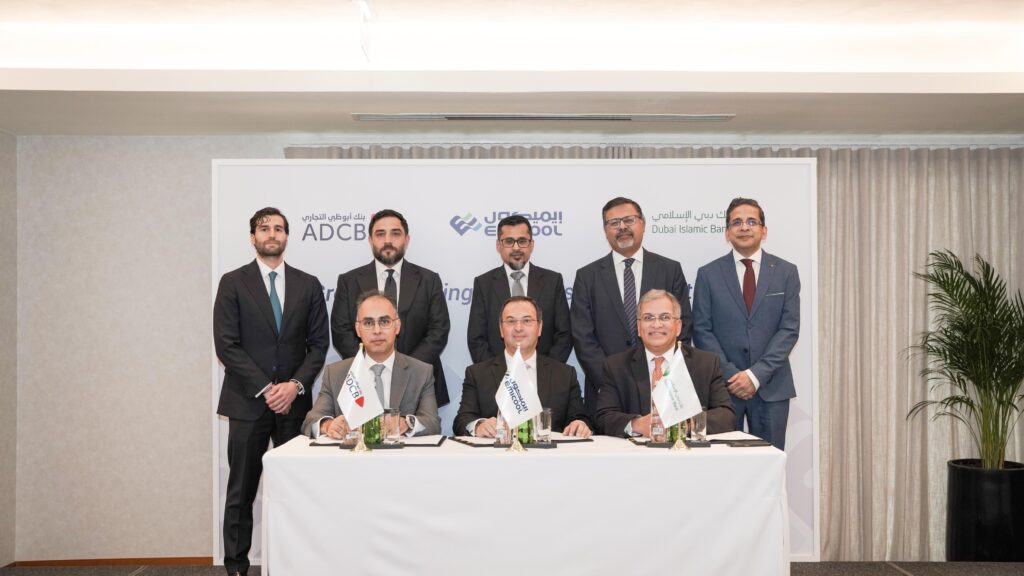
Dubai, UAE, 24 April 2025: Emirates District Cooling (Emicool), a joint venture between Dubai Investments and Actis, has secured its first green financing agreement. Making the announcement through a Press Release, Emicool said the syndicated financing facility totals AED 2.25 billion, with AED 1.95 billion classified as Green Financing for Eligible Green Projects. Dubai Islamic Bank and Abu Dhabi Commercial Bank are leading the financing with a 60:40 share, respectively, Emicool added.

Dr Adib Moubadder, CEO, Emicool, signed the agreement in the presence of representatives from the company and participating banks, the District Cooling utility provider said.

Emicool said the funding is intended to support the utility’s District Cooling expansion projects across the UAE and the wider region. The facility is structured with a five-year moratorium and a total term of 12 years. The utility provider noted that the format resembles a bond structure and is designed to optimise capital efficiency.

Commenting on the development, Dr Moubadder said: “Securing this green financing facility is a testament to our ongoing commitment to sustainability and innovation. This funding will optimize our capital structure while expanding our energy-efficient cooling services, in line with the UAE’s green economy vision. As a company deeply aligned with the UAE’s Net Zero by 2050 strategy, this milestone reinforces Emicool’s leadership in the green District Cooling space. By embedding sustainability into both our financial and operational strategies, we are driving meaningful change across the utilities sector and setting new benchmarks for climate-conscious infrastructure.”

Actis also commented on the financing. Max Burke from Actis said: “Sustainability and responsible investment are at the heart of Actis’ strategy. This milestone financing for Emicool underscores our vision for supporting environmentally and socially responsible infrastructure projects. We look forward to Emicool’s continued leadership in sustainable District Cooling and contribution to global climate goals.”

According to Emicool, the financing complies with internationally recognised Green Loan Principles (GLP), ensuring that the proceeds are allocated to environmentally responsible projects that focus on energy efficiency and carbon reduction.

The utility provider noted that its cooling systems have consistently delivered energy savings compared to traditional methods. Emicool added that Moody’s has provided a Second Party Opinion, assigning the facility a Sustainability Quality Score of SQS3 (Good), supporting the company’s claim of alignment with international sustainable finance standards.

Premium Story

ASHRAE Falcon Chapter announces MENA HVAC Design virtual training course

Virtual HVAC Design Level I & II (MENA) returns in May with live instruction and region-specific focus, AFC says

DUBAI, UAE, 21 April 2025: The ASHRAE Falcon Chapter (AFC) announced through an email communique that it will host the Virtual HVAC Design Level I & II (MENA) programme, delivered online through ASHRAE Global Training this May. Designed to address the unique climate and design requirements of the Middle East, Africa and parts of Asia, the course series will run from May 19 to 28, offering live expert instruction over 8 days, AFC said.

According to the AFC, the HVAC Design Web-Training Series (MENA) is split into two levels:

  • Level I – Essentials: May 19-23 (3pm-7pm, UAE)
  • Level II – Applications: May 26-28 (3pm-7pm, UAE)

The AFC said both courses are led virtually by seasoned instructors and are designed to equip participants with practical, ASHRAE-standard knowledge in HVAC system design.

“Achieving energy-efficient building performance that provides cooling comfort for occupants and meets the needs of building owners begins with system design,” an AFC representative said. “If the design is flawed, performance will suffer, and owner objectives will not be satisfied.”

HVAC Design: Level I – Essentials (MENA)

The AFC said this 18-hour training aims to transform engineers new to the field into effective members of HVAC design and facilities teams. The AFC said the course has been “customised to consider the special design requirements of the Middle East” and provides foundational skills in psychrometrics, system design, and building efficiency.

According to the AFC, the objectives of the course are to:

  • Calculate heating and cooling loads to ensure right sizing of equipment and minimising energy use
  • Explain HVAC controls and building automation systems as they relate to occupant health and comfort

The AFC said that attendees from previous sessions shared that the training had been a “huge benefit” for beginners and provided the confidence needed to pursue HVAC design professionally. According to the AFC, a participant from Nigeria said, “The training provided me with enough knowledge and confidence to believe that I can be an HVAC design engineer.”

HVAC Design: Level II – Applications (MENA)

The AFC described this course as having been designed for those with 2–10 years of HVAC experience or those who have completed Level I. The AFC said this 12-hour course provides advanced training using real-world case studies and in-depth coverage of ASHRAE standards, including Standards 55, 189.1, and the Advanced Energy Design Guides.

The AFC said the course focuses on:

  • Applying concepts of thermal comfort and air quality
  • Determining the basic design parameters for multiple HVAC systems including VAV, chilled beams and UFAD
  • Describing the importance and impact of energy codes on the design process

As reiterated by the AFC, one past participant from Sri Lanka said: “It is a great course for anyone coming from the building services engineering industry to gain more than the basic knowledge…. It is also a good revision for anyone who is already in the industry.”

Instructor line-up

The AFC said Level I and II will be led by prominent figures in the HVAC field:

  • Samir Traboulsi, Ph.D., P.Eng., Fellow Life Member ASHRAE – Senior lecturer at the American University of Beirut and award-winning ASHRAE Distinguished Lecturer
  • Hassan Younes, BEAP, BEMP, HBDP, HFDP, OPMP, Member ASHRAE – Co-CEO and Co-Founder of grfn, with extensive MENA region experience in energy efficiency, sustainability and MEP design
  • Omar Abdelaziz, Ph.D. – Assistant Professor at the American University in Cairo, with over 15 years in energy-efficient building technologies and global recognition in HVAC R&D

Fees and registration

The AFC noted that participants can register for each level separately or as a bundled offering:

  • Level I: USD 641 (ASHRAE members) / USD 803 (non-members)
  • Level II: USD 444 (members) / USD 543 (non-members)
  • Combo: USD 868 (members) / USD 1,077 (non-members)

Fee includes course access, materials and a Certificate of Attendance with corresponding Professional Development Hours (PDHs), the AFC said.

To learn more or register, contact: globaltraining@ashrae.org

Premium Story

Eurovent Task Force IT Cooling elects first Chair and Vice-Chair

Organisation announces the election of Enrico Boscaro and Mario Scattolin as the first Chairperson and Vice-Chairperson, respectively, of its newly formed Task Force on IT Cooling

BRUSSELS, Belgium, 17 April 2025: The Eurovent Task Force ‘IT Cooling’ (TF-ITC) has elected its first Chairperson and Vice-Chairperson for a two-year term. Making the announcement through a Press Release, Eurovent said Enrico Boscaro, Group Marketing Manager, CAREL, will serve as Chairperson, while Mario Scattolin, Global Compliance Director, Vertiv, will assume office as Vice-Chairperson.

According to Eurovent, Boscaro brings over 25 years of experience in the HVACR sector and has long been an active contributor to the organisation. In his new capacity, he will lead strategic initiatives to shape the future of data centre cooling across Europe, Eurovent added.

“The data centre industry is using a lot of energy, but from a global perspective it is providing technologies – from video conferencing to AI – that might result in global energy savings,” Boscaro said. “Nonetheless, the players in the data centre cooling marketplace have always been striving to achieve energy efficiency. New technologies and new EU regulations are creating new challenges, but I am sure this group, made up of exceptionally skilled professionals, is willing to lead the way for the entire HVAC to aim at continuous improvement, to guarantee the best sustainability both from the environmental and the economic point of view. I am honoured to be the Chairperson of this group and will do my best to collect everyone’s contribution together with Mario, to combine all the members’ knowledge and support the policymakers in this journey that will make our planet a better place.”

According to Eurovent, Scattolin is an expert in IT cooling, with experience spanning European and global markets. Speaking on the occasion of taking office, Scattolin said: “I am honoured and excited to serve as the Vice-Chairperson of the Task Force. In our increasingly interconnected world, the demand for computational power continues to grow exponentially. This growth parallels the critical need to address environmental impacts, climate change and the imperative need for decarbonisation.

“Our Task Force is at the forefront of providing any useful information for defining the regulatory framework that will govern IT cooling products in Europe. We are committed to ensuring that these technologies not only meet rigorous safety standards but also improve the competitiveness of the sector and strengthen European energy autonomy. As we face the complexities ahead, collaboration will be key. Together, we can harness innovation to create sustainable solutions that align with our environmental goals while supporting economic growth. I look forward to working alongside each of you to advance our shared mission.”

Eurovent said the new Task Force was launched in December 2024, with the aim of providing Eurovent members with insights into ongoing developments in the data centre cooling industry. Participation in the Task Force is open to all Eurovent members.

Premium Story

Cummins unveils Battery Energy Storage Systems at UAE launch event

Company says new system marks the latest step in its energy transition strategy across Middle East

DUBAI, UAE, 16 April 2025: Cummins Arabia and Cummins Middle East jointly introduced their new Battery Energy Storage Systems (BESS) at an event held in Dubai on April 14. Making the announcement through a Press Release, the company said the launch drew attendance from consultants, key customers, and partners spanning sectors such as data centres, commercial property, healthcare, utilities, oil & gas and manufacturing.

Lucio Kroll, Senior Director – New Energy Solutions, Cummins Power Generation, and Amit Deshpande, Managing Director, Cummins Arabia, officially unveiled the new BESS, Cummins said, adding that the presence of senior leadership underscored the strategic importance of the launch for the company and the broader Middle East region.

Cummins described the BESS launch as “a major step forward” in its efforts to support energy transition and power resilience. The company said the system addresses energy needs, including peak shaving, grid stability and backup power, all while aiming to reduce environmental impact.

“We’re proud to bring BESS to the UAE market at a time when customers are seeking smarter, more sustainable ways to manage energy,” said Rajat Mathur, Business Development Leader – New Energy Solutions, Cummins Power Systems. “This launch reflects our commitment to supporting our partners with solutions that are both forward-looking and practical.”

Emad Lotfy, Power Generation Business Director, Cummins Arabia, added: “We’ve seen strong interest from customers across sectors who are looking for flexible and reliable ways to manage their energy use. BESS gives them a new level of control and confidence.”

Cummins described its BESS offering as a scalable, sustainable and dependable storage solution that aligns with the UAE’s growing emphasis on renewable integration and critical facility reliability. According to the company, the system is designed to help customers optimise energy use while working toward sustainability goals.

Cummins Arabia, the largest distributor of Cummins products in the Middle East, played a central role in introducing the BESS platform to the region, the company said. With operations across the UAE, Saudi Arabia and Kuwait, the company reported it has a team of over 550 professionals offering technical expertise and end-to-end support for BESS adoption.

The company said its investment in BESS is part of a broader strategy to position itself as a partner in the UAE’s shift toward a more sustainable energy landscape.