CCME.NEWS

Your source for the HVACR Industry, covering in-depth news & analyses on policy, business & technology.

Get Premium:

Sign-up

COMMERCIAL ENQUIRIES:

Frédéric Paillé
Co-Founder & Commercial Director
fred@cpi-industry.com
+971 50 714 7204

Follow Us

CCME.NEWS

CCME.NEWS, covering the regional and global HVACR industry with an unwavering commitment to providing in-depth news and analyses on policy, business and technology

Contact Info

PO Box 13700,
Dubai Media City, Dubai
admin@cpi-industry.com
+971 50 714 7204

Follow Us

Premium Story

NIBE joins Eurovent as a Corresponding Member

Company says joining the association marks an exciting milestone in its journey of growth and innovation

BRUSSELS, Belgium, 30 January 2025: Sweden-headquartered manufacturer of HVAC equipment, NIBE has joined Eurovent as a Corresponding Member. Making the announcement through a Press Release, Eurovent said the addition of NIBE brings forth growth within the association’s dynamic membership base.

According to Eurovent, NIBE is a global group structured in three business areas. Its Climate Solutions area develops and manufactures intelligent, energy-efficient indoor comfort solutions for all types of properties, Eurovent said. It combines renewable energy with new smart technology to offer efficient solutions, and it has grown into a global group with 21.000 employees on average with a global presence, Eurovent said.

Martin Forsen, Manager, International Affairs, NIBE, said: “Joining Eurovent as a Corresponding Member marks an exciting milestone in NIBE’s journey of growth and innovation. Expanding our product portfolio is a natural step in our commitment to offering sustainable and energy-efficient solutions, globally. Becoming an active part of Eurovent allows us to contribute to the Association’s critical work while benefiting from its extensive expertise and collaboration opportunities. We are both proud and grateful to join this esteemed community and look forward to advancing the future of indoor climate solutions together.”

Premium Story

Johnson Controls Announces Joakim Weidemanis as Next CEO

Company says he will succeed George R Oliver

CORK, Ireland, 5 February 2025: Johnson Controls (JCI) said its Board of Directors has appointed Joakim Weidemanis as Chief Executive Officer, effective March 12, following the Company’s Annual General Meeting of Shareholders. He succeeds George R Oliver, following a thorough succession planning process, the company added.

Oliver, who JCI said led the Company’s successful transformation into a pure-play building solutions provider, will continue to serve as Non-Executive Chairman of the Board until July 31. At that time, he will be succeeded as Chairman by Mark P Vergnano, who has served on the Johnson Controls Board since 2016. Oliver will remain as an advisor to the Company until December 31, to provide ongoing support and ensure a smooth leadership transition, the company said.

According to JCI, Weidemanis is a seasoned operator with a successful track record in leading global technology-driven businesses and delivering profitable growth. He held several executive leadership roles over his 13-year career at Danaher Corporation, which JCI said provided him with extensive experience scaling global companies from a foundation of customer orientation, innovation and efficiency. He most recently served as Executive Vice President, Diagnostics and China at Danaher, where he was responsible for operational leadership of an approximately USD 15 billion group across eight global technology businesses, JCI said. Through acquisitions and organic growth, the revenue of Danaher’s Diagnostics business grew significantly over a four-year period during his leadership, JCI said. Earlier in his career, he held executive positions of increasing operational responsibility at Mettler Toledo and ABB, JCI said. Weidemanis has lived and worked in the United States, Europe and Asia over the course of his approximately 30-year career.

Joakim Weidemanis

Speaking on the occasion, Jürgen Tinggren, Lead Independent Director of the Johnson Controls Board, said: The Board identified Joakim as uniquely suited to lead Johnson Controls during its next chapter of growth as a pure-play provider of comprehensive solutions for commercial buildings. Joakim’s approach to leading service-oriented businesses aligns well with both the Johnson Controls approach and our end-to-end operating model. Throughout his career, he has demonstrated remarkable ability as an operator of large global businesses, scaling both organically and inorganically, and is adept in shaping product portfolios and leveraging technology to deliver best-in-class financial performance.

“As we have made substantial progress in our transformation, George has set the stage for Johnson Controls to capitalize on the opportunities ahead. On behalf of the Johnson Controls Board, we thank him for his remarkable leadership over the last eight years.”

Weidemanis said: “As I come to know Johnson Controls, I am energized by its mission-driven culture and strong 140-year legacy of developing market-leading technology and solutions that enable customers to manage their facilities in a smarter, more sustainable and more productive way. I am deeply passionate about leading global technology-driven businesses that help customers advance their goals and make a meaningful, positive impact on society. I look forward to leveraging my experience and the foundation George and the team have built to deliver on the company’s full potential for customers, employees and shareholders.”

Oliver said: “Joakim is the ideal person to lead Johnson Controls as CEO. The efforts we have made over the past eight years have transformed Johnson Controls into a simpler, more profitable and faster growing company better able to deliver on our financial and operational objectives. As we build on the momentum from fiscal 2024, I look forward to working with Joakim and the team to ensure a smooth leadership transition and a promising future for Johnson Controls.”

In a separate press release, issued on February 5, JCI reported fiscal first quarter 2025 earnings results and provided financial guidance for fiscal second quarter 2025 and updated full year 2025 guidance.

Premium Story

Danfoss conducts event, introduces newly acquired Bock

Company says event brings together contractors, consultants and end users; adds it supports the development and use of low-GWP refrigerants to minimise global warming

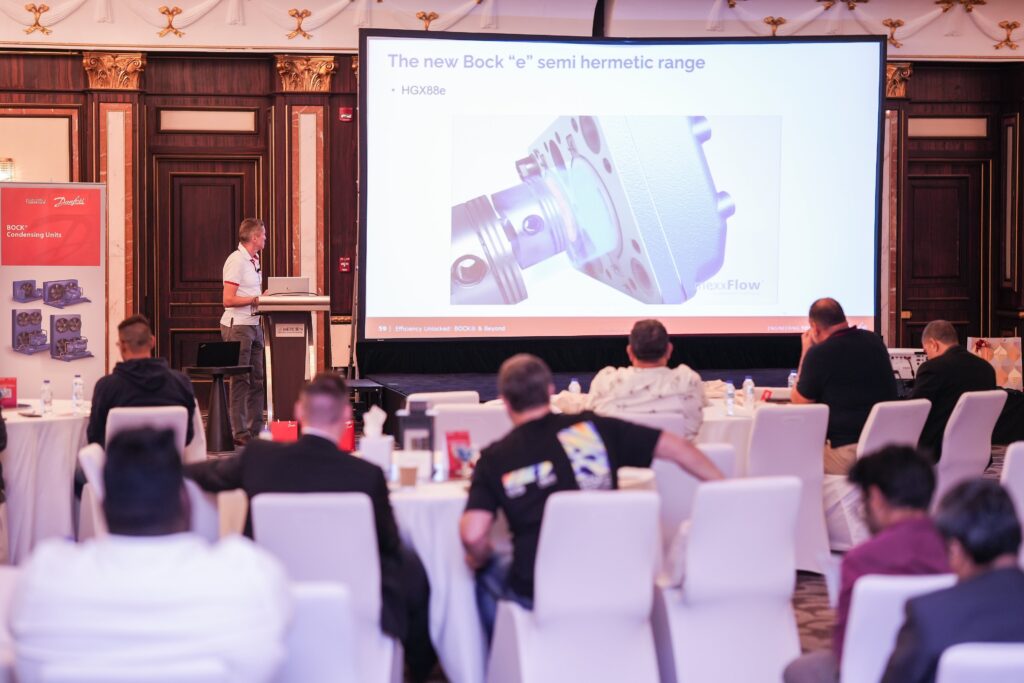
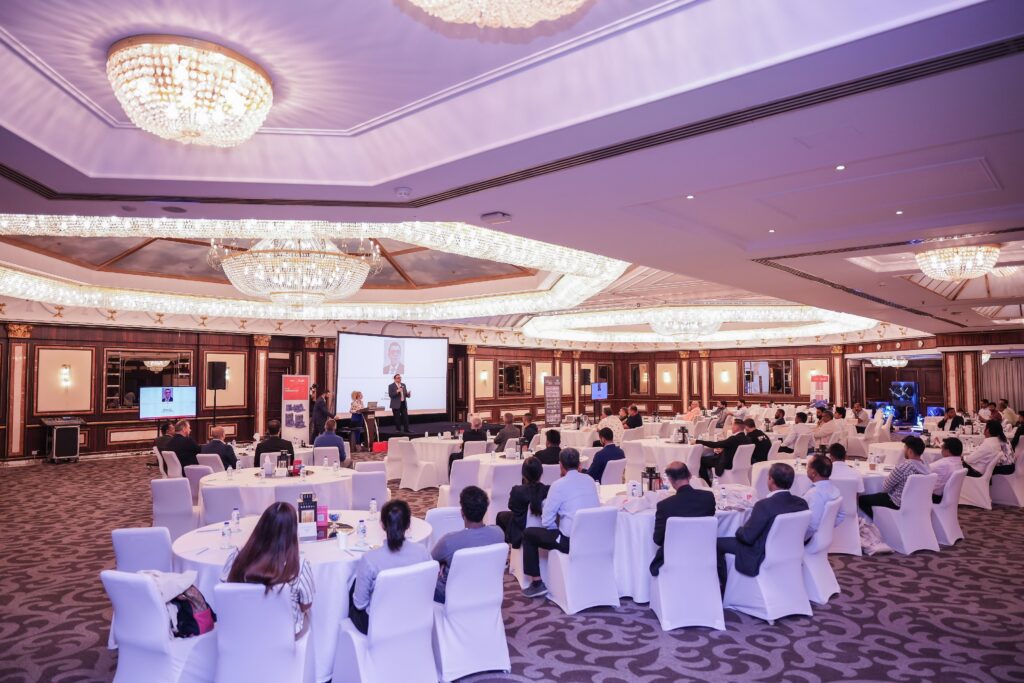
DUBAI, UAE, 3 February 2025: Danfoss, in collaboration with JK Engineering Solutions, held an event to introduce its recently acquired BOCK GmbH, at Le Meridien Dubai. Making the announcement through a Press Release, Danfoss said the event brought together over 100 professionals, including contractors, consultants and end users to discuss advancements in sustainable cooling and heating solutions.

According to Danfoss, the event follows its acquisition of BOCK GmbH, which manufactures CO₂ and low-GWP compressors. Danfoss added it supports the sustainable development and use of low-GWP refrigerants to minimise global warming.

Dalibor Sandor, Product Manager and Trainer for Condensing Units, Global Danfoss BOCK, said: “It was my pleasure to come to Dubai for this occasion and present Danfoss Bock reliable CO2 and low-GWP refrigerant compressors, ensuring functionality, cost-effectiveness and environmental responsibility go hand in hand. The special focus of the event was on BOCK condensing units, which are designed for extreme conditions, such as scorching hot regions such as the Middle East. They maintain efficiency without compromising on performance, thanks to adaptive heat exchangers and efficient AC fans.”

Danfoss said it is actively involved in developing products using refrigerants and in evaluating the viability of new refrigerants as they are introduced. According to Danfoss, new and evolving regulations on refrigerants can make it a challenge to stay up to date on current trends, with new regulations impacting everything from component selection to designing future systems. As refrigerant regulations evolve, the company recognises the challenges and uncertainty this brings, Danfoss said.

Mahmoud Juma, Managing Director, JK Engineering Solutions, said, “It has been an exciting era with BOCK; now with Danfoss’ presence, it is a transformation to elevate to new heights.”

Tareq Marwan, Project Manager, Azizi Developments, said, “We compared all the compressors competing for the project, and it’s true, BOCK has the lowest operating power.”

Premium Story

The Chinese question

Just how much is the Asian giant the reason behind the solidarity being shown to the second Trump Presidency? Krishnan Unni Madathil attempts to provide an answer…

Can anything not be about Donald Trump these days? There is an understandable sense of franticness among a lot of segments around the world about just what the second Donald Trump presidency will mean. And I do not mean to twaddle at length about the politics or the international relations or the ethics or philosophy or any such. These matters have already been covered in much depth in almost every other media source available.

But the measures taken by the new American administration on the economic and commercial front may set off a chain reaction of impacts, which may hit ordinary businesses and consumers far removed from the centre of the action. But there is also the distinct possibility that Donald Trump may merely be a useful alibi to a creeping sense of disillusionment with international commerce that had been building up for some time.

Take the unease with China, for instance. Donald Trump has spent over a decade calling them out for problematic policies and practices, and taking the international rules of commerce for a ride. But Trump was not the first or the only one being suspect. Hordes of small, medium and large businesses have been complaining for as long as one can remember about the predatory instincts of the Chinese manufacturing machine. What is frustrating is not the economic sense behind cheap manufactured goods; who doesn’t like a lower cost if they are not producers? What is frustrating is the reported lack of transparency when it comes to the origins of and sustainability of these low prices. And we are not supposed to ask such questions aloud.

The businesses in developed and high-income economies which have benefited most from the China phenomenon are those who are most capable of splitting up their businesses into its various components and shipping off parts of its value deal wholesale to China. This requires a level of scale and sophistication that most businesses do not have. Businesses that have invested in some manufacturing plant and equipment find that the only bit of their company that is competitive is the trading arm.

We have come to a situation where essentially, “the world trades what China makes”.

A lot of credit is due to the Chinese ability to scale up so rapidly in such a short period of time. Or maybe it is not a short period of time any longer; we just haven’t noticed how quickly time has passed. The Chinese story that is relevant to us today began only in the 1990s, where after the fall of the Soviet Union and the formal end of global communism, and the conclusion of international trade conventions that focused on harmonising world commerce, Chinese manufacturing soared. This required immense changes, in China, in terms of the way business was done. It required immense movements of capital, machinery and labour. I don’t know how they managed to convince so many ordinary Chinese workers, at the beginning of this mega-trend, before the fruits were visible, to forego high wages or adequate living standards. Perhaps they did not need much convincing.

But we have the world of today; and China is very much at the centre of it. Indeed, China has become sufficiently expensive enough, now that the country is outsourcing its manufacturing to Vietnam and Thailand!

The reason why the majors in developed and high-income economies did not mind the shipping off of large chunks of their value chain to China was in part due to a religious adherence to a business principle laid out by the Indian-American business theorist and Professor in the MBA programme at Columbia, Dr C K Prahalad, who drafted the principles of “core competences” for multinational conglomerates, which he initially developed for use by General Electric, which was a huge deal in the 1990s and decades prior – at one time, the world’s largest corporation! Under the leadership of Jack Welch, they went on an acquisition spree in the 1980s, which saw them getting involved in everything from electric bulbs to jet engines and to equipment lease finance. I had worked with them in the United Kingdom for a short while, and I came off extremely impressed by the level of their internal organisation.

What was in it for those shipping these processes off was that it was felt at the time that the core competences – the key value generator of a business proposition – would continue to stay with the company HQ. This is what Apple is doing with its host of products; and I made a comment about that in this magazine a few years ago when I mentioned that while all (or most) of the production of Apple products takes place in China, this only accounts for two per cent of the total value generated per Apple product; 98% of the value is generated in the design and marketing, which is all controlled firmly from the United States (sorry, California!).

What all these models discounted heavily was the Chinese ability to learn. And they learn fast. In the 1960s and 1970s, Japan was where China was in 2000s, and Japanese products were similarly laughed off in Western markets as cheap, tasteless but useful. In response, perhaps, Japan invented the Deming Prize, the international benchmark for quality manufacture.

China, and the western response to it, is in many ways a Japan redux. And with perhaps 20 times as much force and velocity!

That the Chinese are learning, and now generating ideas, with the same rapidity and scale with which they took up those grimy manufacturing jobs is shown with the recent release of DeepSeek. Suddenly, it is not just the manufacturing divisions of multinational conglomerates which seem fit to be shipped off to the Far East! The loud disquiet we hear in response to DeepSeek’s AI model, built at a fraction of the cost it apparently takes to develop these models in the United States (DeepSeek built at the expense of some USD 6 million what took an American company a few hundred billion dollars), is not really with relation to the technological aspect of it; it is the dawning realisation that what they thought could not be vulnerable to being shipped off – their command over IP – are now firm candidates to be put on that boat.

We see this in the automobile industry, as well. The German car industry, the flagship industry of that country and a byword for efficiency and competence and safety (though we can’t be so sure, after all those braking flip-flops), is officially in trouble, as admitted by one of the leading candidates in the upcoming German elections. There too, China. The Chinese are assembling cars the way they assemble phones. China has zoomed past both Germany and Japan to become the world’s largest exporter of cars; and an increasing share of these exports is not just assembled European, American and Japanese brands; we are having to take names such as BYD, Geely, SAIC with renewed respect! And the Germans don’t even register when it comes to EVs. Even Tesla, maker of the first viable electric-only car, is now facing the heat from Chinese competition in the EV space, which it helped create some 20 years ago! It is like selling tea back to the British at Boston Harbour!

And as if divine intervention decided to sweeten the deal even more in China’s favour; some 80% of the kind of rare earth minerals that are relevant and essential to the by-now present EV battery revolution are within the land borders of China.

All this may explain why, despite being such a toxic social pariah for all these years, multinational conglomerates have been extra nice towards Donald Trump and his, ahem, second coming! He is the outlet for their frustrations. He is speaking their language. It appears it is the multinational conglomerates that are the real Donald Trumps.

China, China, China!

Premium Story

Why it’s absolutely crucial to get the refrigerant charge right

Excess refrigerant can lead to refrigerant migration, oil dilution and component damage, while insufficient refrigerant can cause inadequate lubrication for the compressor, leading to wear and tear, says Dan Mizesko…

Centrifugal chillers are a key component in large chilled water plants and District Cooling plants. These chillers are designed to provide cooling to buildings, factories and other facilities, and they operate by removing heat from the chilled water loop. One of the most critical factors in ensuring that a centrifugal chiller operates efficiently is maintaining the correct refrigerant charge. Proper refrigerant charge is essential for optimal chiller performance and energy efficiency. This article explores the reasons why refrigerant charge plays such a crucial role in the energy efficiency of centrifugal chillers.

1. Optimal heat exchange and cooling performance

Centrifugal chillers rely on a closed-loop refrigeration cycle, where the refrigerant is used to absorb heat from the return chilled water loop to be cooled, and release it to the condenser water loop. The refrigerant charge affects the efficiency of this heat exchange process. As I have highlighted time and again, a chiller’s efficiency is affected most by its resistance to heat transfer. Too little refrigerant results in inadequate heat absorption, meaning the chiller will have to work harder and longer to achieve the desired cooling effect. Conversely, too much refrigerant can cause flooding in the evaporator or refrigerant carryover to the compressor, which also reduces system performance and can damage the compressor.

With the correct refrigerant charge, the heat transfer process is optimised. The evaporator absorbs as much heat as possible, and the compressor operates efficiently, leading to better overall cooling performance. This directly impacts the chiller’s ability to maintain the desired temperature without over-exerting the system or wasting energy.

2. Energy efficiency and operating costs

Energy consumption is a significant consideration in operating centrifugal chillers, particularly for large systems that run continuously. A chiller with an improper refrigerant charge will have to compensate for suboptimal performance, often by drawing more power to maintain cooling. If the refrigerant charge is too low, the compressor will run longer to try to maintain cooling, leading to higher energy consumption. On the other hand, an overcharged system may result in excessive pressures, which puts additional strain on the compressor, also leading to higher energy consumption.

By ensuring that the refrigerant charge is just right, the chiller can operate at its most energy-efficient point, which translates into lower electricity bills and reduced operating costs. Energy-efficient chillers are not only more cost-effective but also have a smaller environmental impact, as they consume less electricity and, thus, produce fewer carbon emissions.

3. Avoiding overloading of the compressor

The compressor in a centrifugal chiller is responsible for circulating the refrigerant through the system. An improper refrigerant charge can cause the compressor to work harder than necessary. When the refrigerant charge is too high, the compressor may experience higher discharge pressures, which lead to excessive energy use, premature wear and potential mechanical failure. An overcharged system puts extra strain on all components of the refrigeration system, reducing its lifespan.

Conversely, if the refrigerant charge is too low, the compressor may not be able to provide sufficient cooling capacity, which can cause the system to overload, forcing the compressor to operate inefficiently, again leading to higher energy consumption and potential damage over time.

4. Enhanced system longevity and reliability

Maintaining the correct refrigerant charge also improves the reliability and longevity of the centrifugal chiller. Systems that are consistently overcharged or undercharged are more prone to breakdowns and require more frequent repairs. Excess refrigerant can lead to refrigerant migration, oil dilution, and component damage, while insufficient refrigerant can cause inadequate lubrication for the compressor, leading to wear and tear.

By ensuring the chiller operates with the correct refrigerant charge, businesses can extend the life of their equipment, reducing the need for expensive repairs and downtime and, ultimately, lowering the total cost of ownership over the life of the chiller.

5. Avoiding refrigerant waste and environmental concerns

Improper refrigerant charging can also contribute to refrigerant loss, which is not only costly but also harmful to the environment. Refrigerants are regulated substances due to their potential to contribute to global warming and ozone

depletion. An overcharged or undercharged chiller may leak refrigerant or require more frequent recharges, resulting in unnecessary waste.

On the other hand, a well-maintained chiller system with the proper refrigerant charge operates more efficiently, preventing unnecessary refrigerant loss and contributing to a greener, more sustainable operation. Minimising refrigerant waste is both an economic and environmental advantage, as it lowers the carbon footprint of the plant.

6. Achieving manufacturer’s performance specifications

Chiller manufacturers provide specific guidelines for the refrigerant charge necessary to meet the system’s design specifications. Following these recommendations ensures that the chiller operates within the expected parameters, allowing the system to achieve its designed cooling capacity and efficiency. Deviating from the specified refrigerant charge will lead to performance issues.

By adhering to the manufacturer’s specified refrigerant charge, facility and plant managers and owners can ensure that their centrifugal chillers perform optimally, reducing the risk of system failure, ensuring compliance with regulations, and maintaining the performance guarantees provided by the manufacturer.

Conclusion

The refrigerant charge is a fundamental factor in ensuring that centrifugal chillers operate with maximum energy efficiency. From enhancing heat exchange efficiency to reducing compressor strain and minimising refrigerant waste, the proper charge is integral to the overall performance, cost-effectiveness and sustainability of the chiller system. Whether for reducing energy consumption, extending the life of equipment or minimising environmental impact, maintaining the correct refrigerant charge is essential for maximising the performance and efficiency of centrifugal chillers. By ensuring that the refrigerant charge is properly monitored and maintained, chilled water plants can achieve significant energy savings, lower operating costs and promote environmentally friendly practices.

Premium Story

The time of autonomous buildings is here

Salah Nezar speaks on the vision for the New Murabba to bring a game-changer solution for the District Cooling industry using AI and ML to achieve unprecedented efficiencies. The paradigm shift approach, he says, will reset the high-performance benchmark by leveraging real-time data management and deep knowledge of designing and operating cooling plants. The solution, he says, will require careful migration of current assets’ setpoints to their optimal targets, hence attracting much interest in what really matters for operators and end users…

At New Murabba, we set new benchmarks by introducing the latest methods and technologies into District Cooling systems, leaving behind conventional practices. Legacy chillers’ configurations shall be replaced and automation of controls through AI shall be introduced, as well as optimised sequences of operations.

Our goal is to ensure a complete integration of AI algorithms within the Automation Control Framework and to set new benchmarks. The performance readjustment of various active assets will be done on a continuous basis, enabled through real-time data management and deep understanding of interdependencies of the same.

This marks the beginning of a huge digital transformation in the District Cooling industry, whereby AI algorithms and predictive models take over tasks hitherto being performed by human beings, such as data analysis, predictive maintenance and making setpoint adjustments in real-time. These systems will continuously learn and keep improving with volumes of data emanating from a multitude of IoT sources and, hence, facilitate never-before-achieved optimisation.

Key features of the AI-driven system

It all starts with seamless, secure connectivity across all assets to enable frictionless data flow from all IoT devices to the data lake. The raw data gets cleaned, sorted and analysed. AI algorithms will probe this curated data, extracting actionable insights from various sources, particularly historical BMS outputs, occupancy trends and weather conditions. The algorithm will recommend the optimal cooling demand and set the best-in-class operational parameters.

The subsequent layer of the application lies in suggestions for improvements due to the aggregation of data from various sources, redefining how these sequences of operation are defined based on what really matters to operators. It uses AI models to predict system degradation, asset failures and deviation from the design intent to improve overall plant performance. Real-time setpoint management allows the operators to take necessary actions upfront, thus really allowing for the possibility of remote resolution through centralised control.

Looking ahead to autonomous District Cooling systems

At the New Murabba, we believe the District Cooling industry has now entered the new era of efficacy, where AI and advanced analytics self-manage, adjust and optimise systems in real time. Be it predictive maintenance, AI-driven energy optimisation or weather forecasting by predicting their behavior and adapting to peaks and troughs, these systems are incessantly upscaling energy efficiency, therefore very much going towards autonomous plants.

Key trends powering AI adoption

A few factors have accelerated the pace of integrating AI into District Cooling operations, beyond imagination. These factors are:

· The availability and economy of IoT sensors: Reflecting real-time data on systems’ performance and environmental conditions allowing decisions commensurate with accuracy and timing.

· Advances in cloud computing: The scalability of cloud platforms allows enormous data storage and processing power with remote monitoring, thereby enhancing the functionalities of AI-driven systems.

· Relatively low computing power and inexpensive deployment costs make possible the implementation of expensive advanced AI and ML algorithms.

· Open automation technologies make system integrations and control strategies less problematic, hence making AI more accessible.

· Generative AI: It will enable advanced system optimisation by learning the patterns within operational data.

· Seamless integration: AI-driven insights in every step of the cooling process – design, construction, operation and maintenance – lead to faster preventive and predictive reactions.

Challenges and strategic solutions

With some key benefits, some challenges must be overcome to realise the fullest potential of high-performance operations. Some major concerns include Low Delta T Syndrome, idle capacity and heat recovery opportunities. How AI and other technologies can help in the given scenarii are as follows:

Low Delta T Syndrome: As is reasonably well known, the is the condition when there is a lack of appropriate temperature difference between the chilled water supply and return lines due to inefficiency. This inefficiency forces chillers, pumps and cooling towers to work harder, consuming more energy and increasing operational costs. Addressing this critical issue requires a best-in-class design practice to ensure the following:

Correct sizing of cooling components, such as chillers, plate and frame heat exchangers, pipes, decouplers and valves, to optimise the cooling plant performance.

Variable primary flow mechanism: This mechanism will ensure the dynamic variation in the chilled water stream to maintain the best setpoint temperature.

Leveraging advanced controls and IoT sensors with AI-driven algorithms to monitor and adjust operational control points in real-time is a feature. PICVs on coils allow for pressure-independent control to achieve exact water flow, with minimal wastage, further optimising energy efficiency.

Idle Capacity: The system, if producing more chilled water than is used, can be accurately predicted by employing the power of AI, using historical data on weather patterns and occupancy. Thermal Energy Storage (TES) systems can play an important role in mitigating this issue by allowing surplus chilled water to be stored during low-demand periods and be used during peak times, to be able to balance production with actual demand.

Integration of cooling for data centres: Data centres need to be integrated with the District Cooling loop, requiring low grades of chilled water. This will enable data centres to make use of the return chilled water line, enhance the system efficiency and reduce the cost of cooling.

Use of Treated Sewage Effluent: The use of treated sewage effluent for cooling applications will reduce dependence on freshwater, mainly in cities like Riyadh. On-site STPs will treat the water, which will be a sustainable and economically viable source of water.

Waste Heat Recovery: The employment of heat recovery systems traps this waste heat and reduces the heat rejection loads on the cooling towers. That could be utilised to preheat domestic hot water or for heating swimming pools. Booster heat pumps may be used to maximise the amount of recovered heat while keeping the water at a safe temperature.

Renewable Energy Integration: Integrating PV and thermal solar panels, coupled with heat recovery system, will allow the improvement of efficiencies and reduce dependence on conventional sources of power, which enhances the project’s sustainability.

Delivering optimum efficiency and sustainability

Success will come from how far AI-driven technologies are brought in and how well operators manage the performance at cooling plants. With predictive models, real-time data and renewable energy sources, operators will be able to bring down costs, enhance system performance, and alleviate the financial loads associated with developers and end users.

Conclusion

The future of District Cooling will be shaped only by AI-powered autonomous systems that adapt and improve continuously with real-time data and predictive analytics. In this regard, for fast-tracking at every level, industry, researchers and policy framers need to join hands and ensure this happens with due regard to data privacy concerns, reskilling of human resources and the formulation of new standards for infrastructure driven by AI. Finally, with strategic partnerships and further innovations, AI-enabled cooling systems will be found in the heart of sustainable, energy-efficient infrastructure in the years to come

The writer is Senior Director, Design Management, MEP at New Murabba. He may be contacted at snezar@newmurabba.com


Premium Story

CAREL to host webinar on EPBD and ESPR regulations

Online event will explore new EU regulations aimed at improving energy efficiency in buildings

BRUGINE, ITALY, 20 January 2025: CAREL said it will be hosting an interactive webinar, titled “New efficiency policies for products and buildings in the EU” on February 20 from 10am to 11am, CET. Making the announcement through a Press Release, CAREL said the event will provide insights into the revised European EPBD (Energy Performance of Buildings Directive) and the ESPR (Eco-design for Sustainable Products Regulation).

CAREL said Raul Simonetti, HVAC/R Corporate Business Manager, CAREL, and Miriam Solana Ciprés, HVAC/R Technical Knowledge Manager, CAREL, will conduct the webinar. It will be in English, the company added.

CAREL said the session will cover the key aspects of EPBD (EU) 2024/1275 and ESPR (EU) 2024/1781, which came into effect on May 28, 2024 and July 18, 2024, respectively. According to CAREL, the revised EPBD (Energy Performance of Buildings Detective) focuses on improving energy efficiency in buildings, promoting zero-emission construction, and adopting smart technologies to monitor and reduce energy consumption. Meanwhile, ESPR (Eco-design for Sustainable Products Regulations) broadens the scope of eco-design to include life cycle analysis and sustainability criteria, aimed at reducing environmental impact, improving efficiency and lowering carbon footprints in buildings.

The company said the webinar would combine an informative lecture with a fun quiz, offering prizes to participants who answer correctly and quickly. It added that the event is free to attend, and participants can register through the following link:

https://carel.zoom.us/webinar/register/8217363350450/WN_Gb-xpX8AR8-hipWMV1my6w

Premium Story

HVAC climate goals are under pressure

It is vital that we accelerate regulatory refrigerant transitions in the Middle East, says Nabil Shahin

The GCC region, categorised under Article 5 Group 2 in the Kigali Amendment, faces a unique set of challenges in transitioning from hydrofluorocarbons (HFCs) to lower-global warming potential (GWP) alternatives, such as hydrofluoroolefins (HFOs) or natural refrigerants. Amid mounting urgency from global and regional regulators to accelerate the refrigerant transition worldwide, including in the Middle East, this shift is seen as a critical step in combating global warming and addressing climate change challenges. With a different implementation timeline than other regions, this transition has specific concerns, including the use of flammable refrigerants, the training of technicians and the readiness of regulatory bodies. Additionally, the region’s high ambient temperatures present a unique challenge, as refrigerants behave differently under such conditions compared to milder climate regions.

Unique challenges of refrigerant transition in the Middle East

1. Regulating and using flammable refrigerants: Many low-GWP alternatives, such as HFOs and natural refrigerants, are flammable. This raises significant safety concerns, as improper handling or storage could lead to fire hazards. The region’s technicians, who often lack the necessary training to work with these refrigerants, require skill upgrades to ensure safe and effective handling. Clear safety protocols and updated regulatory measures are essential to mitigate these risks. The transition to natural A3 highly flammable refrigerants like R290 (propane) for central ACs and heat pumps, if it ever happens, is a long way off and will involve considerable research to ensure safety.

2. Technician training and skill development: Transitioning to these refrigerants demands new skills, including an advanced understanding of flammability, pressure-temperature relationships and system design. To address this, the Refrigerant Driving License (RDL) programme, jointly developed by UNEP and AHRI, is now ready for administration to interested parties. This programme provides comprehensive training materials and testing for technicians before they can claim RDL certification, ensuring they possess the necessary competencies to handle refrigerants safely and effectively. Currently, the availability of trained and certified technicians in the Middle East is insufficient. A large-scale training initiative is needed to bridge this gap.

3. Regulatory and governmental preparedness: Building codes, safety standards, transportation, warehousing and other regulations must evolve to accommodate the use of new refrigerants. Governments in the region need to expedite regulatory updates, aligning them with global standards while addressing local needs. This aligns with the global regulatory push to accelerate climate action through rapid adoption of lower-GWP refrigerants, underscoring the need for immediate and coordinated efforts. New refrigerants are already entering the Middle Eastern market, making it important for regulatory bodies to begin the process and keep pace with developed countries.

4. High-ambient temperature conditions: The Middle East’s extreme climate, with temperatures regularly exceeding 40 degrees C, is a challenge. Certain refrigerants may exhibit reduced efficiency and capacity under such conditions. Evaluation of refrigerants to ensure suitability for high-ambient temperatures is essential.

5. Regulations requiring low-GWP refrigerants: The Kigali Amendment to the Montreal Protocol necessitates the use of refrigerants with low-GWP ratings. In the United States and Europe, maximum GWP levels of 700 and 750 have been established, with plans to lower this threshold to below 150, soon. One of the dilemmas faced by the Middle East is whether to follow a phased transition, starting at a higher GWP threshold or to leapfrog directly to a low GWP of 150. This approach would avoid the need for successive transitions and align the region with future global standards from the outset. Global pressure to adopt low-GWP refrigerants is increasing due to its role in reducing greenhouse gas emissions. The AHRI Refrigerant Transition Work Group is actively discussing this strategy, though no decision has been made. As the GCC region falls under Group 2, it has a delayed compliance timeline, providing an opportunity to adopt a tailored solution suitable for local conditions rather than mimicking other regions.

6. PFAS in refrigerants and new regulations: Some refrigerants contain per- and polyfluoroalkyl substances (PFAS), commonly referred to as “forever chemicals”, due to their persistence in the environment. PFAS are increasingly being scrutinised for their potential harm to human health and the environment. The European Union is considering a comprehensive ban as early as 2026. This poses a significant challenge for the HVAC industry, as refrigerants containing PFAS could be out of reach due to regulatory changes.

The role of AHRI MENA’s Refrigerant Transition Work Group

Recognising these challenges, AHRI has established a Refrigerant Transition Work Group, comprising regional and international HVAC system and component manufacturers and is chaired by Murad Abu Salimah from Danfoss. The group’s primary objectives are:

1. Evaluating refrigerants for regional suitability: The work group is assessing the performance of available refrigerants under high-ambient conditions. Field testing is being considered to determine which refrigerants are most effective in the Middle East’s climate. This data-driven approach ensures that selected refrigerants meet efficiency as well as safety requirements.

2. Guiding regulatory bodies: By leveraging lessons from Europe and the United States, the work group aims to help regional regulatory authorities adapt to the refrigerant transition efficiently. This involves providing technical assistance, sharing best practices and avoiding the need to “reinvent the wheel”.

3. Collaborating with UNEP and Local National Ozone Offices: The group will work with UNEP to support local ozone offices in developing phasedown plans for HFCs. These plans must align with the Kigali Amendment’s mandate to reduce HFC consumption by 85% by 2047. While each country will present its own plan and timeline, creating a successful model in one nation can serve as a blueprint for others in the region.

4. Involving stakeholders and ensuring industry readiness: The group has initiated discussions with chemical companies to evaluate new refrigerant products suitable for the Middle East. The intent is to ensure that HVAC manufacturers and industry collaborate with regulatory bodies and international organisations to address technical and regulatory barriers. Training programmes and certification schemes for technicians are a critical component of this collaborative effort.

Phasedown timeline and compliance

Under the Kigali Amendment, Middle Eastern countries are required to develop HFC phasedown plans. These plans outline the steps needed to achieve an 85% reduction in HFC consumption by 2047. Each country – in conjunction with their ozone office – will play a central role in crafting and implementing these timelines, ensuring alignment with global standards while addressing regional priorities. The accelerating global regulatory focus on meeting these targets highlights the need for swift and decisive action in crafting effective phasedown plans as soon as possible. This task of the phase-down, although the GCC region falls under Article 5 Group 2 hottest nations, will commence in 2028 and reduce the level to 15% of 2024-26 levels by the year 2047. Which means that the ozone office of each of these countries must present the plans as soon as possible and decide on how the phase-down will be implemented and what sectors will be affected. The specific reduction steps may include a freeze date in 2028, a 10% reduction by 2032, 20% by 2037, 30% by 2042, and an 85% reduction by 2047. Most likely, this region will start shifting sooner than 2028, as most manufacturers have already switched to the new refrigerants in the developed countries and will most likely not continue to produce two separate products or continue to develop products with harmful refrigerants.

Importance of refrigerant reclamation

An often-overlooked aspect of refrigerant management is the critical role of reclamation. Approximately 60% of the refrigerants sold globally are used to replenish existing systems due to leaks or servicing needs, while only 40% is used in new equipment. Training and the development of robust reclamation centres in the Middle East could significantly reduce the demand for new refrigerants, lower costs for end-users and mitigate environmental impact. Reclamation ensures that high-GWP refrigerants are captured, refined (removing moisture and oil) and reused, minimising their release into the atmosphere and supporting compliance with phasedown targets.

The path forward

As the Middle East embarks on this complex refrigerant transition, a multifaceted approach is essential. By focusing on training, regulatory alignment, reclamation infrastructure and targeted refrigerant evaluations, the region can achieve a smooth transition while meeting its obligations under the Kigali Amendment. The global regulatory push for accelerated refrigerant transitions underscores the critical need for the Middle East to align with these initiatives to combat climate change effectively. The collaborative efforts of industry stakeholders, regulatory bodies and international organizations will be crucial in overcoming the challenges and unlocking the opportunities of this transition. The Refrigerant Transition Work Group’s initiatives provide a roadmap for success, ensuring the Middle East’s HVAC industry is well-prepared for the future.

The work group will also release articles to update stakeholders on various elements of the transition in the upcoming months, keeping the industry informed and engaged.

Premium Story

The Cooling Pledge: A hedge against global warming

The Pledge, a significant outcome of COP28, in the UAE, offers the HVACR industry a practical edge in addressing the climate crisis, says Dr Rajendra Shende

No one understands the importance of hedging more than business leaders. A hedge is an investment tactic that is deployed to mitigate possible and potential loss in other investment practices. The Global Cooling Pledge is such a hedge that offers the cooling business, engaged in refrigeration and air conditioning, a practical edge in addressing the climate crisis.

The mind-boggling conundrum of global warming and air conditioning can be stated in simple term: Planetary global warming needs air conditioning, which in turn, warms the planet!

Interestingly , Lee Kuan Yew, the founder and the first prime minister of modern Singapore once stated: “Air conditioning was a most important invention for us, perhaps one of the signal inventions of history. It changed the nature of civilisation by making development possible in the tropics. Without air conditioning, you can work only in the cool early-morning hours or at dusk.” He went on to say: “The first thing I did upon becoming prime minister was to install air conditioners in buildings where the civil service worked. This was key to public efficiency.”

Lee Kuan Yew died in March 2015, 10 months before the Paris Climate Agreement was signed. Little did he know that in the future, energy efficiency of air conditioners would matter as much as the efficiency of public servants!

“Global heating is a cold, hard fact.” That’s how the World Meteorological Organization (WMO) said on January 10, 2025. Based on six international datasets, it confirmed that 2024 was the warmest year on record. Known to issue Press statements in rather dry language with a flood of weather statistics, this time around, the WMO issued the following statement: “Global heating is cold, hard fact. Climate history is playing out before our eyes. We have had not just one or two record-breaking years but a full ten-year series.” That was a telling statement, if any.

More cooling needs more energy, more energy produces more greenhouse gases, more greenhouse gases result in higher temperature on Earth. Higher temperature needs more cooling for human activities like food preservation, production of medicines, health, comfort and for data centre security for digital technologies, which themselves are showing a phenomenal rise every year. This vicious cycle in cooling is the mega challenge to address what the WMO stated as a ‘cold and hard’ fact. Clearly, 2024 ended by making it very cold and clear that human developmental activities have disrupted the carbon cycle on our planet.

Seventy-five per cent of the greenhouse gas emissions come from energy generation. Part of that energy is needed for human development, which in turn needs cooling operations. The word ‘space cooling’, mainly used by the International Energy Agency (IEA), interestingly enough has nothing to do with ‘space’ applications in the sky, but space within buildings like residences, factories and hospitals which need to be cooled. With several extreme heat events and record high temperatures the world over since the 1800s, much of the global population, mainly in Africa, Middle East and Asia, is at high risk of heat stress, adversely affecting labour productivity, and human physical and mental health.

Growing populations and ever increasing global warming have led to a continuous rise in demand for air conditioning and refrigeration, resulting in higher greenhouse gas emissions. Energy consumption for space cooling has tripled since 1990, though much of the population in poor countries do not have access to air conditioning and refrigeration due to accessibility and affordability. This has left many people deprived of cooling, thereby creating ‘cool-inequity’. Sadly, the term ‘sustainable cooling’ does not internalise such social and just dimensions of cooling.

About 10-15% of global greenhouse gas emissions come from refrigeration and cooling (RAC) applications. The sources of emissions from the RAC sector are two: Direct emissions resulting from the leakages and end-of-life disposal of the refrigerants that have Global Warming Potential (GWP), and indirect emissions arising out of use of energy for the compressors and allied accessories for refrigeration or air conditioning equipment. Nearly 70% of emissions are indirect, and the remaining are from refrigerant leakages and their open disposal.

The vicious circle of emissions from the RAC sector can be greatly disrupted by transitioning away from highly climate-damaging HCFC and HFC refrigerants to low and, then, zero-GWP refrigerants, and moving towards super energy efficient and then clean-energy RAC appliances. Fortunately, the RAC business is on the threshold of realisation that there are, along with climate benefits, significant economic benefits to enhance the energy efficiency and use of clean energy.

However, the time to act is now. During COP28, in the year 2023 in Dubai, under the Presidency of the UAE, all countries that attended agreed to double energy efficiency and triple renewable energy use. A significant outcome of COP28 was the Global Cooling Pledge, joined by 63 countries, including Canada, Kenya, the UAE and the United States. The Pledge marks the world’s first collective focus on direct and indirect emissions from cooling, which includes refrigeration for food and medicine and air conditioning. The Pledge commits countries to reduce by 2050 their cooling-related emissions by at least 68% compared to 2022 levels, along with a suite of other targets, including establishing minimum energy performance standards by 2030.

The goals of the Global Cooling Pledge can be achieved by the RAC Industry, which has been a beacon of successful transformation right from the 1990s, when the Montreal Protocol sounded a clarion call. No one reacted more positively, and with more commitment, than the RAC industry. I believe it can once again rise to the call issued by the Pledge through phase down and then phase out of HFCs; phase out of HCFCs; promoting use of natural and near-zero-GWP refrigerants; monitoring energy efficiency of the RAC appliances through digital dashboards and through the use of AI technologies; pledging not to dump outdated appliances to poor countries; creating a fund of its own to help poor countries to enhance energy efficiency and effective monitoring of appliances; tying up with universities to promote the research, development and piloting of actions that achieve use of clean energy in RAC appliances, and through promoting passive, traditional and natural cooling practices that were followed in Asian and Middle Eastern countries for centuries in the past.

CPI Industry and its flagship magazine, Climate Control Middle East, along with Green TERRE Foundation would aim to develop this Editorial Campaign to achieve the goals of The Pledge and invite commitments from industry partners to mitigate RAC-related emissions as per well-meaning targets. The success stories; research papers; and Pledge-related events, including awards and conferences, that would be held in 2025 would find a place in this magazine during the course of the year, and important points extracted from the Campaign would be presented during COP30, in Brazil.

Building a better future for RAC through disruptive changes in behaviour would still validate the statement by the late Lee Kuan Yew that the most important invention of the 20th century was indeed the air conditioner! As temperatures and emissions rise, let the commitment of the RAC industry to The Pledge also rise for a world featuring sustainable and just cooling.

Premium Story

Decoding HVACR 2030

Eurovent report offers an analysis of the HVACR industry in 2023, explores key trends and challenges, presents a forecast through 2030

On November 29, 2024, Eurovent Market Intelligence (EMI) published its latest comprehensive report, HVACR 2030, which offers an analysis of the HVACR sector in 2023. This fourth edition of EMI’s ongoing series explores key industry trends and challenges, and presents a forward-looking forecast through 2030. The extensive study is intended as a resource for manufacturers, investors and policymakers seeking insights into current market dynamics, emerging technologies and opportunities.

Covering 16 products under five chapters: Cooling, Refrigeration, Thermodynamics, Terminal units and Ventilation, the report focuses on the European market, which includes the EU27, Balkan countries, Norway, Switzerland, Türkiye, UK and Ukraine.

The first section of the report, dedicated to cooling, is a comparison of the cooling tower and dry cooler markets. The dry cooler market amounted to €372.7 million in 2023 in Europe, compared to €210 million for cooling towers, the former being dominated by Germany and the latter by Türkiye. The evolution in value was much more favourable in 2023 for dry coolers, with +15% while that of cooling towers stagnated. This is part of an underlying trend in Europe, which is seeing the dry cooler market progressing more quickly than that of cooling towers. Between the two, the adiabatic and hybrid dry coolers are progressing the fastest, but another confrontation is looming between the simple spray and pad systems. As can be seen in the graph opposite, pad systems dominate the market, but this trend could be reversed.

The chapter on refrigeration covers the market for coolers and condensers, including CO2 units. The former totalled 271,000 units, compared to 48,900 for the latter in 2023. The market is dominated by France, followed by Italy and then Germany, but the most interesting point is, of course, the evolution of CO2 units in Europe. Their proportion increased from 12% in 2019 to 20% in 2023: It is higher in northern Europe – around 50% — but this is not necessarily where the largest markets or the strongest growths are. As for ammonia (NH3) units, the large markets are in Spain, Poland and the Netherlands, but once again, the growth potential is elsewhere.

In the chapter on thermodynamics, the market evolution in 2023 showed a positive trend overall, except for the rooftop segment, which experienced stagnation in unit numbers. One of the standout segments of 2023 involved chillers with a capacity above 50 kW, which experienced remarkable double-digit growth, reaching a market value of €1,997.7 million. It must be noted that air-cooled and water-cooled chillers fuelled the expansion. While the long-term analysis by cooling and heating type revealed differing trends, the refrigerant analysis concluded that the phase-down of HFCs in 2023 was rather slow, despite a decline in the use of R-410A.

The report also features an analysis of refrigerants based on capacity, heat source, type of cooling or heating, compressor and application. Additionally, it includes a forecast of the chiller market by refrigerant up to the year 2030.

The CRAC/CRAH market also enjoyed double-digit growth in 2023, with unit sales increasing by 15% and market value rising by 33%, reaching €375.8 million. This growth was primarily driven by the rising demand for high-capacity CRAH units (over 100 kW), which are essential for hyperscale and large enterprise data centres. The units have consistently experienced growth since 2015, although there was a brief slowdown in 2021, due to uncertainties following the pandemic. However, the market rebounded in 2022, and in 2023, there was a 28% increase in sales of large units.

In the section dedicated to terminal units, the report highlights the positive growth of the fan-coil unit market, which was valued at €570 million in 2023. The market is primarily driven by units without casing, which makes up about one-third of the market, slightly surpassing units with casing. The strong growth in 2023 contrasted with the chilled-beam market, which remained particularly stable in both value and structure. In 2023, the sales of chilled beams reached almost 64 million euros, with Sweden alone accounting for more than a third of the amount. A modest decline is expected for the chilled-beam sector through 2030, as fan-coil units – a more cost-effective solution – continue to gain market share.

Finally, in the chapter on ventilation, the report features three products: Air-handling units (AHUs), central residential mechanical ventilation with heat recovery (MVHR) and air filters. Only the last product demonstrated stable growing dynamics. Largest in the ventilation sector in Total Europe, the AHU market (around 2.9 billion euro sales) in 2023, grew by +7.5% in euro terms but stagnated in units. The situation by country varied a lot, with only southern Europe and the United Kingdom having a positive evolution in units. The year 2023 for the AHU market was highlighted by turning the rotary into the dominant heat recovery technology in Europe (37% against 32% for the plate), with a high probability of keeping this prevalence in the future. Additionally, the report explores the correlation between the evolution dynamics of AHUs and integrated control and compact units, which both suffered a decrease in 2023, following the weak performance of retail and light-commercial applications.

The central residential MVHR market experienced the worst downturn in the ventilation segment, with a 10% decline, impacted by the crisis in new residential construction all over Europe. Among significant markets, only Spain and the United Kingdom enjoyed a positive evolution in 2023, while northern and eastern Europe dipped by around -20%.

The EMI forecast predicts a gradual recovery, though rather slow and not immediate. Despite the overall decrease, the units with enthalpy slightly increased, but mainly in eastern Europe. Unlike that for AHU, the share of rotary heat recovery in central residential MVHR in Total Europe diminished in 2023, which is likely related to the strong decline in northern Europe, the region where this heat recovery type dominates. Additionally, the report analyses the defrosting strategies used in different European countries and the preferences by the unit’s mounting type.

Editor’s Note: EMI’s database, which includes contributions from over 500 participants, formed the foundation for the HVACR 2030 report, providing an understanding of the economic, technological and regulatory factors shaping the HVACR sector. The report spans 154 pages. For more details, readers may contact: statistics@eurovent-marketintelligence.eu