CCME.NEWS, covering the regional and global HVACR industry with an unwavering commitment to providing in-depth news and analyses on policy, business and technology
The professional association said the seminar will examine motor starting technologies for HVAC systems, with insights from ABB’s product management team
DUBAI, UAE, 15 January 2026: ASHRAE Falcon Chapter said it will host the seminar, “Motor Starting Solutions in HVAC Application” at the Metropolitan Hotel Dubai on February 3, from 6:30pm to 10:00pm, in partnership with ABB. Making the announcement through a Press Release, the society elaborated that the seminar aims to provide insights into motor starting techniques and components for HVAC systems.
ASHRAE said Lucas Schichel, Product Manager, ABB, will speak at the seminar. The society added that Schichel has nine years of B2B product management experience and a Master of Science degree in Industrial Engineering from RPTU Kaiserslautern. ABB said Schichel specialises in motor starting components, including manual motor starters, overload relays, contactors and soft starters, and works within its Agile Team ‘Develop Solutions: Motor Starting’ to develop tailored solutions that address specific customer needs.
The ASHRAE Falcon Chapter said the seminar agenda begins with registration and a welcome session at 6:00pm, followed by coffee networking at 6:30pm, a seminar from 7:00pm to 8:30pm, and concludes with dinner until 10:00pm.
The society added that the seminar is aimed at professionals in the fields of medicine, science, and technology. ASHRAE said the seminar will cover topics such as sustainable and environmentally friendly technologies, HVAC applications as a key area for customer-centred solutions, and the certification of motor-starting components for flammable refrigerants.
Premium Story
ORA Developers deploys JAGGAER to streamline global procurement
ORA Developers has outlined how a unified digital procurement platform from JAGGAER is supporting its international operations
DUBAI, UAE, 14 January 2026: ORA Developers said it is streamlining sourcing, strengthening supplier collaboration and improving visibility across its international operations through the deployment of a unified digital procurement solution from JAGGAER. Making the announcement through a Press Release, ORA said the platform supports its rapid growth and underpins its ambition to modernise procurement as a strategic driver of operational excellence.
ORA said it operates across the Caribbean, Cyprus, Egypt, Greece, Grenada, Iraq, Pakistan, the UAE and Tunisia. The company said it works with a wide network of consultants, contractors and suppliers in categories ranging from interior finishing materials and furniture to hospitality, IT and professional services. ORA said that by standardising supplier performance evaluation on a single platform it can identify and engage high-performing partners in each market regardless of geography. The company said this allows developments in all regions to benefit from consistent quality, access to premium materials and proven expertise.
ORA said the introduction of JAGGAER’s sourcing and supplier management capabilities brings new levels of transparency to tendering processes. The company said that with each market facing different regulatory requirements, the platform provides a structured, audited and fully digital approach to managing bids and supplier participation. ORA said this transparency improves internal governance and strengthens the resilience of its global supply chain without compromising local autonomy. ORA added that it contributes to business benefits including timely project delivery and more efficient resource allocation.
From an ESG standpoint, ORA said it is using the platform to accelerate responsible sourcing across its operations. The company said JAGGAER enables it to assess suppliers on sustainability criteria during onboarding and evaluation. ORA said this supports its commitment to eco-friendly materials, supplier diversity and clear reporting on ESG-related procurement indicators, which the company said allows sustainability to be embedded into the earliest stages of project development.
ORA said procurement is often overlooked despite being one of the most influential parts of the real estate and construction value chain. ORA added that digitalising this function allows it to work with the best suppliers in each market, improve quality and consistency across developments.
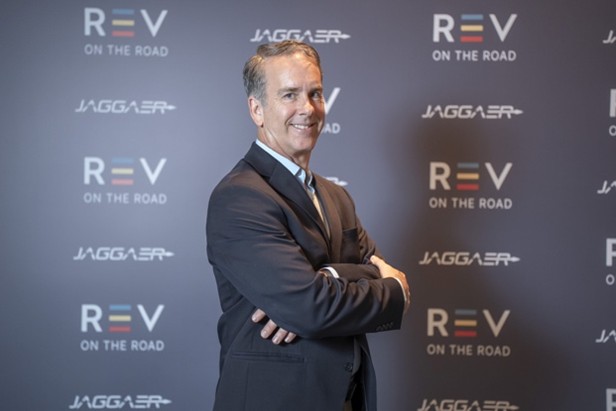
Troy Meyers
JAGGAER said it commends ORA for its commitment to raising industry standards. “ORA is creating a benchmark for how real estate and construction companies can use digital procurement to unlock efficiency, transparency and resilience at scale,” said Troy Meyers, Chief Customer Officer, JAGGAER. “Their approach demonstrates how a modern, data-driven procurement model can support business expansion while improving supplier collaboration and sustainability outcomes. We are proud to support ORA on this transformation,” Meyers added.
Premium Story
Empower reinforces partnership with UNEP at ADSW 2026
Company said the meeting explored opportunities for cooperation in technical support for District Cooling projects
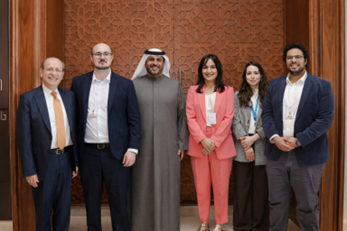
DUBAI, UAE, 14 January 2026: Empower said its CEO, H.E. Ahmad Bin Shafar met Lily Riahi, Head and Global Coordinator, UNEP Cool Coalition, along with the Coalition team, on the sidelines of Abu Dhabi Sustainability Week (ADSW) 2026.
H.E. Ahmad Bin Shafar, Lily Riahi and the Coalition team
Making the announcement through a press release, Empower said that extensive discussions were held during the meeting on several key topics, including strengthening cooperation to promote district cooling globally, supporting UNEP’s events and initiatives, and exploring ways to raise awareness of sustainable cooling solutions and provide advisory support for national- and state-level policies on efficient cooling.
Empower said the meeting also addressed prospects for cooperation in technical support, including expertise contributions for establishing District Cooling systems in cities, technical feasibility assessments, training and development, information exchange, validation of District Cooling systems and operational advice.
According to Empower, the two sides discussed sustainable business models for District Cooling services, particularly the ‘utility-service’ model and the company’s integrated end-to-end service model, covering design, build, operation, maintenance, metering, billing and customer service.
Empower said these efforts align with the framework of the Cool Coalition’s Global Cooling Pledge, launched at the 2023 UN Climate Change Conference (COP28), hosted by the UAE.
The company added that H.E. Bin Shafar and Lily Riahi also discussed ways to expand and accelerate the adoption of sustainable cooling solutions in countries that have joined the pledge, which has attracted 72 countries and more than 80 partners within just 18 months. The meeting, Empower said, further focused on collaboration to achieve the objectives of the pledge through support for international mechanisms, including the adoption of EPIC (engineering, procurement, construction, installation and commissioning) contracts for cooling facilities and the wider implementation of the ‘cooling as a service’ concept.
Empower said H.E. Bin Shafar stressed the importance of international partnerships in accelerating the adoption of sustainable cooling solutions, noting that District Cooling is among the effective solutions supporting global efforts to address climate change challenges and achieve Net Zero.
H.E. Bin Shafar said: “We work within the framework of the wise leadership’s forward-looking vision, which places strong emphasis on District Cooling within national plans to enhance energy efficiency and build a sustainable, carbon-free future. The Global Cooling Pledge represents a practical embodiment of these efforts and serves as a key driver of international initiatives in the District Cooling sector. Through this framework, efforts are focused on translating global commitments into concrete actions on the ground and advancing the transition to innovative and sustainable cooling solutions aligned with the Sustainable Development Goals (SDGs) and climate action.”
He added: “Based on Dubai and the UAE’s leading position in the global sustainable District Cooling sector, Empower is keen to build bridges of constructive dialogue, enhance cooperation and joint efforts with global partners, and lead initiatives to advance the District Cooling sector and promote its wider global adoption.”
Empower said its previous engagements at several international events, including COP28 and global virtual seminars, form part of its efforts to support the Cool Coalition’s initiatives to promote the adoption of sustainable solutions, facilitate the exchange of expertise and best practices, and highlight the vital role of district cooling in reducing carbon emissions, improving energy efficiency, and achieving global sustainability goals.
Company says the improved rating reflects progress in climate action and water security alongside wider recognition from international sustainability standards
BRUGINE, Italy, 14 January 2026: CAREL said CDP, the global non-profit organisation that monitors corporate performance in the fight against climate change, has published its latest score for the Group, awarding it an “A-” rating. Making the announcement through a Press Release, CAREL said this marks a further improvement compared to the previous year and places the company in the “Leadership” band, alongside others committed to tackling climate change.
CAREL said its performance in the area of Water Security was also positive, adding that CDP awarded the Group a score of “B” in this category, representing a significant improvement year-on-year.
Commenting on the outcome, Francesco Nalini, CEO, CAREL Group, and Carlotta Rossi Luciani, Board Member (ESG responsibilities), said: “The excellent result achieved adds to the award of the Silver Medal by EcoVadis and the validation by the Science Based Targets initiative (SBTi) of our short-term emissions reduction targets (near-term targets). The continuous improvement in the main ESG ratings confirms that sustainability is now fully embedded in the CAREL Group’s development strategy and represents a tangible driver of competitiveness, innovation and long-term value creation.”
Premium Story
AHRI addressed climate change at annual HVACR Leadership Roundtable
The association outlined key climate, policy and market priorities during its third annual leadership roundtable in Dubai
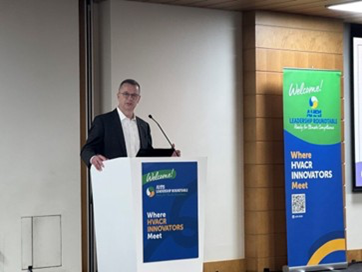
DUBAI, UAE, 13 January 2026: The Air-Conditioning, Heating, and Refrigeration Institute (AHRI) said it welcomed more than 80 senior leaders from its member companies across the region to its third annual AHRI Leadership Roundtable. Making the announcement through a Press Release, AHRI said the roundtable was themed “Ready for Climate Change” and was held at the Dubai World Trade Center on November 24. The association said the meeting took place during the inaugural HVACR World exhibition which it said was endorsed by both AHRI and ASHRAE.
AHRI said the Leadership Roundtable serves as a strategic platform for open dialogue on the future of the HVACR industry across the Middle East and North Africa. The association said discussions focused on climate policy, the refrigerant transition, regional regulatory developments and the market outlook.
Stephen Yurek
AHRI said its President and CEO Stephen Yurek opened the meeting by sharing insights on the global refrigerant transition. The association said he outlined the United States’ roadmap to achieve 150 GWP limits for commercial equipment by 2032 and also addressed the relationship between climate ambition and economic reality. “As affordability pressures increase, climate considerations often move lower on the list,” Yurek noted. “For policies to succeed, they must be achievable, economically justified, and aligned with real-world market conditions,” Yurek continued.
AHRI said its Senior Vice President of Global Services Henry Hwong followed with an update on the association’s global footprint by announcing the establishment of a new AHRI office in Singapore. AHRI said the new office is intended to support manufacturers, regulators, consulting engineers and governmental and non-governmental organisations in the Association of Southeast Asian Nations region.
AHRI said its MENA Managing Director Nabil Shahin discussed the association’s regional activities. The association said Shahin highlighted the development of three new regional performance equations for Integrated Part Load Value and Integrated Energy Efficiency Ratio. AHRI said these equations cover chillers, Variable Refrigerant Flow systems and large unitary equipment. The association said this represents a step toward regionally relevant performance evaluation. AHRI said the event concluded with an interactive session during which members expressed alignment with the association’s direction and emphasised the importance of AHRI’s role in representing industry interests among key stakeholders. AHRI added that members shared constructive feedback to help ensure future initiatives remain industry-driven and reflective of collective market needs.
Premium Story
Empower reaffirms its support for the sustainable development agenda in UAE
The company highlighted the role of District Cooling systems in supporting the UAE’s sustainability agenda, reducing carbon emissions, and enhancing energy efficiency
DUBAI, UAE, 13 January 2026: Empower said it has reaffirmed its commitment to supporting the UAE’s sustainable development agenda through the adoption and promotion of energy efficient District Cooling solutions.
Making the announcement through a Press Release, the company said the reaffirmation comes as the UAE continues to advance national and global efforts to promote sustainability and climate action, coinciding with Abu Dhabi Sustainability Week (ADSW) 2026. Empower highlighted the pivotal role of District Cooling systems in supporting the UAE’s sustainability agenda and accelerating national efforts to reduce carbon emissions and enhance energy efficiency.
H.E. Ahmad Bin Shafar
H.E. Ahmad Bin Shafar, CEO, Empower, said: “The UAE places strong emphasis on sustainability and environmental conservation, reflecting its pivotal role in mitigating the impacts of climate change. This is demonstrated through the launch and implementation of ambitious national strategies, including the UAE Energy Strategy 2050 and the Dubai Clean Energy Strategy 2050, which aim to increase reliance on clean and renewable energy and establish a sustainable development model. This strategic direction has reinforced the UAE’s international leadership in the District Cooling industry, driven by long-term investments in advanced infrastructure and facilities operated in line with the highest global standards.”
H.E. Bin Shafar added: “Sustainability is a cornerstone of Empower’s operations and a central pillar of its corporate strategy. The company plays a pivotal role in supporting Dubai’s sustainable future through District Cooling systems, which are among the most efficient solutions for space cooling, reducing energy consumption by up to 50% compared to conventional air conditioning systems, significantly lowering carbon emissions, and conserving resources while maintaining the highest levels of operational efficiency. Empower also continues to support smart cities and green buildings in Dubai by investing in cutting-edge technologies and innovation to enhance cooling efficiency and long-term sustainability.”
H.E. Bin Shafar further said that the growing demand for Empower’s services, amid the rapid expansion of the real estate market and the rising number of new development projects, reflects increasing confidence in the company’s environmentally friendly solutions and their wider adoption.
Empower said, ADSW, organised by the Abu Dhabi Future Energy Company, Masdar, is held from January 11 to 17, 2026, in Abu Dhabi, focusing on accelerating sustainable development under the theme “The Nexus of Next: All Systems Go,” uniting leaders to drive action in clean energy, finance, AI, and technology to build a more resilient future.
Premium Story
Society outlines programme for 2026 Women in ASHRAE Leadership Symposium
ASHRAE said the event is designed to support professionals at different stages of their careers by focusing on leadership skills, professional networking and inclusive strategies
ATLANTA, United States, 12 January 2026: ASHRAE said it has announced the technical programme for the 2026 Women in ASHRAE Leadership Symposium, which it said will take place on April 13 and 14, 2026, in Los Angeles, California. Making the announcement through a Press Release, the society said the symposium follows a sold-out inaugural event in 2025 and will return with an expanded agenda aimed at empowering women and allies across the HVAC&R and built environment industries.
Karine Leblanc, Symposium Chair, said: “This event offers professionals at every career stage, from students and early-career practitioners to seasoned executives, the opportunity to enhance leadership skills, grow their professional networks, and explore inclusive strategies for advancing women in the industry.”
ASHRAE said the symposium will feature keynote sessions delivered by speakers from academic and professional backgrounds.
The society said Gail Brager, Distinguished Professor of Architecture, University of California, Berkeley, will share insights from her leadership in building science and sustainability research and her experience mentoring emerging leaders.
ASHRAE said Sara Safari, empowerment activist and author, will also deliver a keynote address. The society said Safari will speak about her personal experiences in overcoming challenges and how those principles can inspire peak performance in technical teams.
ASHRAE said the breakout programme will include sessions examining how to inspire and attract the next generation into the HVAC&R trades and related technical careers. The society said sessions will also look at the role of artificial intelligence (AI) and Internet of Things (IoT) technologies in improving building performance and commissioning outcomes.
ASHRAE said additional discussions will focus on developing executive presence through authentic confidence, clear communication and personal influence across technical and leadership roles. The society said the programme will further highlight case studies of women leading decarbonisation, electrification and net-zero building projects.
The society added that the breakout sessions will also address managing technical teams using emotional intelligence, with an emphasis on leading across diverse backgrounds, roles and experience levels. ASHRAE said in-person early bird registration for the symposium is priced at USD 495 for ASHRAE members and USD 545 for non-members. The society said early bird registration discounts will be available through February 6.
Premium Story
Frascold introduces NEXUS screw compressors for high temperature heat pump applications
Company says the key challenge for these applications lies in ensuring performance stability and reliability
MILAN, Italy, 12 January 2026: Frascold said it has launched its new NEXUS screw compressors for high temperature heat pump applications in the industrial process heating sector. Making the announcement through a Press Release, the company said the launch comes at a time when boilers have historically been the primary solution to guarantee high temperatures and operational continuity across industrial processes.
Frascold’s NEXUS screw compressor
Frascold said changes in the energy and regulatory landscape are prompting a reassessment of gas-only heating systems. The company said increasing fuel cost volatility is making the management of these systems more challenging, while climate neutrality goals set out in the Green Deal, Fit for 55 and REPowerEU are encouraging a longer-term approach to heat generation.
Frascold said industries ranging from drying and food processing to chemical and pharmaceutical manufacturing continue to require stable and reliable heat. The company said industrial air-water and water-water heat pumps are emerging as a viable alternative capable of covering a wide range of temperatures with more efficient and flexible energy architectures.
Frascold said the key challenge for these applications lies in ensuring performance stability and reliability. The company added that this requirement is met by its semi-hermetic high temperature compressors, which it said enable industrial heat pumps to replace traditional boilers even in demanding applications.
Frascold said the NEXUS series brings together compressors designed to withstand high compression ratios and operate continuously under harsh conditions. The company said the technology combines high operating temperatures, compatibility with low GWP refrigerants and application versatility to support more advanced and sustainable solutions.
Frascold said the new generation of NEXUS screw compressors is the result of extensive reengineering to enhance reliability, performance and flexibility. The company added this includes the integration of high efficiency motors designed to operate in extreme thermal conditions.
Frascold said expanded temperature limits allow suction temperatures of up to 100 degrees Celsius, supporting operational stability during high power consumption. The electric plate, Frascold added, has been redesigned with an optimised structure to withstand higher operating temperatures.
Frascold said further modifications include new generation bearing materials and revised tolerances to compensate for thermal expansion at suction temperatures up to 100 degrees Celsius and delivery temperatures up to 150 degrees Celsius. The company said it has also introduced changes to the lubrication circuit, including a specific oil formulation to reduce refrigerant solubility and maintain optimal viscosity.
Frascold said crankcase heaters have been upgraded with up to four electrical heating elements to ensure correct oil temperature and viscosity before start-up. The company said a special external coating capable of withstanding temperatures up to 200 degrees Celsius has been applied to ensure long-term protection and durability.
Frascold said the compressors support external inverters in the 30 to 60 Hz range to enable precise modulation of cooling and heating capacity. The company said the motors and lubrication circuit are designed to ensure adequate lubrication at high speeds and reduce mechanical stress over long-term operation.
Frascold said the NEXUS series is intended for large-capacity heat pumps with volumetric displacements ranging from 316 to 912 m³/h at 50 Hz and motors rated up to 300 HP.
Maurizio Mastrapasqua, Product Manager, Frascold, said: “The reliability of NEXUS compressors has been confirmed by a number of field applications, in particular, an in-depth test campaign conducted at the Danish Technological Institute between February 2024 and July 2025. During these tests, performance and reliability were verified even under the most demanding operating conditions.”
He concludes “Frascold is ready to introduce important innovations in the field of high temperatures, with future developments that will take performance to even higher levels.”
Premium Story
Safe Monitoring Group completes acquisition of Advanced Gas Systems
The company outlined how the acquisition strengthens its capabilities in gas detection and safety solutions
VELLINGE, Sweden, 8 January 2026: Safe Monitoring Group AB, an industry group of gas detector manufacturers, said it has closed the acquisition of Advanced Gas Systems Ltd. (AGSL), an Irish company that provides gas safety and fire suppression solutions.
Making the announcement through a Press Release, Safe Monitoring Group said the acquisition of AGSL supports its work to protect people, equipment and the environment from hazardous gas leaks.
Safe Monitoring Group said that AGSL was established in 2015 and that the company offers design, supply, installation and maintenance of gas detection, gas proving and fire suppression systems for commercial and industrial clients across Ireland.
Safe Monitoring Group said that, as part of the group, AGSL will collaborate with other companies on R&D, marketing, procurement, sales and service. The company added that this collaboration will be noticed by existing customers of AGSL and other group companies, who will have access to a wider range of products and services to support current and new applications.
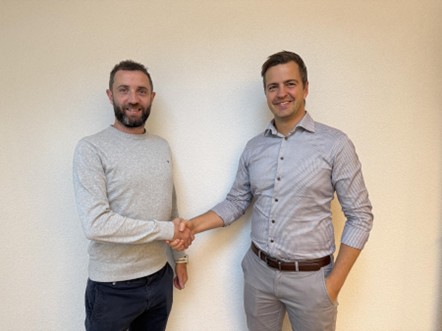
Ross Larkin and Alexander Larsson
Ross Larkin, Managing Director, AGSL, said: “I´m thrilled to be a part of Safe Monitoring Group and look forward to the expansion of both AGSL as well as the group with other companies joining forces with us.”
Alexander Larsson, CEO, Safe Monitoring Group, said: “I have got to know AGSL during the past year and I´m really impressed with their innovative product and solution. I´m looking forward to expanding the business together with the management of AGSL. Safe Monitoring Group will continue our expansion in new geographies and applications by organic growth and an ambitious acquisition agenda.”
Safe Monitoring Group said it has acquired 100% of the shares in AGSL and that the process was completed on October 23, 2025. The company added that the sellers of AGSL have re-invested and are now also shareholders in Safe Monitoring Group and will continue working within the group.
The company says its mission is to make the green transformation both smart and strategic
Dubai, UAE, 15 December 2025: Terracore said it has launched in the UAE as a brand focused on powering a new era of smart and sustainable living. Making the announcement through a Press Release, Terracore said it aims to redefine sustainable development by offering integrated technologies that create measurable impact for people and the planet. The company said it brings together innovation, design and accessibility to empower developers, homeowners and businesses to adopt future-ready ways of living and working.
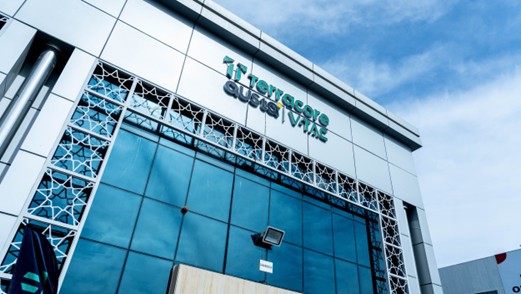
Terracore Building
Terracore said it was built to simplify the path to sustainability through a single integrated ecosystem combining HVAC, lighting, smart automation and solar energy systems to optimise energy performance, design efficiency and long-term operational value. The company said this approach enables property owners and developers to reduce costs, enhance asset value and achieve certifications such as LEED, the Dubai Green Building Code and DEWA compliance. Terracore said this sets a benchmark for sustainable development in the region.
“Terracore was born from a belief that sustainability shouldn’t be complex or exclusive,” said Tanishk Sajnani, Founder and CEO, Terracore. “We’re reimagining how sustainability is built, making it practical and attainable for everyone. Our goal is simple, to turn sustainability from an aspiration to an everyday reality,” Sajnani added.
Terracore said the UAE’s real estate and construction sectors account for a significant share of national energy consumption. The company said its arrival is timely as its integrated solutions allow developers to reduce energy costs by up to 50 percent while future-proofing assets through smart automation, solar integration and data-driven energy management.
Terracore said its first commercial project, Sourcehaus, will launch in the Al Quoz Creative Zone. The company said Sourcehaus is a LEED-certified destination designed as an experience-driven space that unites innovation, sustainability and design under one roof. Terracore said the project is curated as a “haus” for smart living and sustainable development and said it represents its ecosystem approach where technology, architecture and creativity converge. Terracore said its mission is to make the green transformation both smart and strategic. The company said that by integrating solar energy, smart automation, lighting and HVAC solutions into one intelligent ecosystem it creates efficient, adaptive and sustainable environments. Terracore said that as the UAE positions itself as a global hub for sustainable innovation it ensures every project, regardless of scale, can be part of that movement.