
CCME.NEWS

Your source for the HVACR Industry, covering in-depth news & analyses on policy, business & technology.

Get Premium:

Sign-up

COMMERCIAL ENQUIRIES:

Frédéric Paillé
Co-Founder & Commercial Director
fred@cpi-industry.com
+971 50 714 7204

Follow Us

CCME.NEWS

CCME.NEWS, covering the regional and global HVACR industry with an unwavering commitment to providing in-depth news and analyses on policy, business and technology

Contact Info

PO Box 13700,
Dubai Media City, Dubai
admin@cpi-industry.com
+971 50 714 7204

Follow Us

Premium Story

Can’t ignore IDEC if pursuing a sustainable cooling narrative 

Saying that the scorching temperatures and rising humidity levels in the Middle East necessitate a paradigm shift towards sustainable cooling solutions, Shakeel Ahmed Kayani of Windmason Arabia Company says IDEC systems offer a promising alternative, providing effective cooling while minimising environmental impact

In recent years, there has been a growing awareness of the need to adopt sustainable and energy-efficient technologies. One such technology that has gained significant attention is the IDEC (Indirect Direct Evaporative Cooling) system. The system not only provides a comfortable and healthy indoor environment but also offers energy savings and a reduced carbon footprint. 

The Middle East presents a formidable challenge when it comes to climate control. Scorching daytime temperatures that routinely surpass 45 degrees C (113 degrees F), coupled with significant humidity levels, create an environment demanding not just effective cooling solutions but also sustainable ones. Traditional air conditioning, while undeniably efficient at combating the heat, comes at a considerable environmental cost. 

Let’s talk about the limitations of traditional air conditioning systems and explore IDEC systems, which are gaining traction in the region with the passing of each day. 

The unsustainable burden of traditional air conditioning 

Conventional air conditioning units are notorious for their exorbitant energy consumption. During peak summer months, the demand for cooling surges, placing a tremendous strain on power grids. 
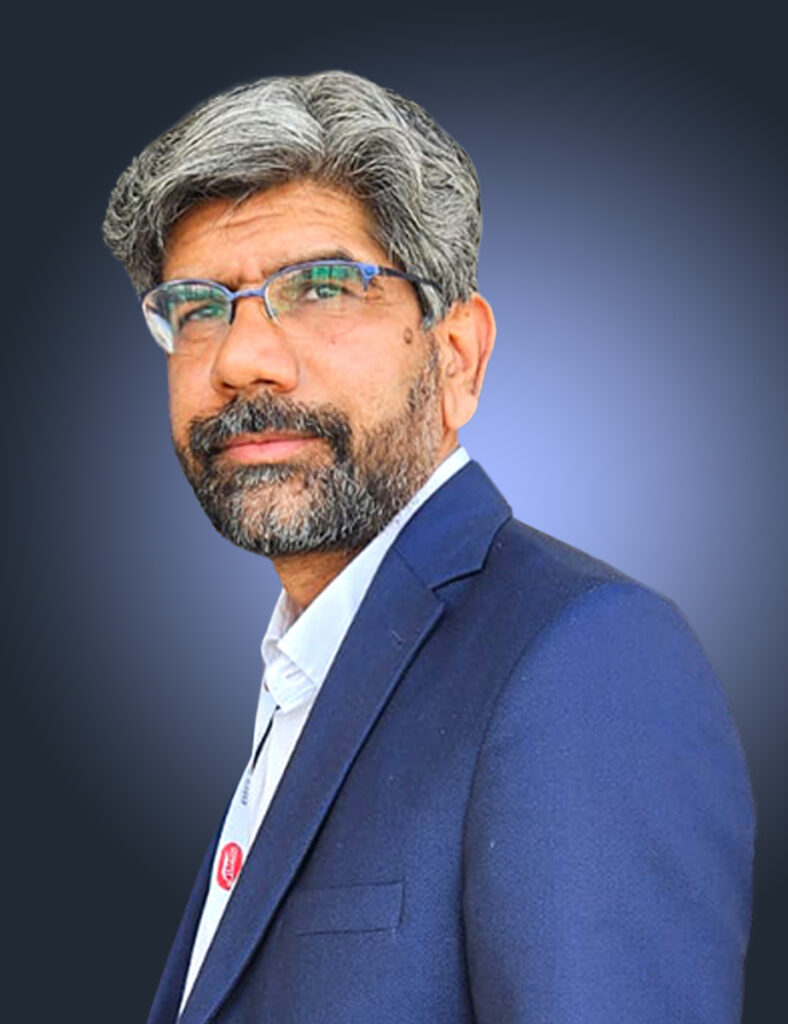
Shakeel Ahmed Kayani

To meet the surge in demand, power plants often resort to increased burning of fossil fuels, further exacerbating the problem. This not only contributes significantly to greenhouse gas emissions but also elevates air pollution levels, detrimental to public health. 

Traditional air conditioners rely on refrigerants, many of which are potent greenhouse gases. Leaks and improper disposal of these gases can have a devastating impact on the environment. Studies have shown that certain refrigerants have a global warming potential thousands of times greater than carbon dioxide. 

The looming threat of climate change 

The environmental consequences of traditional air conditioning are becoming increasingly concerning. The ever-growing reliance on fossil fuels for power generation directly contributes to the burning of fossil fuels, which releases greenhouse gases like carbon dioxide, trapping heat 

in the atmosphere and causing a gradual rise in global temperatures. This warming trend disrupts weather patterns, leading to extreme weather events like heatwaves, droughts and floods, which we are sadly witness to. Not only that, as the atmosphere absorbs more carbon dioxide, the oceans become more acidic, posing a significant threat to marine ecosystems. 

Traditional package air conditioners versus IDEC systems 

A direct comparison between IDEC systems and traditional package air conditioners is not entirely accurate. Package units function as heat pumps, transferring heat from the indoor environment to the outdoors. This process cools the interior but raises the outside temperature. 

IDEC systems operate entirely on fresh air, significantly enhancing Indoor Air Quality. They effectively convert hot outside air – potentially reaching 40-50 degrees Celsius – to significantly cooler air – around 14-18 degrees Celsius. 

For a more relevant comparison, consider Fresh Air Handling Units. IDEC systems excel as a cost-effective and energy-efficient alternative to FAHUs. 

In the face of these mounting challenges, IDEC systems offer a beacon of hope. They leverage the natural phenomenon of evaporative cooling to achieve cool air without relying heavily on electricity. They use natural process of evaporation for cooling, making them a more sustainable alternative to conventional air conditioning methods. 

IDEC systems excel in arid regions due to their ability to effectively cool through evaporative processes. This makes them a suitable solution for areas experiencing hot and dry weather conditions. A significant advantage of IDEC systems is their focus on fresh air. They continuously introduce and circulate fresh outdoor air, promoting a healthier indoor environment. 

IDEC systems boast significant energy savings compared to traditional air conditioning. By using natural cooling methods and minimal electricity, the environmental impact is substantially reduced. Studies suggest energy savings of up to 83% can be achieved. 

IDEC systems operate without relying on harmful refrigerants. This eliminates the environmental concerns associated with their production, use and potential leaks. While a precise estimate requires specific details, studies indicate that a typical air conditioner can emit 2,000-3,000 pounds of CO2, annually. Replacing these systems with IDEC technology has the potential to significantly reduce these emissions on a large scale. 

IDEC systems also help to reduce carbon footprint by minimizing reliance on traditional electrical cooling. This aligns with global efforts to combat climate change. A hypothetical scenario involving the installation of five million tons of IDEC systems in Riyadh could demonstrably decrease the city’s annual CO2 emissions by millions of pounds, annually. This aligns with the vision of a “Green Saudi Arabia”, outlined in Saudi Vision 2030. 

Types of IDEC systems 

IDEC systems operate differently depending on the level of humidity in the environment. They are divided into three types: Two-stage IDEC systems, three-stage IDEC systems and four-stage IDEC Systems… 

1. Two-Stage IDEC (dry climate) 

– Stage 1 (Indirect Cooling): Outside air is drawn through a heat exchanger containing a water-cooled media. As the air passes through, it results in a significant temperature drop without increase in humidity. 

– Stage 2 (Direct Cooling): The pre-cooled air is further cooled by directly evaporating water using a mist. This adds some humidity to the air, but due to the initial dryness, it remains comfortable. 

2. Three-Stage IDEC (moderate humidity of up to 30%) 

– Stage 1 (Indirect Cooling): It involves a water-cooled heat exchanger that provides pre-cooling to the ambient air. 

– Stage 2 (Indirect Cooling): It can be direct expansion (freon-based compressor) cooling stage or air-to-air heat exchanger using the return air heat recovery. 

– Stage 3: (Direct Cooling): It is the same cooling process mentioned in the two-stage system. 

3. Four-Stage or Hybrid IDEC Systems: (humidity up to 60% or above) 

While IDEC systems excel in dry and semi-arid climates, their effectiveness can be limited to regions with extreme humidity (above 60%). As humidity rises, the air’s capacity to absorb moisture through evaporation decreases. This can lead to increased indoor humidity levels, and excessive moisture in the air can lead to a feeling of discomfort and potentially contribute to mould growth. 

The Four-Stage or Hybrid IDEC System is a solution to deal with the challenge of extreme humidity in IDEC systems. These systems incorporate compressors alongside the traditional IDEC stages. During periods of high humidity, the compressor can provide additional cooling to supplement the evaporative cooling process. This allows for continuous dehumidification and maintains the effectiveness of the indirect cooling stage. 

The road to a sustainable future 

Embracing innovative and sustainable cooling technologies like IDEC is crucial for the future of the Middle East. Governments in the region can play a vital role by providing incentives for the adoption of IDEC systems through tax breaks or subsidies. Investing in research and development to further enhance the efficiency and applicability of IDEC technology in various climatic conditions is the way forward. 

Raising public awareness about the environmental impact of traditional air conditioning and the benefits of sustainable cooling solutions, like IDEC, is essential for driving wider adoption. 

A holistic approach to sustainable climate control extends beyond just cooling buildings. Implementing strategies like planting trees and incorporating reflective materials in building design can help reduce the urban heat island effect and lessen the overall cooling demand. 

Promoting energy-efficient practices in all sectors, from industrial to residential, can significantly reduce the environmental footprint associated with power generation. 

The scorching temperatures and rising humidity levels in the Middle East necessitate a paradigm shift towards sustainable cooling solutions. IDEC systems offer a promising alternative, providing effective cooling while minimising environmental impact. By embracing innovation, fostering public awareness and implementing broader sustainability initiatives, the region can firmly tread towards a cooler and greener future.

The writer is General Manager, HVAC and Power Solutions at Windmason Arabia Company. He may be reached at windmason07@gmail.com.

Premium Story

UNEZA announces joint intent to scale renewable capacity by 2.5 times to 2030 

Alliance says its members announce action plan at the IRENA Assembly and will focus on increasing the speed of grid investment and development   

ABU DHABI,  UAE, 19 April  2024: The Utilities for Net Zero Alliance (UNEZA) announced that it adopted the UNEZA Roadmap to 2030, which targets a total increase of renewable energy capacity within its portfolios to 749GW by 2030, an increase of 2.5 times relative to 2023. 

Making the announcement through a Press release, UNEZA said, its members’ joint renewables ambition was announced alongside a grid infrastructure action plan. 

UNEZA said the plan, revealed at the 14th Assembly of the International Renewable Energy Agency (IRENA), addresses the pressing need to scale and modernise global grid infrastructure to support clean power development and the tripling of renewables by 2030. According to IRENA, around USD720 billion per year of investment in power grids and flexibility is needed to limit global warming to 1.5 degrees C.  

UNEZA said in a joint, high-level statement that its CEOs stressed the centrality of enabling grid infrastructure and urged the policy and regulatory community to engage the industry to address bottlenecks and unlock capital flows. 

According to UNEZA action plan focuses on three key critical areas: 

  • De-risking supply chains.  
  • Facilitating policy & regulatory support.  
  • Mobilising capital.  

UNEZA said the joint statement and action plan were announced on April 17 at the 14th IRENA Assembly Ministerial Roundtable ‘Infrastructure for the Energy Transition: Utilities for Net Zero Alliance’. 

Francesco La Camera, Director-General, IRENA, said: “The shift towards a renewables-based energy system is accelerating, and with the adoption of a global goal to triple renewable power capacity by 2030 at COP28, this trend is expected to intensify. IRENA’s WETO shows that this goal will be met only with modernising infrastructure designed for the fossil fuel era to more interconnected and flexible systems that support renewables. The announcement of a grid infrastructure action plan by the Utilities for Net Zero Alliance is a significant step to addressing this urgent need, showcasing the central role that utilities can play in transforming our energy systems and realising net-zero targets.” 

H.E. Razan Khalifa Al Mubarak, UN Climate Change High-Level Champion, said: “Utilities play a crucial role in delivering mitigation measures that align global development with a net-zero future and are central to a future energy system that is in harmony with nature and the environment. Building on the momentum from COP28, we are advancing the design and implementation of our action plan and call on utilities worldwide to join this initiative, showcasing their ongoing commitment to meaningful action.”   

Jasim Husain Thabet, Group Chief Executive Officer and Managing Director, TAQA and Co-Chair of the Alliance, said: “The global utilities community is taking bold, decisive steps towards the tripling of renewables by 2030, not just in terms of our concrete investment plans but also in our drive to address energy transition bottlenecks – particularly for grids. It is increasingly recognised that grid infrastructure development is critical to enable the energy transition and expansion of clean power capacity. However, we need to do more across industry and policy to encourage more supply chain capacity, address the gridlock in permitting for grids and increase capital flows.” 

Martin Pibworth, Chief Commercial Officer, SSE plc and Co-Chair of UNEZA, said: “Our combined plans for accelerating renewables deployment will go a long way towards achieving our 2030 goal, but we also know that utilities can’t do it alone. We also need to build resilient supply chains that can meet this surge in demand, and we need bold enabling policy and regulatory mechanisms to underpin investments and accelerate the speed at which we can build. That is why we are coming together today to demonstrate our intent to the global supply chain and offer practical, actionable recommendations to policymakers, which we hope will help unlock real delivery on the ground and keep us on a pathway to trebling renewables this decade.” 

Launched at COP28, UNEZA said it counts many of the leading global utilities among its members. UNEZA said that it is led by the UAE’s TAQA (Abu Dhabi National Energy Company), and founding entities include Bui Power Authority, DEWA, DLO Energy, EDF, EDP, Edison International, E.ON, Enel, Engie, Etihad Water and Electricity, Hitachi Energy, Iberdrola, Jinko Power, KEGOC, KenGen, Masdar, National Grid, Octopus Energy, RWE, Sacremento Municipal Utility District, Schneider Electric, Siemens, SSE, Tenaga, Uniper and Xlinks. Green Grids Initiative and ACWA Power are recent new additions to the community. 

Furthermore, UNEZA said that the Alliance secretariat is guided and hosted by IRENA and supported by partners including the UN Climate Change High-Level Champions, International Electrotechnical Commission (IEC), Global Renewables Alliance and Coordinador Eléctrico Nacional, Green Grids Initiative. 

UNEZA said it invites companies to join the common vision of accelerating the energy transition, and the membership is open to utilities, developers, power system technology companies and knowledge partners determined to expedite the transition towards a net zero future by 2050. 

Premium Story

Leminar,  Ebara forge business relationship

Company says the aim is to provide comprehensive pumping solutions

DUBAI, UAE, 18 April 2024: A provider of HVAC & Plumbing Solutions, Leminar announced the signing of a distributorship agreement with Ebara Pumps Middle East FZE, a fully owned subsidiary of EBARA Corporation Japan, on April 4. Making the announcement through a Press release, Leminar said, the collaboration marks a notable advancement in its commitment to offering comprehensive pumping solutions to the market, while emphasising the shared dedication of both entities towards delivering high-quality solutions that meet market demands and exceed customer expectations. 

Leminar said that founded in 1912, Ebara Corporation was originally established as a pump manufacturing company in Tokyo, Japan, swiftly diversifying its offerings to include a comprehensive array of products essential for industrial and infrastructure development across five continents. The company said that Ebara is one of the largest centrifugal pump manufacturers in Japan and across the world today and added that it is renowned for its century of relentless innovation and unwavering commitment to quality in the standard and custom pump markets. 

Pramodh Idicheria, Chief Operating Officer, Leminar Global, said: “We’re excited to announce our distributorship for sales and service of water and waste water pumps required in building services in the territory of the UAE with Ebara. By leveraging our collective strengths, we are poised to deliver unparalleled pumping solutions tailored to the demands of our customers in the UAE. Together, we are committed to driving innovation and excellence, ensuring our clients receive world-class products and services that exceed customers’ expectations.” 

Commenting on this strategic business relationship, Haruki Komatsu, Managing Director, Ebara Pumps Middle East FZE, said: “We are delighted to announce our distributorship for sales and service of water and waste water pumps required in BUILDING SERVICES in the territory of UAE with Leminar. This collaboration signifies a strategic alignment of our shared values and goals, further reinforcing our commitment to fostering a sustainable society in the UAE. We anticipate a mutually beneficial relationship that will drive innovation and create lasting impact in our community.” 

Kartik Raval, Senior General Manager, Leminar, said: ” Our expertise and market presence, combined with Ebara’s legacy of excellence in pump manufacturing, promise to deliver unmatched value and reliability to customers across the UAE. This business relationship underscores our commitment to offering cutting-edge solutions that empower businesses and contribute to the nation’s sustainable development goals. 

Premium Story

VTT releases research project on responsible CO2 removal

Organisation says the multidisciplinary NEGEM research project focuses on responsible carbon dioxide removal options, their potential, and social and environmental impacts

ESPOO, Finland, 18 April 2024: VTT Technical Research Centre of Finland (VTT) said that carbon dioxide removals have recently been the subject of live public debate. Making the statement through a Press release, VTT said, the European Commission has communicated that drastic emission reductions must be supplemented with land-based and industrial carbon removals by 2040 to keep on track with the climate neutrality target by 2050. VTT said the multidisciplinary NEGEM research project has focused on responsible carbon dioxide removal options, their potential, and social and environmental impacts for the past four years.

Kati Koponen, Senior Scientist and Coordinator of the project, VTT, said:”Removing CO2 from the atmosphere is needed to keep the warming at 1.5 degrees C. At the same time, we must significantly accelerate our efforts to reduce emissions. Therefore, carbon removal is not an alternative to emission reductions, but a necessary supplementary measure.”

VTT said the NEGEM project investigates several different technologies and practices for removing CO2 from the atmosphere: afforestation and reforestation, capture of CO2 released during bioenergy production and storing it in geologic formations (BECCS), biochar production, capture of CO2 directly from ambient air and storing it in geologic formations (DACCS), soil carbon sequestration, enhanced weathering, and ocean alkalinisation. 

VTT said that each method has positive and negative impacts on the surrounding nature and society and added that industrial carbon removals such as BECCS and DACCS offer a solution for permanent carbon storage, but they are currently more expensive and further away from large-scale deployment than for example, re-/afforestation, which are ready-to-use methods. However, VTT said, carbon stored in forests can be released quickly, for instance, during a forest fire or logging.

On the other hand, VTT said increasing natural carbon sinks through reforestation or soil carbon sequestration also has a positive impact on biodiversity, recreational value, and nature’s ability to adapt to climate change. It can also help meet international nature restoration targets. 

Koponen said: “Responsible carbon dioxide removal takes into account the advantages and disadvantages of each method. It is important to use a portfolio of methods to balance the trade-offs and to ensure cost-efficiency. Therefore, all methods will most likely need to be used simultaneously.”

VTT said the research project involves 16 European universities, research institutes, NGOs, and companies.

Koponen said: “The required scale of carbon dioxide removal and its impacts are not yet fully understood. Large-scale international cooperation is also necessary for the transport and storage of carbon dioxide, as many countries do not have their geological formations suitable for carbon dioxide storage. There is also a demand for mutually agreed-upon science-based monitoring practices and regulations.

While carbon dioxide removal increases costs, it also creates economic opportunities for European countries. If we must remove gigatons of carbon from the atmosphere, it will require numerous plants and large-scale infrastructure for transport and storage. Carbon dioxide removal may become an entire industry, creating jobs and export potential for pioneers. Nations, companies, and the EU have to plan their carbon dioxide removal efforts now while focusing on drastic emission reductions.”

Premium Story

​​European Union launches ‘EU-GCC Green Transition Project’

EU says launch of the project signifies a turning point in the global transition towards a clean energy future

​ABU DHABI, UAE, 18 April 2024: European Union announced that in a significant step forward for clean energy and climate action, it launched the EU-GCC Cooperation on Green Transition project. Making the announcement through a Press release, the EU said the event took place at the IRENA pavilion during the World Future Energy Summit (WFES) in Abu Dhabi.

The EU said that the project aims to create a joint platform to exchange best practices and expertise between the EU and the GCC region stakeholders, promoting and adopting policies and technologies that support the GCC region’s green transition and fostering a collaborative business environment between EU green tech companies and their counterparts in the Gulf region. The launch of the project signifies a turning point in the global transition towards a clean energy future, marking a critical commitment to collaboration that sets a powerful example for the international community, paving the way for a more sustainable and prosperous future for all, EU further said. 

The EU said the launch event featured keynote addresses from distinguished speakers, including H.E. Lucie Berger, Ambassador of the European Union to the United Arab Emirates, Lukasz Kolinski Head, Unit Renewables and Energy System Integration at the European Commission, and Tarig Ahmed, Regional Programme Officer – MENA Region, IRENA. The EU also said the speakers underscored the significance of international collaboration in addressing global sustainability challenges and highlighted the transformative potential of the EU-GCC Cooperation on the Green Transition Project.

The EU said that in her opening speech, H.E. Berger, emphasised the project’s significance in the collective fight against climate change, highlighting the essential role of businesses from the EU and the GCC region countries in implementing the global targets of tripling renewable energy and doubling energy efficiency. The EU also added that she underlined that enhancing the business environment through this project can play a pivotal role in reaching those targets.

Kolinski said: “Collaboration between the EU and GCC region on green transition is essential for achieving our climate goals. This initiative will drive innovation, create new opportunities, and contribute to a more sustainable future.”

Ahmed said: “I strongly believe that the EU-GCC Cooperation on Green Transition Project is timely and is a pivotal initiative to enable renewable energy solutions and encourage regional collaboration. This project is an essential milestone towards achieving a sustainable future for the GCC region and ultimately to our planet.”

The EU said that a key event highlight, echoing this year’s theme of the IRENA General Assembly, was the roundtable discussion titled “Outcome of COP28: Infrastructure, Policies and Skills for Tripling Renewables and Accelerating the Energy Transition.” The discussion, the EU said, focused on how the EU and GCC region can work together to develop robust infrastructure for significantly increasing renewable energy in the region, implement effective clean energy policies and equip their workforce with the necessary skills for the evolving energy landscape. Furthermore, the EU said,  the discussion explored avenues for knowledge sharing, technology transfer, and joint project development, paving the way for a more sustainable future.

The EU said that the EU-GCC Cooperation on Green Transition Project is poised to catalyse change. By fostering deeper collaboration, the project aims to increase the deployment of renewable energy sources significantly, stimulate environmental protection efforts, enhance economic growth and diversification, and strengthen resilience in the face of climate change impacts, the EU further said. 

Premium Story

Victaulic announces new appointment

Neil Wypior comes on board

RIYADH, Saudi Arabia, 17 April 2023: Victaulic, the US-headquartered mechanical pipe joining systems provider, announced that it has hired Neil Wypior as the Offsite Construction Manager in Saudi Arabia. Making the announcement through a Press release, Victaulic said, Wypior possesses  expertise in industrialised construction and mechanical, electrical, and plumbing (MEP) solutions, along with a specialisation in modular construction. Furthermore, the company said, Wypior would drive its growth and presence across Saudi Arabia. 

Branden Kotyk, Vice President and General Manager, EMEA, Victaulic, said: “Saudi Arabia continues to experience a surge in construction across megaprojects, housing, infrastructure, and more. We are thrilled to welcome Wypior to the Victaulic team. His unparalleled experience and 360-degree knowledge of our industries make Wypior the perfect fit for our vision of growth and innovation.”

Victaulic said that Wypior’s most recent experience was as an industrialised construction consultant (MEP) for NEOM, and before that, he was the Founder and Managing Director of EVO MEP and Managing Director of PREFAB MEP. The company also said that Wypior is recognised as a thought leader who actively contributes to MEP innovation through associations, events, and educational activities. 

Wypior said: “I am delighted to join Victaulic and embark on this new chapter of my career. Having used Victaulic’s solutions myself through my years as a skilled tradesman, I have always understood the value and potential of Victaulic’s systems to revolutionise the industry. I’m eager to leverage my knowledge of the Saudi Arabian market to make a meaningful impact on construction in the region.”

Premium Story

ALEC, BUTEC joint venture secures design-build contract 

ALEC says the joint venture has secured a design-build contract for Abu Dhabi’s first waste-to-energy plant

ABU DHABI, UAE, 15 April 2024: ALEC Engineering and Contracting (ALEC) announced that a joint venture between ALEC and BUTEC has secured a design-build contract for Abu Dhabi’s first waste-to-energy (WtE) plant. Making the announcement through a Press release, ALEC said the companies have partnered with the Swiss-based Hitachi Zosen Innova (HZI), a company renowned for its expertise in waste-to-energy technology, to collaborate on the construction of this project. 

Situated near the Al-Dhafra landfill, ALEC said, the ultra-large waste incineration facility will process 900,000 tons of non-recyclable waste annually over the next 30 years. ALEC said the aim of the project is to prevent the release of nearly 1.1 million tonnes of CO2-equivalent emissions, annually. Furthermore, ALEC said, the plant will add 80MW of power generation capacity from a non-fossil fuel source. 

ALEC said the joint venture would oversee the engineering, procurement, and construction of all non-process-related activities, encompassing civil engineering; concrete and structural steel work; installation of mechanical; electrical, and plumbing (MEP) systems and building services. Also, the companies would manage external works and site infrastructure development, ALEC said. 

Sean McQue, Managing Director – Construction, ALEC, said: “We are pleased to have been selected for this crucial project, highlighting our commitment to sustainable progress within the region. This Waste-to-Energy facility marks a significant milestone in Abu Dhabi’s endeavours to tackle waste management issues and diminish greenhouse gas emissions. ALEC’s proficiency, combined with BUTEC’s excellence in design-build ventures, guarantees the successful execution of this landmark initiative.”

Hani Houalla, Country General Manager, BUTEC, said: “BUTEC’s design-build expertise, coupled with ALEC’s construction capability, positions us as a strong team ready to deliver impactful infrastructure projects like Abu Dhabi’s Waste-to-Energy facility. We are proud to contribute to the UAE’s decarbonization agenda and to this significant development.”

Premium Story

H.E. Ahmad Bin Shafar receives accolade from the Chairman of Empower

Empower says H.E. Saeed Mohammed Al Tayer, Chairman, Empower, honoured H.E. Ahmad Bin Shafar, CEO, Empower, in recognition of his outstanding contributions spanning over 20 years in steering the company since its inception

DUBAI, UAE, 15 April 2024:  Emirates Central Cooling Systems Corporation PJSC (Empower) announced that H.E. Saeed Mohammed Al Tayer, Chairman, Empower, honoured H.E. Ahmad Bin Shafar, CEO, Empower, in recognition of his outstanding contributions spanning over 20 years in steering the company since its inception. Making the announcement through a Press release, Empower said the accolade celebrates his pioneering role in advancing the District Cooling industry regionally and globally and his proficient team leadership that has propelled Empower to its esteemed position as a global leader in the District Cooling sector. Empower said the ceremony took place during its annual general assembly.

Empower said H.E. Al Tayer also praised the company’s remarkable progress in technical and production capacities, attributed to its strategic investments in Fourth Industrial Revolution technologies and commended on its commitment to enhancing its international standing through innovation. Empower also said that the Chairman acclaimed its continuous improvement in service standards, which has benefitted thousands of customers across various districts of Dubai. 

H.E. Al Tayer said: “ We recognise Empower’s active role in environmental conservation and establishing unparalleled benchmarks in production and distribution quality. The dedication and professionalism exhibited by Empower’s teams, under the leadership of H.E. Bin Shafar, align with the visionary approach outlined by His Highness Sheikh Mohammed bin Rashid Al Maktoum, Vice President and Prime Minister of the UAE and Ruler of Dubai. Empower stands as a testament to the UAE’s commitment to sustainable development and economic progress.”

“The success of Empower to become number one in the world would not have been possible without the unlimited support and unprecedented backing of H.H. Sheikh Mohammed. Empower’s vision is to be the world’s leading District Cooling service provider by promoting sustainable and optimised use of energy resources to deliver reliable, cost-effective, and environmentally friendly world-class cooling services to achieve customer satisfaction, thereby creating long-term shareholder value. Under the leadership of H.E. Bin Shafar over the past two decades, Empower has achieved unique and outstanding milestones, significantly shaping the District Cooling industry locally and elevating Dubai’s prominence and leadership globally in this sector.” 

Empower said H.E. Al Tayer also highlighted historical milestones in the company’s journey, including its ascent as the world’s largest District Cooling services provider, its strategic acquisitions of cooling portfolios from major urban projects and iconic landmarks across Dubai, such as Palm District Cooling, Nakheel, Meydan, and the operation rights of the District Cooling systems of Dubai International Airport, among others. Empower said that he also emphasised groundbreaking partnerships with international companies, resulting in the execution of the largest deals in the history of the international District Cooling industry. Furthermore, Empower said, the  Chairman praised the company’s successful listing on the Dubai Financial Market and its continuous commitment to adopting sustainable and efficient technologies in cooling plants aiming to preserve the environment and reduce energy consumption rates significantly, thereby minimising CO2 emissions.

H.E. Al Tayer further said, “Empower has always made us proud through its continuous success, winning many prestigious local and global awards and its strategic collaborations with research and development institutions, global universities, international associations, and establishments aimed at advancing the District Cooling industry.”

H.E. Bin Shafar said: “My efforts over the past two decades have been founded on collaborative endeavours with all relevant departments, institutions, and sectors involved in District Cooling services, aligning with the vision of the wise leadership. I express my sincere gratitude to the early shareholders of Empower, whose unwavering confidence in the organisation’s potential to achieve global leadership has been instrumental since 2003, when Empower entered the market with just one cooling plant in the Dubai Financial Centre area. True to their expectations, Empower now holds over 80% of the District Cooling market of Dubai, with dozens of modern plants and a vast distribution network supplying hundreds of skyscrapers and mixed-use projects across residential, office, education, health, entertainment, shopping, hospitality, hotel, and other sectors. With our high level of professionalism and substantial production capacity, we are fully equipped to serve the majority of Dubai’s population with the highest international quality standards.”

Empower said that H.E. Bin Shafar thanked Empower’s Chairman, members of the Board of Directors, and all team members for the warm honour, acknowledging that the recognition places additional responsibilities on his shoulders to take Empower towards even greater achievements and successes.

Premium Story

Frascold launches CO2-based TK HD series

Company says the brand-new range of transcritical CO2 compressors, is designed to deliver high performance, 24/7 

MILAN, Italy, 12 April 2024: Frascold announced the unveiling of the brand-new CO2 natural refrigerant-based TK HD series, a new heavy-duty sustainability frontier. Making the announcement through a Press release, Frascold said in a scenario where environmental protection is increasingly an absolute priority, it stands for the development of innovative solutions striving for continuous improvement and meeting all the needs of the industry. Frascold further said that the new TK HD series results from the company’s major investments in research and development, and this solution offers high performance, variable and persistent workloads and long service life. Moreover, the company said that the new series’ superior energy efficiency, reliability and excellent performance make it the right choice for various applications, including refrigeration, air conditioning, and high-temperature heat pumps up to 100 degrees C.

Frascold said that it delves into exploring innovation in each component, striving towards achieving maximum strength to ensure that its compressors can operate under harsh environmental conditions, constant round-the-clock workloads, at high temperatures and high delta P, while fully safeguarding the environment. Frascold also said that it focuses on using cutting-edge and top-quality materials to build long-service life compressors that are resistant to corrosion, heat dissipation, and optimised lubrication. In this sense, Frascold said, by providing the new CO2-based TK HD series with anti-friction treatments and a new surface finish, it is able to reduce wear and extend the service life of compressors for superior performance constant over time. In addition, the company said that reliability, resistance and duration were also confirmed by the field test, which was ongoing externally for a year. The option of fitting an inverter confers greater flexibility to the compressors, hence making them ideal to meet all the needs of the HVAC&R industry, Frascold further said. 

Frascold said the optimisation of the internal components and the painstaking mechanical balancing have contributed to significantly reducing the noise level, with a sound pressure range at a distance of one metre comprised between 64.5 and 76 dB(A), equivalent to the volume of a conversation for smaller models, or to the road traffic for size Z1. 

Frascold said the range includes two motor versions, four sizes, and 34 models, with a range between three and 50 HP and volumetric displacements comprised between 1.9 and 37.9 m3/h at 50 Hz. The company further said the range was conceived to bear pressure up to 100 bars and offers the utmost flexibility and compatibility with existing systems, enabling retrofit solutions. 

Frascold said that CO2 offers countless benefits compared to conventional synthetic refrigerants: Low global warming potential refrigerant fluid, which is readily available and non-inflammable, to the benefit of higher operating limits compared to propane gas. Moreover, the use of CO2 contributes to enhancing plant efficiency, which is a significant opportunity to reduce environmental impact and promote responsible management of energy resources to foster a sustainable future, Frascold further said. 

The company also said that the TK HD series is ideal for intensive and continuous round-the-clock workloads, like those required in industrial and trade industries.

Premium Story

Eurovent Product Group ‘Fan Technology’ elects new chairperson

Uwe Sigloch comes on board

BRUSSELS, Belgium, 11 April 2024: Eurovent Product Group ‘Fan Technology’ (PG-FANS) announced that Uwe Sigloch, Vice President – Global Product Management, ebm-papst, was elected as its new Chairperson. Making the announcement through a Press release, PG-FANS said, the election was held during its meeting on March 21 in Warsaw, Poland.

PG-FANS said Uwe Sigloch has several years of experience in the Eurovent Product Group ‘Fan Technology’, where he has held the position of vice-chairperson since 2014. PG-FANS also said that he would take up the role for the next two years as the only chairperson, as the group currently has a vacant position for a vice-chairperson. Furthermore, PG-FANS said the group’s participants had reviewed their support and trustworthiness by electing Sigloch for the Chairperson position, which had been vacant in the previous term.

Sigloch said: “It is an honour that the group participants have trusted me to take up the position of chairperson for the next term. The Product Group ‘Fan Technology’ is the contact point for the European fan industry. With our work, we want to support the interests of manufacturers, particularly in the wide area of sustainability regulations. We also seek to work closely with the users of fans to facilitate the efficient operation of fans in a wide range of applications.”