CCME.NEWS, covering the regional and global HVACR industry with an unwavering commitment to providing in-depth news and analyses on policy, business and technology
Why have to put up with Low Delta T, when it can be solved, asks Abdullah Abu Gallioun of Blurock Project Management
Improving chilled water Delta T, which is the temperature difference of chilled water supply and return, will not only improve the power consumption of the building but also will impact the central distribution system on the supplier’s side of a District Cooling scheme.
Low Delta T Syndrome results from the inefficient use of chilled water in buildings and plants, leading to a lower return chilled water temperature to the chiller’s side.
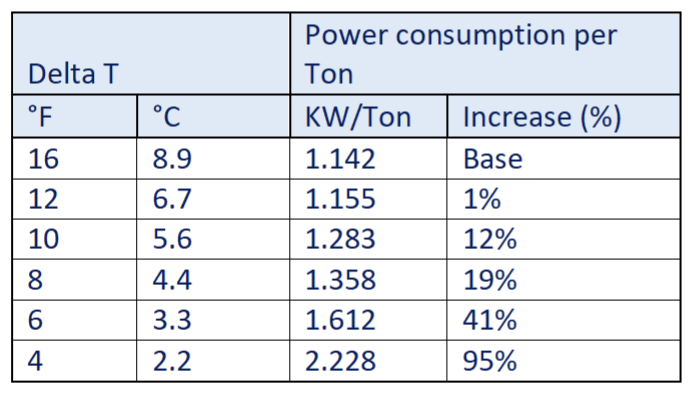
As shown in Table 1, Low Delta T Syndrome will lead to a significant increase in power consumption (kW/Ton) through the District Cooling plant. When Delta T is 16 degrees F (8.9 degrees C), the total power consumption will be 1.142 kW/Ton, compared to 1.358 kW/Ton for Delta T of 8 degrees F (4.44 degrees C).
Table 1: Low Delta T Syndrome’s effect on total power consumption
Case Study
To understand the root causes of the low delta T issue at the building side, the chilled water system was challenged continuously for a period of a month. The inspections included site visits and monitoring the BMS.
The findings were impressive and led to a set of clear reasons behind the Low Delta T problem, as follows:
1.1. Design mistakes
1.1.1. Building load versus District Cooling load
This is one of the most valuable players of the Low Delta T game, as controlling the District Cooling chilled water side needs to follow the building-side requirements.
A deep understanding of the cooling load calculations is unavoidable. And the sustained negligence of the training needed for mechanical engineers would lead to extra safety factors that would impact the building-side Delta T.
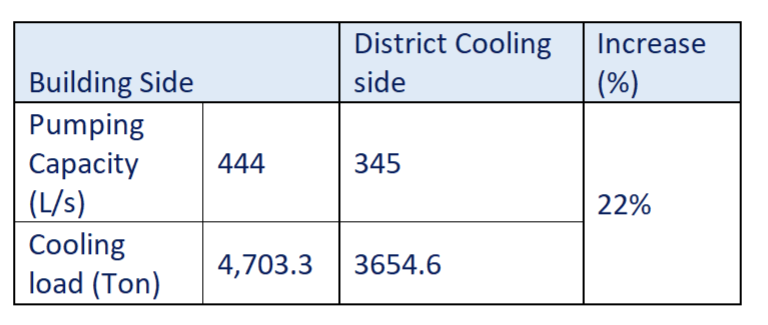
A detailed study of the drawings and comparing them with the actual capacities of the chillers revealed that the designer was oversizing the cooling load…
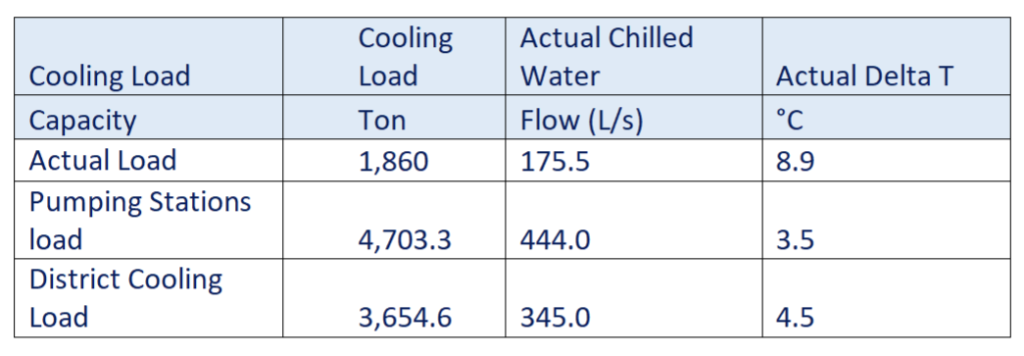
Table 2: Building loads versus District Cooling load
As a remedial measure, future loads need to be considered very carefully, indeed. The developer has a very serious role to play, which needs to be considered while specifying for future developments towards the objective of enhancing the running performance of buildings.
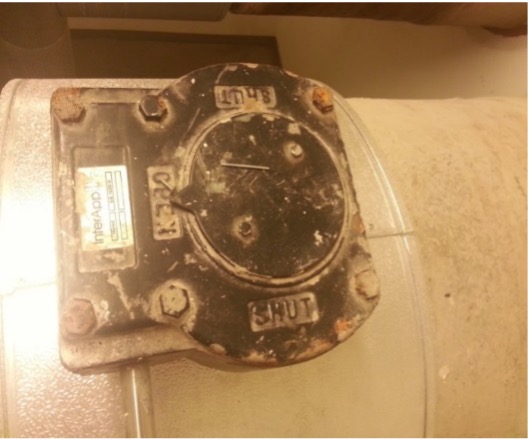
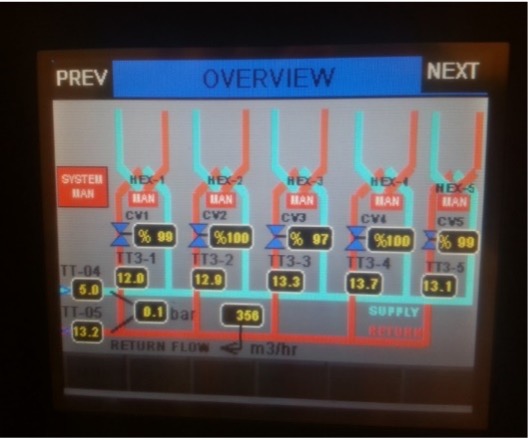
Figure 1: Chamber Valve was 100% openFigure 2: HEX valves were 100% open
1.2. Actual needed cooling load
Based on multiple visits made to the site and the daily and hourly readings of the BTU meter, the peak cooling load recorded was 1,860 tons, compared to 4,703 tons, as per the building-side pumping stations and 3,654 tons, as per the District Cooling supplier.
Table 3 describes the huge impact of wrongly calculated cooling load on the actual chilled water Delta T. Considering that the peak actual load is around 1,860 tons, with a total water flow of 175.5 L/s, the actual delta will be 3.5 on the building side and 4.5 on the District Cooling side.
Table 3: Actual Delta T versus contractual and calculated flow
1.2.1. Wrong coils selection
Again, designers have a critically important role to avoid the Low Delta T Syndrome. One of the fatal mistakes causing the Low Delta T problem in buildings is related to the selection of the FCUs cooling coil delta T.
Designers and contractors should follow the exact same Delta T provided by suppliers. Although such mistakes are not expected, this is what my team and I faced while trouble-shooting the problem.
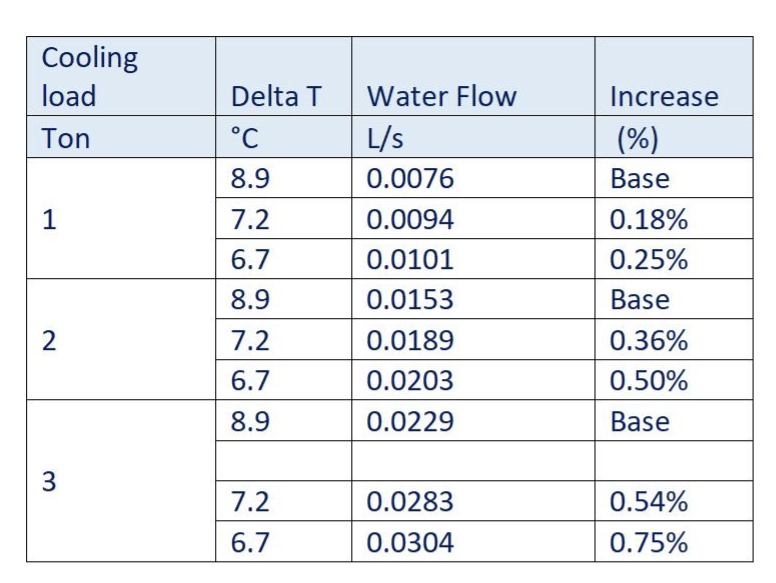
Figure 3 describes the root cause of the problem, selecting the coils based on Delta T 7.2 degrees C instead of 8.9 degrees C, which would have a direct impact on the needed chilled water flow for each unit.
Figure 3: Wrong coils selection
As shown in Table 3, lowering the selected Delta T would lead to a clear increase in the water flow demand needed by each unit. The table describes the increase of the chilled water flow needed by each unit serving each space in the building. Selecting coil served by 7.2 degrees C instead of 8.9 degrees C would lead to a 25% increase in power consumption for each cooling ton.
Table 3: Wrong coil selection versus Delta T impact
1.2.2. Building de-coupler mixing
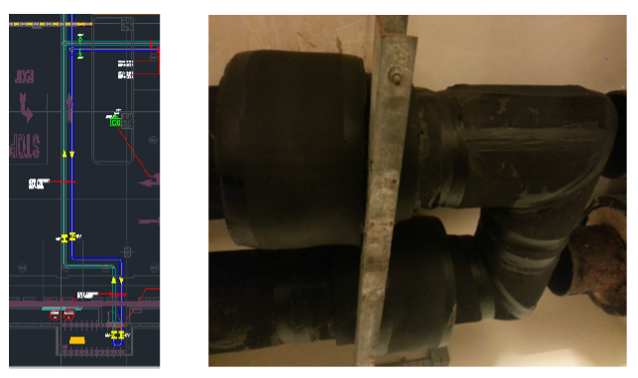
Installing de-couplers for future installations is one of the biggest mistakes that designers and contractors could do. With such a large chilled water return, controlling the Low Delta T would be impossible.
Such a point can be avoided only during the design and construction stages, as reconnecting such huge pipes would be impossible during the operational phase of the project. Any attempts at doing so would lead to many abortive works that would affect the operations of the building.
As shown in Figure 4, it would be near impossible to recover from such design mistakes and would lead to a huge Low Delta T.
Figure 4: The installation of decouplers
1.3. Operations
Operators should play a very important role towards the objective of avoiding the Low Delta T Syndrome. Indeed, once the construction has been completed, it would be the operator’s responsibility to control the Delta T.
Operators should have their preventive and regular maintenance and inspections processes in place to avoid issues that could impact Delta T.
1.3.1. Dirty cooling coils
Dirty cooling coils not only affect the cooling capacity and air quality inside the building but also affect the demand of the chilled water flow.
1.3.2. BMS control and monitoring system
BMS has an important role to play in controlling the chilled water system and in avoiding the Low Delta T Syndrome. The BMS Operation and Maintenance (O&M) manual should describe all the factors that may affect the performance of the system, flows, temperatures and the pressure differential sensors set points.
As per BMS sequence of operations, when the ambient temperature is 12 degrees C, the supply chilled water temperature is set to be 12.5 degrees C. Such very high and clearly not acceptable set point would definitely lead to a Low Delta problem.
Abdullah Abu Gallioun
Also, the bypass valve between the supply and return will open if the temperature of the return chilled water is lower than 14 degrees C.
As a result, in winter and during off-peak time, the supply chilled water would be around 12.5 degrees C, while the return would be 14 degrees C, with total Delta T of 1.5 degrees C.
Conclusion
Controlling Low Delta T while operating a building is not an easy task, especially when the cause of the problem is related to design and construction issues. The cost of replacing coils in our case study was around AED 2 million, in addition to any other losses, especially if the case is related to hotels, restaurants and hospitals.
On the other side, the consultants and contractors should consider the needed plans to increase the knowledge of young engineers, who do the cooling load calculations and the selection of the HVAC system equipment.
Operators have a very important role to avoid and decrease the cause of the Low Delta T problem. Continuous attention to the BMS to monitor and control the pumps’ flows and set points must not be neglected.
Preventive maintenance should be in place as part of the Testing & Commissioning and O&M plans. Cleaning the ducts and coils would not only enhance Indoor Air Quality but also avoid turbulent and laminar flows.
District Cooling providers should play a major role in controlling Delta T. A benchmarking for the buildings considering reasonable cooling density based on building type and GFAs should be considered.
Finally, authorities would always have the upper hand when it comes to setting the roles and responsibilities of each party, considering the early stages of design and reaching to the stage of Low Delta T penalties.
The writer is MEP Manager at Blurock Project Management. He may be reached at abdullah@blurock.ae.
Association says Publication 512-23 supersedes AMCA Publication 512-09
ARLINGTON HEIGHTS, United States, 28 February 2024: Air Movement and Control Association (AMCA) International Inc. has announced the release of AMCA Publication 512-23, AMCA Listing Label Programme. Making the announcement through a Press release, AMCA said that the AMCA Publication 512-23 supersedes AMCA Publication 512-09.
AMCA said the purpose of the AMCA Listing Label Programme is to provide follow-up service for louvres tested in accordance with ANSI/AMCA Standard 540, Test Methods for Louvres Impacted by Wind Borne Debris, and/or ANSI/AMCA Standard 550, Test Method for High Velocity Wind Driven Rain Resistant Louvers.
According to AMCA, notable changes to AMCA Publication 512 include:
· New labelling requirements.
· New definitions.
· A new requirement concerning Miami-Dade County-approved/certified test reports.
· Revised qualifying statements.
· A new catalogue requirement.
· New requirements for electronic print catalogues and electronic product-selection programs.
· A rewritten verification-test procedure.
· An expansion of the permitted uses of the listing label.
· A rewritten procedure for AMCA International-recognised laboratories.
The provision of design allowances.
AMCA said the Publication 512-23 is available in PDF format free of charge and printed copies are available for USD 5 for AMCA members and USD 10 for non-members. To obtain a copy, click here.
Premium Story
World Future Energy Summit 2024 to be held in April
Organiser says Summit will build on COP28’s successful commitment of more than USD 85 billion to climate financing
DUBAI, UAE, 8 February 2024: The recent COP28 in Dubai underscored the UAE’s global leadership in a sustainable energy future with the brokering of a momentous USD 700 million loss and damage fund, USD 100 million of which was pledged by the host country, to provide financial support to developing countries suffering from climate destruction, said RX Middle East, the organisers of World Future Energy Summit 2024 in a Press release. RX Middle East said that with the targets and agreements of COP28 now set, how that fund can be utilised through innovative solutions to tackle climate emergencies and the UAE’s pioneering vision on energy transition will be further accentuated at the World Future Energy Summit 2024, the 16th edition of the leading business event for fauture energy and sustainability, set to take place in Abu Dhabi in April.
The Summit, organisers said, will be held at the Abu Dhabi National Exhibition Centre (ADNEC) from April 16 to 18 and will build on COP28’s successful commitment of more than USD85 billion to climate financing, by bringing together industry leaders, policymakers, investment incubators, corporate partners, and world-class startups eager to strike while the iron is hot and facilitate the transformative future laid out in the multitude of COP28 agreements.
Leen Alsebai, General Manager of RX Middle East and Head of the World Future Energy Summit, said: “COP28 initiated dramatic new frameworks which governments and the private sector must work towards to help realise pledges made across climate change, climate finance, sustainability, food security, and emissions reduction. The event will be a catalyst to further COP28 resolutions along the road to reality.”
The Summit, organisers said, will elevate the private sector’s commitment to COP 28’s pursuit of more aggressive emissions-reduction plans, including scaling back oil and gas production and refocused renewable energy targets. RX Middle East also said that with experts predicting 2024 as a critical year for renewable energy deployments, renewables will be at the centre of World Future Energy Summit 2024 debates.
Francesco La Camera, Director-General, IRENA, said: “Renewable energy capacity has more than tripled globally over the past 15 years. Yet, to achieve the goals of the Paris Agreement, it needs to triple again by 2030. By establishing a clear global target aligned with IRENA’s World Energy Transitions Outlook, the UAE Consensus has created unprecedented political momentum to overcome this daunting challenge. Now is the time to tackle the key obstacles impeding progress by reorienting our infrastructure, policies, and workforce to support a new energy system dominated by renewables.”
RX Middle East said that, together, participants at World Future Energy Summit 2024 will probe how to unlock investment and find innovative instruments to close the climate finance gap, increase private sector engagement with regulators and governments, integrate carbon into decision-making and asset valuation, and increase adaptation and resilience financing. The organisers also said that as well as digging deep into ways of tripling renewable power generation capacity to 11,000 GW, global energy decision-makers and influencers from across the globe will also explore ways to triple nuclear energy by 2050, double energy efficiency this decade, reach near zero-methane emissions by 2030, and cut the share of fossil fuels in the world’s energy production.
AlSebai said: “COP28 has precision-focused the energy industry’s minds on solutions, with World Future Energy Summit 2024 acting as the premier platform where technological innovations not yet deployed at scale can be scrutinised. We envisage the event producing an unprecedented catalogue of partnerships, agreements, technological innovations, and new collaborative pathways to transition the collective COP28 accords into action. The energy industry is now in the vanguard of championing a sustainable planet for today and future generations. The knowledge and collaboration that the Summit will engender will be powerful currencies to propel the world forward in unprecedented ways for a cleaner, greener tomorrow.”
For more information on the event and how to be involved, please visit https://www.worldfutureenergysummit.com.
Premium Story
‘Our leverage is making sustainable and intelligent solutions for a better climate’
Marco Duarte, Managing Director, ebm-papst Middle East, talks not only about the company’s EC motors and connectivity initiatives but also elaborates on how it is “engineering a better life” every single day. Excerpts…
How is ebm-papst leveraging its expertise for optimal interaction of motor technology, electronics, and aerodynamics to contribute to sustainability initiatives in the Middle East?
In essence, ebm-papst’s expertise in integrating motor technology with electronics enables the development of innovative, efficient and adaptable solutions. This integration drives advancements in various industries, supporting the drive towards sustainability while enhancing performance and reliability in diverse applications. By leveraging our expertise in these areas, we craft innovative solutions that significantly enhance energy efficiency in various applications. Our fan and motor technologies are meticulously designed to work seamlessly together, achieving optimal performance and minimal energy consumption. Through continuous research and development, we ensure that our products contribute to sustainability initiatives by delivering efficient, reliable and eco-friendly solutions tailored to the specific needs of the Middle East. Our leverage is making sustainable and intelligent solutions for a better climate.
In the transition towards energy- efficient solutions, what role does industrial digitalisation play in optimising energy consumption in buildings and industrial settings within the Middle East?
Digitalisation provides us with so many new opportunities – why shouldn’t we use them to develop the obvious? And that is basically sustainable solutions to save energy. By integrating smart technologies, data analytics and real-time monitoring, GreenIntelligence enables precise control over our fans and motors, ensuring they operate at peak efficiency. This not only reduces energy consumption but also enhances overall system performance. With this motto, we combine the opportunities of digitalisation with our sustainable solutions. This benefits our environment, but of course, also our customers and their customers. And Artificial Intelligence is playing a very important role inside our company.
Our engineers are already using AI and working on sustainable and digital solutions to protect the climate and to help our customers, and their customers, to reduce their carbon footprint and save on costs at the same time.
We can also achieve greater energy efficiency with connectivity that will be reflected in energy consumption in buildings and industrial settings. We’ve already achieved very high efficiency with motors, electronics and aerodynamics. There’s no longer much room for improvement there. Products offer the greatest potential for energy savings in their applications, such as running only when they’re needed, and then only with the required output.
The focus is no longer on the products alone, it’s mainly on the data they supply. We’ve already had smart products with on-board electronics for some time, and we’ve been gathering data in our products for a long time for later viewing and analysis. Now, connectivity is joining the mix. By networking our fans, we make their data accessible and useful to the user everywhere. That introduces new possibilities. Added value is created when digital products solve problems that analogue products can’t. And for that, our epNEO products can help achieve great savings on energy with smart, predictive controls; full integration of systems; and affordable and quick payback.
With our digital technology, we want to help create a more sustainable future. Because we are sustainability enablers and digitalisation facilitators, and this combination creates the ideal space for innovations with an absolute customer focus.
Could you elaborate on how the move toward EC technology aligns with the Middle East’s changing stance on energy efficiency and sustainability and how it benefits existing and new HVAC systems in the region?
The shift to EC (Electronically Commutated) motors aligns perfectly with the Middle East’s focus on energy efficiency. Embracing EC technology helps HVAC systems meet evolving regulations, making buildings compliant and efficient. Despite higher initial costs, the long-term energy savings makes it appealing for businesses aiming to cut operational expenses and support sustainability.
EC fans offer several benefits, like reduced energy consumption, variable- speed control and high efficiency, addressing the region’s temperature fluctuations effectively. They ensure precise control over fan speed, optimising energy usage without compromising comfort.
Moreover, EC motors guarantee improved performance and reliability, crucial in extreme climates. They enhance longevity, reduce maintenance needs, and align with the Middle East’s evolving stance on energy efficiency and sustainability. This transition positions the region as a leader in sustainable HVAC practices. In addition to our values of efficiency, enthusiasm and humanity, glocalisation, digitalisation and sustainability are key factors in being able to Make the Future Together for a better world for present and future generations.
Given the significance of energy efficiency standards, like the Energy Performance of Buildings Directive (EPBD), in Europe, could you describe ebm-papst’s initiatives or strategies to ensure the company’s products align with energy efficiency standards and regulations? How do you adapt your product offerings to meet the specific requirements and demands of the Middle East market, where climatic conditions and regulatory frameworks may differ from those in Europe?
ebm-papst places a high priority on meeting and exceeding energy efficiency standards, globally. We have practiced sustainability since our founding, and in our product development we follow our guiding principle that every newly developed product must surpass its predecessor economically and ecologically. Because “engineering a better life” is our motto, and we base everything we do on it. It is our drive that makes us strive with full innovative power for maximum efficiency and sustainability.
By maintaining a proactive approach, we ensure that our fans and motors not only meet but often surpass the energy efficiency standards. This adaptability showcases our commitment to delivering sustainable solutions that address the unique challenges and requirements of the Middle East. We want to inspire our customers. This is clear from the example of our RadiPac fans that are used, for example, in air-handling units.
Over the past few years, we have continuously optimised our fans, focusing primarily on energy efficiency but also on noise reduction and “handling”.
Fans for ventilation and air- conditioning technology are subject to continuous further development, as the demands of users, particularly in terms of control options and energy efficiency, are increasing rapidly. Legal requirements, increasing environmental awareness and potential savings in operating costs are contributing to this. Centrifugal fans from ebm-papst are setting new standards here: Thanks to aerodynamic optimisations, innovative materials, well-thought-out design details and highly efficient EC motors with intelligent control electronics, they not only deliver significantly more air performance than before but also operate particularly quietly and efficiently. Ventilation and air conditioning technology can benefit from this just as much as industrial applications.
In this way, our products are designed to align with regional regulations and standards, including the specific demands of the Middle East market. We also collaborate closely with Eurovent Middle East, where we are a Member of the Board, and the aims are to introduce better practices in the HVACR industry and to promote guides to higher standards in the industry and regulatory bodies, tailored to the region’s climatic conditions. For example, the Association has recently launched the HVACR Leadership Academy, aiming to offer certified training courses designed for engineers and technicians. Additionally, the initiative includes knowledge development programmes, tailored to meet the needs of other professionals within the HVACR industry. The goal is to enhance comprehension of products, technologies, industry standards and best practices. This sector is pivotal, not only for ensuring health and comfort but also for managing the rapidly expanding energy footprint worldwide.
How does ebm-papst address the global carbon footprint associated with fans and motors in its product design and manufacturing processes, with a focus on energy efficiency and reduced emissions?What specific initiatives and innovations has ebm-papst undertaken to enhance the energy efficiency of fans and motors, thereby contributing to the reduction of carbon emissions?
At ebm-papst, we take a comprehensive approach to minimise the global carbon footprint of our products. Our fully owned and operated factories worldwide employ advanced R&D and manufacturing processes that prioritise energy efficiency and reduced emissions. Initiatives include continuous improvements in motor technology, aerodynamics and materials to enhance overall efficiency. Additionally, our focus on local supply chains reduces transportation-related emissions. We constantly innovate, introducing initiatives that not only meet but exceed global energy efficiency standards, reinforcing our commitment to sustainable practices and contributing to the reduction of carbon emissions. The company is clearly committed to climate protection with the aim of achieving climate-neutral production by 2025. This includes emissions it generates directly (Scope 1) and indirectly (Scope 2).
There’s a better than 50% chance that one of our fans is in use somewhere. Because we are part of all the changes with our air technology. It’s a fact – climate change is changing the world; we all know that by now. But the question arises in this context: Who is currently thinking about his or her carbon footprint during climate change? In Germany, it is calculated at approximately 11.6 tons per person per year. In the everyday situations already mentioned, but also in many buildings, there is a high probability that our products are in use. We are a HIDDEN CHAMPION in the true sense of the word. But in a double sense, because our innovative fans and solutions often help “quite hidden” in everyday products that the end user often does not even see. Because we help our customers to reduce their carbon footprint. You can see how this can look in concrete terms in one of many examples: Supermarkets. Everyone knows them, everyone goes shopping there. Supermarket refrigeration systems are responsible for 30-60% of energy consumption. In 70 supermarkets, 200 AC fans were replaced with our EC fans. Energy consumption was reduced from 800,000kWh per year to 150,000 kWh as a result. This saving of 650,000kWh could power the refrigerators of 5,200 private households for one year.
How does ebm-papst collaborate with customers to understand their requirements and preferences for more energy-efficient fans and motors to lower the carbon footprint of their applications?
Our collaboration with customers is a cornerstone of our commitment to sustainability. We engage in a consultative process, actively listening to our customers’ requirements and preferences. Through close communication, we gain insights into their unique challenges and needs. This collaborative approach allows us to tailor energy-efficient solutions, ensuring that our fans and motors not only meet but exceed the expectations of our customers. By working hand-in-hand with clients, we collectively lower the carbon footprint of their applications, contributing to a more sustainable and environmentally conscious future.
Given the magnitude of the context COP28 provides, what does it mean for ebm-papst to showcase its green credentials in the UAE – the host country of the mega climate summit?
While ebm-papst may not participate directly in COP28, our technology stands as a key enabler for driving HVAC solutions towards sustainability. Showcasing our green credentials in the UAE, the host country of this pivotal climate summit, underscores our commitment to environmental responsibility. We believe that sustainability is not merely a burden but an added value. By emphasising the importance of information exchange and collaboration across industries, organisations and policymakers, we strive to contribute to the global awareness of climate change. Our presence in the UAE and the Middle East reflects our dedication to fostering a greener future and aligning with international efforts for climate neutrality.
Could you please tell us the next steps for ebm-papst Middle East and the Group?
We’re heading towards our North Star, which shines clearly and simply: Values, vision, strategic objectives, portfolio, unique selling points, organisation, cooperation – the strategy, in a nutshell.We want to continue to inspire customers and protect the environment with digital-retrofit solutions in the future. And we do it Engineering a Better Life and Making the Future Together.
As part of its “Making the Future Together” strategy, launched in 2022, the company continues to prioritise quality and responsibility towards customers and employees by focusing on sustainability, digitalisation, innovation and the promotion of young talent. Particular attention is being paid to the growth markets of America and Asia. In addition to record investments in Germany and international locations, ebm papst is once again increasing its spending on research and development to 140.2 million euros.
We particularly focus on the expansion of production and the development of heat pumps and highly energy-efficient fans. The construction of the new Electronics Innovation Center, in Mulfingen, and investments in the United States, and in Asia and eastern Europe are part of the strategy. Here, the focus lies on the core business of ventilation and heating technology. In China, we are growing our production sites in Xi’an and Shanghai. This represents our response to the continuous development of our APAC business and ensures that we can respond independently and in the best possible way to our customers’ needs and local market requirements as part of our “local for local” strategy, maintaining the same production standards as a product being made in Germany or in any other location that we have worldwide.
We are also growing tremendously in the Middle East, with the help of all our partners. Being the global market leader in fans and motors, and with our total focus on sustainability and efficient digital air and heating technology, we provide our customers with the best solution products. We are bringing ventilation technology into a new era with intelligent and sustainable solutions for our customers, Making the Future Together!
Premium Story
Why fresh air ventilations key to health, hygiene and comfort in the Middle East
Khalil El Ghazzi, Managing Director, Systemair Saudi Arabia, writes on
the importance of ventilation in ensuring the wellbeing of occupants and operations of businesses and on how this can be achieved through good HVAC design without impacting energy efficiency goals
In the Middle East, fresh air should not be considered a privilege but a
right. For buildings in the GCC region– be they residential, commercial or
industrial – costly conditioned air is crucial to surviving scorching summers. However, it is often forgotten that having air conditioners does not mean that buildings receive fresh air, which is equally important in ensuring the health, comfort and productivity of inhabitants, and in helping meet the objectives of critical processes.
The reluctance to invest in fresh air ventilation solutions, like fresh air handling units (FAHUs), often stems from a rather outdated thinking about cost and energy use, amongst other concerns. However, such archaic thinking fails to accommodate the myriad of innovative solutions in the market, such as recovering cooling and humidity in FAHUs through advanced energy recovery components, many of which can ensure proper, balanced ventilation without being energy-intensive.
We ventilate, because… Before going further, let’s remember why
we ventilate in the first place. Essentially, we ventilate to:
• Secure fresh air supply for respiration and combustion processes,
• Remove emissions deriving from materials and people,
• Remove dangerous contaminants from indoor spaces, and
• Control temperature and humidity
Replacing stale “used” air with new, fresh, filtered air is essential to achieving good Indoor Air Quality (IAQ). Defined indoor air climate parameters can also only be guaranteed with a proper mechanical ventilation system. As said, an air conditioner or chiller alone does not provide any fresh air. At best, it recirculates the indoor air.
A case for and against fresh air ventilation systems
As mentioned, there are some that voice concerns in the market concerning investment in ventilation solutions, stemming from the need for a more precise understanding of what good ventilation has to offer (see the article, titled ‘FAHUs are energy-intensive and
are a cause of health issues in buildings’, December 2022 issue of Climate Control Middle East; the e-magazine is available at ccme.news).
Here are a few…
Heat, humidity and mould
The Middle East region is known for its very hot and humid climate, which leads
some people to claim that in such an environment, using FAHUs can increase the humidity levels inside the building, pointing to recirculating air. Fresh air ventilation can, in fact, help achieve relative humidity levels indoors to levels commonly recommended by academics (40-60 %), even in the Middle East’s climatic conditions. Quality fresh air ventilation and air treatment ensure the proper amount of fresh air. It also controls humidity and temperature by operating as a comprehensive and targeted supply air treatment to maintain the best possible IAQ. By bringing in dry outdoor air and removing moisture-laden indoor air, fresh air ventilation improves
occupants’ comfort, reduces the risk of mould growth and other moisturerelated problems, and so much more.
Energy consumption
According to sceptics, bringing in fresh air and conditioning it to the required temperature and humidity levels require a significant amount of energy, which can increase the overall energy consumption of the building. While it is true that fresh air conditioning requires energy, modern HVAC systems with energy-recovery components recover energy from the exhaust air and pre-cool or preheat incoming fresh air. They effectively reduce overall cooling demands, significantly reducing energy
consumption while providing fresh air ventilation. Innovative solutions, like enthalpy heat exchangers or sorption rotors, also ensure efficient humidity transfer and recovery. For example, depending on the city and conditions, it is possible to upgrade a unit with an energy efficiency rating of ‘C’ or ‘D’, according to Eurovent’s Summer Energy Efficiency Class Calculation, up to a rating of ‘A’ through only integrating a sorption rotor.
Do remember in this respect that in many buildings across the Middle East, cooling energy is not recovered but merely lost to the environment.
Air quality
As we know and experience everyday, outdoor air quality in the Middle East can be poor, especially in urban areas with high pollution levels. Some people claim that bringing in fresh air from
outside would introduce pollutants and allergens into the building. Others state that since the region is prone to frequent dust and sandstorms, the climate will damage FAHU systems and their components, reducing their lifespan and increasing maintenance costs. Let’s distinguish fact from
fiction here. Outdoor air pollution only underlines the need for proper
ventilation to ensure optimal IAQ. Remember, the main objectives of
ventilation are to introduce fresh, clean air; reduce CO2 levels and to remove particles from outdoor air as well as indoor air to achieve a proper, clean and safe environment for all types of spaces. Fresh air ventilation can help dilute and remove indoor pollutants, such as
carbon dioxide, particulate matter (PM), volatile organic compounds (VOCs) and other contaminants, providing a healthier indoor environment for occupants. Exhausting polluted air outside and bringing in fresh, well-filtered air inside reduces CO2 to minimum levels.
Comfort and compliance
Multiple studies have shown that fresh air ventilation can improve occupant comfort and productivity. By providing a more comfortable and healthier indoor environment to spaces such as offices and schools, it is possible to ensure that people are more alert, focused and productive, which benefits the economy and society as a whole. Lastly, some building codes and standards stipulate that a certain minimum amount of fresh air ventilation is to be provided in buildings. Using fresh air ventilation in Middle East spaces ensures compliance with these codes and standards.
IAQ-centric designs
The ventilation system must be designed with great care to achieve the required thermal and atmospheric indoor environment. An FAHU must be equipped with the necessary functions for air handling – such as high-level filtration, energy-recovery components, integrated controls – with the required capacity. The air distribution system must be designed considering sound levels, air velocities and the air volume requirements in the respective rooms. If a clear focus on energy efficiency is maintained for all design aspects, a balanced, demand-controlled mechanical
ventilation system with energy recovery will be the most efficient way of achieving an excellent indoor air climate.
It is also important to remember that the factors for “correct” design will also vary depending on:
• Building size, category and type,
• Occupancy,
• Indoor activities,
• Contamination sources and concentrations,
• Building location, and
• Climate
For ordinary comfort ventilation, the goal is to achieve an excellent
thermal and atmospheric indoor environment with a “tolerable” percentage of dissatisfied occupants. People vary regarding temperature preferences, activity level and clothing. Therefore, achieving 100% satisfaction in any given thermal environment is impossible.
Fresh air solutions for every need: Case studies across the GCC region
Many government and commercial properties across the Middle East have seen the benefits of investing in high-quality ventilation solutions, coupled with good design. Here are a few from around the region…
UAE: CSS CLOUD KITCHEN, DUBAI: Systemair custom-designs ventilation solutions that enhance a cloud kitchen’s IAQ at the customer’s desired power consumption requirement Like any professional kitchen, the cloud kitchen under City Storage Systems (CSS) Holding, in Arjan, Dubailand, in Al Barsha South, Dubai, places high emphasis on hygienic operations, high-quality operations, and the health and comfort of its personnel. A cloud kitchen utilises a commercial kitchen for the purpose of preparing food for delivery or takeout, with no dine-in customers. As such, the company demanded ventilation solutions that would meet these requirements. The critical requirements were for the FAHU, ecology units and make-up fans to modulate as per the kitchen’s operational demand. The ventilation solutions had to consume 22 kW less than standard industrial power standards, and were required to be delivered within the strict project completion time of 4-6 weeks. To meet these requirements, Systemair engineered its already energy-efficient solutions even further. To start with, Systemair provided the following:
FAHU with condensing unit,
Two customised ecology units,
15 K inline duct fans, and
Six CDRE box fans Systemair adapted and customtailored the solutions to meet the project’s needs. The new design saw improvements in:
The geometry of the fins,
Condenser coil size, and
PLC control panels for both FAHU and ecology modulation, as per demand in the kitchen hoods While the FAHU power input was initially 125 kW, the new design reduced this to 111 kW. The modification resulted in an energy savings of 14 kW, supported with PLC controls that modulate according to use. These custom changes resulted in 11% energy savings.
QATAR: NATIONAL HEALTH LABORATORY, DOHA
Systemair delivers an extensive and specialised product range to ensure the most hygienic air quality levels without sacrificing energy-efficient operation
The National Health Laboratory, in Doha, Qatar, embodies the country’s strong focus on actively raising the quality and standards of the healthcare sector in the Middle East region. Below were critical considerations that contributed to the design:
Site integration concerning the master plan and climatic conditions,
Functional distribution to achieve optimum spatial use,
Outstanding architectural design that gives the building its iconic façade, and
A comfortable and friendly working environment
The National Health Laboratory was a second-place winner in the ‘Engineering Excellence and Innovation’ category during the 2023 Ashghal Forum, organised by the Qatar Public Works Authority. The laboratory also meets the three-star Global Sustainable Assessment Scheme (GSAS) level. GSAS is the first performance-based system in the Middle East and North Africa (MENA) region, developed for assessing and rating buildings and infrastructure for their sustainability impacts.
The project, led by Focus Design Partners, is one of the first labs in Qatar to use Building Information Modelling (BIM), an issue for which Systemair has a dedicated department available to provide quality models across all product groups.
Several factors made the project especially challenging to meet higher-than-usual standards. The architectural design divides the spaces into departments, depending on the functioning and connection restrictions between laboratories. Being a critical healthcare facility, the project demanded the highest quality ventilation solutions that comply with relevant codes, offer reliable operations and withstand the region’s conditions.
Furthermore, the mechanical engineering design was challenging. Due to the requirement for hazardous exhaust and speciality gas requiring unique piping systems, the building needed denserthan-usual ceiling cavities. This required constant coordination between designers and engineers to avoid clashes and ensure systems routing meets the project’s high design and performance aspirations.
As a result, Systemair supplied the project with the following solutions:
K in-line duct fans,
PRF fans,
AJR jet fans for car park,
AXC fans for car park,
Hygienic BA-H Series AHUs,
BA Series FAHU, • EX-centrifugal fans (ATEX),
SBA AHU Filter,
AHU Filter Boxes, and
Ducted UV lamps
Systemair had an advantage over other bidders owing to its specialised product range, as the laboratory project had specific requirements for fans for aggressive media. The Systemair team also highlighted the benefits of Eurovent-certified hygienic AHUs to Ashghal and their ability to provide the highest quality indoor climates in an energy-efficient manner.
SAUDI ARABIA: THE COURTYARD BY MARRIOTT, RIYADH
It was decided that the project shall be supplied with Electrostatic Precipitator, pre-filter, bag filter and UL-certified carbon filter. Fans with AMCA certification and 200 degrees C continuous operation would be the ideal solution to meet the project specification requirements.
The Courtyard is a hotel owned and operated by Marriott International. As one of Marriott’s mid-priced brands, The Courtyard primarily targets business travellers and travelling families. With the quick turnover, the requirement was for reliable ventilation equipment, ensuring a clean, comfortable and odour-free environment.
Systemair supplied the project with:
MUB EC square duct fans,
DVN thermo roof fans, and
DVS direct-driven roof fans
The customer opted for Systemair solutions, as they were the most suitable and reliable fans for staircases, kitchens and toilets. Systemair showed its commitment to ensuring quick and straightforward delivery throughout the project. The solutions were also prioritised for their features, promising ease of installation, maintenance and operations.
OMAN: MANDARIN ORIENTAL MUSCAT
Systemair delivers ecology units to the hotel to ensure the kitchen is able to maintain a clean and healthy indoor climate, in line with the establishment’s hospitality standards
The Shatti Al Qurum Hotel, also known as Mandarin Oriental Muscat, is a luxury development project, 20 minutes from Muscat International Airport. The main requirement was a ventilation system to help ensure the hygiene and cleanliness of the kitchens within the facilities. The customer highlighted the need to clean greasy and dirty kitchen exhaust air, including Electrostatic Precipitator, pre-filter, bag filter and carbon filter and the motor out of air stream ecology units.
Energy efficiency was also a key priority for the customer to ensure long-term sustainability of operations whilst remaining durable to meet the kitchen’s heavy use.
It was decided that the project shall be supplied with Electrostatic Precipitator, pre-filter, bag filter and UL-certified carbon filter. Fans with AMCA certification and 200 degrees C continuous operation would be the ideal solution to meet the project specification requirements.
The following model sizes were chosen:
SYSECO 150,
SYSECO 50, and
SYSECO 30
The units, delivered with the support of Systemair’s Oman distributor, M/S. Light House Trading & Engineering Services LLC., IE2 models were delivered, as they met the client’s efficiency requirements. The units play a vital role in maintaining IAQ, which is crucial in environments where grease, smoke and odour particles, emitted from cooking, negatively affect human health and impact comfort conditions in homes, restaurants, hotels, and other sensitive hospitality and entertainment venues.
Premium Story
Building bridges beyond the European HVACR Industry
Eurovent President, Raul Corredera Haener, speaks on trending regulatory issues in the EU, Eurovent’s ongoing and future international collaborations and on the upcoming Eurovent Summit, from October 25 to 28, in Antalya. Excerpts from the interview…
Digitalisation has come to the fore in recent times. What are the main objectives of the Association?
Eurovent represents the European HVACR industry. It is currently home to 16 national industry associations from different European countries, 90 direct Corresponding Members (manufacturers) and seven Associate Members (other stakeholders from the HVACR industry). The majority of manufacturers under the Eurovent umbrella are small- and medium-sized enterprises.
Among many objectives, we focus on connecting our industry and representing its unified voice towards the European authorities and beyond, while providing support and guidance to all members, regardless of their size or turnover. Eurovent’s members come from close to 30 countries, and there is something special about sitting around one table with your competitors and discussing common goals as colleagues. After all, we are all in favour of the same principles, those that are guiding Eurovent, as well: Levelling the playing field and diminishing trade barriers while making sure that innovation supports our strict standards for energy efficiency, Indoor Air Quality (IAQ) and digitalisation.
Raul Corredera Haener
An additional issue that receives particular attention and grows in importance day by day is that there is an increasing urgency related to growing environmental challenges, such as global warming, climate change, indoor and outdoor pollution, emissions that contaminate the atmosphere, food safety and water shortages. Eurovent and its members are committed to meet these environmental challenges and to innovate while contributing to green thinking throughout all sectors of the HVACR industry, as we realise that this sector plays an essential role in tackling them.
It has been nearly a year and a half since you have been leading Eurovent. You are also a Senior Director at Systemair. How do you manage to fulfil the responsibilities of both the positions? The role of the President comes with many responsibilities. One of our crucial tasks is coordinating the differing points of view of the Association’s stakeholders, making sure that our decisions are favourable not only to my Board colleagues but also to the Association as a whole and all its stakeholders. On the other hand, I have to make sure that all Board, Commission and General Assembly meetings are conducted smoothly with productive goals.
I could not simply manage all that is required, despite my ability and experience to do so. Our outcomes are achieved also thanks to my colleagues in the Board, the Chairmen, Vice-Chairmen and many dedicated persons of our Product Groups, as well as our Secretary General and his Team. They always have my trust and support in taking good decisions, which have a positive outcome and drive the Association in the right direction. This work is not easy, but our joint industry ideals are brought forward, thanks to the dedication and support of all those who voluntarily walk an extra mile to do so. In regard to managing my daily tasks at Systemair, I have realised over the past years that in order to have a good outcome in any project or task at hand, one needs a productive team that has a shared vision. Any project or task becomes easy with the right team.
Since your election as the President, which issues, do you think, have gained the most importance in the eyes of the Association? The year 2022, so far, has been a great one, since we have been able to meet in person and implement some of the core tasks at hand that we have always intended to push forward. Our main priority is to raise awareness on the important role our industry plays in society. Quite frankly, the majority of the public was unaware of the importance of quality ventilation systems within their residential and working spaces prior to the start of the COVID-19 pandemic. Although understanding of the importance of good IAQ is increasing, we still have a lot to do to raise awareness of the role of our industry and the sustainable and effective solutions it offers in this respect.
We have notably been advocating for strengthened Indoor Environmental Quality (IEQ) provisions in the revised Energy Performance of Building Directive (EPBD), which is a cornerstone of building sustainability and needs to receive the attention it deserves; and Eurovent will not cease its efforts to help IEQ make its way into European-wide legislation.
We are also looking to making sure that the policies of the European Green Deal fully deliver on the promises held by our industry for decarbonisation. Eurovent is strongly involved in the current revisions of many European legislations touching this subject, including the F-Gas Regulation, the Ecodesign Regulation for Sustainable Products, the Energy Performance of Buildings Directive, the Environmental Product Declaration schemes, legislation aimed at boosting renewable heating and cooling and phasing out of fossil fuels, and more.
Another important issue we have been focussing on is globalisation. While Europe is continuously streamlining policies between the different Member States and overcoming existing national barriers to create a true Single Market, the industry should also be aware of what is happening in other countries and regions of the world. What originally started with one regional chapter – Eurovent Middle East – has developed into a comprehensive and coordinated international effort, with the goal to create a level playing field and the highest efficiency and sustainability standards all over the globe. In line with our focus on international trade, we are hosting our 2022 Eurovent Summit in Türkiye. The main goal of the event is to act as a bridge between different industry stakeholders and geographical regions.
How do you see technology changing the HVAC industry in a post-pandemic world?
The central technological problem at the heart of the HVAC sector remains the same as always: How to provide clean and healthy indoor air in a safe, energy efficient and cost-optimal way. If previously the focus was more single-mindedly on energy efficiency and cost savings, we might now see better appreciation for IAQ. It is hard to say in which direction this will take the development of new technologies. It is worth noting that our industry is turning its attention more and more towards better monitoring, improved connectivity and smarter controls, which offer gains on all fronts, from better energy efficiency to improved IAQ and more.
Ventilation and IAQ have received more attention, and consequently, there has been a boost in sales of plug-in HVAC accessories and products that can provide higher air quality at relatively low costs and without redesigning the whole system. Whether this trend will last remains to be seen. In the long term, HVAC systems must be designed with excellent IEQ as a main objective. We also see more business coming from renovation projects rather than new constructions, and increased importance of state support, subsidies and public financing schemes.
Could you elaborate on the services Eurovent offers and how they benefit the industry and society?
Eurovent is a broad organisation fully committed to serving the industry and its stakeholders. We add value and promote the interests of our industry in a variety of ways, including through advocacy and representation, product performance certification, market data collection and more. The role of the Association is to unify the European HVACR industry and support manufacturers in the EU regulatory world, by on one hand representing their voice in front of the authorities, and on the other supporting them in interpretation and application of relevant EU legislation.
The Association also facilitates pre-normative research and develops recommendations, which provide codes of good practice for particular issues in the absence of clear standards or legislation. Finally, it is also involved in education and awareness-raising initiatives to promote our industry and the sustainable and effective solutions it offers.
As I have already mentioned, Eurovent runs an independent chapter, Eurovent Middle East (EME), home to the region’s leading manufacturers and other stakeholders active in the field of HVACR. EME plays a vital role in the development of regional regulations and standards and the projection of Eurovent principles in the region.
What most people in the market recognise us for is our certification department. ‘Eurovent Certified Performance’ is a worldwide leading certification scheme for over 40 different HVACR products. This third-party voluntary certification was set up in 1990s and has meanwhile become essential in ensuring the level-playing field, as it certifies through various tests and audits that the catalogue values given by a manufacturer match the actual performance of the product line. To ensure impartiality necessary for the certification accreditation, all activities of Eurovent Certita Certification (ECC) are run independently from the Eurovent Association. Being a member of the Association is not a prerequisite to be certified and vice-versa.
Eurovent Market Intelligence (EMI) is the leading statistics office for the HVACR market in Europe, Middle East and Africa, providing key market data since 1994. The guiding principle of this Eurovent department is to establish a detailed map of these markets with direct participation of the manufacturers. I’m proud to say that EMI collections have tripled their overall number of participants in the last six years, and today, they reach more than 400 manufacturers in the EMEA region within 18 different programmes.
The Eurovent world also offers building quality and performance certification through its unit, COPILOT, which offers independent ISO 17065-accredited certification of due diligence of technical systems and building commissioning. Its mission is to create certification solutions that improve the building industry. To complete the 360-degree approach, our unit, PRODBIM offers a unified European solution to the many formats that coexist within BIM today. It delivers an online database, which presents product data of manufacturers within a standardised framework, usable for different BIM environments, as well as frequently used database systems and building codes throughout different countries.
Why are you hosting this year’s Eurovent Summit specifically in Türkiye? And what do you look forward to at the event?
The Eurovent Summit is a biennial event hosted in different regions of Europe in rather medium-sized cities that not everyone might be fully familiar with. For this year’s edition, we decided to host it in Antalya, Türkiye, home country to one of our Member Associations, ISKID, a Turkish Air Conditioning and Refrigeration Manufacturer’s Association.
One of the main reasons we selected Türkiye is because of this edition’s theme, #BuildingBridges, which focuses on connecting manufacturers and consultants, planners, installers, trade associations and policy makers, in Europe the East and beyond. We would like to expand our relations with organisations and associations in the HVACR sector not only in Europe but also beyond the European borders, and Türkiye is a well-found starting point. With Türkiye’s geolocation and networks established by ISKID, this has a huge advantage to us in connecting with other stakeholders in the region. We certainly look forward to building bridges and stronger relationships with more manufacturers and policymakers during the Summit.
In line with this theme, and in spirit of the previously mentioned importance of globalisation and Eurovent’s efforts to strengthen its global footprint, one of our goals as a European Association is to place further focus on international partnerships. Last year, we reinforced our cooperation with multiple international strategic partners, such as ABRAVA, the CoolCoalition and FAIAR. In addition, this year’s Eurovent Summit is supported by many international partners of Eurovent, highlighting the importance of Türkiye as a bridge between different parts of the world. The supporters include several Turkish associations, as well as international organisations such as ACAIRE, AIRAH, or the Chinese Association of Refrigeration.
What have you earmarked to be the special highlights of the Summit? And who are the key speakers?
As usual, this year’s Eurovent Summit offers a rich parallel programme complementing the wide selection of meetings of the different Eurovent units. While it is a must for participants of any of the Eurovent initiatives to attend the event, we make sure to include seminars and flagship events focusing on particular topics to provide added value to different stakeholders in the HVACR industry.
Highlights of the event include the Eurovent Innovation/HUB, focused on building bridges between innovation and sustainability, a high-level policy panel presenting visions for the future of product efficiency from different stakeholders, a special honorary event – ‘Legends of Eurovent’, a fireside chat on the future of industry exhibitions in the post-pandemic world, and a parallel seminar programme organised by ISKID and TTMD with simultaneous translation in English and Turkish.
As far as the speakers go, this year’s Summit participants can look forward to many high-level representatives of different industry stakeholders, such as manufacturers, laboratories, service providers, policy makers and association representatives. Examples include Dustin Steward (UL Solutions), Alex Rohweder (J2 Innovations), Frank Grundholm (ABB), Filip Konieczny (FLOWAIR), Federico Munoz Sanchez (CEIS), Herman Hacaduryan (REFKAR), Francesco Scuderi and Markus Lattner (Eurovent) and Sylvain Courtey (Eurovent Certita Certification).
In addition, spouses and friends of the Summit participants are welcome to attend. With a special spouse pass, they are offered a high-quality programme on two days of the Summit. While the participants join technical meetings and seminars, they can discover the magic of Antalya. Herewith, I would like to cordially invite all readers of Climate Control Middle East to join us for the Summit. All details and registration can be found at www.eurovent-summit.eu.
The Eurovent Summit is a non-profit event with comparatively low-ticket prices that only aim to cover part of the costs. The remaining amount is provided by our sponsors.
Premium Story
Should schools pay close attention to the built-in environment?
Improved IEQ and IAQ result in better scholastic performance
Dubai, UAE: Crystal Pereira, seven, a student in Dubai, often falls ill with chest congestion and chronic cough. Her parents believe that she usually picks up the ailments from other students in her class. But is there a deeper problem than just kids passing on infections?
Studies by experts point out that one of the main contributing factors towards a student’s scholastic performance is superior indoor environmental quality (IEQ), as well as indoor air quality (IAQ). With students, teachers and support staff studying and working in a school building for an average of 6-10 hours daily, risks of respiratory disorders are high, if no attention is paid to the built environment.
IAQ in schools relies heavily on the maintenance of HVAC systems, according to a study carried out by Nazanin Behzadi. The study conducted across four schools in the UAE, also reveals that children are most vulnerable to health issues when exposed to poor IEQ conditions in schools. Her report shows that since children’s bodies are still in the development stage, they tend to breathe more rapidly than adults, and since they are closer to the ground level because of their height, the inhalation of pollutants, including tiny particles, is more aggressive. The report further says, “They spend most of their time in a school building. Thus, appropriate IAQ for school environment is an exceptionally important matter.”
Experts also suggest that a student’s performance is closely related to IEQ. According to a white paper authored by B Surendar, Editorial Director and Associate Publisher, CPI Industry, when a classroom has poor IEQ, it could comprise more than 500 chemicals and microbes and unseen and odourless gases among other dangerous pollutants. The white paper suggests that these cause chronic respiratory disorders, which result in absenteeism, which in turn lead to the child lagging behind in studies, gravely affecting student performance. However, the scenario can change if schools pay more attention to the built environment of classrooms. Although regulatory bodies do monitor building aesthetics, both IAQ and IEQ, too, need to be regulated.
The white paper recommends school administrators to “adopt adequate IEQ principles and to embrace strategies and solutions.”
Behzadi’s study, on its part, suggests that IEQ is often a forgotten subject, and that prolonged exposure to unhealthy conditions can lead to long-term health disorders among children. Hence, school authorities need to ensure that HVAC systems are adequately maintained on a regular basis.
The 3rd Annual Middle East Variable Refrigerant Flow Conference, held on March 30 and 31 at the Habtoor Grand Beach Resort, Dubai, served as a platform for end-users, consultants and manufacturers to discuss issues plaguing the VRF industry. Lack of operational data for VRF systems and a call for the harmonisation of regulations were the two topics that secured major time and attention amongst the stakeholders. We bring you the first part of the report.
By Rajiv Pillai | Features Writer
The variable refrigerant flow (VRF) market is worth approximately USD 10 billion, globally. In the Middle East, several consultants and building owners are turning towards VRF technology, keeping in mind the flexibility it offers, energy efficiency and compact footprint, among other reported attributes. Simultaneously, the general belief amongst end-users and consultants is that the industry could have a much larger share of the market in the region, provided there is greater clarity on issues related to piping length, fresh air and performance, backed by independently reviewed operational data.
The 3rd Annual Middle East Variable Refrigerant Flow Conference, produced by CPI Industry, publishers of Climate Control Middle East magazine, held on March 30 and 31, at the Habtoor Grand Beach Resort, Dubai, took over these issues by engaging the various stakeholders in discussions and presentations. Operational data was one of the themes of last year’s VRF conference. In the build-up to this year’s edition of the conference, Climate Control Middle East sent across questionnaires to various manufacturers to elicit answers on operational data, and was able to produce those responses to the audience at the conference.
One of the key highlights of the conference was the presentation of real-time operational data by one of the manufacturers, which was a first-of-its-kind initiative for the region. The presentation of real-time data, on Day 2, was prompted by an interesting discussion involving consultants, during which one of the participants, George Berbari, the CEO of DC PRO Engineering, castigated the VRF industry for not doing enough to build confidence towards the technology, particularly a reluctance to present field validation data. More on that later, though.
Erick Melquiond
Faisal Ali Hassan Rashid
The proceedings of Day 1, moderated by Erick Melquiond , the President of EuroventCertita Certification, revolved around the different set of regulations existing in the region, and on how they might help encourage energy efficiency. Faisal Ali Hassan Rashid, Director, Demand Side Management, Dubai Supreme Council of Energy (DSCE), kick-started the proceedings, when he spoke about energy efficiency in air conditioning systems and the role played by Demand Side Management (DSM). “As the population grows, energy consumption will also increase and 70% of energy will go into cooling,” Rashid said. To address this, the DSCE has come up with eight DSM programmes, which basically focus on energy efficiency and reduction in demand, he said. “DSM strategy is in focus of the Supreme Council of Energy,” Rashid said. “HVAC is addressed through three separate programmes: building retrofits, District Cooling and standards and labels for appliances and equipment.”
When asked on what he thought of VRFs as one of the possible energy-efficient cooling approaches, Rashid subtly responded by saying, “We look at best practices all over the world, and opinions are encouraged from various entities.”
Hassan Younes
Rashid’s presentation was followed by a discussion on low-GWP refrigerants for high-ambient conditions, which was co-presented by Hassan Younes, Vice Chair, ASHRAE Falcon Chapter, Grassroots Government Affairs and Chapter Technology Transfer Committee, and Farah Al Zarooni, Head of Accreditation, Emirates Authority for Standardization and Metrology (ESMA). Zarooni stated that ESMA had mentored discussions on the use of low-GWP refrigerants and was constantly trying to make progress on the issue. Speaking about the industry-specific 4th Refrigerants Symposium, held in October 2014 in Dubai, Younes said that the discussions at the symposium revolved mostly around the use of low GWP refrigerants and about handling those refrigerants in a safe manner by taking into account all the possible risks involved.
Sarfraz Dairkee
Sarfraz H Dairkee, Secretary of the Board, Emirates Green Building Council (EGBC), then made a presentation on how the EGBC was working on a technical guideline for retrofitting existing buildings. The guideline’s main chapters, Dairkee said, would comprise sub-sections, which he added, would provide readers a choice of specific processes they could implement to improve their building’s performance, save money, and prevent further pollution of the environment. The release of the guideline, Dairkee said, was in the second quarter of the year.
Tarek Alsitt
Esam Elsarrag
Dairkee, quoting a report by the Pacific Northwest National Laboratory, said that the VRF technology was well-suited to retrofit applications in older buildings and that it could replace existing equipment in limited space conditions. He cautioned, however, that manufacturers of VRFs systems needed to address some concerns, such as the technology being a proprietary system and as having a high refrigerant charge.
Next up, the discussion focused on the advantages and challenges of having a set of regional standards and how different regulatory and assessment authorities were working towards achieving a harmonised approach. Tarek Alsitt, Standards Specialist, GCC Standardization Organization (GSO), spoke about GSO Standards and their impacts on VRF systems. He said that the GSO Standards dealt with safety requirements, testing methods and rating for performance requirements for air-conditioner appliances. Revealing the lack of a specific common standard for VRF systems, Alsitt said that the GSO was ready to take recommendations from VRF manufacturers towards establishing a regime.
This point was further taken up by Dr Esam Elsarrag, the Director of the Doha, Qatar-headquartered Gulf Organisation for Research & Development (GORD-GSAS). He said that GORD’s objective wasto create a sustainable built environment that minimised ecological impact through the development of a sustainability rating system supported by a set of performance-based standards that addressed the specific regional needs. He said: “GSAS is the only performance-based system in MENA. We talk about building performance. We develop benchmarks. And once we develop benchmarks, the manufacturers will develop the right tools; this will help them. We look at issues from the macro level to the micro level.” Elsarrag went on to claim that GORD’s benchmark was 70% better than the ASHRAE standard.
The highlight of Elsarrag’s presentation – and perhaps the entire conference – was an announcement he made about how Qatar was launching twin initiatives to encourage VRF manufacturers to showcase their technology. He said that the country had created two projects – the 800-square-metre Eco Villa in Lusail City, which was a real-to-scale local villa and the Innovative Technohub at the Qatar Science and Technology Park. He welcomed VRF manufacturers to showcase their systems at the two projects. “If you contribute [through sharing your technology],” Elsarrag said, “you must be willing to be open when it comes to sharing data. If you are willing to be open, you are welcome.”
His speech was followed by a panel discussion, in which Alsitt and he participated and held court on the issue of harmonisation of regulations and unification of certification processes. They discussed that there was a need for interaction among GCC countries for developing the regulations, and for having proper follow-ups and arriving at a consensus on how to implement them.
As if a logical sequence, Veerle Beelaerts (see side-bar, titled Voices), the Environment and Compliance Specialist at Daikin, in a subsequent presentation, said that the VRF technology was fully recognised in the GCC and was represented in legislations as a separate product category. She went on to add that VRF was optimised for seasonal efficiency, while delivering high comfort levels, thanks to the innate ability of the technology to adjust the refrigerant volume and the refrigerant temperature. Local legislations were in place to reduce the energy consumption, she said, adding that those were based on nominal efficiency, though. Seasonal efficiency would reduce energy consumption throughout the whole year, but there was no formula for high-ambient conditions in the region. The existing formulae for moderate climatic conditions could be adapted to high-ambient temperature conditions, though, Beelaerts said. “Currently, there is no formula for high-ambient conditions, then how can you put in a legislation?” she asked.
The response to her question was unanimous, “There is a need to create a formula, and all the members of the GCC must come to terms with this, otherwise there will be different legislations.”
Besides Beelaerts, Zakir Ahmed, the Managing Director of NIA Limited (suppliers of Gree VRF systems in the region), spoke on behalf of the VRF manufacturing community on Day 1. Ahmed, making an Industry Leadership Address, spoke about the efficacy of solar photovoltaic-powered VRF systems and the implications of the innovative technology for the region (see side-bar, titled Solar-centric innovation).
The fag end of Day 1 saw two back-to-back panel discussions, the first involving end-users and the second involving consultants. The first discussion, chaired by Dairkee, had Raied Al-Bitar, Manager (Mechanical), Meraas Holding; Amgad Abadir, Manager (Mechanical), Aldar Properties and Khalid Rabbani, Chief Engineer-Rail Projects, Planning & Development Department, Roads and Transport Authority as the panellists. They elicited concerns ranging from a lack of awareness about the technology, how to quantify (operational data) and the possibility of refrigerant leaks.
Berbari stirred things up by stating that he was not happy with the performance of VRF systems from an energy efficiency perspective. He revealed that he had come armed with data that he had measured himself, which showed VRF systems as being low on energy efficiency. “What claimed to have an EER of 20 was actually 8.5 when measured,” he said. He boldly went on to predict that by 2020, VRFs would be phased out completely and would be replaced by variable water flow systems.”
He said the only way for manufacturers of VRF systems to convince him and his fellow consultants was to present them with field data. “Manufacturers must come out with some operational data,” he said. “The data must be provided to end-users and consultants. There should be consistency in manufacturer’s claims. And if you can measure it, then do it accurately. If you have measured it, then report it.”
The panel discussion involving the consultants set the tone for Day 2, with one of the manufacturers, Toshiba, represented by AHI Carrier, coming back with real-time operational data, as demanded by the consultants. The representative from the company presented the data during a panel discussion involving different manufacturers, at the end of Day 2.
The Day began with a presentation on operational data by B Surendar, the Editor of Climate Control Middle East. The presentation, as mentioned earlier, comprised the results of a survey of different manufacturers on different aspects of operational data; the survey was conducted a week prior to the conference. Surendar summarised his presentation by saying that for a larger part, the responses to the questionnaire were generic and inconclusive. AHI Carrier, informally representing all the manufacturers, as mentioned earlier, partially redeemed the situation by presenting the real-time operational data.
(To be continued in the May 2015 issue)
Solar-centric innovation
Zakir Ahmed, the Managing Director of NIA Limited (Gree), gave an Industry Leadership Address on the topic, “Advent of the solar-powered system: The efficacy of a solar photovoltaic-powered VRF system and the implications for the region, including zero power consumption from the grid”. Later, he spoke to Climate Control Middle East on the side-lines of the conference. Excerpts…
Zakir Ahmed
Could you elaborate on the solar-powered VRF system?
We have just launched the solar-powered VRF systems, and the reason why we have put this launch forward is because of the VRF Conference. Furthermore, new initiatives like the Shams Dubai coming on board, this is actually the first step forward. Perhaps talking about this much before may have been too premature.
Could you comment on the market awareness on VRF systems? Why are they not yet popular in the Middle East context in relation to other parts of the world?
This is the sad part of it. And throughout the conference, we have seen that happen. VRF is a new-generation alternative to the fixed based system this country was using, and it came late to this market. It started off in Japan about 20 years ago. It went to Europe. It came to neighbouring markets, such as Turkey and Iran, 10 years ago. It took time to come to the Gulf countries, because the inverter systems that were used in the VRFs could not handle the high-ambient conditions. That was the technology then, but they have improved the protection for the inverter systems, which can now withstand high-ambient temperatures of 52 degree C. That was the first limitation from the supplier and had nothing to do with the industry. When the equipment came to the market, the issue that came to the fore was of VRF manufacturers not giving technical support. In such an atmosphere, it is obvious that the consultant will always be in doubt. So that’s the challenge that the industry has had, such as operational data not being available and installation procedures not being correct. So fear is instilled in the people that if the installation is improper, the building can give a problem. These are pertinent points. The intensity with which these are exaggerated has put fear into the minds of the consultants. So this conference is meant to educate and dissipate that fear.
VRF is about three factors: the first is energy conservation – 30% is the norm that is expected from the industry. The second is about better quality comfort – a normal air conditioner would swing in the temperature range by two degrees C, and for VRFs it’s supposed to be half a degree C. It gives you this variation in temperature in the room. And the third is the ability to control the functioning of the air conditioning unit based on real demand. If you, for example, have a rooftop package unit, for a single household, even though you are using just one zone such as a living room, the equipment will be cooling the whole house. That’s the worst example.
The best example is that with VRFs, for every room you can have a single control and, thereby, you can reduce your energy or rather rationalise your energy based on actual use, rather than forced switching on and off of the machine.
The last two parts may not have anything to do with government bodies, but conservation does. If Dubai has the plan 2021 to cut down consumption by 30%, initiatives like this from the industry will help the government meet the standards. Recognition of the problem is 50% of the solution. The government has to recognise the kind of equipment that has been going into the building pipe design for the lack of choice, and this equipment is guzzling too much energy unnecessarily. It’s a waste of energy. VRF is a product that has been precisely developed to cut the wastage and also conserve energy. The government cannot come and tell the end-user that you have to stop using this air conditioner and start using VRFs, though. They could use chiller systems, but what the government can say is that for every square metre of indoor space, you will rationalise the energy supply to only so much and when the government does such a thing, automatically the customer goes around seeking efficient solutions. VRF is one of them.
VOICES
I think the most important thing now is that there are different legislations everywhere, so I would hope that they would work together to come to one legislation for the whole region or at least implement the GSO legislations that are there. Otherwise, it’s very difficult to comply. Also, if the legislations are there and the standards are there, there are no clear rules on how to comply about the testing or how the inspection will be done. These rules change a lot. And this is very difficult for the manufacturers, because they want to comply, but sometimes it’s just not possible, or you have to change something at the last moment, which is expensive, of course.
Veerle Beelaerts
– Dr Veerle Beelaerts, Environment and Compliance Specialist, Daikin Middle East
We have projects in the size of 18,000 TR – a single project of 18,000 TR for VRF has never been found or never been sold, as far as my knowledge is concerned, in any part of the globe. The fact that we get to see these projects today means we don’t have to wait that long. The point to see is that the intensity of the project and the number of such projects is going to increase by the day. I will not say VRFs are not popular any more. The technology is very popular.
Syed Jafar Imam
– Syed Jafar Imam, Senior Regional Manager – RLC (Middle East and Africa), AHI Carrier
VRF systems are going to be one of the players of the market competing against the chillers and standalone systems, owing to energy efficiency. I had done designs with VRF systems possibly nine years back, where we had installed five or six units combined with an outdoor unit, owing to lack of space. It was a retrofit job, and it is running successfully. It was one of the earlier jobs I had executed, and we were open to the technology. However, I observe a lack of knowledge among the manufacturers. We do get contradicting information at times.
As a consultant, we need to know the performance of the equipment at 50 degree C, because that is how we rate the equipment from different manufacturers. What we found from our previous experience is that some of the manufacturers don’t even guarantee that their equipment will run at 50 degree C; they don’t want to give it in writing. We basically are in a desert climate, where the temperatures go as high as 50 or 52 degree C, and so at that temperature, we should be able to meet the indoor comfort conditions. If the outdoor condensing unit is not sized properly to take care of that load, then it will be a problem.
The 2nd Annual Middle East Variable Refrigerant Flow Conference, produced by CPI Industry, publishers of Climate Control Middle East magazine, held on March 31 and April 1, at Yas Island, Abu Dhabi, served as a platform for industry stakeholders to discuss issues surrounding VRF technology and larger concerns about finding cooling approaches that are energy efficient, resource-conserving and economically viable. We bring you the first part of the report.
The 2nd Annual Middle East Variable Refrigerant Flow Conference, produced by CPI Industry, publishers of Climate Control Middle East magazine, held on March 31 and April 1, at Yas Island, Abu Dhabi, served as a platform for industry stakeholders to discuss issues surrounding VRF technology and larger concerns about finding cooling approaches that are energy efficient, resource-conserving and economically viable. We bring you the first part of the report.
Energy security is an issue that encompasses the GCC states. The region relies on fossil fuels for its energy supply. Fossil fuels, however, constitute a finite resource, and with the regional energy demand following an exponentially upward trajectory, the need to conserve electricity and the necessity to find new sources of energy have become more pressing than ever.
To encourage energy efficiency and conservation best practices, the governments of the GCC states have introduced regulations and quality assessment programmes. The first plenary discussion on Day 1 of the Variable Refrigerant Flow Conference, (VRF Conference) revolved around the different set of regulations existing in the region, and on how they might help encourage energy efficiency within the technologies on offer and promote environmental stewardship.
One of the crucial subjects discussed at this juncture was the advantages and challenges of having a set of regional standards and how the different regulatory and assessment authorities were working towards achieving this end.
“When you set up a standard,” said Dr Esam Elsarrag, Director, Gulf Organisation for Research and Development (GORD-GSAS), “you have to think of its applicability. We have to set up standards that can be deployed and that is based on the problem.” Elsarrag shared the view that while coming up with standards, his team looks at the situation from several levels. “Can I solve the problem by putting only a systems solution? If systems solution is not enough, we can look at other solutions, like passive design solutions.”
By looking at passive design solutions, Elsarrag said that the investigation would no longer centre on how one could provide an efficient cooling solution, but on how one could reduce demand for cooling. “If we can reduce the need for cooling, then, at that time, we can use efficient systems. Do we have to increase the cooling requirement then look for a solution, or do we have to limit the requirement for cooling at the beginning?” He said that GORD-GSAS would make an integrated process with the design team to achieve a certain cooling target. “Once we have achieved the cooling target,” he said, “that is the time when we can look at efficient systems. We can apply conventional systems, but we have to exclude the inefficient ones.”
Dr Ali Al Alawi, Senior Corporate Environmental and Sustainable Development Advisor, Petroleum Development of Oman (PDO), was of the same opinion, and added, “We need to start our quest to reduce energy from the design stage; then we can do other improvements.”
The regulatory and assessment bodies, however, know that setting up regulations is just the tip of the iceberg, so to speak. One of the main problems that they may face, in light of introducing regulations and conformity assessment programmes, is resistance from the industry at the implementation stage. “To avoid any resistance from industry stakeholders,” said Abdullah Abdelqadir Al Maeeni, Director of Conformity Affairs Department of the Emirates Authority for Standardisation and Metrology (ESMA), “we are involving them in setting up the standards. Our standards and regulations are mainly developed by the stakeholders. They are involved from the first stage of development, so they understand what is required and the reason behind the requirements.” He added that industry stakeholders should know in advance what changes would be required so that they can adjust their designs to comply with the standards. “Since they are involved in the process from the beginning, we (ESMA) do not encounter challenges in terms of implementation,” he elucidated.
Abdessalam Benyaich, Conformity Assessment Specialist, GCC Standardisation Organisation (GSO), agreed with Al Maeeni, when he said that he believed there was no single standardisation body that could develop standards on its own. “We have to ensure a framework where everybody can participate. Then, we can ensure a conformity assessment scheme that is most suitable for specific cases. Participation is the keyword here. The industry should be involved, so we can have a suitable set of standards for each objective.”
The discussions, then, zeroed in on another important challenge to regulatory and assessment bodies: Keeping up to speed with innovation. In this regard, Benyaich said: “We have to let the technology develop. We should not underpin the development of the technology.” He was of the view that the new way to deal with regulations involved was setting up essential requirements and, then, letting manufacturers submit individual evidence on how they were able to meet the set standards. “In the old way of doing things, we set up standards and we tell the manufacturers to comply with them. It is not the idea now. Again, the keyword here is participation from the industry,” he emphasised.
Al Maeeni concurred, and added: “We are asking the manufacturers to develop the technology. We are also working with them through trainings, so that we may also be informed of what technology will come.”
After the first plenary discussion, Al Maeeni, Elsarrag and Benyaich took the podium for their individual plenary presentations.
As part of our comprehensive coverage of the event, we bring you excerpts from the presentations conducted on Day 1 of the event …
Abdulla Abdelqadir Al Maeeni
Director of Conformity Affairs Department, Emirates Authority for Standardization and Metrology (ESMA)
“Controlling only the ACs is not the right approach to energy efficiency. If we are just controlling one product, then we leave out the other elements in the system. If we only control the ACs, then the lighting systems may be generating heat. We have to strike a balance in terms of energy efficiency. The AC products should meet the minimum of 5.9 EER under the T3 conditions or hot climate conditions.
“In 2013, the percentage of two-star systems decreased, while the percentage of three-star products increased. This means that the market is shifting to more energy-efficient products. This is giving us a benchmark for the next update of our regulation. We are looking to stop the one- and two-star ratings, and the present-day three-star rating will be the new one-star, and so on. We will develop two new EER for the four-star and five-star ratings. This will be reviewed every two to three years, in consultation with the industry.
“We are looking to cover the full range of cooling systems. This may be issued by the end of the first half of this year (2014). We are now in the process of drafting the regulations with the stakeholders.
“We find a challenge: There is no benchmark in terms of energy efficiency and electrical safety for bigger units in the high-ambient temperature countries. There are standards available for the international market, but none of those standards talk about high-ambient temperature countries. We have to make sure that products are complying with energy efficiency and safety requirements under the high ambient temperature conditions.”
“The main objective of GSO is to help in attaining the objective of integrating the market by ensuring harmonisation of standards and technical regulations. Once we have developed standards, what now? We have to have a suitable conformity assessment scheme or certification scheme, and GSO is dealing with that aspect. We want to ensure that everybody is participating in this process; it is a process where everybody has to agree with [it], then we can enforce it.
“At the end of 2013, we have about 10,000 standards. Most of them are voluntary (87%) standards, while the others are mandatory. The number of mandatory standards has shrunk. Before, it was at 20%, because we are now aiming at a new way of introducing standards. We are allowing the manufacturers to employ many solutions to meet the requirements. We are only setting the essential requirements. Then, the manufacturers have the burden to show evidence that their products meet the objective. Then, the manufacturers are responsible for the conformity assessment programmes, providing for possible intervention of [certified] bodies. The manufacturer can draw a technical file and affix the “G” marking. This will give free circulation for products bearing the “G” marking.
“For the not-fully-harmonised sectors, like EER, we have started a mutual recognition system. For air conditioners, for example, UAE and Saudi Arabia have two different set of standards. We have set up a system, where regional committee will work in harmonising the standards, say between UAE and Saudi Arabia to come up with one single standard and one single certification scheme on EER. If we can foresee a fully harmonised technical regulation among the six countries, it can be better.”
Esam Elsarrag Director, Gulf Organisation for Research & Development (GORD-GSAS)
“We are looking at the overall performance. That is what we want to achieve. If we put elements together, how, as a system, will they perform? Maybe your product as a standalone performs well, but when you put the elements together, the performance may be different. Testing an equipment in the lab is good, but deploying it in a building and how the building will operate is another case.
“We have to look at R&D from scratch. People may think that here, in the Arab world, we have to copy and paste. We say ‘sorry, we are not going to copy and paste’. Yes, we are not going to reinvent the wheel, but we are not going to copy and paste blindly. We have to understand our problem, then we will see: If there is something that will benefit me (from what has been done elsewhere), we will take it, but if there isn’t, we will assess and improve it, or we will create a thing of our own.
“We need not reinvent the wheel, but we do not want to copy and paste. We need to benefit from what happened worldwide, and we have to build our own according to the GCC context. This way, nobody can criticise the GCC context saying that there is any gap, because we did all the gap analysis. People can bring a very nice statement from a standard in California or from a certain American standard, but it may not work here. You can bring different sustainability standards, but they may not work because our laws are different. Even the laws among GCC countries are different.”
Cees Van Duijin Manager, Environmental Quality Branch, Environmental Security Sub-Directorate (ENS), INTERPOL General Secretariat
“Together with UNEP, we increasingly tackled the topic of CFCs and ODSs, in general. What we tried to do, to bridge the knowledge gap, is to develop a manual for law enforcement officers, which will tell a bit more about the background. Also, the manual is a tool to engage with relevant stakeholders and governmental organisations in the country. It was developed in 2011, in consultancy with 190 countries. It zeroes in on the methods of smuggling and on the identification and detection of the modus operandi.
“We see now that there are more and more combined teams, with customs and police, but it is not always that easy. Owing to its being a sub-transnational issue, INTERPOL is an important body on the police side to bring those entities with each other.
“We teach the police officers the basic things on how to recognise counterfeit products. The manual that we have developed is a restricted product, not freely available. If you are from a governmental agency, and you want to have a copy of it, you can always request access to the Environmental Crime site.”
Yonjea Han Sales Engineer, Samsung
“To achieve a sustainable building, these are our suggestions: Using a heat recovery ventilator, one can intake the outdoor cold air to the room (saving approximately 20% of electricity here). At that time, one does not have to operate the air conditioner, so there could be savings in electricity. If we use the geothermal energy for water-cooled VRF, we can use the energy from the ground. In addition, we can use the unit for cooling and heating at the same time. Using efficient lighting can also help in saving energy. Combined with solar panels, we can produce domestic hot water. Normally, the electric heater is used in the Middle East, but the energy efficiency of electric heaters is around 1. But with the solar panels and our water-cooled VRF, the efficiency could go up to more than 5, meaning you can save around 80% of electricity with this.
“We can also monitor the energy consumption and the gas or water [consumption] with the power distribution system. We can monitor how much energy is consumed by the gas, by the water or by the electricity.”
Sana Hamdani Strategic Marketing Engineer, Daikin
“In terms of energy prospects, the government has a crucial role in setting up regulations. As you know, to reduce the actual energy consumption, the government has been responding with very fast-moving energy efficiency regulations. Just recently, SASO has implemented a minimum efficiency requirement increase of 50% within a time frame of one and a half years. Although the climates in the GCC countries are quite similar and although the challenges are the same, we have different regulations for different countries. Sometimes, even in the same country, the regulations vary per city. The fast-moving regulations, based on high efficiency will completely change the dynamics of the HVAC market.
“What will be the impact of the high EER regulations to the HVAC industry? The VRV market will expand towards larger-sized projects, due to its high EER level, and also due to the higher acceptance of the technology. On the other hand, the VRV will also expand to the smaller-sized projects because of the high EER regulation. Here, we will pick up some market from the DX.”
Belinda Fan Product Management Manager – VRF Systems, Johnson Controls Asia Engineering Centre
“Each refrigerant system of JCI VRF products can connect to up to 64 indoor units at the same time, and it can connect to the wired controllers and wireless controllers. One wired controller can connect to up to four indoor units as a group to do the same operation. We can also connect the diagnostic kits to indoor units to do some monitoring or service for any malfunction of the system. It will be very convenient for the service men, because they can remain inside and be able to check the running status of the whole system.
“If we connect a BACnet communication board to the outdoor units, we can combine several individual refrigerant systems into a large-scale system. We are the first supplier to enable the BACnet protocol in the VRF system directly.”
Imad Kaba Sales Leader, Trane
“VRF makes sense in some capacities, in some loads, and in some applications. I have taken a residential building of 100TR, which is suitable for a VRF system. We also assume that the chiller systems require pumps, so we will be adding the power consumption of the pumps, as well. For this study, I have selected two outdoor units of approximately 52TR. When I select these units, they will give me 1,240 MBH of actual capacity at Dubai conditions and at design conditions. I have also selected a chiller which will give me 1,213 MBH.
“What we do is we take the tariff of the UAE which is around 33 fils per kwh. When we apply it to our computations [computation was done in Kaba’s presentation], we get a saving, VRF against screw chiller, of AED 56,000. This is the running cost difference, per year. “In an installation of 100 to 300 TR, in a residential or office building, it makes a lot of sense to install VRF systems. We have lower first cost and lower running cost compared to the chiller system. It is modular and lightweight, easy to install, no pumps and no underground chilled water pipes, and gives us almost the same comfort level.”
Voices
The last panel discussion on Day 1 focused on key end-user demands and the purported advantages and disadvantages of VRF systems. Here are the highlights…
Mohammed Mirza Senior Manager for Infrastructure and Vertical Design, Aldar
Most of the testing and commissioning people are not qualified, or at the end of the project, there is not enough time for them to do the testing and commissioning. No matter who delays the project, the testing engineer should be able to deliver the project on a particular day. That is when shortcuts are being taken. So, the building may not be commissioned properly…. We should not push the testing and commissioning team to take shortcuts. Maybe, the facility managers should also be part of the testing and commissioning …
Dr Ali Al Alawi Senior Corporate Environmental and S&D Advisor, Petroleum Development, Oman
I have been working with solar energy for so many years, and I know that it is not easy to convince people to go for new technology. To convince the people, there is a need to make them understand the benefits of the system, in relation to them and also to the environment. In recent times, people have become more environmentfriendly. It seems that this technology has a very good potential, but there is a need for training for installation and maintenance personnel, and for assurance of good equipment installation.
In any project, we have a testing and commissioning programme that is part of our follow-up action. Most of the time, contractors do not have enough time, owing to a variety of reasons. For chilled water systems, you need about six to eight weeks, and that kind of time is not available. When you walk into some of the buildings here in Dubai, most of the building management systems are not in operation, pumps are running on manual mode, VFDs are not put in place…
The strength of the VRF system, for small to mediumsized buildings, is the observed lesser testing and commissioning time.