

Europe records rising temperatures, shrinking glaciers and declining snow cover in latest climate report
READING, United Kingdom, 29 April 2026: The European Centre for Medium-Range Weather Forecasts (ECMWF), an independent intergovernmental organisation and World Meteorological Organisation (WMO), released the European State of the Climate 2025 report, outlining the impacts of rapid warming across the continent. Making the announcement through a Press Release, the organisations said Europe was experiencing reduced snow and ice cover alongside increasing heatwaves, droughts and record ocean temperatures affecting regions from the Arctic to the Mediterranean.
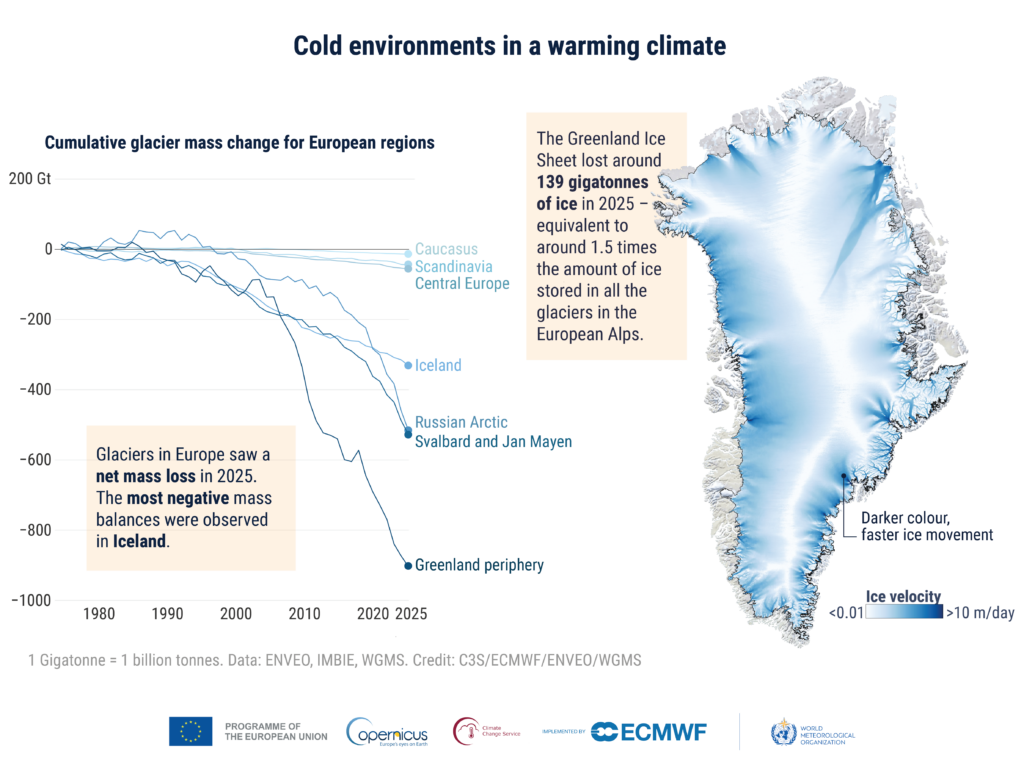
(Right) Greenland Ice Sheet ice flow velocity for the 2025 hydrological year.
Data: IMBIE, ENVEO. Credit: ENVEO/C3S/ECMWF.
ECMWF and WMO said the report, produced under the Copernicus Climate Change Service, brought together contributions from around 100 scientists. The organisations added that the report provided a comprehensive overview of climate indicators across Europe, including cold environments, marine ecosystems, rivers, lakes and wildfire risk.
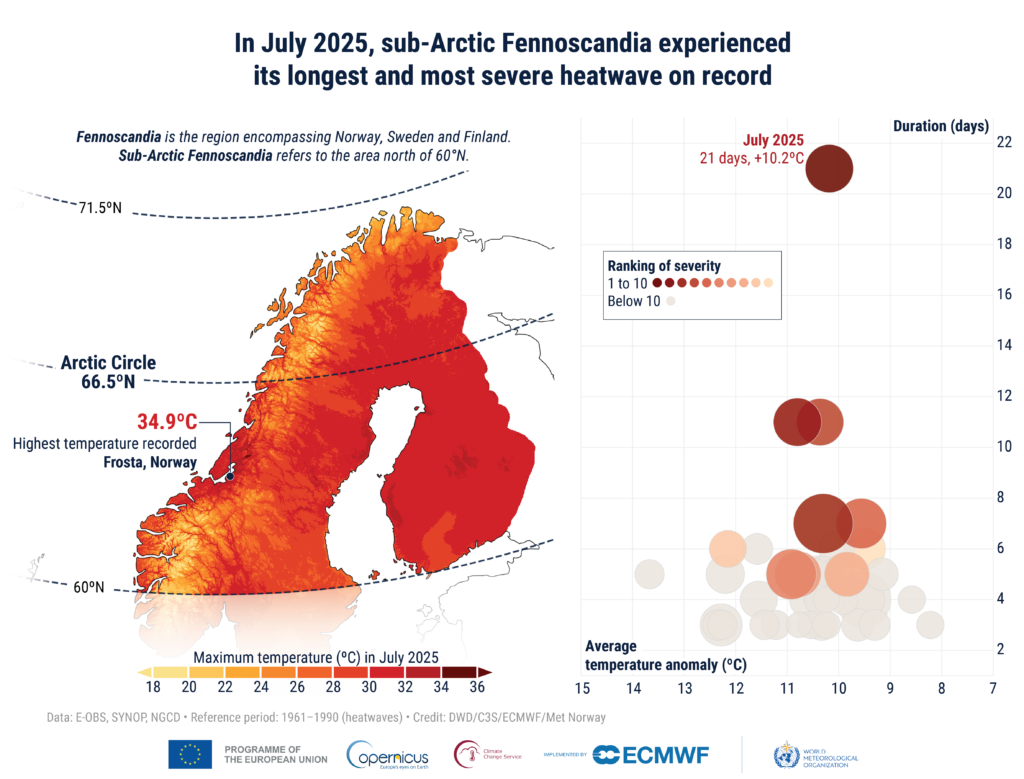
According to ECMWF and WMO, the key findings of the report state that at least 95% of Europe had experienced above-average temperatures in 2025. The organisations added that a record three-week heatwave affected sub-Arctic Fennoscandia, with temperatures exceeding 30 degrees C near and within the Arctic Circle.
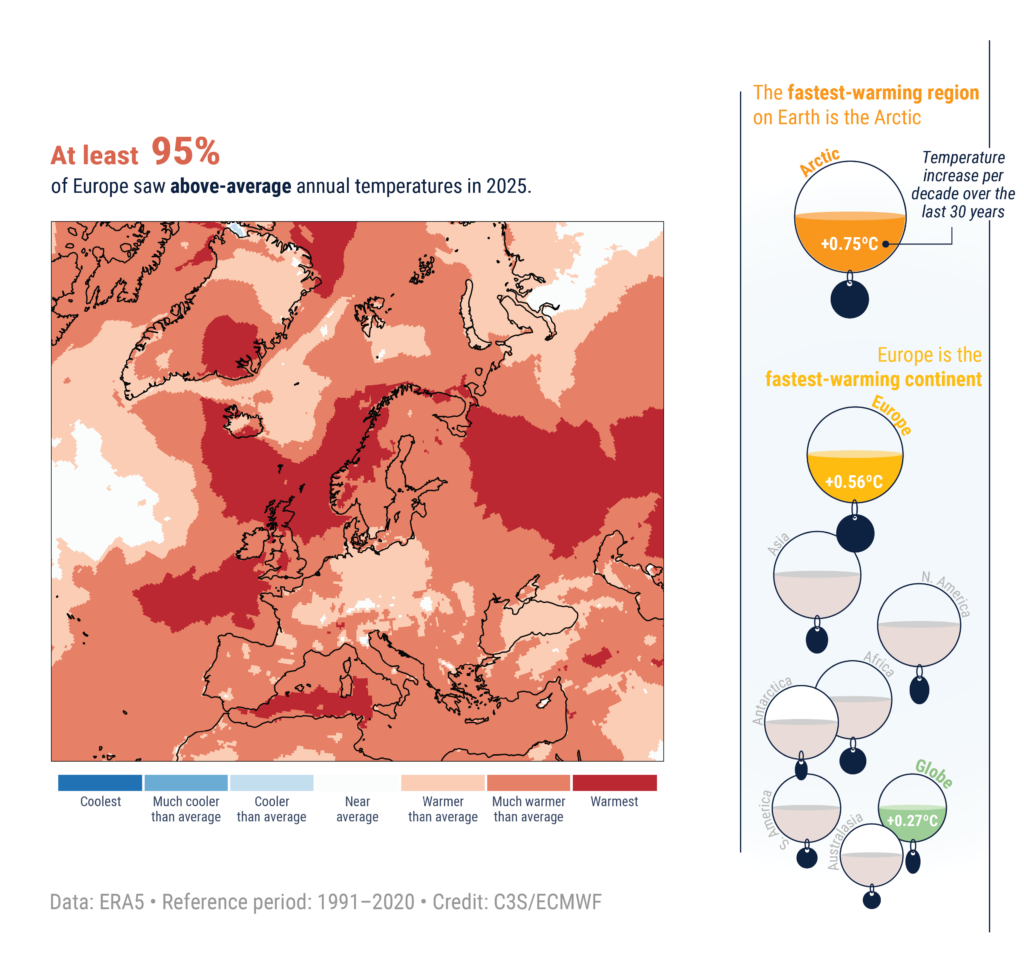
(Right) Visual representation of anomalies in average temperature over the globe, for each continent based on the IPCC regions, and the Arctic. Linear trends are
indicated for the last thirty years (1996–2025) for the globe, Europe and the Arctic. Data: ERA5. Credit: C3S/ECMWF
ECMWF and WMO said glaciers across all European regions had recorded net mass loss, with Iceland experiencing its second-largest glacier loss on record. The organisations added that snow cover levels were 31% below average and that the Greenland Ice Sheet had lost 139 gigatonnes of ice.
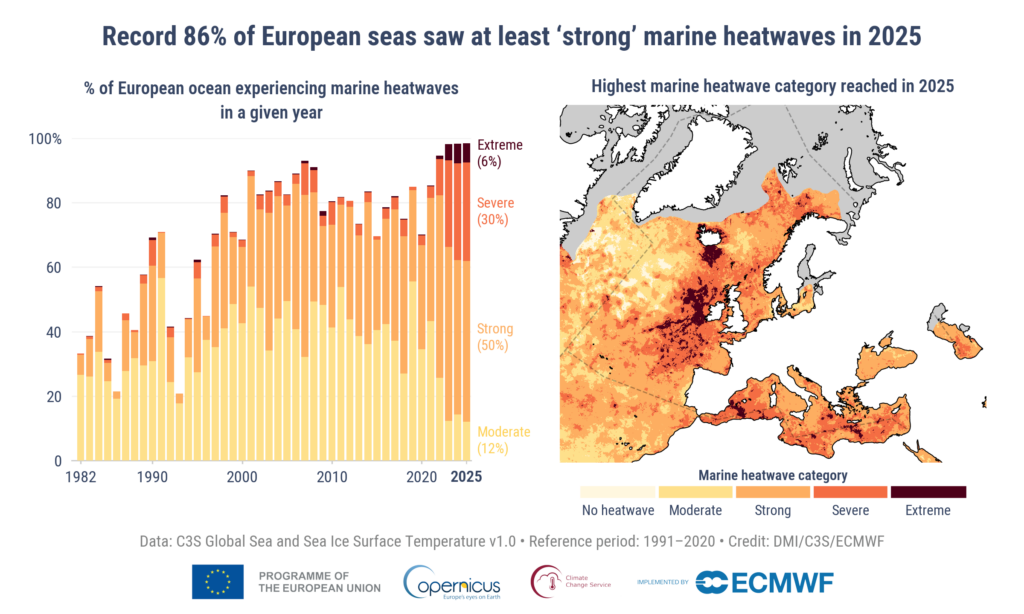
ECMWF and WMO said the annual sea surface temperature across the European region was the highest on record, with 86% of the area experiencing at least strong marine heatwaves. The organisations added that wildfires had burnt more than 1,034,550 hectares, representing the largest area on record.
ECMWF and WMO said river flows had remained below average for 11 months of the year, with 70% of rivers experiencing reduced annual flows. The organisations added that storms and flooding had affected thousands of people, although extreme rainfall events were less widespread than in previous years.
ECMWF and WMO said renewable energy had supplied 46.4% of Europe’s electricity in 2025, with solar power reaching a record contribution of 12.5%. The organisations added that biodiversity remained critical for sustainability but continued to face degradation due to climate change.
ECMWF and WMO said the findings highlighted the interconnected impacts of climate change on ecosystems and societies, reinforcing the need for coordinated policy responses across Europe.
Florian Pappenberger, Director-General, the European Centre for Medium-Range Weather Forecasts, said: “Europe is the fastest-warming continent, and the impacts are already severe. Almost the whole region has seen above-average annual temperatures. In 2025, sub‑Arctic Norway, Sweden and Finland recorded their worst heatwave on record with 21 straight days and temperatures exceeding 30 degrees C within the Arctic Circle itself. The 2025 report offers clear, actionable insights to support policy decisions and help the public better understand the changing climate we live in.”
Celeste Saulo, Secretary-General, World Meteorological Organisation, said: “The WMO State of the Climate has revealed the imbalance of energy on our planet, and the European State of the Climate, produced jointly by WMO and ECMWF, reflects the impacts for Europe. Our joint effort to produce the ESOTC reflects how climate change is impacting biodiversity and the bold initiatives taken by European policy makers to protect and restore it.”
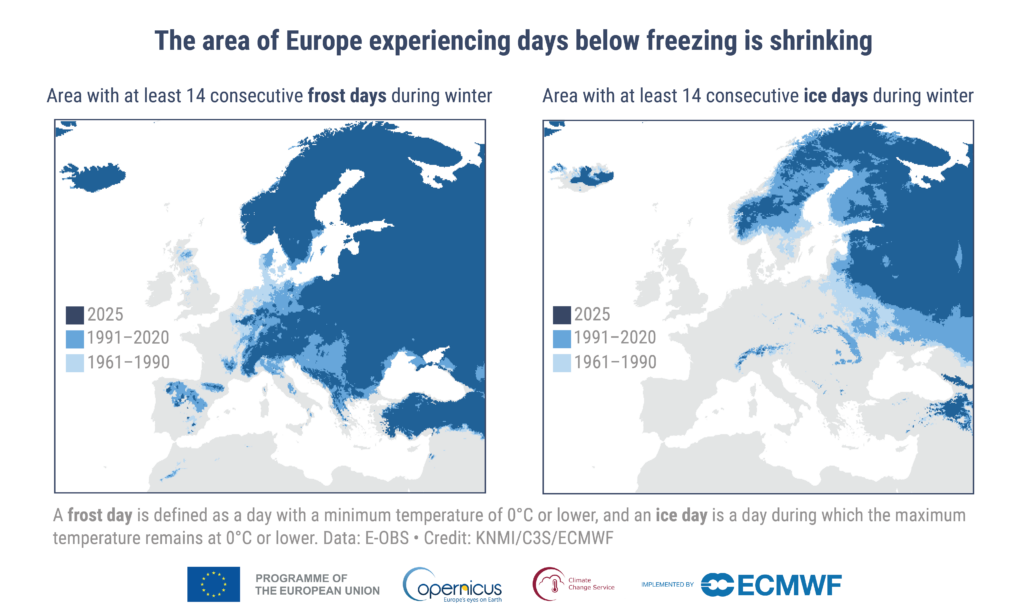
ECMWF and WMO said the report highlighted rapid warming across Europe’s coldest regions, including the Arctic and the Alps, where snow and ice play a critical role in reflecting sunlight. The organisations added that the shrinking extent of freezing winter days and rising minimum temperatures reflected a broader warming trend.
ECMWF and WMO said sub-Arctic Fennoscandia experienced its longest recorded heatwave in July, lasting three weeks, with temperatures exceeding 30 degrees C and peaking at 34.9 degrees C in Frosta, Norway. The organisations added that Europe recorded a reduced number of cold stress days, with 90% of the continent experiencing fewer than average.
ECMWF and WMO said above-average temperatures combined with reduced precipitation had contributed to significant losses in snow and ice cover. The organisations added that snow cover in March 2025 was approximately 31% below average and glaciers across Europe experienced net mass loss, while the Greenland Ice Sheet lost 139 gigatonnes of ice, contributing to rising global sea levels.
Samantha Burgess, Strategic Lead for Climate, ECMWF, said: “The ESOTC 2025 paints a stark picture – the pace of climate change demands more urgent action. With rising temperatures, and widespread wildfires and drought, the evidence is unequivocal; climate change is not a future threat, it is our present reality. In confronting the impact on biodiversity loss, we need to match the speed of adaptation happening in the clean energy transition and, at the same time, ensure robust science continues to underpin our policies and decisions.
ECMWF and WMO said the global ocean had absorbed approximately 90% of excess heat from greenhouse gas emissions, with 2025 marking the fourth consecutive year of record sea surface temperatures in the European region. The organisations added that marine heatwaves affected 86% of Europe’s ocean areas, with 36% experiencing severe or extreme conditions.
ECMWF and WMO said the Mediterranean Sea had recorded at least one day of strong marine heatwave conditions annually over the past three years, while severe conditions were also observed in the Norwegian Sea. The organisations added that these patterns highlighted the widespread geographical impact of ocean warming.
Mauro Facchini, Head, Copernicus Unit, European Commission, said: “The European State of the Climate 2025 report demonstrates once more the value of our joint efforts to have a world-class European Earth observation system. Maintaining our own state-of-the-art, reliable data records of our Earth system is vital for making informed policy decisions in our rapidly changing climate. Copernicus is pivotal to help us preserve our sovereignty, our environment, food systems, safety and economy.”
ECMWF and WMO said around 70% of rivers across Europe experienced below-average flows, while soil moisture levels ranked among the lowest since 1992. The organisations added that drought conditions affected 53% of Europe in May, reflecting combined impacts of rainfall variability and long-term climate trends.
Dušan Chrenek, Principal Adviser, Digital Green Transition, DG Clima, said: “The climate change signal remains unequivocal across Europe, and the European State of the Climate 2025 report is a stark reminder that we must sustain and accelerate both adaptation and mitigation efforts. This edition provides compelling evidence of the profound impacts of climate change on intensity of extreme weather events, biodiversity and economy, while reinforcing Europe’s strategic ambition to further strengthen its Earth observation capabilities by harnessing cutting-edge technologies.”
ECMWF and WMO said European policy frameworks increasingly recognised the link between climate and biodiversity, with initiatives aimed at strengthening ecosystem resilience. The organisations added that the European Union had committed to restoring at least 20% of land and sea areas by 2030 and all ecosystems in need by 2050, supported by broader strategies such as the European Green Deal and EU Climate Law.