

Fortifying the city, one system at a time
The Sixth Edition of The Client, Consultant, Contractor Conference took place on July 3 in Dubai. Held under the title, ‘The Resilience Forum’, the conference, which convened stakeholders against the backdrop of geopolitical instability, shifted its traditional focus from energy efficiency, water-use optimisation and Indoor Environmental Quality (IEQ), to a wider discussion on resilience. At the same time, it trained the spotlights on the need for decentralisation and self-reliance across the UAE’s urban ecosystems.
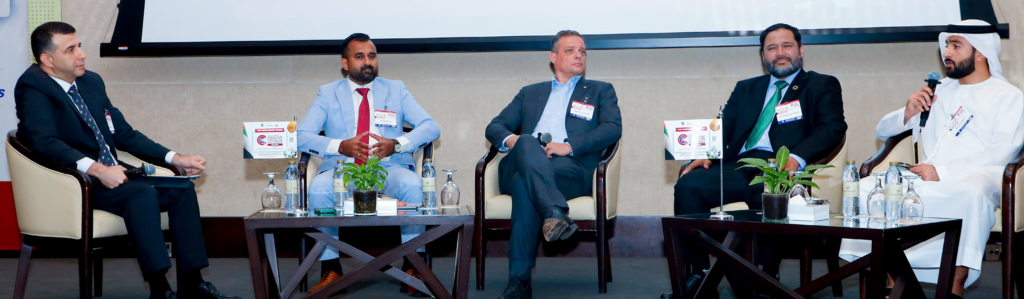
Organised by CPI Industry, the conference opened with a Welcome Address by Surendar Balakrishnan, Co-Founder & Editorial Director, CPI Industry, who highlighted the UAE Government’s economic agility and confidence-building interventions, which sent a clear message to the global business community that Dubai and the UAE remain resilient, reliable, agile and open for growth.
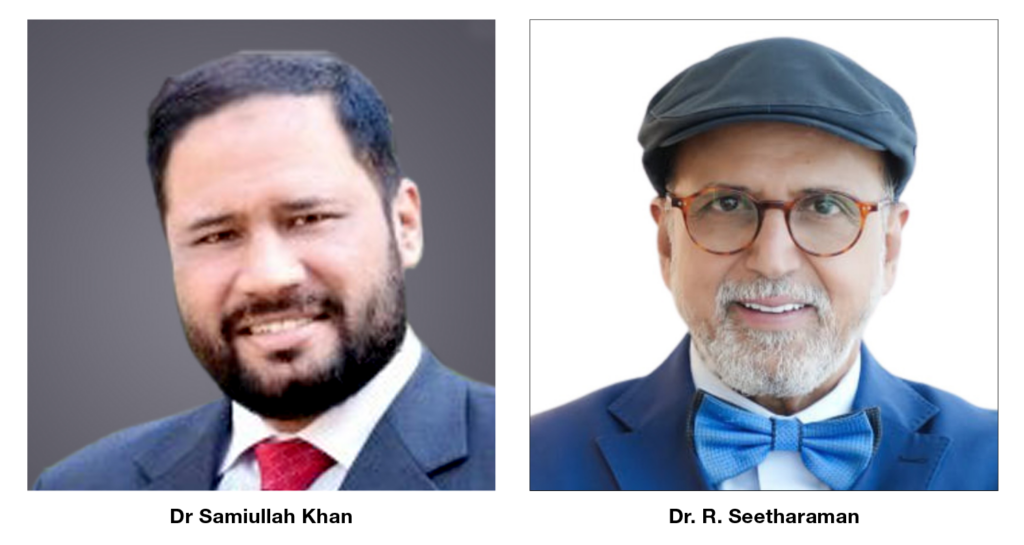
Dr Samiullah Khan, Head of Sustainability, Al Tanmyah Farnek, chaired the conference. In his opening remarks, he provided a framework and context for the conference through using the acronym, VUCA. “We live in a VUCA world,” he said. “Volatile, uncertain, complex and ambiguous. Overcoming such conditions require collective effort. You need to all work together to overcome and thrive in such an environment.”
Referencing discussions at the World Economic Forum in Davos, Khan noted that while the leading short-term concern among global leaders is geopolitical confrontation, the second-ranked concern is misinformation and disinformation, and that the long-term top concerns are “all to do with climate change, weather and sustainability”. Drawing on his own experience in the UAE to highlight the central role of the HVAC industry, he observed a clear shift in local climatic conditions: “I remember when I came into UAE, about 15 years ago, during the winter we never used to have the ACs on. But today we never switch off the AC.”
He pointed to global momentum on decarbonisation, noting that more than 180 countries have already committed to moving to net zero and that the UAE has taken a leadership position as among the top, or the first, country [in the Middle East] to say that we are going to go net zero by 2050″. Reflecting on shared responsibility towards achieving sustainable cooling, he said: “This is everybody’s responsibility. It is not the responsibility of the Government, it is not merely the responsibility of the corporates, the NGOs, the universities. Each one of us needs to work on this, and we need to work on this together.”
Khan drew attention to a quote from the UAE’s leadership to define the conference’s intent: “Here in UAE, in Dubai, we don’t wait for things to happen. We make them happen.”
Following the chairperson’s remarks, Dr R Seetharaman, Economist; Advisor – Green Finance and Former Group CEO, Doha Bank, gave the Plenary Address. He recalled his early efforts as a banker to embed sustainability into banking decades before it became mainstream. He defined the underlying purpose of sustainable finance with the observation: “We haven’t inherited the planet from our parents. We borrowed it from our children.”
Citing global figures, Dr Seetharaman said that USD 300 billion in assets on green finance already existed worldwide, with an annual complementing contribution of over USD 2 trillion. Turning to the UAE specifically, he cited a series of recent commitments, including the UAE Central Bank’s AED 1 trillion sustainable finance declaration in December 2023, the First Abu Dhabi Bank’s USD 5 billion commitment, and the green and blue bond issuances by Masdar, ADNOC and FAB. He noted that the regional sukuk market for sustainability-linked instruments had reached USD 11.8 billion in market capitalisation, with USD 25 billion spent in 2025 alone.
Dr Seetharaman said that green credentials would increasingly determine commercial viability. “You can build any building, but if you are not building it as green, then you’ve lost the game – your cost, in terms of electricity or water efficiency, is not going to be competitive,” he said.
Dr Seetharaman closed his address with an Oriental proverb to summarise his message: “If you aim at short term, you cultivate flowers. If you aim at medium term, you cultivate trees. If you aim at eternity, you build sustainability.”
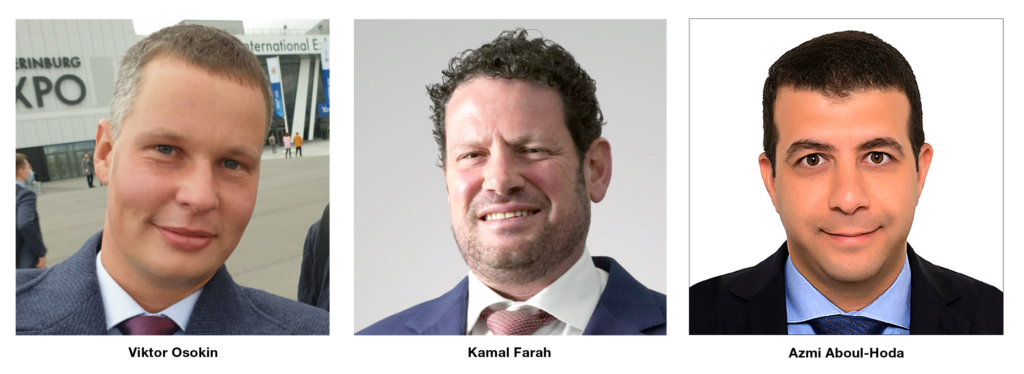
Speaking after him, Viktor Osokin, CEO, Tevmo, described how his software solution has been able to address persistent industry pain points: Converting a Building Information Model into an energy model suitable for analysis software, such as IES VE and EnergyPlus. “You spend many, many days to create an energy model of the building and then to calculate everything,” he told delegates, adding that the issue was “a worldwide problem and here in Dubai it’s a big problem”.
Engaging directly with the audience, Osokin invited engineering consultants in the room to describe their experiences. One consultant in the audience, using DesignBuilder and EnergyPlus, agreed that moving a large Revit model into an energy model was time-consuming. Osokin used the consultant’s words to illustrate the scale of the problem Tevmo addresses. He said that using Tevmo, the model inputs to IES with zero mistakes, in contrast to the weeks-long manual process, typically required.
Responding to further questions, Osokin confirmed that the software accounts for retrofit scenarii, heat transfer through different wall materials based on their U-values and the effect of shading from neighbouring buildings.
Subsequent to Osokin’s technical presentation, Kamal Farah, Director, DesertBoard, introduced Palm Strand Board, an engineered building board manufactured in the UAE from upcycled date palm fronds. He described the scale of the challenge the product addresses, citing that 39% of global emissions are attributable to the built environment. “We can reduce 50% of the building’s lifecycle emissions by using sustainable materials,” he said. Deforestation and forest degradation are responsible for 12% of the global greenhouse gas emissions, he added.
Farah said the Palm Strand Board is manufactured with zero formaldehyde content, in contrast to imported board products in the regional market that he said often contain formaldehyde, despite local requirements for zero-formaldehyde materials. He listed a series of certifications underpinning the product, including an Environmental Product Declaration, In-Country Value certification, Abu Dhabi Quality and Conformity Council approval and Emirates Safety Laboratory fire-rating accreditation, and noted that the product has since gained Class B fire-rated wall panel certification.
To illustrate the carbon impact of the product, Farah cited the experience of one of DesertBoard’s joinery customers. “Ibanos sequestered over four million tonnes of CO2 by using PSB in its projects in the space of one and a half years,” he said.
At full manufacturing capacity, he said, DesertBoard produces enough PSB each year to fill 5,200 containers, equivalent to fitting out more than 200 towers the size of the Burj Khalifa, and that every cubic metre of the board locks away 1,430 kilograms of biogenic carbon.
Concluding his address, Farah linked the product to UN Sustainable Development Goal 11, describing it as modernising and industrialising a past practice of using palm fronds to build traditional shelters.
Subsequent to Farah’s presentation, Azmi Aboul-Hoda, CEO, EMergy Consultants, moderated a panel discussion, which he began by wrapping the interaction around four themes: Lowering emissions and improving IEQ; stakeholder engagement; the role of facilities management firms; and local laws and regulations.
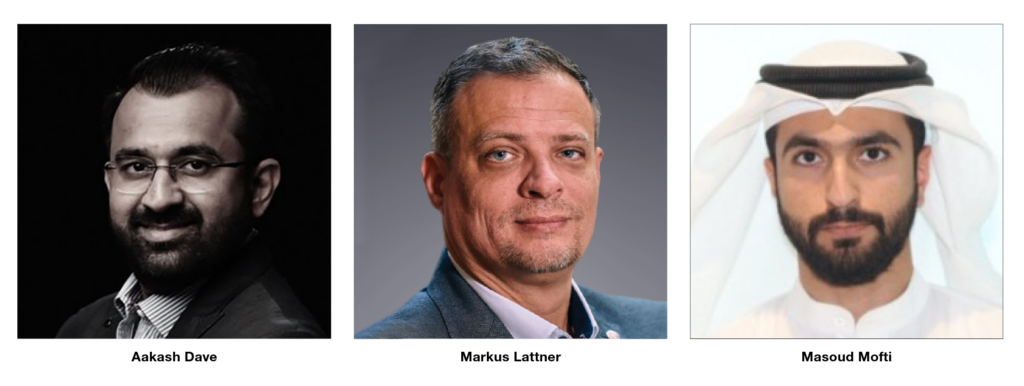
Aakash Dave, Senior MEP Manager, DAMAC Properties, and one of the panellists, described the tension between energy efficiency and occupant comfort as the region’s central design challenge: “People love to come and say that I want this area to be bright. Your energy efficiency is tossed up.” Asked who bears responsibility for closing this gap, Dave said developers cannot escape accountability. “We are the flag bearer for all this, because we sponsor the project we eventually design in terms of how it’s going to come up, and at last, we hand it over,” Dave said, adding that the goal is “not to deliver the energy-efficient building but to run it as an energy-efficient building”.
Dave’s co-panellist, Dr Samiullah Khan illustrated the human cost of poor Indoor Air Quality (IAQ) with a personal account of his own home, where his spouse suffered persistent headaches that doctors could not initially explain. He said that after installing a CO2 sensor, he discovered that the concentration of the gas in his house was at 3,000-plus ppm, against an ASHRAE-recommended level of around 1,000 ppm. He subsequently addressed the condition, which he said, eliminated Sick Building Syndrome, reduced the heat island effect and saved 30-40% on the electricity bill.
Speaking on responsibility, he argued that minimum standards are insufficient. “We need to lift the baseline,” he said. “Sustainability and wellness should not be something that are good to have. They should constitute the baseline.”
Co-panellist, Markus Lattner, who is Managing Director, Eurovent Middle East, located responsibility across the full project value chain, from concept through procurement, installation, commissioning and operation, noting that all throughout this value chain, we are losing on energy efficiency and we are accumulating damages. He argued that progress depends less on regulation than on industry self-organisation. “A way to resilience, a way to improve this, is a strengthening of the civil society where the civil society, an association, comes together, discusses minimum standards, and out of minimum standards usually you have gold standards and benchmarks developing,” he said.
Co-panellist, Masoud Mofti, a Green Ecosystem Strategist, pointed to a persistent culture gap among some property owners and investors, describing their outlook as a “classic mind” that needs to be reached through awareness campaigns and workshops on eco-friendly materials, smart parking and solar integration, alongside engagement with universities and the next generation of engineers.
On best practices, Dave shared an example of a school project, in which a client challenged the team’s HVAC sizing, despite full compliance with sustainability guidelines, arguing that the system was undersized relative to other schools in Dubai. After review, Dave said, the design team held its position, and the building has now been successfully operational for more than a year, with the client conceding that it is working at the very best efficiency. Dave used the example to argue that data-driven decisions, rather than received rule-of-thumb practice, should guide design.
Dr Samiullah Khan offered a contrasting case in which a thermal energy storage proposal, which he said had delivered 40% savings on the cooling load in earlier projects using glycol-ball storage to shift cooling load away from peak afternoon hours, was rejected by a consultant on a subsequent project despite favourable simulation results conducted by the Rochester Institute of Technology, Dubai, owing to fears that an unconventional design might delay Municipality approval. He used the episode to call on the industry to take more risk.
Lattner, speaking on standards, noted that ventilation rate requirements differ between European and ASHRAE standards, owing to differing underlying assumptions about occupant adaptation, and argued that the larger barrier to better outcomes is not the standards themselves but a lack of awareness, knowledge and qualification among many stakeholders, combined with reluctance across the industry to take on liability for unconventional decisions.
Then, speaking on the topic of outcome-based contracting, Dave confirmed that DAMAC Properties applies performance-linked incentives to contractors and consultants, rewarding early delivery without compromising quality and rewarding consultants who exceed sustainability or efficiency KPIs within an agreed budget. He cited an example in which DAMAC’s own facilities management data, shared directly with a consultant on a District Cooling plant, allowed the design to apply real building-level diversity factors rather than conservative assumptions, reducing the plant’s required cooling capacity by 25%.
On engaging stakeholders, particularly in jointly owned properties, Lattner argued for stronger organisation among tenants and the wider industry, encouraging delegates to join industry associations rather than relying solely on government-led standard-setting.
On regulation, Lattner identified the regional refrigerant transition under the UAE’s federal climate law as the most pressing near-term development, warning that by 2032, all the countries in the Middle East will be required to reduce the quota of imported F-gases by 10%, and that anticipated economic growth could create a shortage of up to 30-40% of refrigerants in the market without early action.
During the question-and-answer session, a member of the audience, working in the fields of IAQ and human-centric lighting, cited a July 2025 World Health Organization scorecard indicating that 24% of deaths currently in UAE related to lungs and heart diseases are directly linked to indoor and outdoor air pollution, and questioned why local building codes do not mandate continuous IAQ monitoring. Dr Samiullah Khan responded by pointing to a Ministry of Environment exercise that measured IAQ across 10,000 homes in the UAE, and to plans to install 20,000 air quality sensors across the country. Dave added that the UAE’s air quality strategy, running from 2021 to 2031, already incorporates such initiatives as a work in progress, alongside existing requirements for carbon measurement in higher-tier green building certifications.

Following the panel discussion, Maitha Alblooshi, Agile Coach at Emirates NBD, made a presentation, during which she highlighted the bank’s green loan programme, which she said supports early-stage sustainability start-ups rather than established companies, with more than 120 projects funded since the scheme’s most recent expansion, alongside non-financial support, such as UAE company registration and office space.
In a subsequent panel discussion that focused on reimagining and building resilient infrastructure – data centres and power plants as strategic assets – moderator George Berbari, CEO, DC PRO Engineering, and Author of the book, The Energy Budget, opened the session with a stark description of the region’s infrastructure vulnerability. “The vulnerability of infrastructure,” he said, “was never stronger than any day before.” Drawing on 36 years of experience in the UAE, he set out the country’s power balance, stating that peak demand had reached almost 34 gigawatts, approximately three kilowatts per capita, which is one of the highest in the world, against installed capacity, excluding solar, of around 38 gigawatts, leaving a margin of roughly four gigawatts, against organic demand growth of five percent a year and seven additional gigawatts of demand anticipated from the AI sector alone. He referenced the recent incident affecting the Barakah nuclear plant, noting it had taken one reactor offline, and argued that the country’s national priorities now run, in order, of air defence, the electrical grid and data centres.
On the shifting definition of resilience, one of the panellists, Mohammad Majed, Associate Director, Data Centres, AI, Black & White Engineering, argued that the industry’s historic focus on grid optimisation now needs to incorporate adaptability. “The new definition of optimisation, Majed said, “is also along with the adaptability.” Asked whether clients are now actively requesting resilience, he characterised the market as being in transition, with consultants needing to factor longer-term operational risk into client briefs rather than only short-term requirements.
Majed’s co-panellist, A.R. Suresh Kumar, who is Head of International Operations Business Group at Voltas Limited, placed recent events in historical context, recalling that, unlike neighbouring states, UAE is one of the most peaceful areas through past regional conflicts, and that the GCC region now faces an unprecedented crisis. Kumar recalled that some prestigious UAE buildings had been fitted with express power supplies and control systems as early as 2007 that had never previously been utilised, and argued that the standby power supply and alternative express lines, which are independent of the main grid, are all becoming a necessity. He called on the industry to make essential systems – lifeline features, like water, electricity and data – resilient against this new category of risk.
Sagar Kulkarni, Managing Director, Consistent Engineering Consultants, drew a clear distinction between redundancy and resilience. “While redundancy addresses component failure through backup systems, when we talk resilience, we are talking about the adaptability to adverse conditions in the shortest period of time,” he said. He illustrated the stakes with reference to a real-world incident in which a USD 30,000 drone destroyed a USD 60 million data centre, with weeks of resulting service outage across tenant companies. He argued resilience must be assessed across physical, cyber security, energy security and the security of the whole premises.
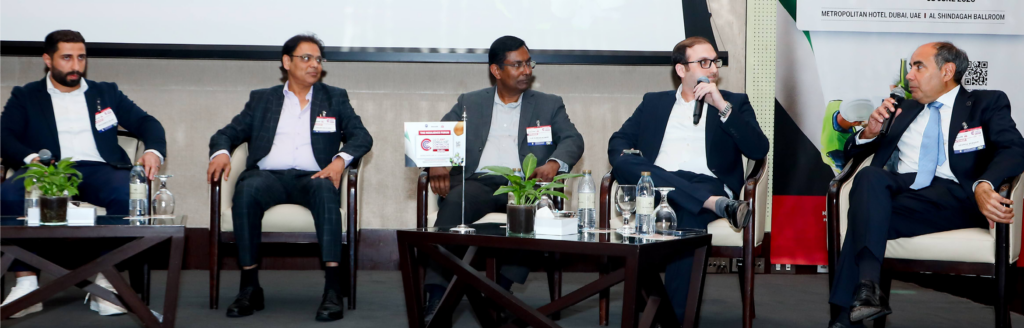
Returning to the discussion on power, Majed cited Gartner’s expectation that power limitation and shortage would restrict around 40% of data centre development globally, and detailed the UAE’s generation mix, noting that 25% of our demand is coming from Al Barakah nuclear plant, while solar contributes only 8-10% of current demand. He pointed to Abu Dhabi’s ambition to develop “10 GW of solar energy by 2030”, including the Around the Clock solar farm, which he said would generate 5.2 GW, with battery storage enabling 1 GW even at night, alongside the Al Ajban project delivering 1.5 GW.
Berbari used these figures to highlight the scale of the long-term challenge, estimating that the UAE would need around 120 GW of solar energy to reach carbon neutrality based on projected demand growth, and that covering three hours of night-time demand from batteries at that scale would require USD 240 billion investment to cover batteries alone. Majed added that gas-fired plants, such as Al Taweelah project, will remain necessary to bridge the intermittency gap left by renewables, even as UAE IT capacity is expected to double from around 500 MW to around 1 GW by 2030.
A member of the audience challenged the panel’s characterisation of the issue, questioning why electricity should be treated as the only relevant form of energy and arguing that lower-grade energy sources could meet many cooling and comfort needs without the same grid burden. Majed pushed back, citing a global shortfall of more than USD 250 billion a year in grid investment and arguing that electrification of transport, buildings and data centres is an accelerating global trend rather than one that can be reversed.
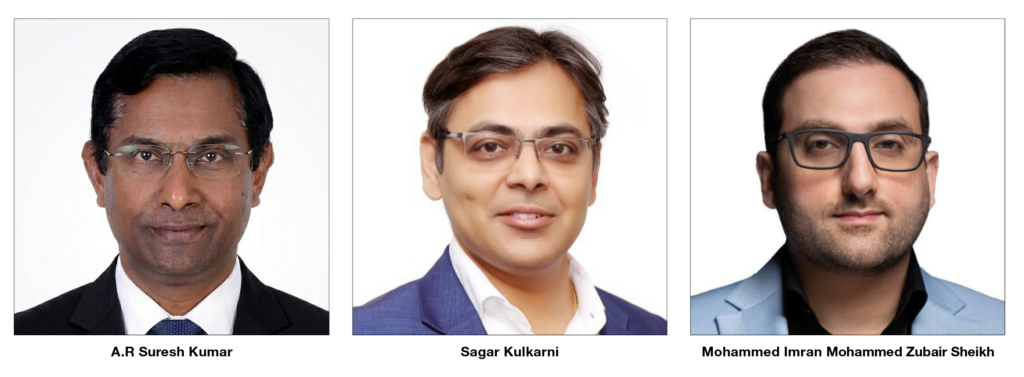
Closing the panel, Mohammed Imran Mohammed Zubair Sheikh, Director of MEP & Specialisms, Ramboll, argued that the concept of resiliency in data centres has shifted from simple backup generation towards part of the geopolitical strategy, with the appropriate level of protection varying by application. He suggested that fortress data centre design, referencing Berbari’s own work, is most relevant to highly sensitive national security or military applications requiring underground plant rooms and blast-proof perimeters, while less critical applications, such as healthcare, telecom and social media platforms, can rely on partial hardening and geographic redundancy instead, since the intention is to protect the service, not to protect the building.
Berbari concluded the discussion by stating that the underlying mindset of the industry needs to change, noting that data centres and utility plants have traditionally been designed for cost optimisation rather than security. He recalled designing blast-resistant underground structures in Singapore capable of sheltering 10,000 people, and observed that while some clients, including an Abu Dhabi bank, have begun requesting secure data centres, design specifications often do not translate into matching execution. He noted that data centre contracts in the region currently tend to go to MEP contractors rather than specialised structural contractors, a balance he suggested may need to shift, given the heavier structural and power-diversification requirements that true resilience demands.
Berbari followed the panel discussion with a detailed technical presentation on his concept, “fortress data centre”, illustrated through a live design example.
He described the building envelope as designed to be “physically impenetrable”, with solid concrete behind a wire mesh and blast-proof doors and dampers fitted to every ventilation outlet. The facility, he said, could be designed to be electromagnetically silent, with the wire mesh grounded to form a Faraday Cage that prevents server electromagnetic emissions from being detected externally, and made thermally invisible, achieved through shifting from air-cooled to water-cooled chillers operating as cold as the ambient air to avoid generating a detectable heat signature.
Berbari paid particular attention to standby generation, noting that generator exhaust, which can reach 250-300 degrees C, could be routed underground via explosion-proof dampers to an exhaust point 10 metres away from the fence, concealing what would otherwise be a clear heat signature.
He described a trigeneration approach in which generator jacket cooling is exchanged via cooling tower water rather than radiators, supported by evaporative cooling and fan coil units to keep generator rooms within safe operating temperatures.
On the building’s structural specification, he explained that 80% would be chiller-free and cooled by the cooling tower, with the remaining water-cooled chillers protected behind 60-centimetre-thick blast-proof doors, and that the protective wire mesh would be specified at 25 by 25mm and five millimetres thickness – fine enough to block electromagnetic emissions.
He noted that the underground data halls, with a five-metre clear height, would be designed to accommodate the next generation of nVIDIA chip hardware, and that wet services, such as cooling towers and geothermal backup, are segregated from electrical services, including battery storage, in separate buildings – a design choice he linked to a prior real-world incident in which a data centre fire originated from on-site battery storage.
On cost, Berbari estimated that the fortified design adds roughly 20% to building cost alone, but only around four per cent to total cost of ownership, once IT and operational costs are included. Describing the additional expenditure with an analogy, Berbari said, “If you have expensive jewellery, you would build a safe underground or somewhere inside and hide it, and this is what will happen here.”
During the question-and-answer session, one of the earlier panellists asked whether the fortress design changes the balance between fail-safe and fail-operational systems. Berbari confirmed that the design remains as fail-safe as the old design, with the fortress concept adding kinetic protection on top of existing fail-safe principles rather than altering that balance. Asked how receptive hyperscalers and major developers are likely to be to the added cost, Berbari argued that the case is strongest where chip and IT hardware costs dominate total project cost, citing next-generation nVIDIA deployments “that can exceed EUR 30 million per megawatt IT”, such as the Stargate project in Abu Dhabi, while acknowledging that the case is harder to make for lower-cost enterprise-level deployments, where IT costs represent a smaller share of the total spend.
Asked, in closing, why the industry continues to build large, centralised data centres that present obvious targets rather than decentralising capacity, Berbari pointed to an emerging US scheme offering homeowners USD 22,000 to host a server and supply spare household power capacity. “It’s not a stupid idea,” Berbari said, “it’s happening.” By saying so, he suggested that decentralised models are already emerging as a parallel response to the same vulnerability his fortress design addresses.
The final discussion of the day, titled ‘Urban resilience through the decentralisation of core essential services’, had Dr Khan as moderator. Shankar Pratap, Senior Mechanical Engineer, Capital Engineering Consultancy, and Srinivasan Rangan, Founder & CEO, Cosmos Energy Intelligence, were the participants.
Dr Khan opened the session by explaining the origin of the topic – a LinkedIn exchange with Mahmoud Al Burai, Advisor to the Dubai Municipality, on how municipalities should respond to recent regional instability, in which Dr Khan had proposed decentralising energy, water, food security and waste management, drawing a comparison with earlier generations, who lived self-sufficiently without centralised infrastructure. He said Al Burai had since invited him to help implement the idea at Dubai Municipality, thus characterising the panel as “going to help me to implement this plan for Dubai Municipality”.
On the topic of cooling, Pratap said that Dubai is “already kind of decentralised” through District Cooling operators such as Empower running separate systems per district, but that many connected buildings are older and inefficient, meaning “the end user is the one ending up paying for it” without receiving commensurate value. Upgrades by operators are needed to close the gap, he said.
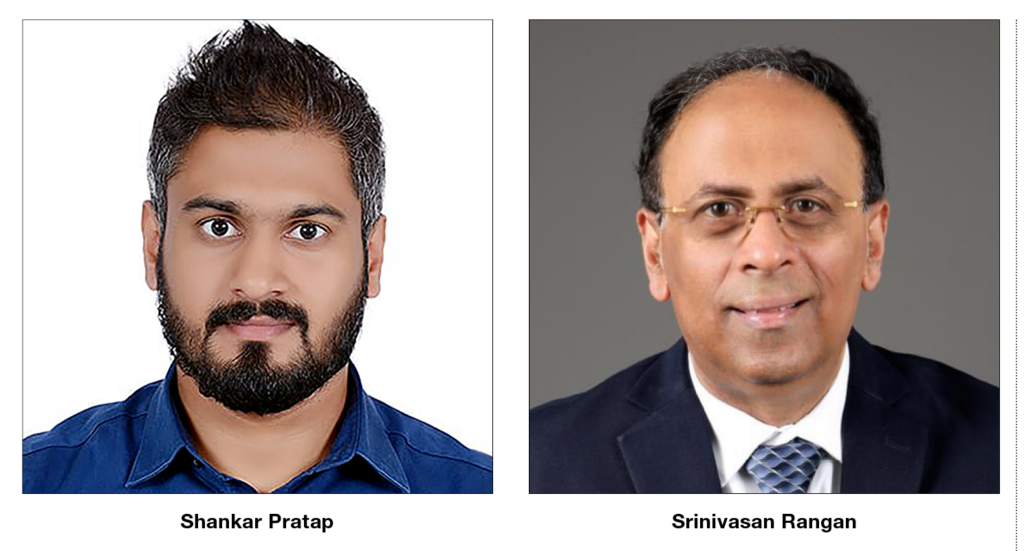
Rangan set out to describe what he called an “energy pyramid” of priorities: First, energy conservation and demand reduction at source; second, energy-efficient technologies, such as variable-frequency drives, thermal storage and demand management; third, energy recovery; fourth, renewables; and finally, grid management. He argued that reducing demand at source by about 30-40% has an immediate and proportionate effect on grid load, and distinguished tri-generation, in which on-site generation, heat recovery and absorption chillers can lift overall system efficiency from 35% to about 65-70%, from the more centralised model of conventional District Cooling.
Rangan described the region’s broader energy inefficiency through an analogy that recurred through the session: “Our energy system is like a leaking bucket, first what you do is arrest all those energy leaks, reduce your demand, then move in for renewable energy.” He cautioned that investors and financiers often jump straight to solar as the default sustainability solution rather than first addressing demand-side waste.
Responding to an audience question on the use of lower-grade energy sources, Rangan reiterated that any renewable source reduces grid stress, but that adoption decisions remain “a techno-commercial decision” dependent on geography and feasibility, reaffirming his preferred sequence of conservation, efficiency, renewables and finally grid investment.
On water, Rangan set out a series of design and operational measures to reduce cooling-tower water consumption, including selecting tower technology and pump systems with attention to evaporation and drift losses at the design stage, applying appropriate water treatment to extend cycles of concentration and reduce blow-down, considering the use of treated sewage effluent, where appropriate, and preventing leakage in chilled and condenser water circuits. He noted that seawater cooling is already used by several regional District Cooling plants from Saudi up till Bahrain, and described an ongoing closed-loop geothermal cooling experiment being trialled with the Rochester Institute of Technology, given the region’s relatively high water table.
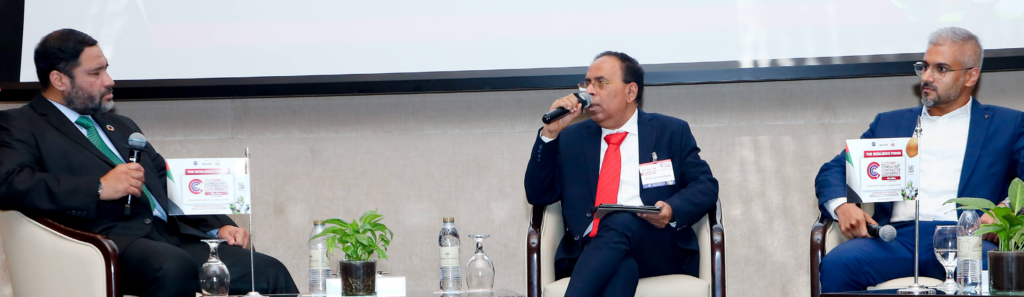
Asked for his advice to developers seeking to build resilience, Pratap argued that simply meeting current local regulation is insufficient, given how rapidly conditions have changed since 2020. He spoke of the need to be stronger to find a better way than the current regulation. He cited the Masdar-ADNOC geothermal cooling project, which uses geothermal energy with absorption chillers to meet 5-10% of Masdar’s total cooling load, and noted growing developer interest in absorption chillers more broadly in Abu Dhabi, driven by lower gas surcharges relative to electricity costs.
Rangan, elaborating on his earlier point about thermal storage, spoke on phase-change materials for thermal storage. He drew on the learning from his earlier career, spent working on thermal energy storage products, to highlight its advantages, including fewer chillers, reduced plant footprint and potential capital cost savings. That said, he cautioned that payback depends heavily on local power tariff structures. “In this part of the world, it is relatively flat, so people go the easy route,” he said. He suggested that anything which is giving about three years is a reasonable payback for the technology to see wider adoption.
Responding to a further audience question on mandatory energy audits, Rangan supported the introduction of a formal Energy Utilisation Index for the UAE, alongside concepts already used elsewhere, such as Energy Star ratings, while noting the absence of a clear, agreed baseline against which reduction targets such as Dubai’s could be measured. He pointed delegates towards the Dubai Demand Side Management programme, run under the Dubai Supreme Council of Energy, as the most relevant existing resource.
Closing the session, Pratap returned to the day’s recurring metaphor, observing that the discussion had repeatedly come back to the idea of the “leaking bucket”, and that the priority for the industry is “to get hold of the demand at the start itself”, bringing the conference’s technical proceedings to a close.