

‘Achieving a place in the Guinness Book of Records significantly enriches District Cooling’
Empower finding a place in the Guinness Book of Records is viewed as a significant milestone for a District Cooling company. What does it mean for you, and for the entire District Cooling movement in the region and at a global level?
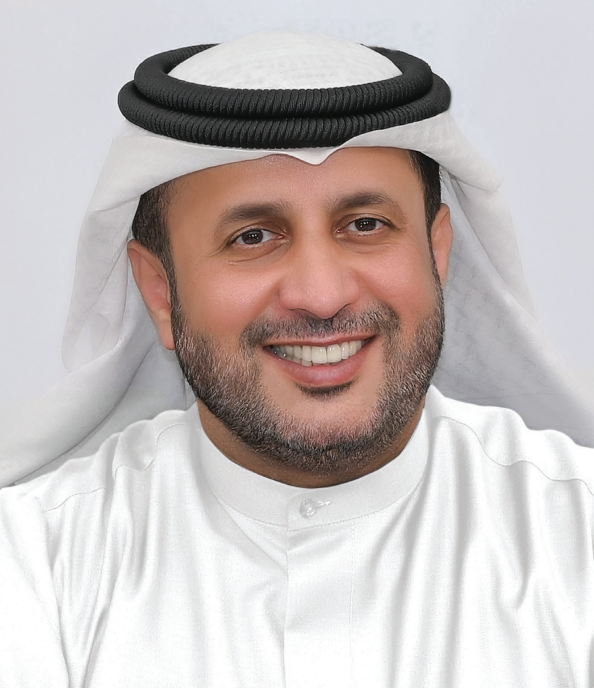
We at Empower have received numerous awards regionally and globally for our various accomplishments over the past two decades. Achieving a place in the Guinness Book of Records is a remarkable milestone for Empower and a significant enrichment to the District Cooling industry.
It showcases District Cooling’s potential and sets a new standard for the industry, worldwide. We have become the first District Cooling company in the world to achieve two Guinness World Records for a single project – the Business Bay District Cooling scheme, in Dubai. Achieving the twin honours helps gain public attention and increases awareness of District Cooling as an energy-efficient solution for space cooling.
The Business Bay District Cooling project is unique for various reasons, including being a single project with the highest capacity, having an interconnected single network of chilled water piping that extends to over 52 kilometres, having a strong Thermal Energy Storage (TES) capacity and having the deepest micro-tunnelling for a District Cooling project.
The Guinness achievement is also a testament to our team’s dedication and innovation. Dubai is a champion city for District Cooling, and the Guinness World
Records solidify the position of the Emirate at a global level. We are proud to lead the way and inspire others to adopt sustainable cooling solutions.
What unique advantages has the IPO brought to you as a District Cooling company? How is it helping you scale up your ambitions?

The IPO has increased our visibility and credibility. It has increased awareness of District Cooling and attracted new customers and partners. It has also opened an opportunity for the public to be a part of this venture that was established with a mission of environmental sustainability.
The IPO has strengthened confidence in Dubai’s long-term growth prospects and critical infrastructure. It has provided us with the necessary capital to further expand Dubai’s District Cooling infrastructure, which ultimately contributes to environmental preservation for future generations.
The Business Bay project is massive in scale and unprecedented in the area of coverage. What unique approach are you adopting in terms of project execution and innovation in technologies? How is the project allowing you to maximise the potential of supplying chilled water in an interconnected manner across your plants in the district?
Business Bay is a vibrant and bustling business hub in Dubai. It is a mixed-use community with residential, commercial and hotel buildings. Developed by Dubai Holding, Business Bay spans an area of 4.3 square kilometres, with a leasable area of 7.2 square kilometres. The area is home to numerous skyscrapers of varying heights and functions.
We at Empower are the exclusive provider of District Cooling services for the Business Bay development. We established the Business Bay District Cooling project with the aim of meeting the cooling requirements of Business Bay development and the stunning towers along Sheikh Zayed Road, thus positioning ourselves as being instrumental in a remarkable achievement in the field of District Cooling.
Currently, we operate the District Cooling system with four advanced District Cooling plantrooms and six TES tanks with a total connected capacity of nearly 242,000 RT, catering to nearly 200 buildings within the development and the adjacent Sheikh Zayed Road through a single underground distribution network that is over 52 kilometres in total length. The project will have an ultimate capacity of 451,540 RT upon its completion.
To execute this massive project, we adopted a unique approach that combines cutting-edge technology with collaborative project management. It has involved proper planning with a strategy developed during the masterplan stage to identify the network serving the early buildings, in coordination with the master developer. We hired the best project management professionals to execute the massive project and an international consultant to design the first plant in Business Bay, thus enabling us to adopt the best design, which became the trendsetter in the region.
One of the key innovations was interconnecting the lower and upper network crossing the Dubai Canal, during which we encountered huge challenges due to constructability issues. The team executed the deepest Non-Disruptive Road Crossing (NDRC) micro-tunnelling project in the world for District Cooling purpose – it was approximately 30 metres in depth. The interconnection allows us to maximise the potential of supplying chilled water across our plants. By leveraging the network, we can reduce energy consumption and increase overall system efficiency.
The project showcases our commitment to pushing the boundaries of innovation in District Cooling and contributing to Dubai’s sustainable developmental goals. We are proud to be setting a new standard for large-scale District Cooling projects, worldwide.
What specific measures are you taking to fully realise the potential of District Cooling in decarbonising our cities – be it in Dubai or through your global involvement of taking your District Cooling expertise to cities across the world?
Growing population and urbanisation increase the global demand for cooling. In the Middle East region, about 70% of the energy used in buildings is for space cooling. By reducing energy usage for cooling, District Cooling significantly reduces annual carbon emissions. District Cooling works by aggregating demand among multiple buildings.
At Empower, we focus more on improving the operational efficiency of District Cooling. We use advanced equipment and leverage the latest technologies, including AI. We also implement Thermal Energy Storage in our District Cooling plants. TES reduces the peak-load pressure on the state’s power grid. We are using advanced control systems and technologies, including SCADA, to optimise the operation of District Cooling plants.
We also initiate retrofitting of buildings to make them compact for District Cooling. Jumeirah Emirates Towers is a classic example of this.
We promote District Cooling as an ideal solution for existing and emerging cities, especially in hot regions. We urge governments of cities the world over to formulate District Cooling-favourable policies.
Speaking of which, how are you using your proven template of establishing District Cooling schemes in urban habitats the world over – in terms of financing of the schemes, engineering, installation, O&M, billing, etc.?
Through collaborating with UNEP’s ‘District Energy in Cities’ and the ‘Cool Coalition’ initiatives, we at Empower are already sharing our expertise with other cities, worldwide. We have already collaborated with ASHRAE to develop a District Cooling Standard, which will be applicable to the global District Cooling sector. We are ready to share our various innovations in the field of District Cooling to enrich the industry. For example, our sub-metering system is a distinctive feature in the District Cooling industry, enabling monthly billing for a vast and diverse customer base. Through an integrated and reliable framework, we obtain accurate meter readings that support seamless billing across all serviced properties.
Given that Renewable Energy is a vital aspect of the modern energy narrative, how are you integrating – or planning to integrate – solar, geothermal, green hydrogen, etc. – in your plants as a consistent aspect of the template?
In Dubai, DEWA (Dubai Electricity and Water Authority) controls the commercial production and distribution of renewable energy. We are using solar energy in our plants, not for producing chilled water but for a common purpose, like lighting the plant building.
Integrating renewable energy in District Cooling operations is something that yet needs to be developed. We have already collaborated with ASHRAE for conducting a research study to invent the next-generation District Cooling systems. One of the key areas of this research will be integrating renewable energy in District Cooling. We hope the outcome of our research will be a game-changer.
The world is moving towards autonomous, smart buildings, which are adaptive in nature and, hence, offer greater sustainability. What futuristic technologies are you exploring, including maximising the potential of AI, to be able to plug into the autonomous buildings’ movement?
As mentioned, we are exploring various opportunities for the development of the District Cooling sector. Our research for the next-gen District Cooling system is the stepping-stone in this direction.
We have also started using machine learning tools in District Cooling plant optimisation, which increases chiller performance and efficiency. We are exploring options to leverage artificial intelligence for planning the production and distribution of cooling energy, based on demand using weather forecasts.
What specific measures are you taking to increase the uptake of Treated Sewage Effluent (TSE) for cooling tower makeup, given that TSE has competing demand from irrigation?
We have prioritised TSE usage in master-planning and design stages of new plants. We have engaged in multiple agreements with TSE suppliers to ensure availability and priority allocation for District Cooling. We have implemented water optimisation strategies to reduce overall cooling tower consumption, enhancing the efficiency of TSE use.
We have also collaborated with Dubai Municipality to align TSE supply planning with seasonal cooling demand peaks. And we have invested in treatment systems to improve compatibility of TSE with plant operations, ensuring reliability and sustainability.
We are fast approaching 2030, seen as a pivotal year in making a decisive shift towards climate-friendly and safe refrigerants? What is your policy in aligning with global refrigeration transition efforts? What steps have you taken in the past one year to mitigate climate change in the context of refrigerants used in your plants? (Context: The consensus is that District Cooling, thanks to its centralised nature, has a better scope for proper refrigerant management by trained technicians who are able to monitor operations round the clock.)
We have aligned with international and national goals, phasing out high-GWP refrigerants and transitioning toward low-GWP alternatives. We have conducted refrigerant upgrade studies in plants with older chillers to meet sustainability benchmarks. We have ensured all refrigerant-handling personnel are well-trained and follow strict leak detection and recovery protocols. We have integrated refrigerant tracking systems for continuous monitoring and prompt maintenance. And we have engaged OEMs and consultants to future-proof plant designs and adopt next-generation chiller technologies.
What are you able to report with regard to interconnecting District Cooling networks for more optimised use of the chilled water that is produced across your portfolio of District Cooling projects?
We have initiated interconnection of key networks to enable load sharing and improve redundancy in areas such as Business Bay, DIFC and Kifaf. We have connected multiple plants within strategic zones to create thermal grids that balance demand and maximise asset utilisation. We have used predictive analytics and real-time monitoring to dispatch chilled water from the most efficient plants first. We have reduced overall energy and water consumption by shifting loads based on operational performance across interconnected systems. And we have strengthened system reliability and resilience through networked operation, especially during peak periods or plant maintenance.
Given the rapid and unprecedented ramp up in data centre activity in the GCC region, including the UAE, what is your outlay of plans to be able to effectively serve the data centre sector with cooling in the most energy efficient and reliable manner?
Currently, we have no specific plan in place; however, effective harvesting of waste heat from data centres could help resolve variances in delta T. We will eventually develop a proper plan for serving data centres based on their growth.